The quick tyre squeeze is not a full bike check
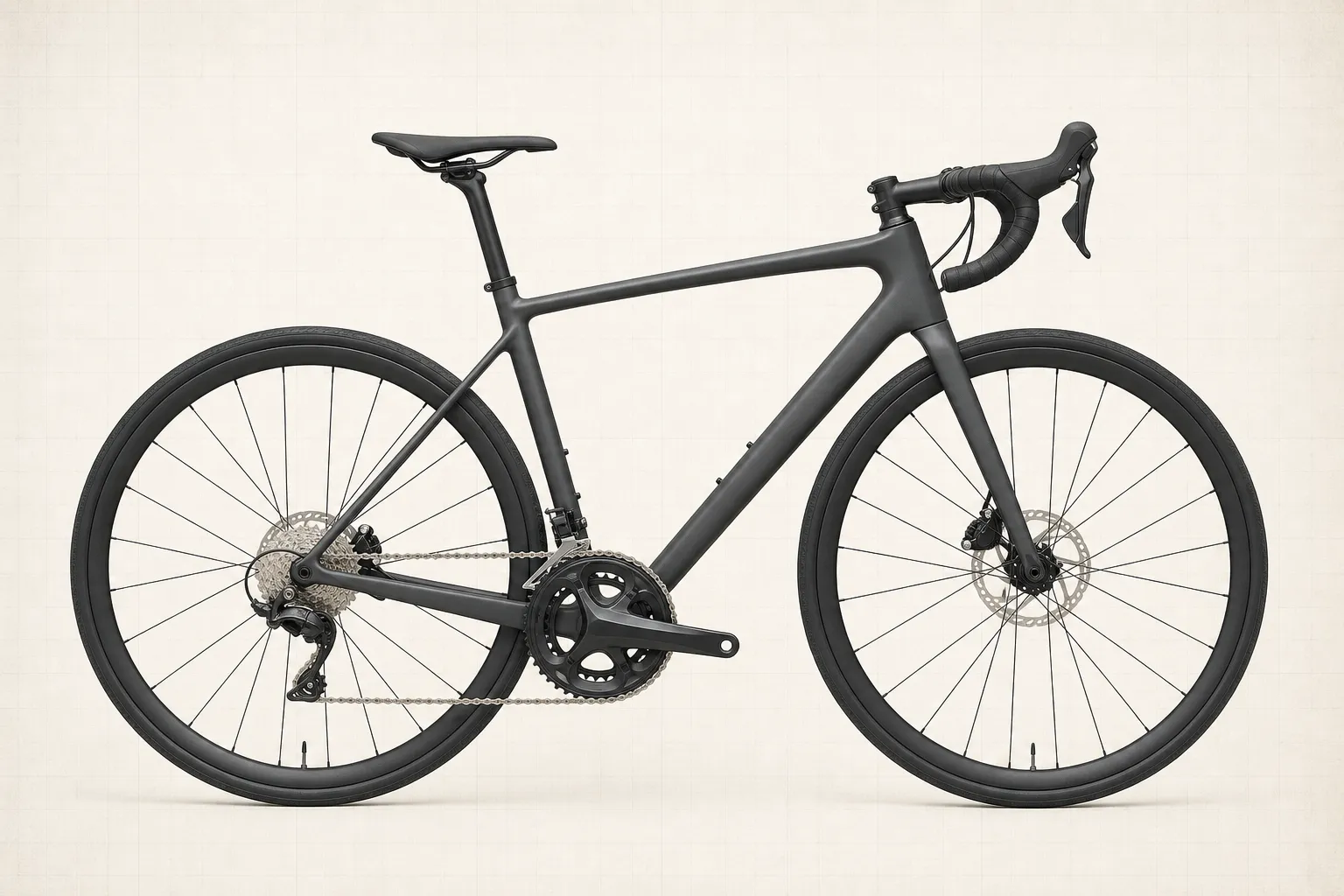
Use a tyre squeeze as one useful clue, then add a short air, brake, chain, wheel, and roll check before beginner road rides.
 Field guide / quick-tyre-squeeze-not-full-bike-check
Before you buy
Check the starter kit first
Print the one-page buying brief for helmet, lights, water, phone, and repair compatibility before comparing upgrades.
A quick tyre squeeze is useful, but it is not a full bike check. Before a beginner road ride, make the squeeze one part of a short routine: air, brakes, chain, wheel security, and one slow roll before you join traffic or commit to a route.
The short answer: squeeze the tyres to catch an obviously soft tyre, then spend another minute checking that the tyres are not damaged, both brakes stop the bike, the chain moves cleanly, the wheels are secured, and the bike feels normal at walking speed.
Why the squeeze is not enough
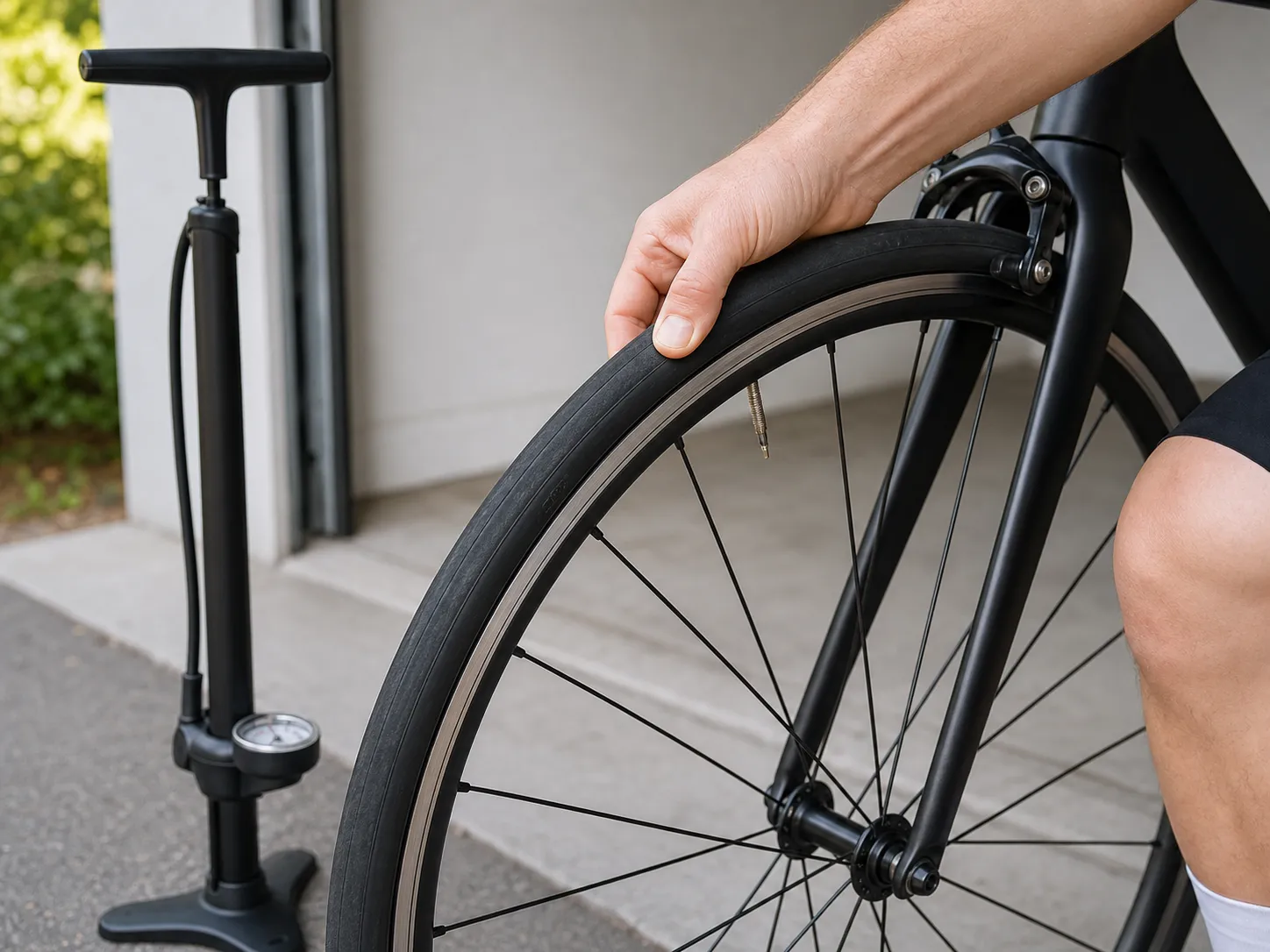
Beginner riders often ask whether they really need a pre-ride check or whether pressing the tyres with a thumb is enough. The habit makes sense: road tyres lose some air over time, and a soft tyre can feel sluggish, squirm in corners, and become more vulnerable to pinch flats. But most ride-ending or safety-critical checks are not in the tyre sidewall.
NHTSA’s pre-ride safety check tells riders to do a quick A-B-C check every time: air, brakes, and chains, plus a test ride to confirm the bike works. The League of American Bicyclists uses the same ABC Quick Check idea and adds quick releases plus a slow brief ride.
That is the useful beginner standard. You are not doing a workshop service at the kerb. You are asking, “Is this bike safe and ordinary enough to start?”
Air: squeeze, then look
The squeeze catches the obvious problem: a tyre that is so soft it should not leave the driveway. It does not tell you the right pressure, whether the tyre has a cut, or whether a slow leak is starting.
Do this instead:
- Squeeze each tyre sidewall and notice whether one feels much softer than usual.
- Look around the tread and sidewall for cuts, bulges, glass, thorns, loose fabric, or unusual wear.
- Pump the tyres if they are below your planned pressure or feel suspicious.
- If a tyre will not hold air, postpone the ride and fix it.
NHTSA’s checklist says to inspect tyres for the right amount of air, cuts or nicks, and worn tread. REI’s pre-ride inspection gives a similar beginner routine: check tyre pressure, look for cracks or excessive wear, and make sure your pump and repair kit are with you.
Do not treat the maximum number printed on a tyre as a target. It is a limit from the tyre maker, not a promise that every rider, rim, road, and weather condition should use that pressure. A future tyre-pressure guide can handle the pressure question properly; this post is only about not skipping the rest of the bike.
Brakes: test before the first junction
A tyre squeeze will not tell you whether the bike stops. Test the brakes before the first junction, descent, group ride, or traffic moment.
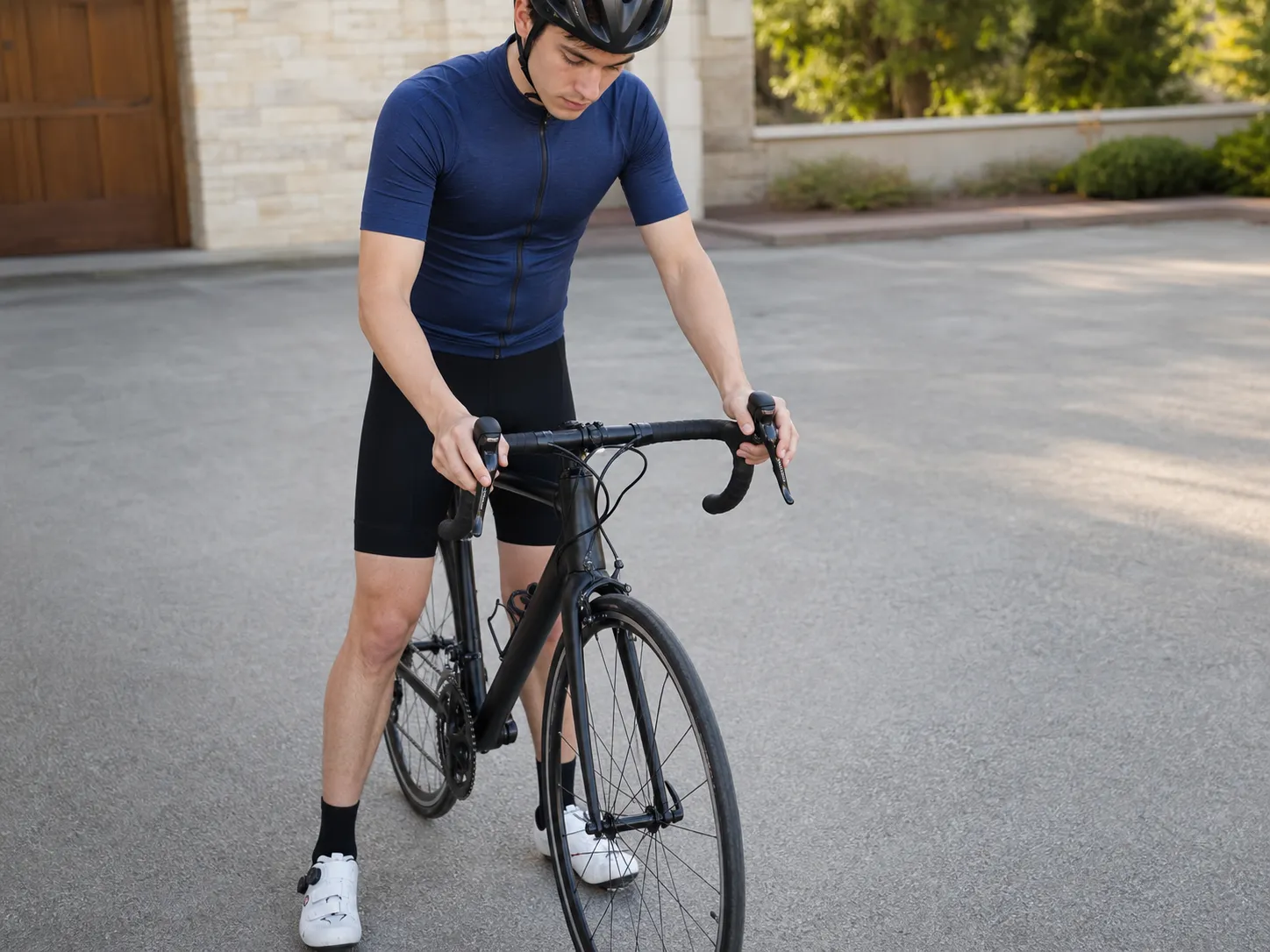
Stand beside the bike or straddle it on flat ground. Squeeze one brake and gently push the bike. Then do the other. The wheel should resist movement, and the lever should not pull all the way to the handlebar.
NHTSA’s bicycle safety page puts the point plainly: ride a bike that works, because rider skill does not help much if the brakes do not work. Cascade Bicycle Club’s ABC Quick Check says brake levers should operate easily, snap back when released, and leave space before the handlebar when engaged.
Stop and get mechanic help if a lever feels weak, spongy, sticky, uneven, or unfamiliar. If you are still learning how road-bike brakes behave, pair this with your front brake is not the enemy and braking and cornering with confidence.
Chain and wheels: catch the simple problems
The chain does not need to look showroom-new before every short ride. It does need to move freely and sit where it belongs. The wheels do not need a mechanic-level inspection every morning. They do need to be seated and secured.
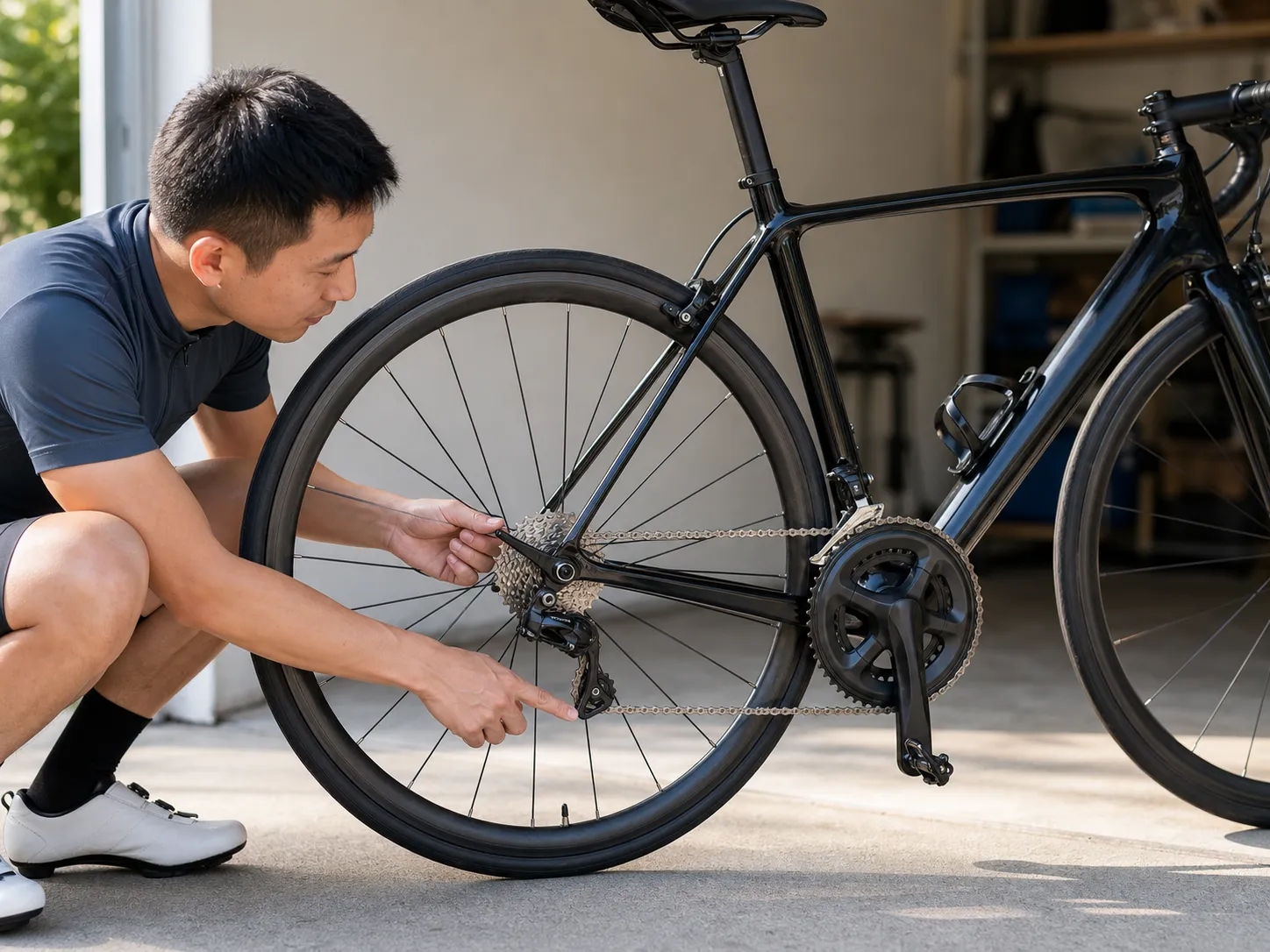
Before rolling out:
- Look that the chain is on the chainrings and cassette, not dropped beside them.
- Turn the pedals gently by hand if the bike is supported safely; the chain should move without grinding, jumping, or catching.
- Check that quick-release levers are closed or thru-axles are secure according to your bike’s design.
- Lift each wheel slightly and spin it if you can do so safely; listen for rubbing, dragging, or wobble.
NHTSA’s pre-ride checklist includes a chain check for cleanliness, lubrication, rust, free movement, and gear changes. The League’s ABC Quick Check includes chain and cranks, quick releases, and a slow brief ride. If those parts still feel like a blur, road bike anatomy for beginners will make the names easier.
The one-minute version
Use this when you are tempted to do only the tyre squeeze:
- Helmet and essentials: helmet fastened, water, phone, lights if needed, repair kit matched to the bike.
- Air: squeeze both tyres, look for cuts or bulges, pump if needed.
- Brakes: squeeze each lever, push the bike gently, confirm the levers feel firm.
- Chain: look for obvious rust, dryness, dropped chain, or skipping.
- Wheels: confirm fasteners are closed and nothing rubs when the wheels turn.
- Roll: ride slowly for a few seconds somewhere safe and stop once before leaving.
If you notice a new sound, rubbing brake, loose wheel, damaged tyre, or strange handling, do not downgrade it to “probably fine” just because you wanted a short ride.
Common beginner shortcuts
| Shortcut | Why it misses things | Better habit |
|---|---|---|
| Squeezing only the front tyre | The rear tyre carries weight too and often hides slow leaks | Check both tyres |
| Pumping without looking | Air does not fix cuts, bulges, or embedded debris | Look before and after pumping |
| Testing brakes only while moving | The first moving test may happen too late | Squeeze and push while stationary first |
| Ignoring wheel fasteners | A wheel can be seated poorly after transport or repair | Check quick releases or thru-axles before riding |
| Calling every noise normal | New rubbing, clicking, or grinding is information | Stop and inspect before speed or traffic |
One focused next action
Before your next ride, do the one-minute version once, slowly enough to learn the sequence. After a few rides it should feel ordinary: tyres, brakes, chain, wheels, roll.
For the gear that makes the check useful away from home, read essential road cycling gear. To practise the repair most beginners worry about, use practise one puncture repair at home.