How to ride into a brutal headwind without burning out in 15 minutes
Conquer strong headwinds on a road bike: aerodynamic hood posture, effort-based pacing over speed, cadence spinning, and smart route planning.
 Field guide / how-to-ride-in-headwind
A headwind is an invisible climb that never summits. The secret to surviving a strong headwind on a road bike is abandoning your speedometer, dropping into an easier gear, tucking your forearms flat on the hoods, and pacing strictly by breathing effort. When you stop fighting the air with raw muscle and start slicing through it with smart aerodynamics and high cadence, you turn a demoralizing slog into sustainable endurance training.
The short answer: Treat headwind like a 4% uphill gradient. Shift 1–2 gears easier to keep your pedals spinning at 85–90 RPM, bend your elbows so your forearms rest nearly parallel to the tarmac on the hoods (saving 20–30+ watts), ignore GPS speed in favor of conversational breathing effort, and always ride into the wind at the start of your ride so the tailwind blows you home.
Why headwind is cycling’s ultimate mental trap
Few things destroy a beginner’s morale faster than turning a corner onto an open road and feeling an invisible wall slam into their chest. Your speed plummets from 28 km/h to 16 km/h, your chain feels heavy, the roar of air in your ears makes it hard to think, and your legs burn after just two miles.
The frustration comes from two unique dynamics of aerodynamic drag:
- Air resistance is non-linear: Aerodynamic drag increases with the square of your airspeed, and the power required to overcome that drag scales with the cube of velocity. Doubling your relative airspeed against the wind does not require twice the power—it requires roughly eight times the muscular effort.
- There is no visual summit: On a real mountain or hill, your eyes can measure progress. You see the crest approaching, which helps your brain meter effort. A headwind offers no visual feedback, tricking your brain into thinking your fitness has suddenly vanished.
The biggest mistake new cyclists make is fighting the wind emotionally. They stare at their bike computer, see a single-digit speed, panic about their average pace, and mash heavy gears to force the bike forward. Within 15 minutes, their glycogen stores are fried and their legs are empty.
Remember: average speed is a poor beginner scoreboard on any ride, but on a windy day, it is actively misleading. Success into a headwind is measured in steady cadence, controlled heart rate, and arriving home with energy to spare.
The 4 core tactics to conquer strong headwinds
You cannot stop the wind from blowing, but you can control how much surface area you present to it and how efficiently your engine works against it. These four tactics will keep you riding smoothly through heavy gusts without burning out.
       ┌─────────────────────────────────────────────────────────┐
       │               4 HEADWIND SURVIVAL TACTICS               │
       └─────────────────────────────────────────────────────────┘
                                    │
     ┌──────────────┬───────────────┴───────────────┬─────────────┐
     ▼              ▼                               ▼             ▼
1. PACE BY     2. GET AERO                     3. SPIN HIGH   4. RIDE OUT
   EFFORT         ON HOODS                        CADENCE        INTO WIND
(Ignore GPS,   (Bent elbows,                   (85-90 RPM,    (Headwind out,
 talk test)     flat forearms)                  save knees)    tailwind home)
1. Pace by perceived effort and heart rate, not GPS speed
When heading directly into a 30 km/h (18 mph) headwind, pushing 180 watts might only propel you at 15–18 km/h. If you try to force the bike to travel at your customary calm-day flat speed of 25 km/h, you would need to produce 350+ watts—an all-out sprint effort that will exhaust you in minutes.
Throw away speed as your benchmark. Instead, use the talk test and perceived exertion:
- Conversational effort: According to public health exercise guidelines from the CDC and NHS, moderate aerobic activity allows you to speak in short sentences without gasping. If you cannot speak three consecutive words without catching your breath, you are riding too hard.
- Heart rate and RPE: Keep your Rate of Perceived Exertion (RPE) at 5 to 6 on a 1-to-10 scale. Think of it as a steady diesel engine rather than a revving sports car.
- Flip your screen: If your bike computer is stressing you out, switch the display to time or heart rate, or simply put the computer in your pocket.
2. The aerodynamic hood tuck (saving 20–30+ watts)
On a flat road at typical road cycling speeds, approximately 75% to 85% of total resistance comes from your body pushing through air, not the bike’s mechanical friction or tyres. In a headwind, that percentage climbs even higher.
The most effective tool you have is your body position:
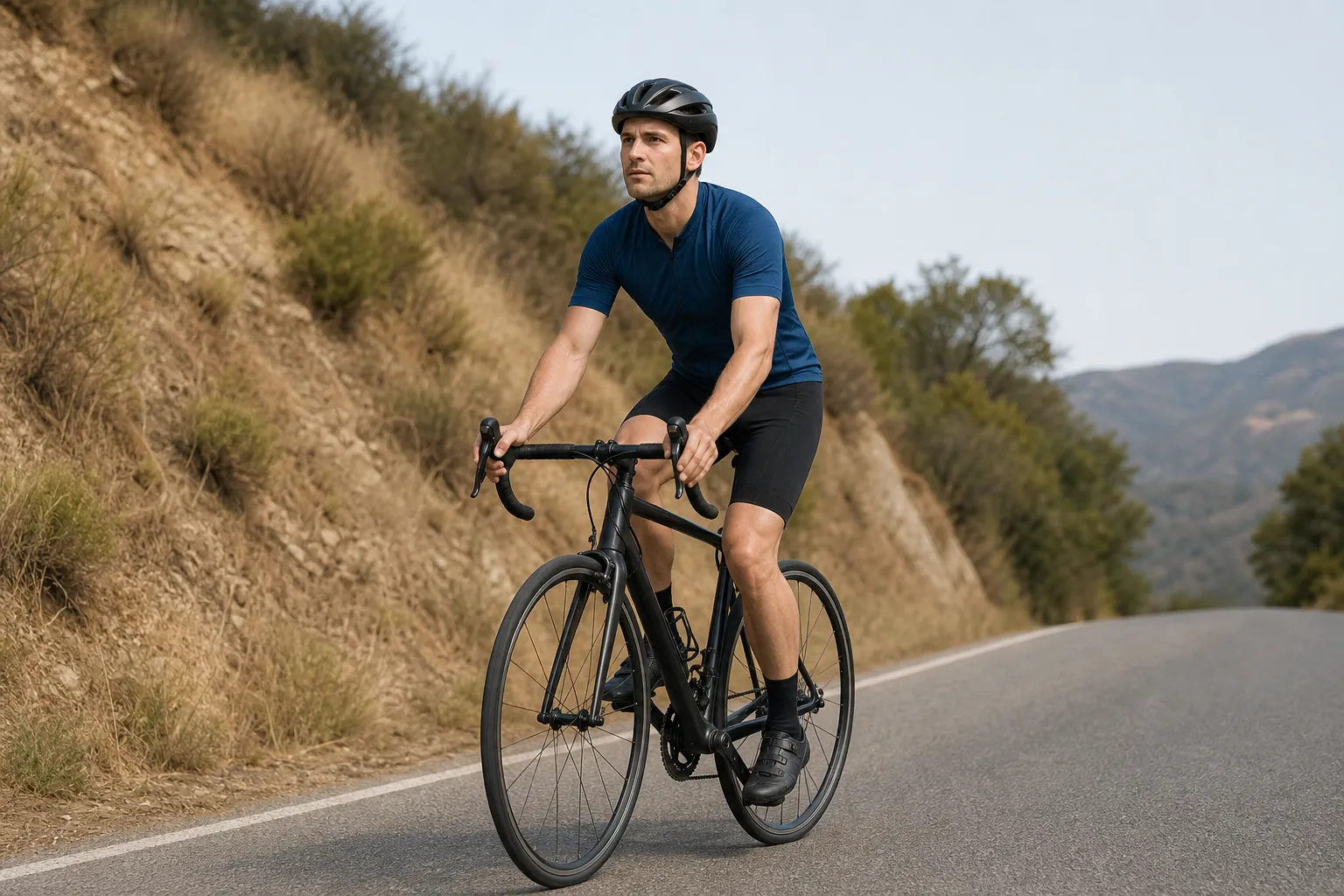
- The horizontal forearm hood tuck: Place your hands securely on the rubber hoods of your brake levers. Bend your elbows so your forearms are roughly parallel to the road surface, and lower your chest toward the stem.
- Why hoods beat drops for long headwind stints: Wind tunnel testing repeatedly shows that riding on the hoods with bent 90-degree elbows produces a smaller frontal profile than riding down in the drops with straight, locked arms. It also places less strain on your lower back and neck over a 30-minute stretch.
- Drop your shoulders and tuck your head: Avoid shrugging your shoulders up into your neck. Keep your shoulder blades relaxed and drop your chin slightly while maintaining a clear, forward line of sight down the road.
- Eliminate “parachutes”: A loose, unzipped rain jacket acts like a spinnaker sail in a gale. Wear a snug-fitting jersey or wind vest (gilet) and zip it all the way up.
3. Shift down and spin at 85–90 RPM (protect your knees)
Because air resistance pushes back against your wheels continuously, a headwind creates the exact same mechanical drag as a constant uphill grade.
If you remain in a large front gear (such as 50x14 or 50x15), your pedalling cadence will naturally drop to 55–65 RPM. Grinding heavy gears under high torque places immense strain on your patellar tendons and rapidly fatigues your fast-twitch muscular fibers.
- Shift 1–2 cogs easier: As soon as you turn into the wind, click your rear shifter 1 or 2 gears easier (larger rear cogs). If the wind is fierce, do not hesitate to drop into your smaller front chainring.
- Target 80–90 RPM: Spinning lightly at a higher cadence transfers the workload from your leg muscles to your cardiovascular system, which recovers much faster and resists fatigue longer.
- Keep pedal stroke fluid: Focus on scraping your feet through the bottom of the pedal stroke rather than stomping violently on the downstroke.
For a complete breakdown of smooth gear selection under load, revisit our guide on how to use road bike gears.
4. Smart wind route planning: out into the blast, home with the breeze
Route direction is the difference between an exhilarating training ride and an exhausting rescue call.
- Always ride out into the headwind: When your energy, glycogen stores, and concentration are fresh, tackle the toughest headwind section. On your return leg, when your legs are fatigued, the tailwind will push you home with minimal effort.
- Check hourly wind forecasts: Look at wind direction and gust strength using apps like Windy, Met Office, or your preferred weather app before you leave. Winds often intensify in the afternoon.
- Use natural windbreaks: Plan routes through tree-lined country lanes, rolling valleys, sunken roads, or suburban neighborhoods. Avoid wide-open plains, exposed coastal roads, or elevated ridge lines when headwinds exceed 25 km/h.
- Plan safe bailouts: Ensure your route offers shortcut options or train stations if conditions become overwhelming. Explore our comprehensive framework in how to plan your first road cycling route.
Comparison: Headwind Mistakes vs. Headwind Mastery
| Factor | Common Beginner Mistake | Headwind Mastery Technique | Rider Benefit |
|---|---|---|---|
| Pacing Strategy | Chasing standard flat-road speed (e.g. 26 km/h) | Pacing strictly by conversational breathing (RPE 5–6) | Prevents blowing up within 15 minutes; protects glycogen |
| Cockpit Posture | Sitting upright on the bar tops with locked elbows | Hands on hoods, elbows bent 90°, forearms horizontal | Cuts frontal aerodynamic drag; saves 20–30+ watts |
| Gear & Cadence | Grinding big gears at 60 RPM with heavy knee strain | Shifting 1–2 gears easier to spin smoothly at 85–90 RPM | Preserves muscular endurance and avoids knee pain |
| Apparel | Flapping loose jacket or unzipped rain cape | Snug jersey, close-fitting wind vest, zipped collars | Eliminates wind-catching parachute effect |
| Route Design | Riding downwind first, facing headwind when exhausted | Heading into the wind first, enjoying tailwind return | Safe, comfortable return home without despair |
Handling crosswinds, sudden gusts, and overtaking vehicles
Headwinds are exhausting, but crosswinds and turbulent gusts present actual handling challenges. When wind strikes your front wheel from a 45-to-90-degree angle, it creates lateral steering torque that can catch you off guard.
Identifying sudden gust zones
Wind does not blow at a constant velocity; it compresses and accelerates around obstacles. Stay alert for these common gust traps:
- Gaps in hedgerows and tree lines: As you ride along a sheltered tree-lined lane, a sudden farm gate or field opening can release a blast of crosswind that pushes your front wheel sideways.
- Bridges and highway overpasses: Elevated structures have no surrounding terrain to block air movement, exposing you to sudden high-speed cross drafts.
- Open field clearings: Exiting a forest or suburban neighborhood into an open rural agricultural expanse often doubles perceived wind force instantly.
- Overtaking trucks and buses: When a large vehicle passes you in a crosswind, it first creates a momentary wind shadow that sucks you slightly toward the vehicle, followed immediately by a violent turbulent air blast as the vehicle clears you.
How to stabilize your bike in gusty wind
- Keep elbows loose and bent: If you lock your arms and stiffen your upper body in fear, every gust hitting your torso will directly twist your handlebars. Treat your arms like flexible suspension dampers that absorb lateral movement without altering your wheel direction.
- Do not white-knuckle the handlebars: Maintain a secure, positive grip on the hoods or drops, but keep your hands and wrists supple. Relax your fingers periodically.
- Weight your pedals and saddle: Keep your center of gravity low and stable. Keep your feet firmly planted on the pedals and your weight settled squarely on the saddle.
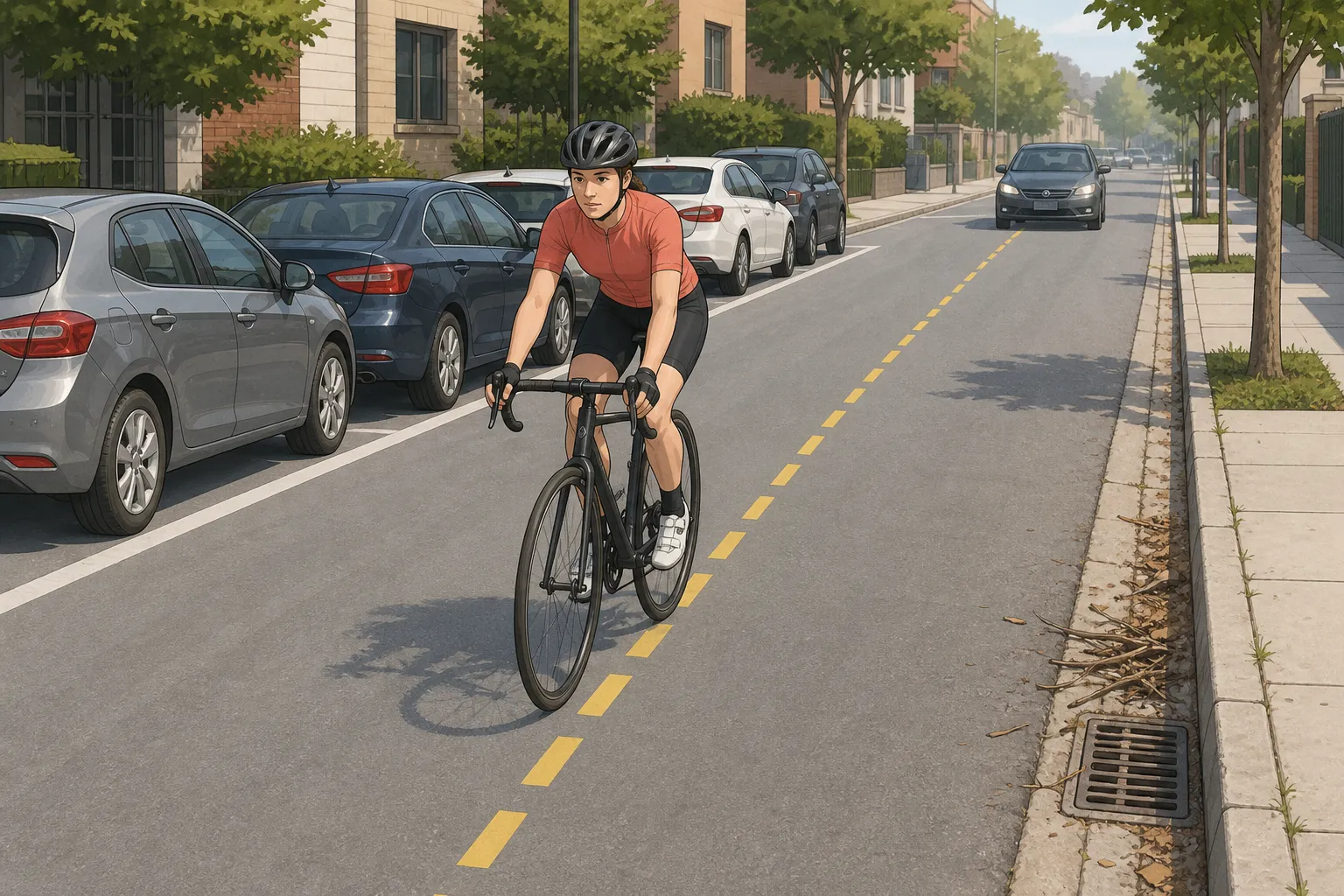
- Avoid the gutter trap: Never ride in the extreme edge or gutter of the road on windy days. If a sudden gust pushes you 30 cm to the side, riding 0.75m to 1m out into the lane gives you plenty of tarmac buffer, whereas riding in the gutter will push you directly into loose gravel, potholes, or the ditch.
Practical step-by-step: Your headwind action checklist
Use this quick-reference checklist to prepare for and execute a calm, controlled ride on windy days.
Before you leave home
- Check wind speed and gust forecasts: Note wind direction and avoid rides if gusts exceed your handling confidence (typically 45+ km/h for beginners).
- Plan an into-the-wind outbound leg: Ensure the second half of your route benefits from a cross-tail or direct tailwind.
- Wear close-fitting apparel: Zip up all jackets and vests to prevent loose fabric from acting like a wind drag parachute.
- Perform your pre-ride safety check: Verify tyre pressures and brake responsiveness using the five-minute pre-ride bike check and ensure your pressures are dialed with our tyre pressure guide for beginner road cyclists.
While riding into the blast
- Adopt the aero hood position: Bend your elbows to 90 degrees, drop your torso, and keep forearms level with the road.
- Shift down 1–2 gears: Keep your cadence spinning smoothly between 85 and 90 RPM to protect your knees.
- Check your breathing: Ensure you can speak short phrases; dial back pedal pressure if breathing becomes ragged.
- Scan ahead for gust zones: Look for hedgerow openings, road bridges, and large approaching vehicles.
- Stay fueled and hydrated: Fighting wind increases metabolic burn; take small sips of water and carbohydrate snacks every 20–30 minutes.
Why headwinds make you a much stronger cyclist
It is easy to resent the wind, but professional cycling coaches often refer to headwinds as “the cyclist’s best training partner.”
Riding into a headwind forces you to practice relentless, uninterrupted pedalling without dead spots in your stroke. It naturally rewards smooth aerodynamic positioning, teaches you how to govern your energy reserves with discipline, and strengthens your core stability on the bike.
When you finally turn around at the halfway point, shift into your big ring, and feel the gentle push of a tailwind carrying you effortlessly home at 35 km/h, you will appreciate every single watt you built fighting the gale.
Your next step
Before your next ride, open your weather app and locate the wind direction arrow. Map out a 20-to-30 km route that points straight into that arrow for the first 10–15 km, using sheltered country lanes where possible.
Once on the road, leave your speed screen hidden, settle into a comfortable 85 RPM cadence on the hoods with bent elbows, and focus entirely on smooth, conversational effort.
For more foundational riding skills and preparation checklists, check out: