How far should a beginner cyclist ride?
Choose a first beginner cycling distance by time, route stress, recovery, and confidence instead of copying someone else's mileage.
 Field guide / how-far-should-a-beginner-cyclist-ride
A good beginner cycling distance is the shortest ride that lets you finish safely, recover normally, and want to ride again. For many new road cyclists, that means starting with about 20 to 45 minutes on an easy route close to home, not chasing a fixed mileage target.
The short answer: pick time before distance. If you are very new, nervous in traffic, or unsure how the bike feels, start with 10 to 20 minutes. If you are generally active and have a calm route, 20 to 45 minutes is a sensible first road ride. If you finish with control and feel normal later that day and the next day, repeat it once, then add one small extension.
Why there is no universal beginner mileage
Beginner cycling communities rarely ask this question in a neat training-plan way. The wording is messier and more useful: “How many miles should I bike as a beginner?”, “What should my first year look like?”, “Can I train for 40 km?”, or “I want to start short and build toward longer rides.”
Recent r/cycling threads show that mix clearly: one self-described complete beginner wanted advice on bike, gear, and long-distance goals, another new rider asked about preparing for a 40 km event, and a midlife beginner described a first year that started with a tiny first ride and gradually became regular longer riding in a discussion about starting biking in midlife.
That community wording matters because the hidden question is not always “what distance is normal?” It is often “what distance will help me become a cyclist without making the first week miserable?”
Distance depends on:
- current fitness and recent activity;
- traffic comfort and route complexity;
- hills, wind, heat, cold, and surface;
- bike fit, saddle comfort, and hand pressure;
- whether you know the route and can shorten it;
- whether the bike is checked, working, and familiar.
Five flat miles on a quiet path can be easier than two miles through fast traffic and awkward junctions. A 30-minute ride after months of walking or running can feel different from the same ride after years of inactivity. Mileage alone cannot see those differences.
Choose time first, then notice distance
Time is a better beginner control than mileage because it includes the route’s real difficulty. If a hill, headwind, traffic light, or nervous junction slows you down, the ride still stays within the effort window you planned.
Use this as a starting point, then adjust down if your route, health, weather, or confidence says so:
| Starting point | First ride target | Good sign afterward |
|---|---|---|
| New to exercise, returning after a long break, or anxious about the bike | 10 to 20 easy minutes close to home | You stop because the plan ended, not because the ride overwhelmed you |
| Generally active but new to road cycling | 20 to 45 easy minutes | You can steer, brake, shift, and get home with attention left |
| Used to indoor cycling, commuting, running, or other endurance activity | 30 to 60 easy minutes on a simple route | The bike, route, and contact points feel manageable, not just your legs |
| Uncertain because of medical history, injury, pregnancy, or concerning symptoms | Get qualified advice and start more conservatively | The plan respects your actual situation, not internet averages |
You can write down the distance afterward. Just do not make distance the boss of the ride. If your 30-minute route ends up being 4 miles, 7 miles, or 10 miles, the useful question is the same: did it leave you in a better place for the next ride?
Use effort as the limiter
For general health guidance, public-health sources talk about effort and consistency more than cycling mileage. The CDC’s intensity guidance explains the talk test: at moderate intensity, many people can talk but not sing. It also notes that intensity is relative, so the same activity can feel moderate to one person and vigorous to another.
That is why a beginner road ride should usually feel conversational rather than heroic. You should not need to stare at speed, chase a friend, grind up every hill, or finish every small rise without walking. The first win is finding an effort you can repeat.
The CDC adult activity overview summarizes the Physical Activity Guidelines for Americans as at least 150 minutes of moderate-intensity activity per week for adults, or 75 minutes of vigorous activity, plus strength work. The American Heart Association gives the same broad weekly target and says to increase amount and intensity gradually.
Do not turn those weekly health guidelines into pressure to ride 150 minutes in week one. Treat them as a direction of travel. If the first ride is 15 calm minutes, it still counts as building the habit.
Build the route so stopping is easy
Distance is only responsible when the exit is simple. Before your first few rides, choose a route that stays close enough to home, transit, a car, or a safe pickup point that a tired rider or mechanical problem does not become a crisis.
NHTSA bicycle safety guidance tells riders to choose routes with less traffic and slower speeds when riding on the road, and notes that a safer route may be away from traffic in a bike lane or on a bike path. For a distance decision, that means a shorter low-stress route is often better than a longer direct one.
Good first-distance route shapes:
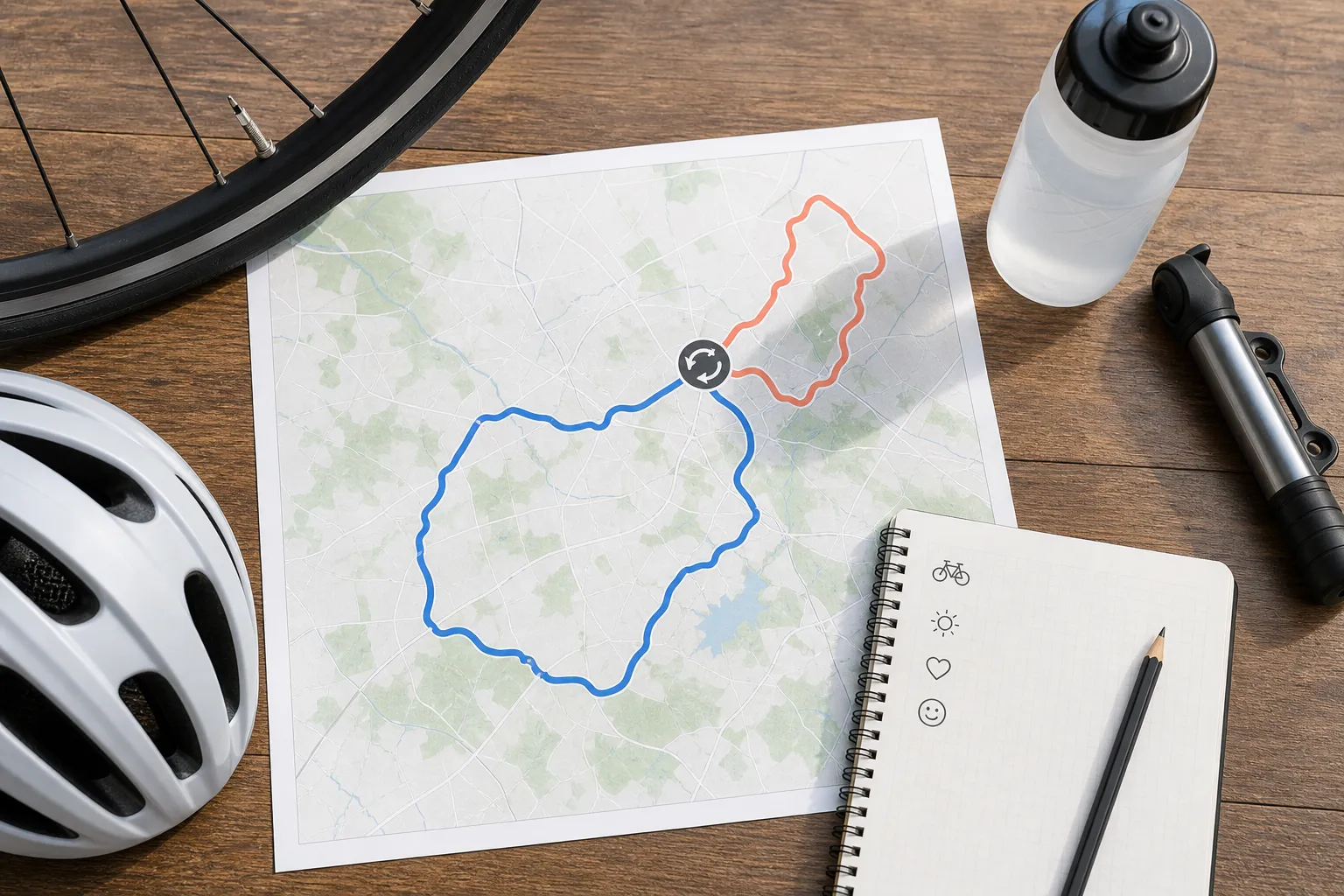
- A short out-and-back: ride away for 10, 15, or 20 minutes, then return the same way.
- A small loop near home: useful if the turns are familiar and easy.
- A park path or quiet road repeat: one calm section you can repeat, then leave whenever the planned time is done.
- A destination and return: a park, shop, cafe, station, or friend’s house, as long as the return is already planned.
If you have not planned the route yet, use how to plan your first road cycling route before choosing a bigger distance. The route decides how much of your attention the distance will cost.
How to decide whether to ride farther next time
Do not increase distance because the number looks small. Increase it because the current ride is becoming ordinary.
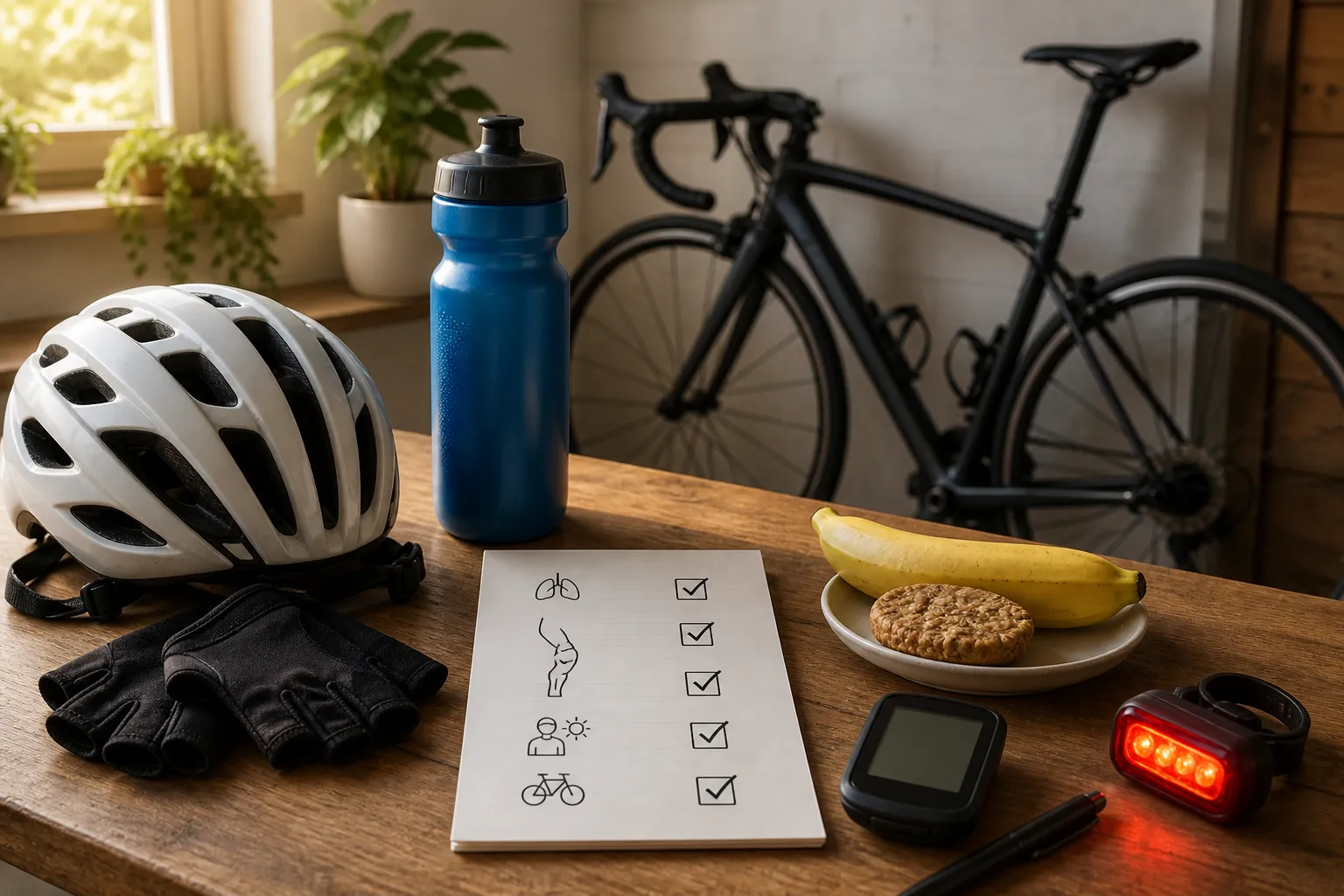
After a ride, ask five questions:
- Did I keep attention for traffic, braking, steering, shifting, and route finding?
- Could I talk in short sentences for most of the ride?
- Did discomfort stay mild, expected, and temporary rather than sharp, numb, or worsening?
- Did I recover normally later that day and the next day?
- Do I honestly want to repeat the ride soon?
If most answers are yes, repeat the same ride once more or add one small extension: another 5 to 15 minutes, one extra loop, a slightly farther turnaround, or a quiet new road. If the answers are mixed, repeat the same route until it feels calmer. If the answers are no, shorten the ride, make the route easier, check the bike, or solve the comfort problem before adding distance.
This is also where average speed is a poor beginner scoreboard matters. A slower ride that finishes controlled and repeatable is a better foundation than a faster ride that leaves you rattled, sore, or avoiding the bike for a week.
A simple first two weeks
This is not a training prescription. It is a conservative structure for beginners who want enough shape to avoid guessing.
| Ride | What to do | Keep it successful by |
|---|---|---|
| Ride 1 | Choose a 10 to 45 minute easy ride from the table above | Stopping while you still feel in control |
| Ride 2 | Repeat the same route or make it slightly shorter | Not trying to prove the first ride was too easy |
| Ride 3 | Repeat again, or add one small extension if recovery was normal | Changing only one thing: time, route, or hilliness |
| Ride 4 | Keep it easy and familiar | Finishing with enough freshness to ride again soon |
Space the rides so your body and contact points can adapt. The NHS adult activity guidance recommends speaking to a GP first if you have not exercised for some time or have medical conditions or concerns, and says activity and intensity should fit your fitness. That is a good boundary for cycling too: online plans cannot see your medical history, bike fit, local roads, or next-day symptoms.
What counts as too far
A beginner ride was probably too far for today if:
- you lose concentration in traffic or start making rushed decisions;
- braking, turning, or shifting gets sloppy because you are tired;
- you feel shaky, confused, faint, unusually breathless, or unwell;
- pain is sharp, one-sided, worsening, numb, or changes how you ride;
- the bike develops rubbing, skipping, brake trouble, a soft tyre, or a loose part;
- you need days to feel willing to ride again.
Too far does not mean you failed. It means the next ride needs a shorter route, easier terrain, more rest, a bike check, a fit adjustment, better food or water, or medical help if symptoms point that way.
Use beginner road bike fit and comfort if hands, saddle, reach, or knees become the limiting factor. Use the five-minute pre-ride bike check if a mechanical issue changes the ride. Fitness is only one part of distance.
Common beginner distance mistakes
| Mistake | Why it backfires | Better habit |
|---|---|---|
| Copying another rider’s mileage | Their fitness, roads, bike, stops, and goals are different | Choose your first distance by time and route stress |
| Making the first ride a test | A test makes every discomfort feel like a verdict | Make the first ride a rehearsal |
| Adding distance, hills, and speed together | Too many changes hide what caused the struggle | Change one variable at a time |
| Riding away from home before you know the bike | A small mechanical issue becomes a long walk or rescue | Stay close until checks and controls feel ordinary |
| Ignoring contact-point discomfort | Hands, saddle, feet, and knees can limit rides before fitness does | Solve comfort before chasing longer routes |
| Calling a short ride pointless | Short repeatable rides build confidence and consistency | Count any controlled ride as useful practice |
Your next step
Pick one easy route close to home and choose a time window from this guide. Ride it without chasing speed. When you get back, write one sentence: “That distance was right, too much, or too easy because…”
That sentence is more useful than a stranger’s mileage. It tells you whether to repeat the ride, shorten it, or add one small extension next time.
If you want the broader habit plan, read your first month of road cycling next. If the route itself is still the hard part, start with how to plan your first road cycling route.
Sources and further reading
- CDC: how to measure physical activity intensity
- CDC: adult physical activity overview
- American Heart Association: physical activity recommendations for adults
- NHS: physical activity guidelines for adults aged 19 to 64
- NHTSA: bicycle safety
- r/cycling reader context: beginner cyclist advice and long-distance goals
- r/cycling reader context: beginner training for a 40 km event
- r/cycling reader context: starting biking in midlife