Aluminium or carbon for your first road bike?
Choose between an aluminium and carbon first road bike by comparing fit, complete specification, repair risk, serviceability, and total budget.
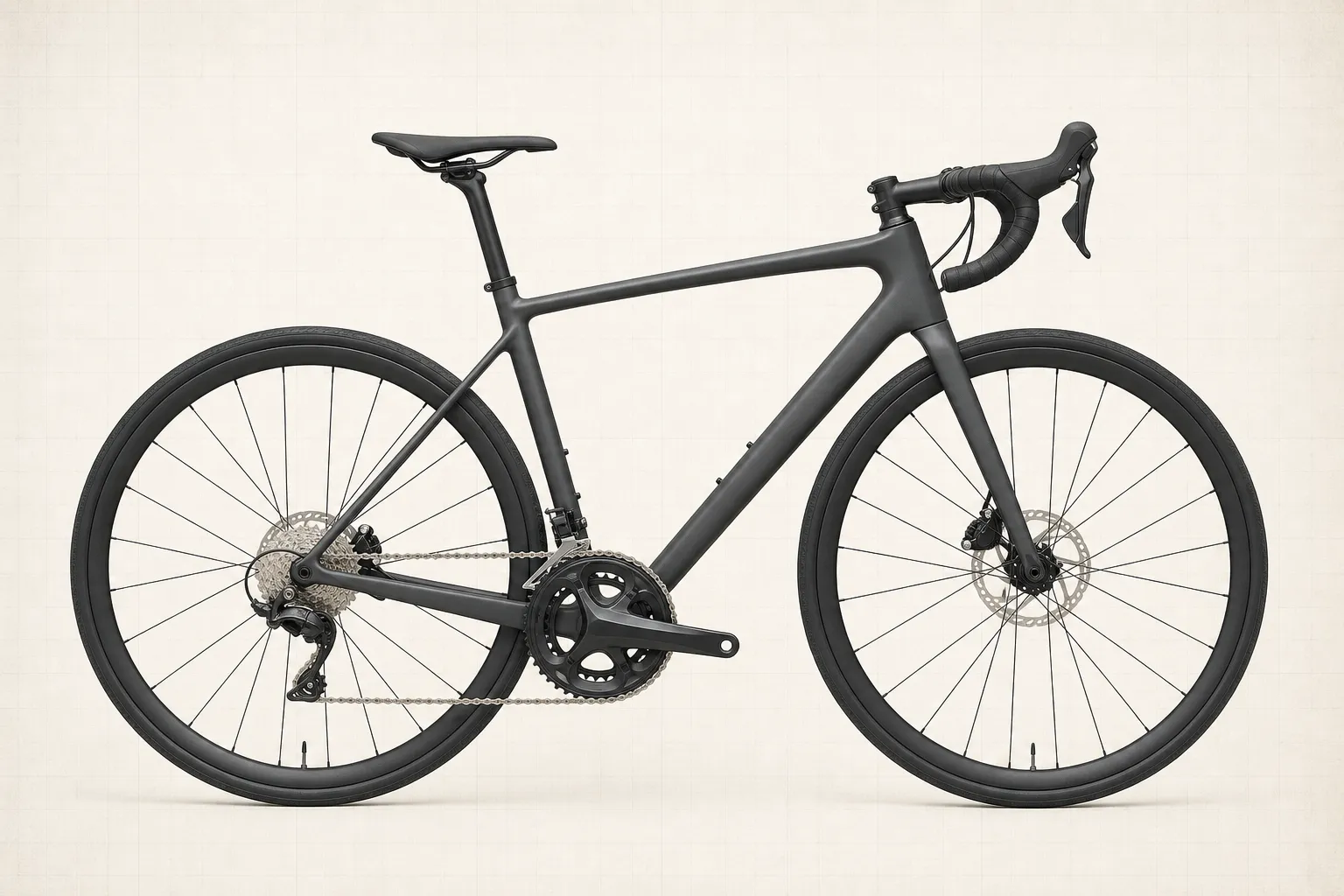 Field guide / aluminium-or-carbon-first-road-bike
Before you view or pay
Check fit, condition, and starter gear first
Use the buying checklist to choose the right path: used-bike viewing, first-bike fit and type, hidden repair costs, or starter gear.
For most first-time road-bike buyers, a well-fitting aluminium bike with sensible gearing, good tyres, and money left for essentials is the stronger default. Choose carbon when the complete bike fits better or delivers features you genuinely value—not because carbon is a required step into “serious” cycling.
The short answer: compare complete bikes, not frame materials in isolation. Fit and geometry come first; then check gearing, tyre clearance, brakes, wheels, serviceability, warranty, and first-year cost. If two bikes meet those needs equally and carbon comfortably fits the budget, it can be a reasonable choice. Aluminium is not a temporary learner category.
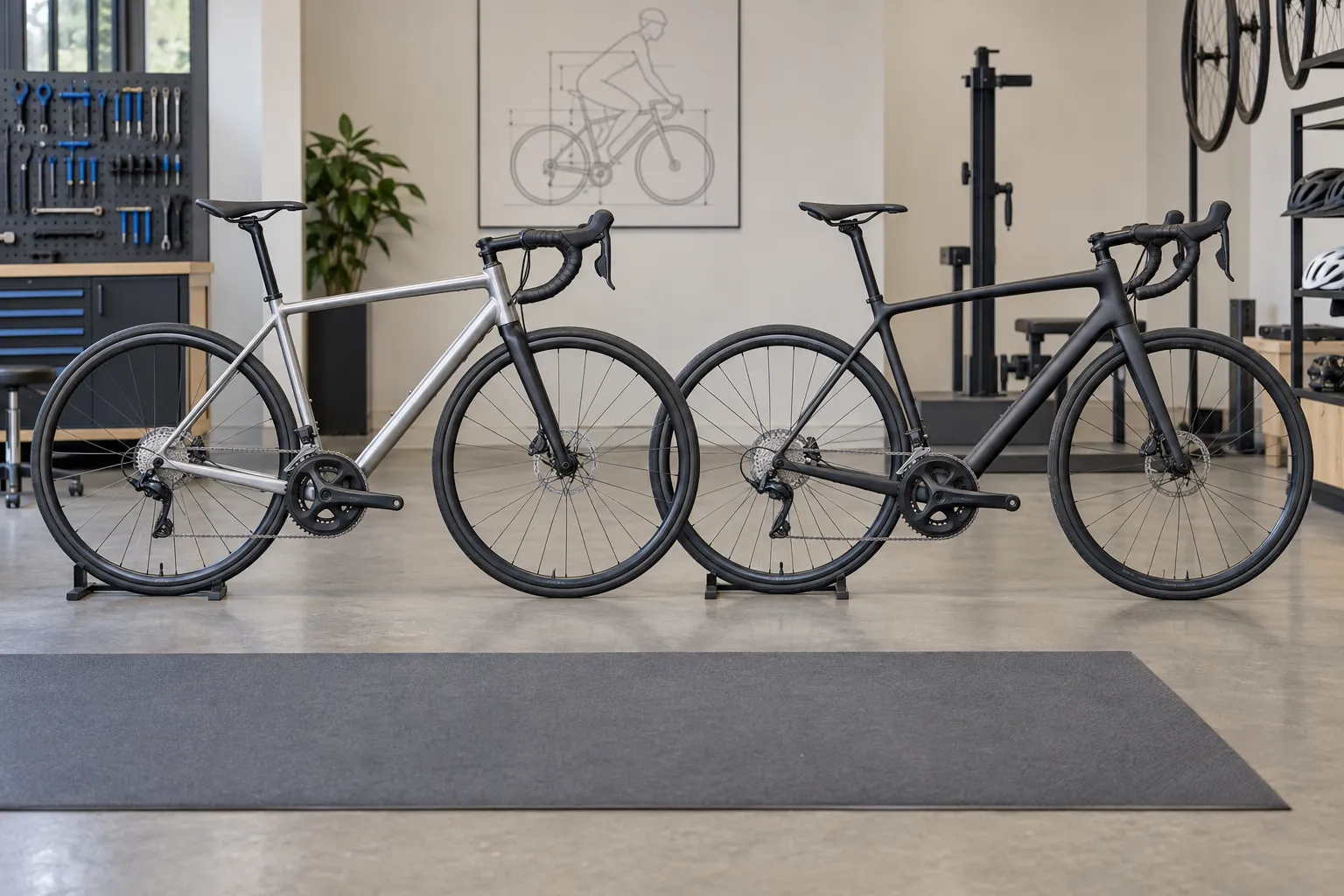
What frame material actually tells you
Aluminium frames are commonly welded from shaped tubes. Carbon frames are built from layers of fibre and resin arranged to meet design goals. Both materials can produce light, stiff, comfortable, durable road bikes; the result depends on engineering, construction, size, fork, seatpost, wheels, tyres, and pressure.
That is why “carbon is comfortable” and “aluminium is harsh” are poor buying rules. A race-position carbon bike on narrow, highly inflated tyres may feel less forgiving than an endurance aluminium bike on wider tyres at an appropriate pressure. Start with endurance bike or race bike for a beginner and tyre pressure for beginner road cyclists.
Compare the complete specification
At the same budget, an aluminium bike may leave more money for components; an entry carbon bike may make compromises elsewhere. This is not guaranteed, so compare line by line:
| Check | Why it matters more than the label |
|---|---|
| Fit and geometry | Determines whether you can use the bike comfortably and control it |
| Lowest gear | Determines how manageable local climbs feel |
| Tyre clearance | Affects comfort, grip, and the roads you can use |
| Brake system | Changes feel, maintenance, wheel choice, and wet-weather performance |
| Wheels and tyres | Strongly influence ride feel and replacement cost |
| Cockpit and seatpost | Proprietary parts can limit cheap fit changes |
| Local service support | Matters when a part, bearing, or hanger needs replacement |
| Warranty and crash policy | Especially relevant for a costly frame |
If you are still learning component names, read what does groupset actually mean? before paying extra for a rear-derailleur badge while ignoring the brakes, crank, cassette, and wheels.
When aluminium is the better first choice
Lean toward the aluminium bike when it:
- fits better or allows a simple stem and handlebar adjustment;
- has easier climbing gears or wider useful tyre clearance;
- includes better brakes, tyres, or wheels at the same total price;
- uses standard, locally available replacement parts;
- leaves room for a helmet, lights, pump, repair kit, fit help, and servicing;
- will be used for commuting, travel, indoor training, or conditions where lower replacement cost reduces worry.
Do not buy aluminium because you expect to discard it. A suitable aluminium road bike can remain a main bike, winter bike, commuter, or trainer bike for years.
When carbon is a reasonable choice
Choose the carbon option when the complete bike is the better match, the extra cost does not remove essential safety and maintenance budget, and you understand its care requirements. Useful reasons may include a lower complete weight, a particular geometry, frame features, or simply preferring how that bike rides after a meaningful test.
“I might deserve carbon later” is not a technical reason, but enjoyment is still legitimate. Be honest about it and compare the opportunity cost: would the same money improve fit, tyres, training consistency, travel, or repair confidence more?
New and used carbon require different judgment
A new carbon bike comes with known ownership, retailer support, and a warranty subject to its terms. A used carbon bike adds uncertainty about impacts, over-tightening, transport damage, repairs, and warranty transfer.
That does not make every used carbon bike unsafe. It means inspection history matters. Current manufacturer guidance warns that carbon can hide damage and says a bike involved in an impact should stop being used until assessed. If a seller reports a crash or you find a suspicious mark, do not attempt to price the uncertainty yourself—get a qualified assessment or leave.
Use the used road bike checklist and fair-price guide before viewing. A cheap carbon frame with an unknown story is not automatically better value than a straightforward aluminium bike.
Budget for the whole first season
Make one budget with four lines:
- Bike: complete purchase price and delivery.
- Fit: likely contact-point changes or professional help.
- Safety and ride essentials: helmet, lights, pump, tubes or plugs, multitool, and suitable clothing.
- Maintenance: first service, wear parts, tools, and workshop labour.
If choosing carbon empties lines two through four, it is outside the useful budget. The starter gear checklist keeps the extras concrete without turning them into an endless shopping list.
A fair test ride
Set both bikes to a safe approximate fit and ride the same short route. Include smooth and rough surfaces, several stops, a climb, easy seated riding, and low-speed turns. Ask:
- Can I reach and operate both brake levers confidently?
- Can I hold a relaxed position without locking my elbows or sliding forward?
- Is the easiest gear appropriate for my roads?
- Are any fit changes simple and affordable?
- Which bike makes me want to keep riding after the novelty fades?
Do not try to identify material from vibration alone. Tyres, pressure, wheels, bar tape, saddle, and position all influence what you feel.
The decision rule
Choose the bike that passes these gates in order:
- safe and correct size;
- suitable geometry and brake access;
- suitable gearing and tyre clearance;
- maintainable parts and support;
- affordable total first-season cost;
- preferred ride feel and appearance.
Frame material is one input within gates four, five, and six. It is not gate one.
Sources and further reading
- Editorial demand signal: recent first-bike discussion comparing a cheaper aluminium model with carbon
- Editorial demand signal: recent beginner-budget discussion about aluminium, carbon, and complete specification
- Manufacturer safety reference: Trek bicycle owner’s manual, March 2026
Reddit discussions were used as question and demand signals. Rider opinions were not presented as verified material-science facts.
Your next step
Put your two best candidates through the beginner road bike buying checklist and compare their complete first-season cost before looking at the frame label again.