How to tell if a used road bike is fairly priced
Compare a used road bike with real local sales, subtract immediate repair costs, and set a walk-away price before you meet the seller.
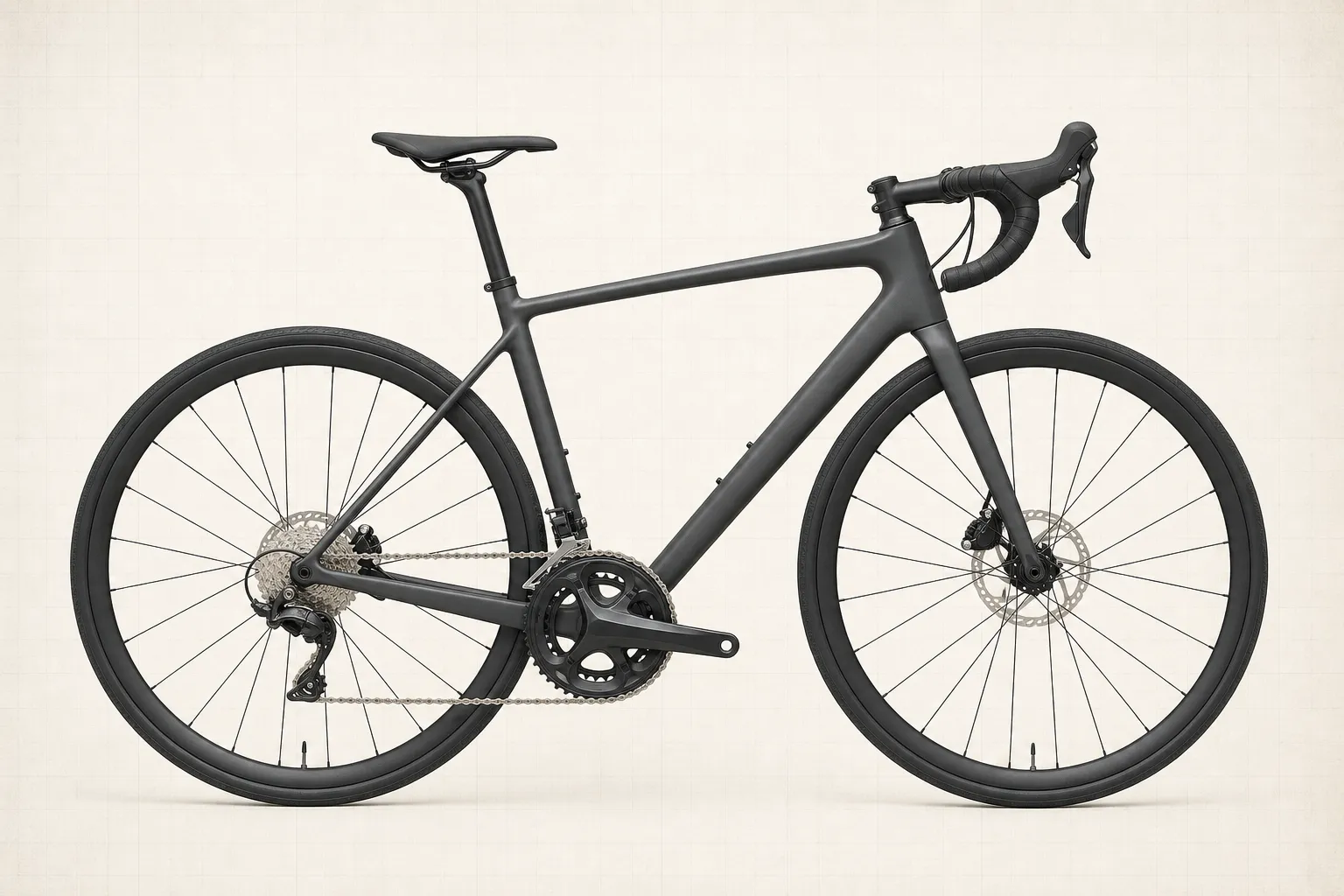 Field guide / used-road-bike-fair-price
Before you view or pay
Check fit, condition, and starter gear first
Use the buying checklist to choose the right path: used-bike viewing, first-bike fit and type, hidden repair costs, or starter gear.
A fair used-road-bike price is not a fixed percentage of the original retail price. It is the price of comparable bikes that have actually sold in your area, adjusted for size, age, specification, condition, and the work the bike needs immediately. Start with evidence, not the seller’s discount claim.
The short answer: find three to six genuinely comparable bikes, favour completed sales over active adverts, calculate the first-month repair bill, then subtract that bill from the local market value. Set your maximum before the viewing and be willing to leave.
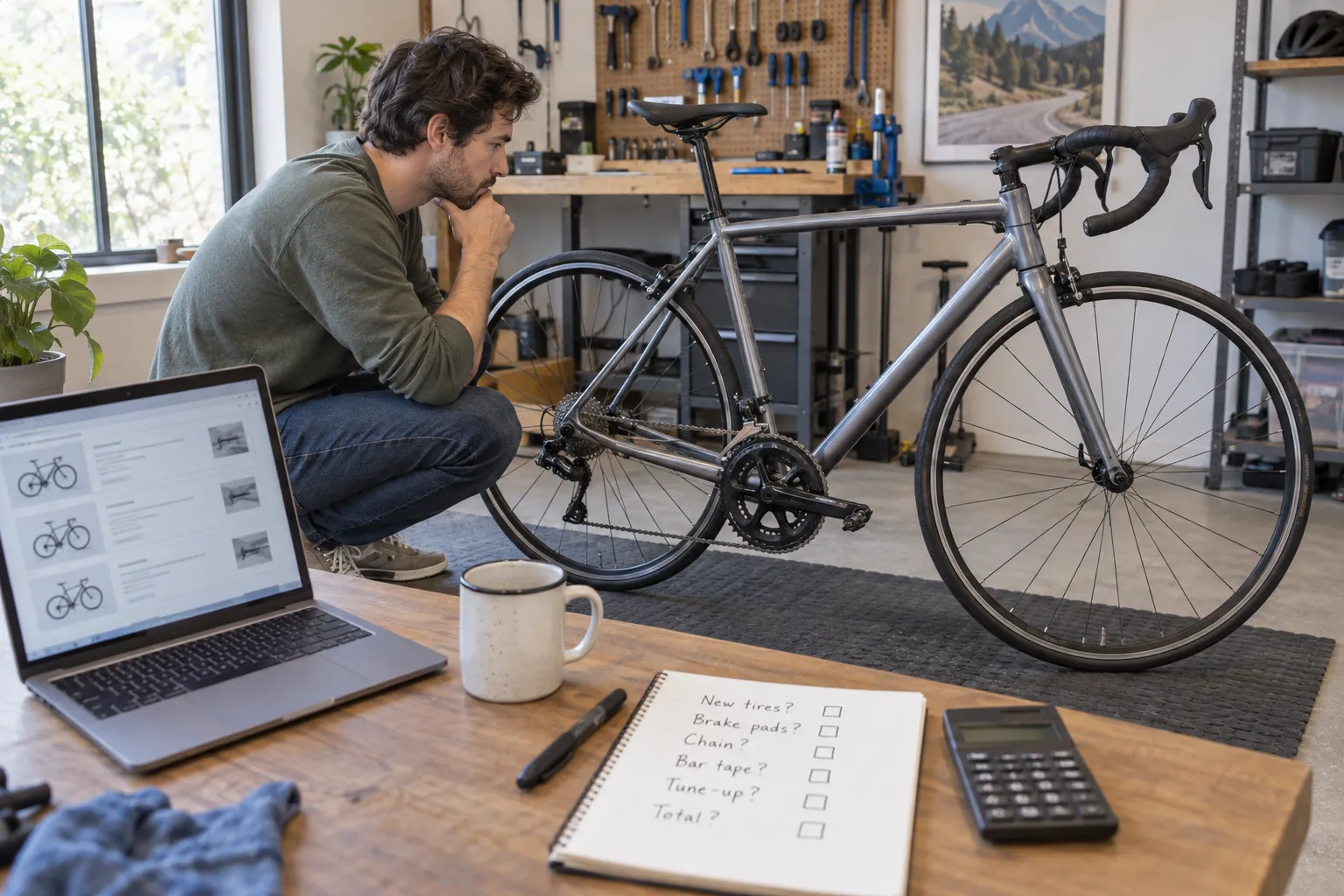
Build a useful comparison set
Search sold listings, local classifieds, consignment shops, and dealer used stock. A comparison only earns a place on your list if it is close on the details that change value:
- the same model generation or a genuinely similar frame;
- the same frame size;
- similar brake type and drivetrain level;
- similar wheel material and depth;
- broadly similar age and visible condition;
- the same local market, where possible.
An active advert proves only what one seller hopes to receive. A completed sale is stronger evidence, although the public price may still omit a private negotiation. If sold prices are unavailable, track active adverts for a couple of weeks and note which disappear, which are reduced, and which remain unsold.
Do not compare a bare frame with a complete bike, a rim-brake model with a newer hydraulic-disc version, or an unusually small or large size with a common size without an adjustment. Ignore any advert that does not show enough detail to identify the frame and components.
Convert the advert into an all-in cost
Use this simple worksheet:
| Item | What to enter |
|---|---|
| Agreed bike price | The amount paid to the seller |
| Safety work | Brakes, damaged tyres, loose headset, wheel faults |
| Wear parts | Chain, cassette, chainrings, cables, bar tape |
| Fit changes | Stem, saddle, bars, pedals, professional help if needed |
| Missing essentials | Pump, spare tube, lights, helmet, repair kit |
| Travel or shipping | Include inspection and return risk |
| First-month total | Add every row |
Get local shop quotes for work you cannot assess or do yourself. Do not insert an optimistic zero simply because a fault has not been confirmed. If the chain is worn and you cannot verify the cassette, budget for both until an inspection shows otherwise.
Use the used road bike checklist at the viewing, and check how to tell if a chain is worn before treating a shiny drivetrain as a healthy one.
Make three prices, not one
Before contacting the seller, write down:
- Evidence-based value: the middle of your best comparable range.
- Opening offer: a respectful number that reflects visible work or uncertainty.
- Walk-away price: the most the bike is worth to you after repairs and fit changes.
Your walk-away price can be lower than market value if the bike is the wrong category, difficult to service locally, or leaves no budget for essentials. It can be near the top of the range for a rare size in excellent documented condition. This is judgment, not a formula.
Adjust for condition without guessing
Value rises when the seller can provide an original receipt, serial number, clear service records, replaced wear-part invoices, and detailed photographs. It falls when the ownership story is vague, the serial number has been removed, the bike cannot be test-ridden, or faults are dismissed as “just an adjustment.”
Treat these as reasons for professional inspection or a no-sale, not bargaining chips:
- a crack, deep gouge, bulge, soft spot, or suspicious repair in a frame or fork;
- crash damage around the bars, levers, fork, head tube, or rear derailleur;
- steering that binds or brakes that cannot stop the bike predictably;
- a serial number that is missing, altered, or inconsistent with the paperwork;
- a seller who will not let you confirm identity and ownership in a safe public setting.
Carbon damage can be difficult to judge visually. Trek’s current owner manual warns that carbon can conceal damage and advises stopping use after an impact until it has been inspected. That is a useful principle regardless of brand: uncertainty about a structural part is a safety issue, not an invitation to negotiate harder.
What depreciation rules miss
Rules such as “half retail after three years” are too blunt. Original retail price may have been inflated, the bike may have sold on discount, a newer version may have changed tyre clearance or serviceability, and local supply can move the market in either direction.
Component upgrades also rarely add their full purchase price. Give them value only when they are compatible, in good condition, and something you would otherwise buy. Keep original parts in the comparison: an expensive saddle that does not fit you may be worth nothing to your first-month plan.
A calm message to the seller
You do not need to win a debate. Try: “I found comparable bikes selling around this range. This one appears to need tyres and drivetrain work, so my all-in budget supports this offer. I understand if that does not work for you.”
If the seller declines, leave the door open and keep looking. The ability to walk away is your strongest protection against urgency, sunk-cost thinking, and a bike that almost fits.
Sources and further reading
- Editorial demand signal: recent discussion about new versus used and apparently overpriced older bikes
- Editorial demand signal: discussion about comparing used-bike advice with real local prices
- Manufacturer safety reference: Trek bicycle owner’s manual, March 2026
Reddit discussions were used to identify the question, not as proof of pricing or safety claims. No usernames or personal stories are reproduced here.
Your next step
Run one real advert through the worksheet, then take the road bike buying checklist and used-bike viewing checklist to the inspection.