What does groupset actually mean?
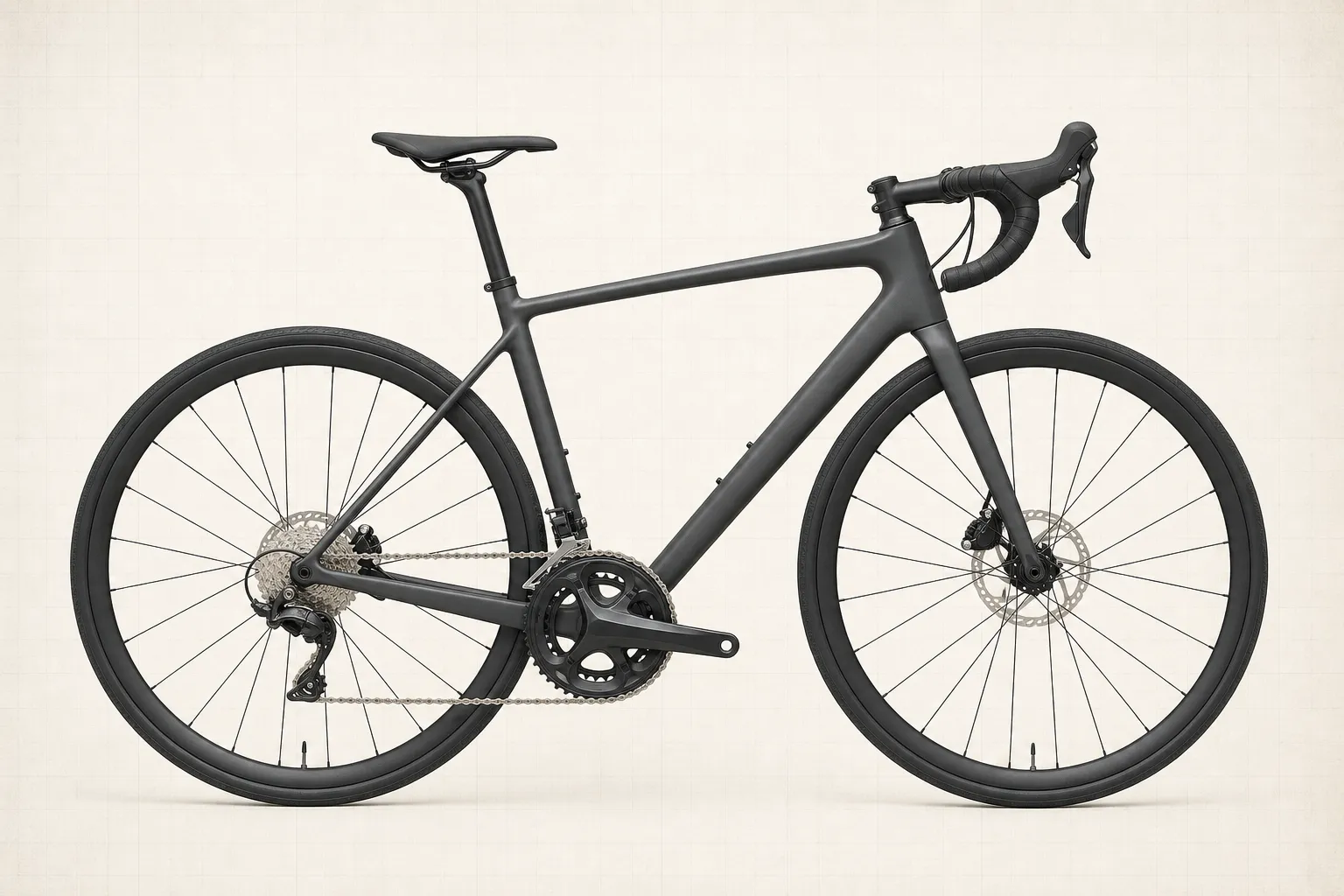
A road bike groupset is the family of shifting, braking, and drivetrain parts; beginners should compare gear range, brake control, compatibility, condition, and serviceability before chasing status.
 Field guide / what-does-groupset-actually-mean
Before you view or pay
Check fit, condition, and starter gear first
Use the buying checklist to choose the right path: used-bike viewing, first-bike fit and type, hidden repair costs, or starter gear.
A road bike groupset is the collection of parts that make the bike shift gears, transfer your pedalling force, and usually stop. For a beginner, the name on the groupset matters less than whether the bike fits, the gears are low enough, the brakes are easy to control, the parts are compatible, and the wear items are in good condition.
The short answer: when a listing says “Shimano 105 groupset” or “SRAM Rival,” read it as shorthand for a family of controls, derailleurs, crankset, cassette, chain, and brakes. Then check the actual parts on the bike, because complete bikes are often mixed, older models vary, and a neglected higher-tier groupset can ride worse than a well-set-up entry-level one.
Why beginners get stuck on this word
Recent community questions show the confusion clearly. A new rider asked how important a groupset is for a beginner while looking at used bikes with Claris and 105. Another first-road-bike buyer compared two similar models mainly through the Tiagra versus CUES spec difference. Older threads still ask the most basic version: what does a groupset bicycle mean?
That language is useful because it reveals the real anxiety: “Am I about to buy the wrong level of bike because I do not understand the part names?”
You do not need to become a component historian. You need to know what the word includes, what it does not guarantee, and which questions change your first few months of riding.
What parts are usually included
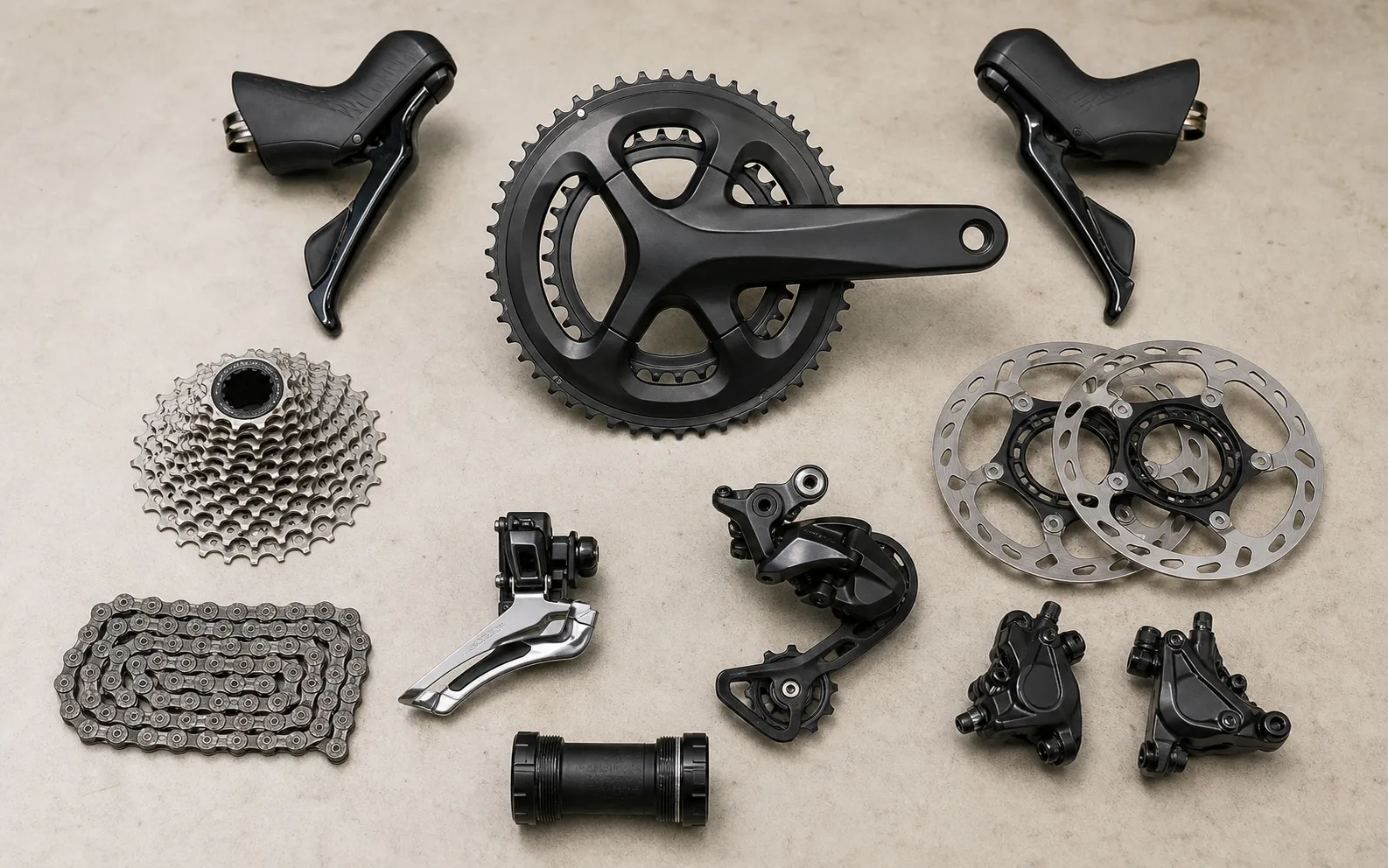
A road groupset usually includes:
- brake and shift levers on the handlebar;
- front and rear derailleurs, if the bike uses derailleurs;
- crankset and chainrings at the pedals;
- bottom bracket, which lets the crankset spin in the frame;
- cassette on the rear wheel;
- chain;
- brake calipers, and sometimes rotors or rim-brake hardware.
Pedals, wheels, hubs, tyres, saddle, handlebar, stem, and frame are usually not what people mean when they say groupset, even though they can matter just as much to the ride.
The exact boundary is not universal. Shimano’s road product navigation separates road groupsets from component categories such as drivetrains, brake systems, wheels, and pedals. SRAM’s road page lists series such as RED AXS, Force AXS, and Rival AXS as well as individual product categories like shifters, brakes, derailleurs, cranksets, cassettes, and chains. Campagnolo’s road catalogue likewise presents road groupsets and wheels as product families rather than one single part.
For plain-English use, that means “groupset” is a helpful shortcut, not a precise inspection report.
The name can hide a mixed build
Complete bikes are often sold with a headline groupset name even when some parts are not from the same tier. A bike may use one series for the shifters and derailleurs, a different crankset, a third-party chain, non-series brakes, or an own-brand cassette. That is not automatically bad. It just means you should read the actual specification instead of trusting the largest word in the listing.
Use this quick check:
| Listing phrase | What to verify |
|---|---|
| “Full groupset” | Are levers, derailleurs, crankset, cassette, chain, and brakes all from the stated family? |
| “105-equipped” | Which parts are actually 105, and which are substituted? |
| “Upgraded drivetrain” | Was the upgrade compatible, and are wear parts fresh? |
| “Needs a tune” | Is it simple cable adjustment, or worn chain, cassette, rings, or brake parts? |
| “Electronic shifting” | Are batteries, chargers, firmware, buttons, and replacement parts available? |
If you are still learning the part names, open road bike anatomy for beginners beside the listing and match the words to the actual bike photos.
What a better groupset usually changes
Moving up a groupset range can bring lighter materials, extra rear sprockets, different brake options, crisper shift feel, electronic shifting, nicer lever shape, or wider compatibility inside that maker’s system. It can also raise replacement-part costs.
The important beginner point is narrower: the higher name is not automatically the better first bike.
Ask these five questions before treating the groupset as decisive:
- Can you reach and control the brakes? A bike that fits poorly or puts the levers out of reach is the wrong bike, even with impressive parts.
- Are the easiest gears low enough? Local hills care more about chainring and cassette sizes than status words.
- Are the brakes predictable? Well-set-up brakes you can modulate matter more than a name you cannot control.
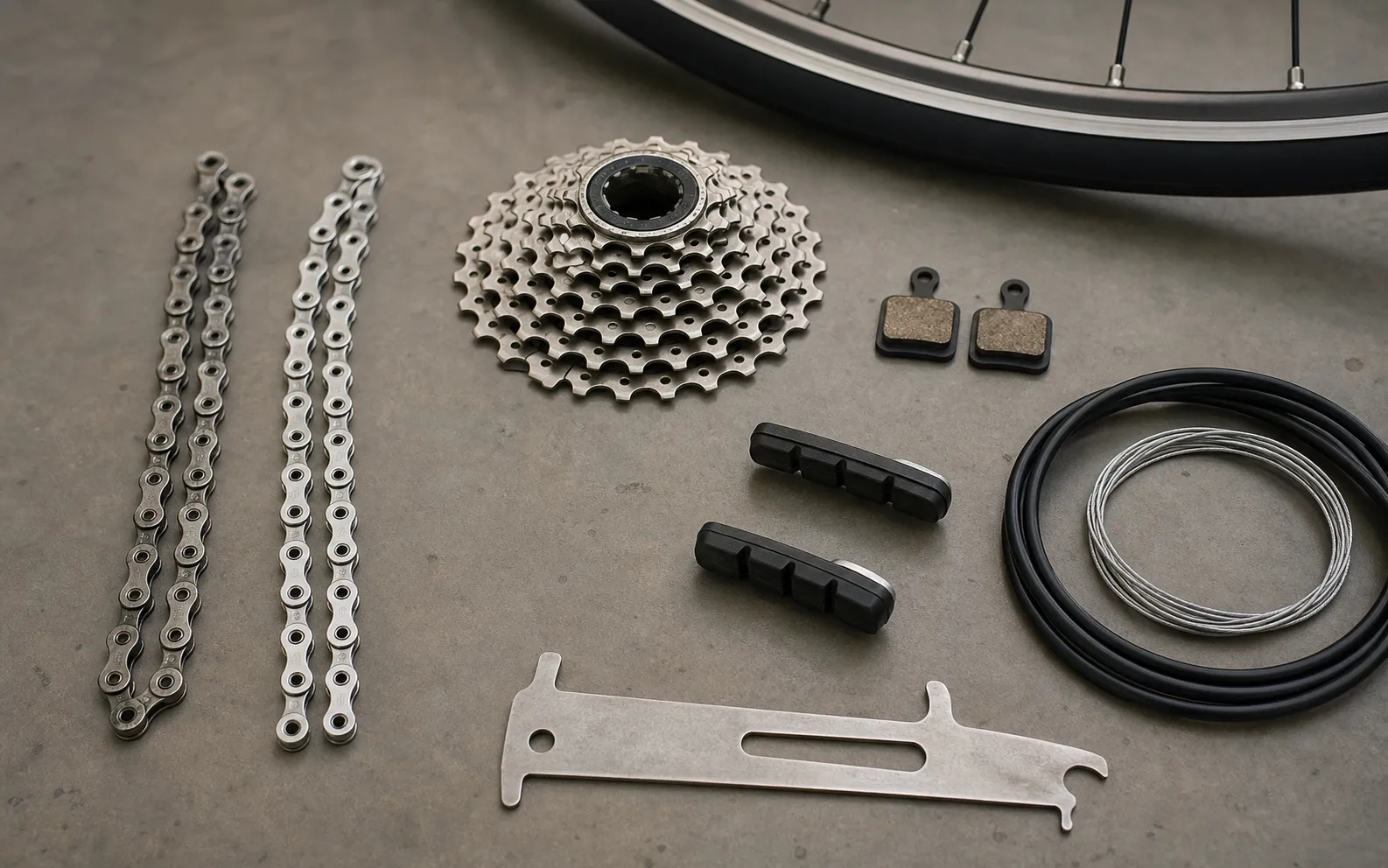
- Are wear parts healthy? A worn chain and cassette can make a premium drivetrain shift badly.
- Can your shop service it? Availability of chains, brake pads, cassettes, cables, hoses, batteries, and small parts matters after the purchase.
Shimano publishes a live product compatibility site because brake, drivetrain, cassette, derailleur, freehub, and cable combinations are not all interchangeable. That is the sober version of the lesson: groupsets are systems.
What matters most on a first road bike
For a first road bike, the groupset should support the ride you want. It should not distract you from the bigger decision.
If you are comparing two bikes, prioritize:
- Fit and control access: can you ride from the hoods and brake confidently?
- Gear range: does the smallest gear suit your hills and current fitness?
- Brake condition: do the brakes engage smoothly, evenly, and without contamination or damaged rims or rotors?
- Tyre clearance and comfort: can the bike use tyres that make your roads feel manageable?
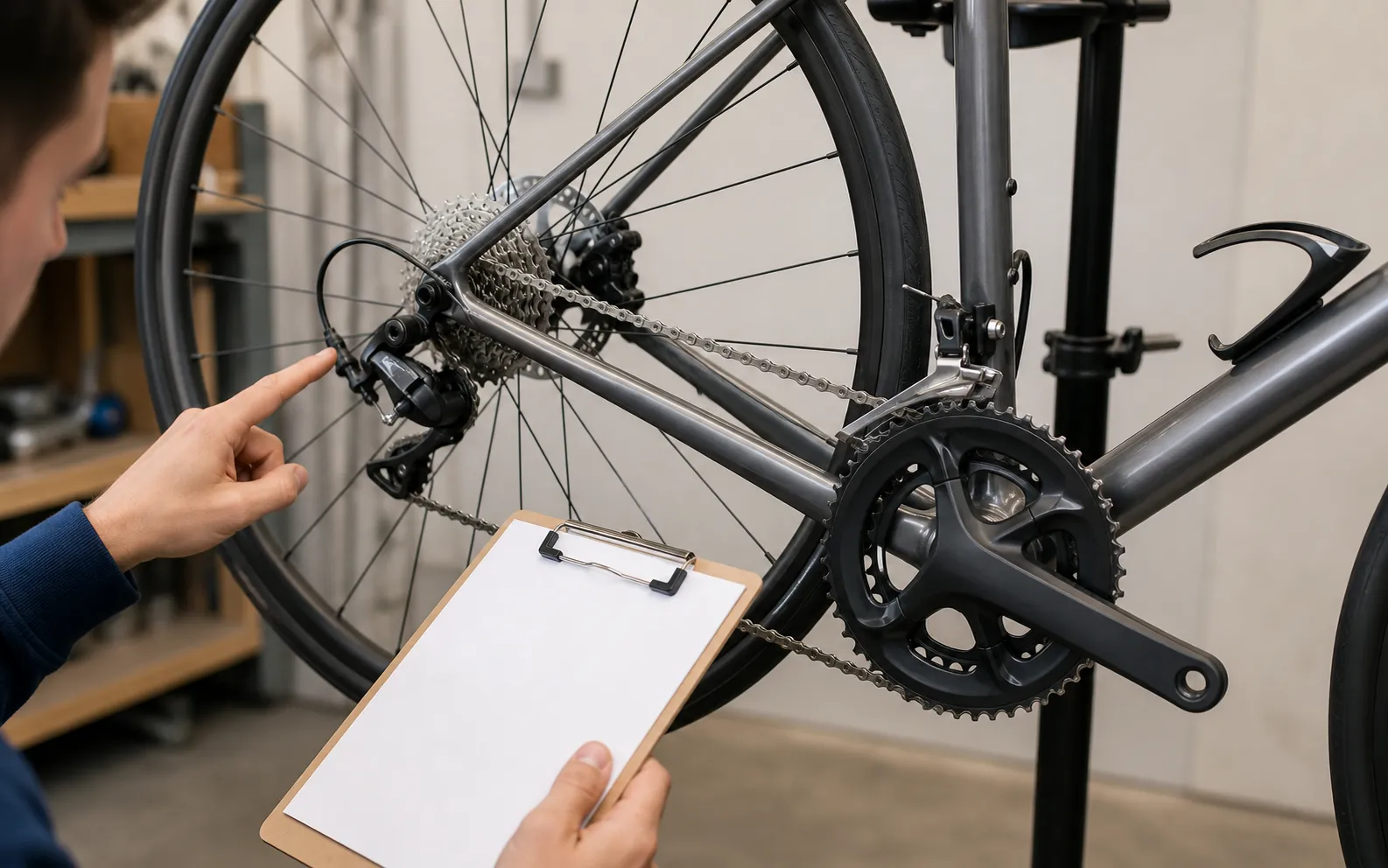
- Maintenance condition: chain wear, cassette wear, cables, pads, rotors, and derailleur hanger alignment can change the real cost.
- Local support: can a nearby shop work on the system without hunting rare parts?
How to choose your first road bike walks through the full bike decision. This post is just the groupset translation layer.
A simple beginner translation table
Use this table when a listing throws component language at you:
| Term | Plain meaning | Beginner takeaway |
|---|---|---|
| Groupset | The shifting, drivetrain, and usually braking family | Useful shorthand, but inspect the real parts |
| Drivetrain | Parts that move power from pedals to rear wheel | Chain, crankset, cassette, and derailleurs need to work together |
| Cassette | Stack of rear sprockets | Larger biggest sprocket usually gives an easier climbing gear |
| Crankset | Pedal arms and front chainrings | Smaller small ring helps climbing |
| Derailleur | Mechanism that moves the chain between gears | Must match the shifter and gear range |
| Hydraulic disc brakes | Brakes moved by fluid pressure | Powerful and common, but service needs the right parts and knowledge |
| Mechanical shifting | Cable-operated gear shifting | Simple and common, but cables and setup still matter |
| Electronic shifting | Battery-powered shift buttons and derailleurs | Can shift beautifully, but check charger, batteries, parts, and support |
None of those words answers the whole buying question alone. They just help you ask better questions.
When to stop guessing
Stop and get bike-shop help if a bike has mixed brake parts, unknown hydraulic hoses, electronic shifting without chargers, a rear derailleur stretched near its limit, a chain that skips under load, a cassette with hooked or shark-fin teeth, a wheel that does not match the cassette, or any brake setup you cannot identify.
Also be careful with used-bike upgrades. A seller may honestly say “upgraded groupset” without knowing whether the cassette range, derailleur capacity, chain length, brake lever pull, hose fittings, or freehub body are correct. If the bike does not shift and stop cleanly during a test ride, treat that as a cost and safety question, not a bargaining phrase.
One focused next action
When you next read a bike listing, do not ask “is this groupset good?” first. Ask: what are the shifters, brakes, crankset, cassette, chain, and derailleurs; are they compatible; are they worn; and do they give me the control and easy gears I need?
Then test the bike like a rider, not a spec sheet. Reach the brakes, shift lightly through the gears, listen for skipping, and choose the bike that makes ordinary riding feel calm. If the controls themselves are confusing, read how to use road bike gears before the test ride.
Sources and further reading
- Shimano road component and groupset navigation
- Shimano product compatibility information
- SRAM road groupsets and components
- Campagnolo road wheels and groupsets
- r/cycling reader context: how important is groupset for a beginner cyclist?
- r/whichbike reader context: comparing first-road-bike groupsets
- r/bicycling reader context: what does a groupset bicycle mean?