Endurance bike or race bike for a beginner?
Choose between an endurance and race road bike by comparing fit, handling, tyre clearance, gearing, and the rides you actually plan to do.
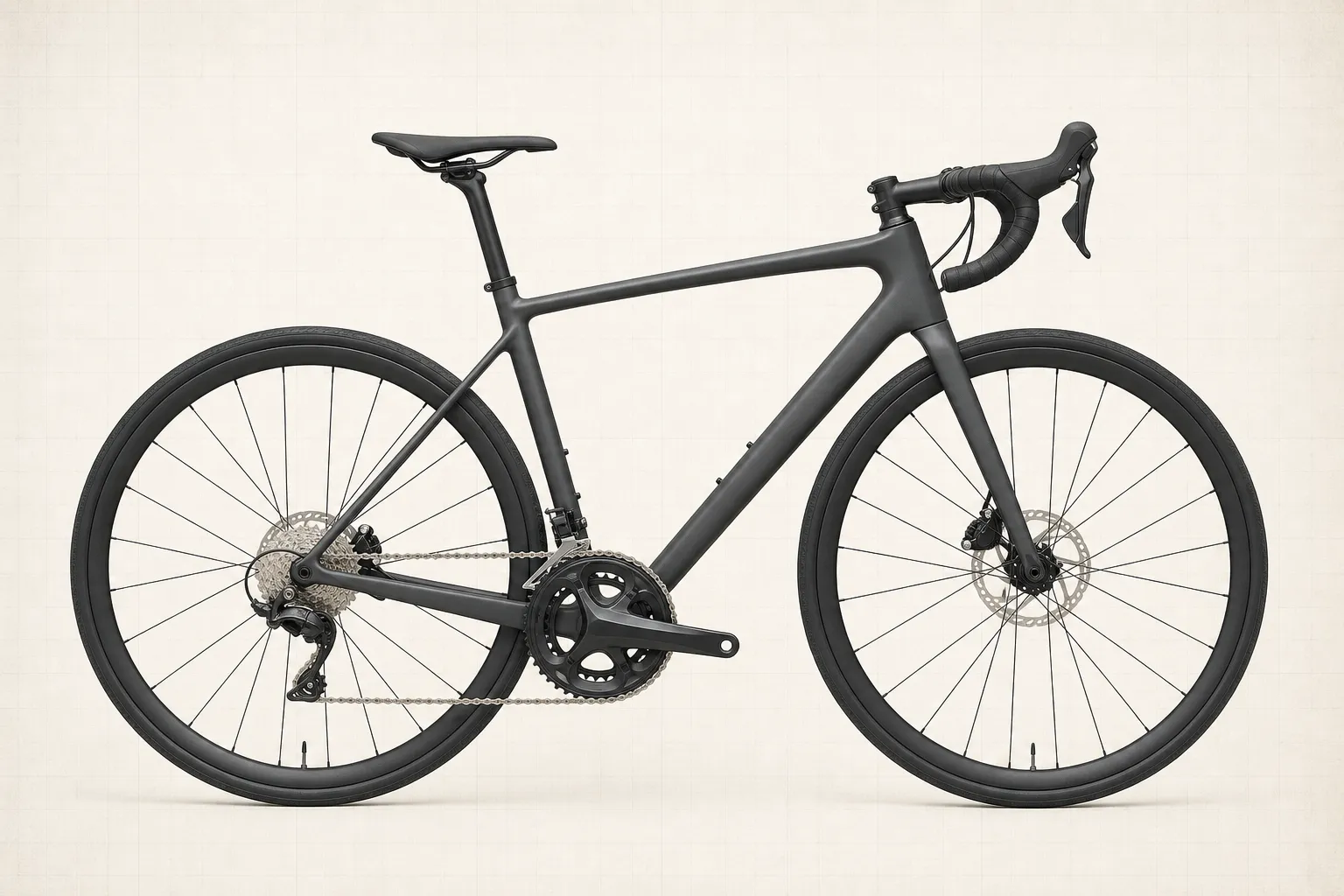 Field guide / endurance-bike-or-race-bike-for-a-beginner
Before you view or pay
Check fit, condition, and starter gear first
Use the buying checklist to choose the right path: used-bike viewing, first-bike fit and type, hidden repair costs, or starter gear.
An endurance road bike is often the easier place to start, but “beginner” does not automatically mean “endurance.” The right choice is the bike that fits you, behaves predictably, and suits the roads and riding you genuinely want—not the category name printed on its product page.
The short answer: begin your search with endurance bikes if you value a less aggressive position, wider tyres, easier gearing, and calm handling. Consider a race bike if you specifically want its lower position and sharper response and can operate it comfortably. Test the complete bike; labels vary between brands.
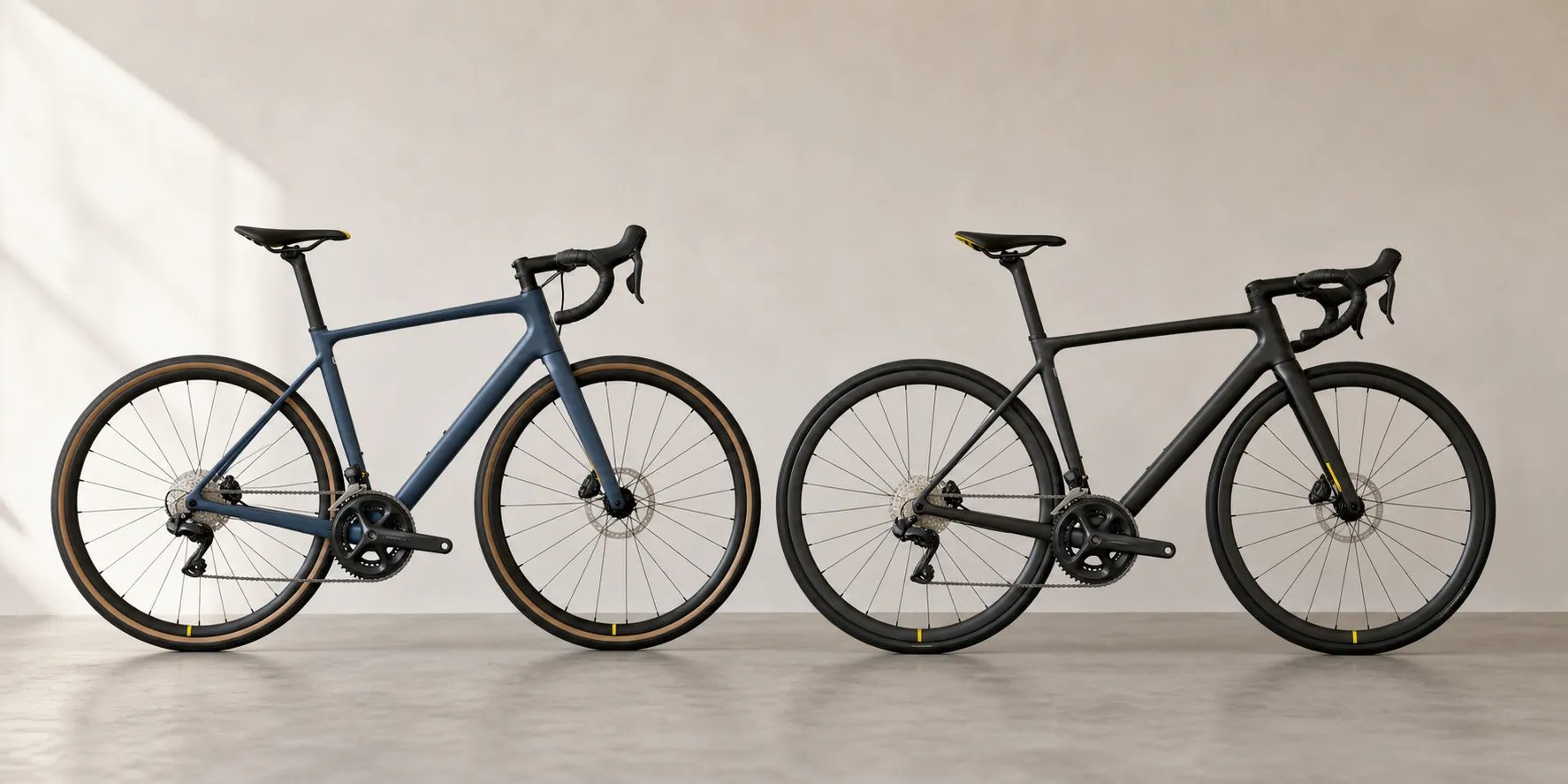
What the labels usually mean
Both types are road bikes. The difference is emphasis rather than a hard boundary.
| Compare | Endurance road bike | Race road bike |
|---|---|---|
| Riding position | Often a little taller and shorter | Often lower and more stretched |
| Handling | Commonly tuned for stability | Commonly tuned for quicker response |
| Tyres | Often more clearance for wider tyres | May prioritize lower weight or aerodynamics |
| Gearing | Frequently includes easier climbing gears | May assume faster riding or racing needs |
| Mounts | More likely to support mudguards or light luggage | Often fewer utility features |
“Often” matters here. Geometry, gearing, and tyre clearance can overlap, so compare the actual specifications and test ride rather than relying on the category alone.
Start with your position, not the frame label
A road bike is a poor choice if you cannot comfortably reach the brake controls, look ahead, steer steadily, or use the available hand positions. A race bike that fits can feel better than an endurance bike in the wrong size. An endurance bike is not comfortable merely because the marketing says it is.
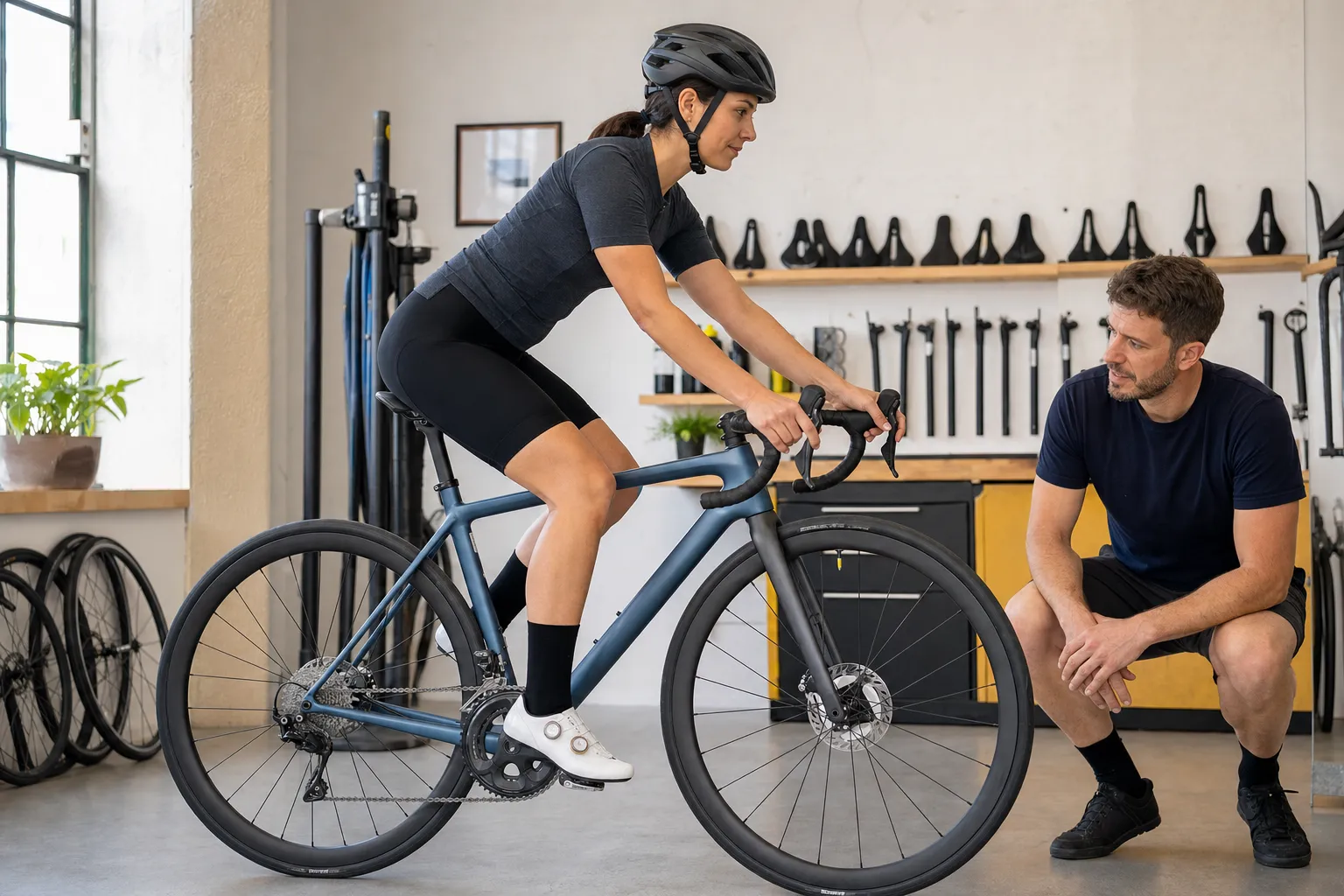
Ask a shop to help you compare:
- how far you reach to the brake hoods;
- how much handlebar drop you can use without straining;
- whether you can brake securely from your normal hand position;
- whether the front wheel feels stable during slow turns;
- whether any discomfort appears during a meaningful test ride.
Fit changes such as a small stem or saddle adjustment can refine a suitable bike. They should not be used to rescue a frame that is clearly the wrong size or style.
Match the bike to your ordinary roads
Choose for the rides you will repeat, not the imaginary fastest day.
An endurance bike is a strong starting direction when your riding will include long recreational days, rough tarmac, steep climbs, uncertain fitness, mudguards, or a preference for predictable handling. Wider tyres used at an appropriate pressure can also improve comfort and grip on imperfect surfaces.
A race bike can make sense when fast group rides, racing, a low aerodynamic position, and responsive handling are genuine priorities. It still needs suitable gearing, tyre clearance, and a position you can sustain. Buying the racier bike because you hope it will force you to become flexible or fast is an expensive experiment.
Do not trade fit for a better component
Beginners often compare a carbon frame with an aluminium frame, or one groupset tier with another, before confirming the fundamentals. Those details matter less if the bike is uncomfortable, geared too hard for local hills, or unable to accept the tyres and accessories your routes require.
Prioritize in this order:
- a suitable size and controllable position;
- safe, predictable handling and braking;
- gearing for your terrain and current ability;
- tyre clearance and practical mounting needs;
- reliable components that can be serviced locally;
- weight, aerodynamics, and upgrades.
Save part of the budget for a helmet, lights, bottles, repair equipment, suitable pedals, and an initial service or fit adjustment. The best specification sheet is not the best complete setup.
The decision to take into a bike shop
Tell the shop what surfaces, hills, distances, weather, and riding groups you expect. Ask to test a correctly sized endurance bike and race bike close together. Notice control and comfort before speed.
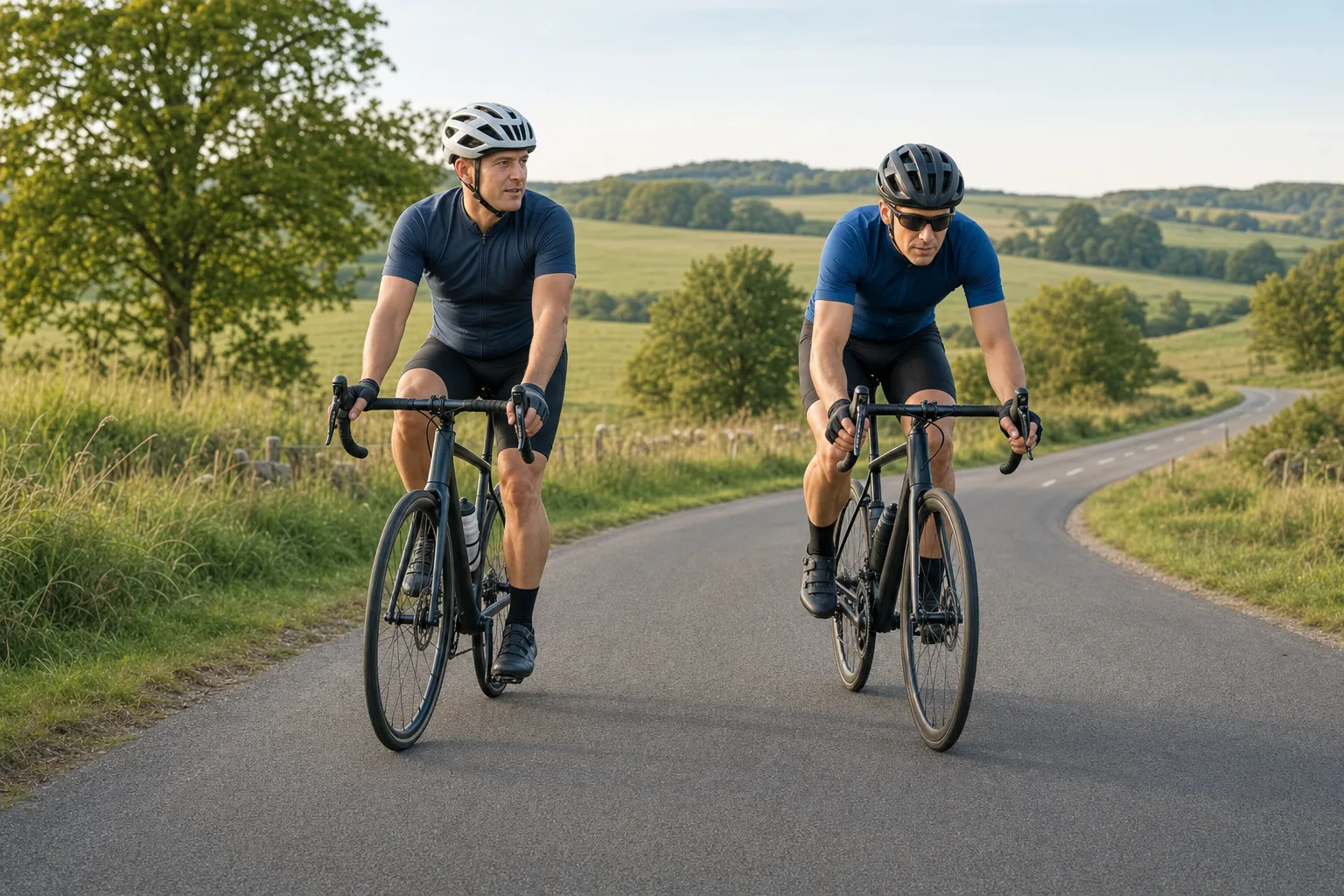
If both feel good, the endurance model is usually the more flexible first choice. If the race bike clearly matches your intended riding and feels natural rather than merely exciting, being a beginner is not a reason to reject it.
For the complete buying process, including budget, fit, test rides, brakes, and used-bike checks, read how to choose your first road bike.