You do not need clipless pedals to be a real cyclist
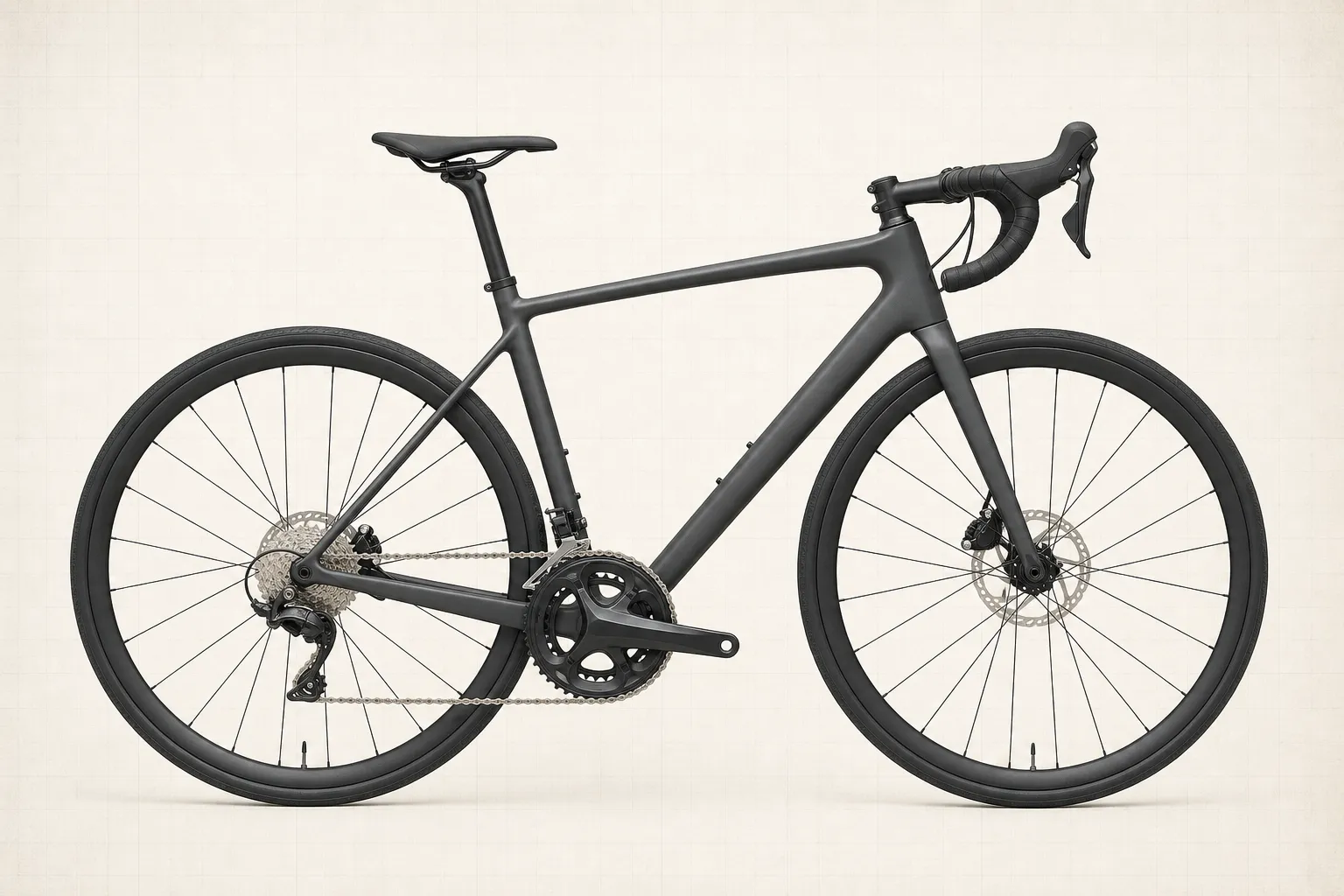
Flat pedals are a valid road-bike setup for beginners; use clipless pedals only when they solve a real problem and you are ready to practise release safely.
 Field guide / you-do-not-need-clipless-pedals-to-be-a-real-cyclist
Before you buy
Check the starter kit first
Print the one-page buying brief for helmet, lights, water, phone, and repair compatibility before comparing upgrades.
You do not need clipless pedals to be a real road cyclist. Flat pedals are a legitimate beginner setup, especially while you are still learning traffic awareness, braking, cornering, shifting, route choice, and stopping calmly.
The short answer: use the pedals that let you ride safely and often. Clipless pedals can later add foot security, repeatable foot placement, and a connected feel, but they are optional equipment, not proof that you belong on a road bike.
Why this question feels loaded
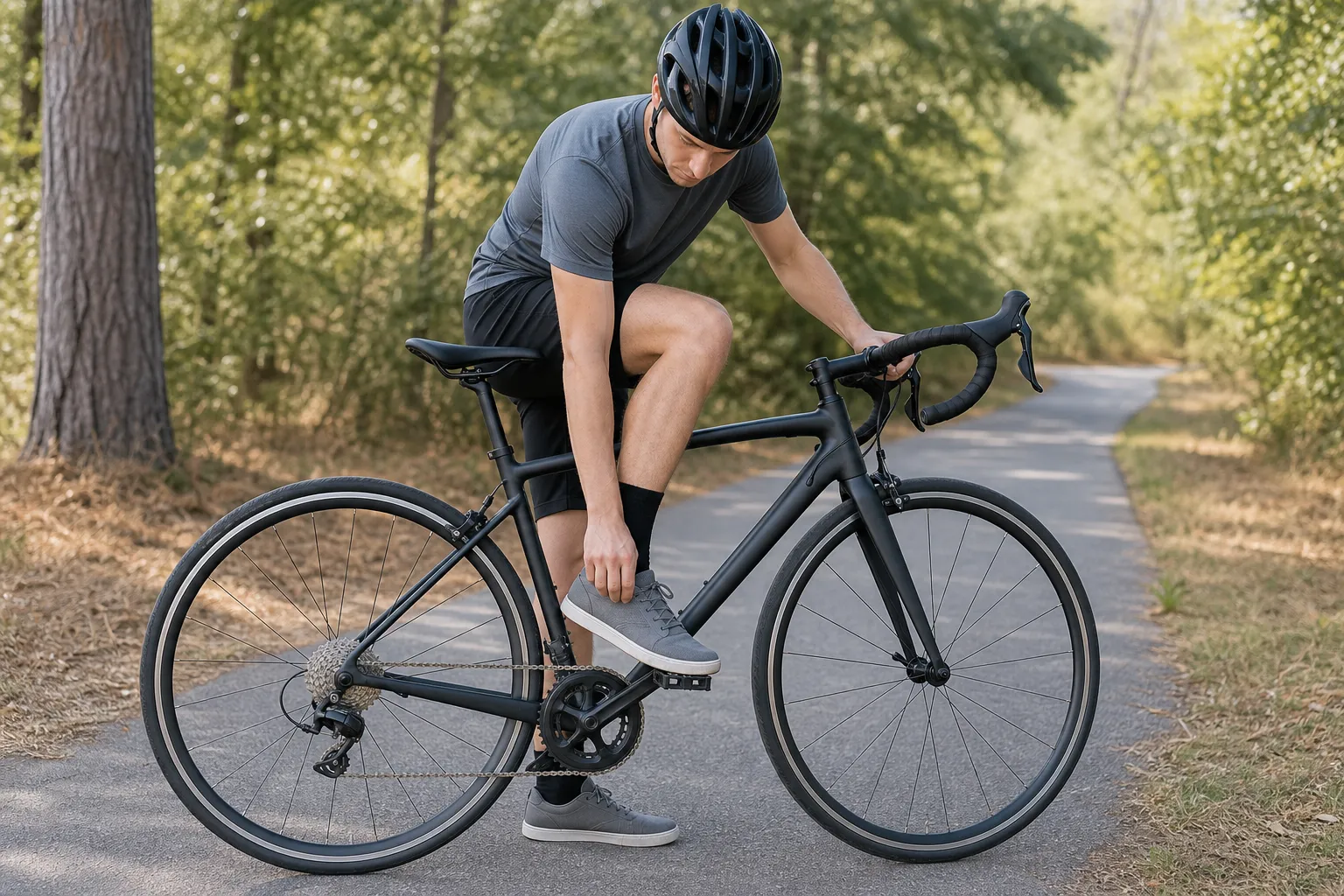
Recent beginner threads show the emotional weight behind the equipment question. A new road-bike buyer asked whether to choose clipless pedals or flats because they were scared of falling and not getting comfortable with clipless on a first road bike. Another rider asked how to get over the fear of falling while riding clipless, with replies circling around low tension, practice, and unclipping before stops.
That language matters because the real decision is not “am I a proper cyclist yet?” It is “does this pedal system make my next rides safer, calmer, or more enjoyable?”
If flat pedals are helping you learn, keep them. If you are riding regularly and your feet slip, you want more consistent foot placement, or you simply want to try the connected feel, clipless pedals can be worth learning. The point is choice, not status.
What clipless pedals actually add
Clipless pedals use a cleat on the shoe that engages with a matching pedal. Despite the name, they are the pedals that clip your shoe in; “clipless” originally separated them from older toe clips and straps.
The useful beginner benefits are practical:
- your foot returns to a similar place on the pedal each time;
- your shoe is less likely to slide off over rough road surfaces;
- a stiff cycling shoe may feel more supportive on longer rides;
- some riders like the connected feeling when climbing or riding out of the saddle.
The benefits are not magic. Research on the shoe-pedal interface is more modest than cycling folklore. Mornieux and colleagues reported no significant difference in net mechanical efficiency between tested pedal conditions, and active pull-up feedback reduced net efficiency in their study (PubMed abstract). Straw and Kram also tested shoe and pedal interfaces at submaximal cycling powers and reported no meaningful metabolic-cost advantage for cycling shoes with clipless pedals over the other tested conditions (Footwear Science abstract).
In plain English: clipless pedals may feel better, solve a foot-security problem, or suit a rider’s preference. They should not be sold to a beginner as a guaranteed speed upgrade.
When flats are the better choice for now
Stay with flat pedals for a while if you are still nervous about ordinary starts and stops, riding near traffic, using the brakes, choosing gears, or putting a foot down quickly.
Flat pedals are also sensible if your rides include lots of walking, errands, cafe stops, short commutes, family riding, mixed footwear, or routes where you stop often. They let you keep attention on the road instead of on the release mechanism.
This matches the bigger starter-gear principle in the cycling gear you can safely postpone: buy the kit that solves today’s ride, not the kit that proves you are serious. The first proof that you are a cyclist is riding the bike.
When clipless is worth trying
Try clipless pedals when the rest of the bike feels ordinary enough that one new skill will not overload you. Good signs include:
- you can start, slow, and stop without rushing;
- you can signal, brake, and look behind without wobbling badly;
- you know which foot you usually put down first;
- you have a traffic-free place to practise;
- you are willing to stop using them if release feels unreliable or painful.
If bike fit is already causing numbness, sharp pain, or one-sided discomfort, do not use clipless pedals as a guessy fix. Cleat position changes the foot-pedal contact point, and discomfort that repeats may need a qualified bike fitter, mechanic, or medical professional depending on the symptoms. Use beginner road bike fit and comfort to separate normal adaptation from warning signs.
The safe first practice session
Manufacturer instructions matter here because clipless pedals are a release system, not just a shoe choice. Shimano’s SPD-SL user manual tells riders to practise engaging and releasing before riding, first with one foot on the ground and the brakes applied, then on level ground until release feels natural. It also says to release cleats beforehand when riding slowly or approaching situations where you may need to stop, such as intersections, U-turns, uphill riding, or blind curves (Shimano SPD-SL user manual).
Use that as the beginner routine:
- Put the bike somewhere flat, quiet, and away from traffic.
- Hold a wall, doorway, fence, work stand, or have a helper steady the bike.
- Keep one foot on the ground and apply the brakes.
- Clip in and twist out with the other foot until the motion is boring.
- Repeat on the other side, even if you expect to unclip with only one foot on rides.
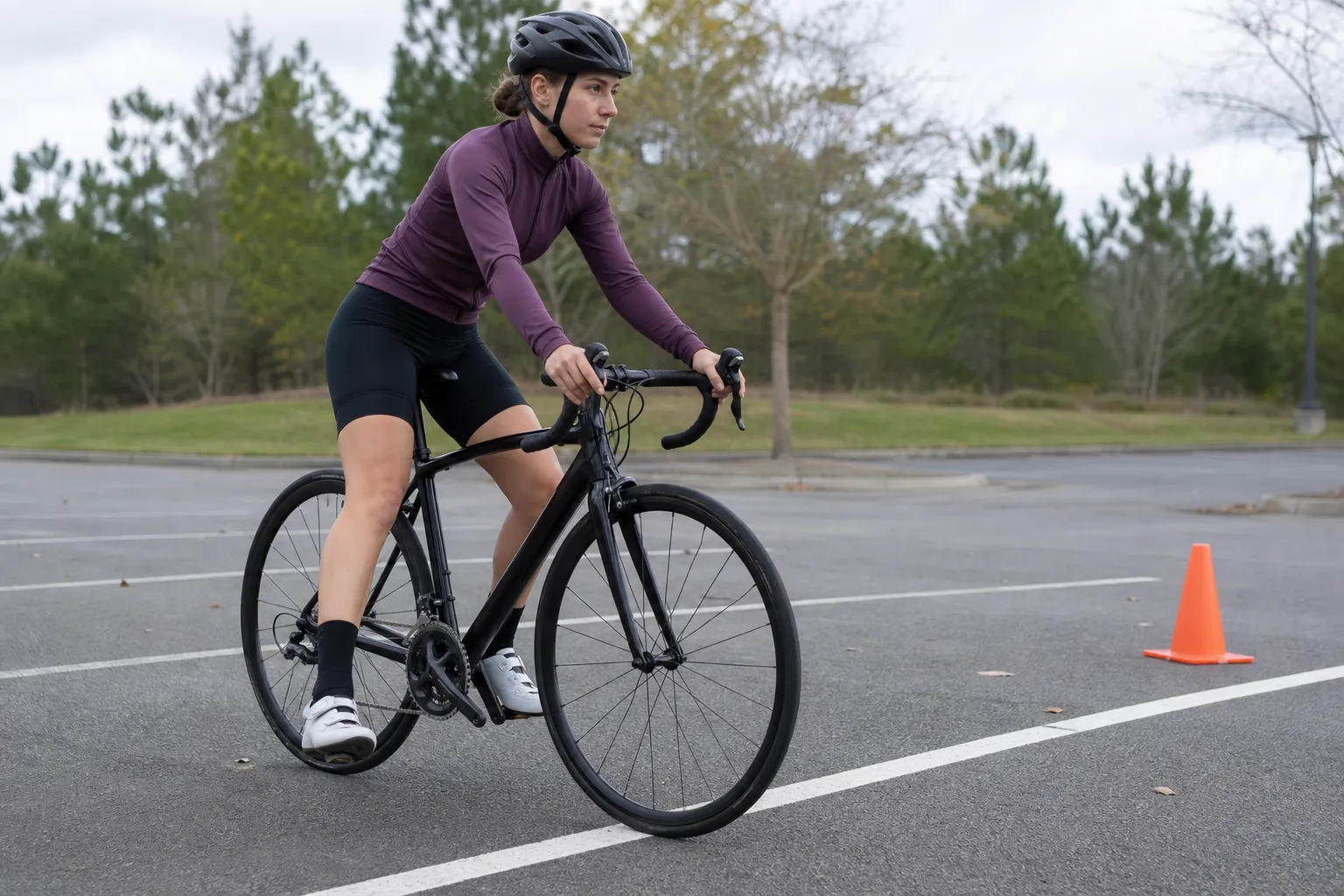
- Roll slowly in a clear practice area and unclip before each planned stop.
- Stop the session if release feels sticky, uneven, surprising, or painful.
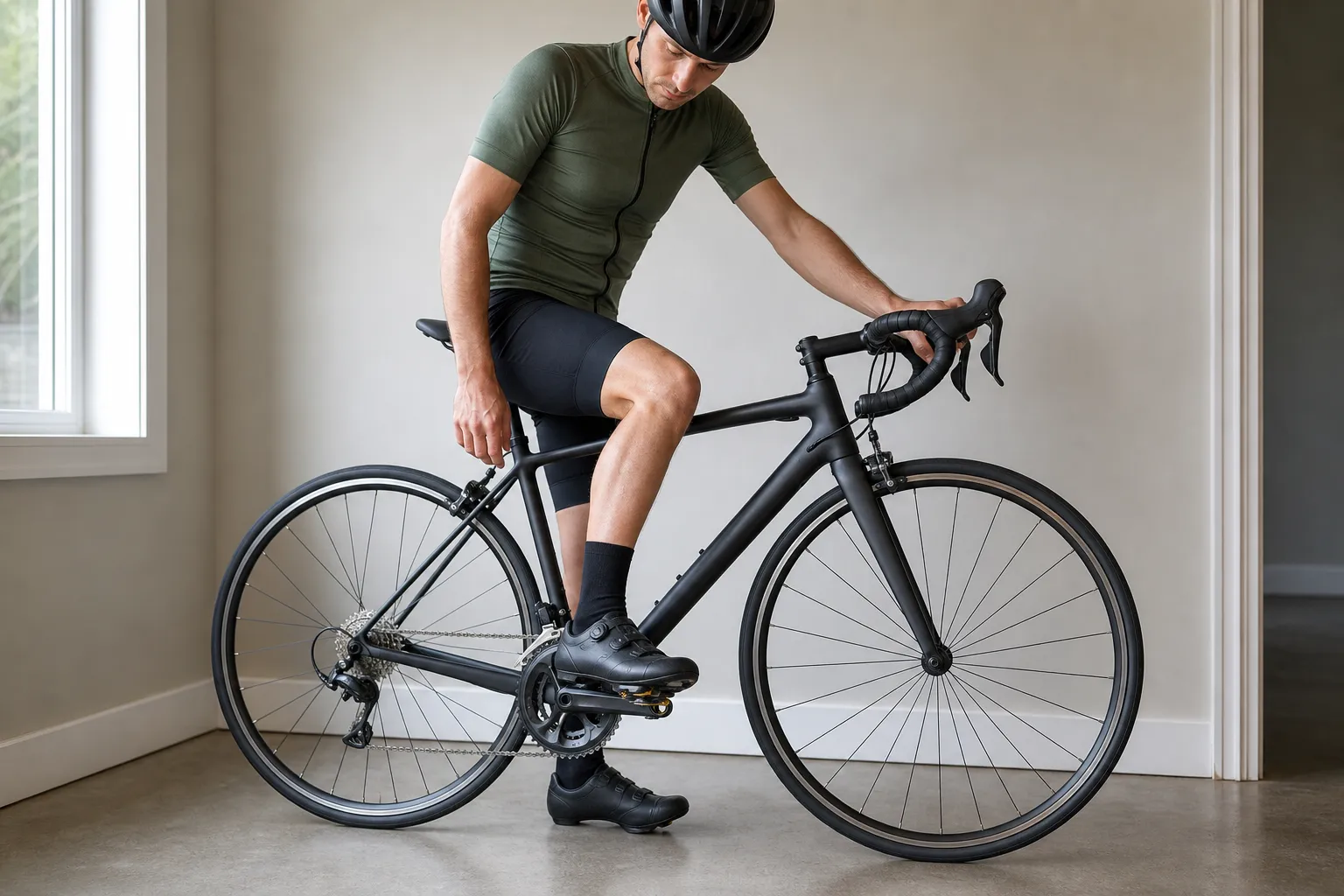
Many pedals allow release tension adjustment. Shimano’s SPD-SL dealer manual says spring tension should be adjusted as needed, left and right pedals should be set equally, and the adjustment bolt should not be turned past the maximum or minimum indicator (Shimano SPD-SL dealer manual). If you do not understand your specific pedal’s adjustment, ask a shop to show you rather than guessing.
The habit that prevents most beginner panic
Unclip before you need the foot.
Do not wait until the bike has almost stopped and your balance has already chosen a side. When you see a junction, tight U-turn, steep ramp, traffic queue, blind bend, cafe stop, or confused moment ahead, release one foot early and hover it ready.
Also check wear and dirt. Shimano says cleats wear and should be replaced when release becomes much harder or much easier than when new; the same user manual tells riders to keep bindings and cleats free of dirt and debris for proper engagement and release. A clipless setup that no longer releases consistently is not a confidence test. It is a maintenance or setup problem.
A simple decision table
| Your current situation | Sensible pedal choice |
|---|---|
| You are learning starts, stops, braking, and road position | Flat pedals |
| You ride short errands or walk often during rides | Flat pedals, or delay clipless until a shop can explain walkable options |
| Your feet slip or wander on longer rides | Consider clipless after practice |
| You want to try clipless but fear falling | Practise stationary release first, then empty-car-park stops |
| Release feels inconsistent or painful | Stop and get setup help |
| You feel pressured because “real cyclists clip in” | Ignore the pressure |
One focused next action
For your next ride, choose the pedal setup that makes the ride calmer. If that is flat pedals, ride them without apology. If that is clipless, spend one quiet session practising clip in, twist out, unclip early, stop, and put a foot down before you take them into traffic.
For the broader starter-kit decision, read essential road cycling gear: what you need and what can wait. For the road habits that matter more than pedal status, use road cycling safety and road positioning.
Sources and further reading
- Shimano SPD-SL user manual
- Shimano SPD-SL dealer manual
- Mornieux et al.: Effects of pedal type and pull-up action during cycling
- Straw and Kram: Effects of shoe type and shoe-pedal interface on the metabolic cost of bicycling
- r/cycling reader context: the fear of clipless pedals as a beginner
- r/cycling reader context: getting over fear of falling while clipless