The cycling gear you can safely postpone
Avoid overspending on your first road-cycling setup by separating equipment you need now from upgrades that can wait for real rides.
 Field guide / cycling-gear-you-can-safely-postpone
Before you buy
Check the starter kit first
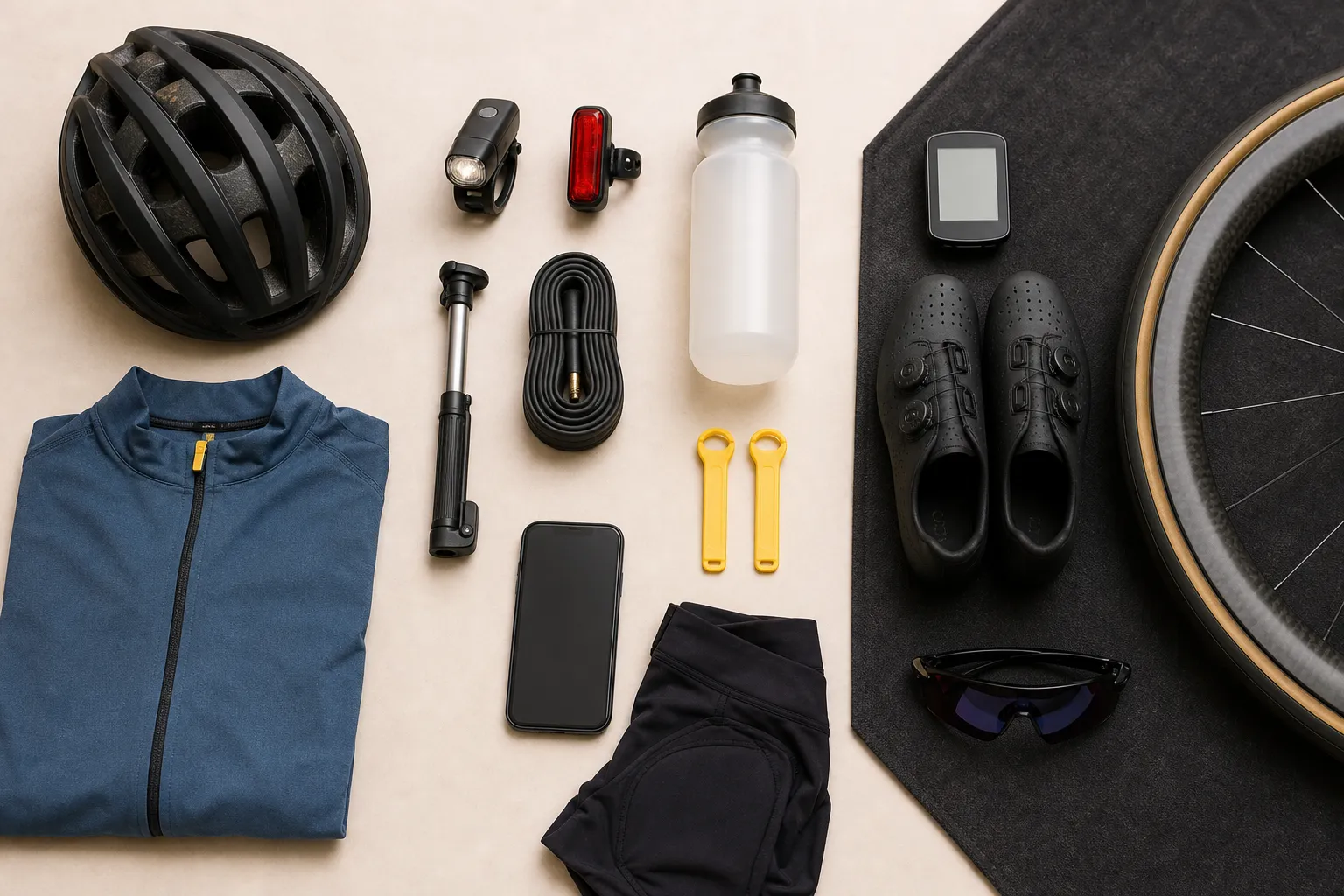
Print the one-page buying brief for helmet, lights, water, phone, and repair compatibility before comparing upgrades.
Most cycling equipment can wait. A new rider needs a safe bicycle, legal equipment, water, simple repair or rescue options, and clothing that cannot interfere with control. You do not need to buy the full visual identity of a cyclist before discovering how you like to ride.
The short answer: postpone performance upgrades, a dedicated bike computer, clipless pedals, a complete cycling wardrobe, and specialist tools until a real ride exposes a problem. Spend first on safety, bike reliability, basic roadside independence, and comfort that keeps you riding.
Buy for a job, not for belonging
Every purchase should answer a specific question: What problem will this solve on my next few rides?
If the answer is “serious cyclists own one,” wait. Equipment can improve comfort or convenience, but it cannot grant membership. A few ordinary rides will teach you more about your needs than a long shopping session.
Equipment that can usually wait
A dedicated bike computer
A phone, a written route, familiar roads, or riding with someone who knows the area may be enough at first. A computer becomes useful when phone battery life, weather protection, handlebar visibility, navigation, or sensor data is a repeated problem.
Do not buy a dashboard of metrics before deciding whether metrics help or distract you. If navigation is the need, compare devices on navigation quality and battery life rather than training features.
Clipless pedals and cycling shoes
Flat pedals are a valid way to ride a road bike. They make starting, stopping, and practising controls familiar while you learn the bicycle. Clipless pedals may later improve foot security or suit your preferences, but they introduce compatibility, fit, and release practice.
Wait until ordinary bike handling feels calm. If you change, practise clipping in and out away from traffic and follow the pedal maker’s setup instructions.
Carbon wheels and other performance upgrades
New wheels, lighter components, aerodynamic parts, and premium bearings are poor remedies for discomfort, worn equipment, unsuitable gearing, or inconsistent riding. Maintain the bike and build useful habits first.
An upgrade becomes easier to judge when you can describe the limitation: unreliable braking in your conditions, repeated tyre damage, unsuitable gearing, or a wheel that is worn or damaged. “Faster” without a specific need is difficult to measure and easy to overspend on.
A complete matching wardrobe
Use clothes that allow free movement, suit the weather, remain visible enough for the conditions, and cannot catch in the chain or wheels. Padded shorts, jerseys, gloves, glasses, and layers can be worthwhile when they solve discomfort, storage, grip, insects, glare, or temperature changes.
Buy one solution for the problem you actually experienced. You do not need several outfits before the first ride.
A workshop full of tools
Carry only tools and spares that match your bike and that you know how to use safely. At home, begin with inflation, cleaning, lubrication, and simple checks. Specialist cutting, pressing, bleeding, bearing, carbon, and high-torque work can wait until you have the instructions, tools, and skill—or can go to a mechanic.
A multi-tool is useful for some loose fasteners, but it cannot make structural damage or every roadside failure safe to ride.
What should not wait
Your exact minimum depends on local law, daylight, weather, route isolation, and the bicycle. Before an ordinary road ride, cover these jobs:
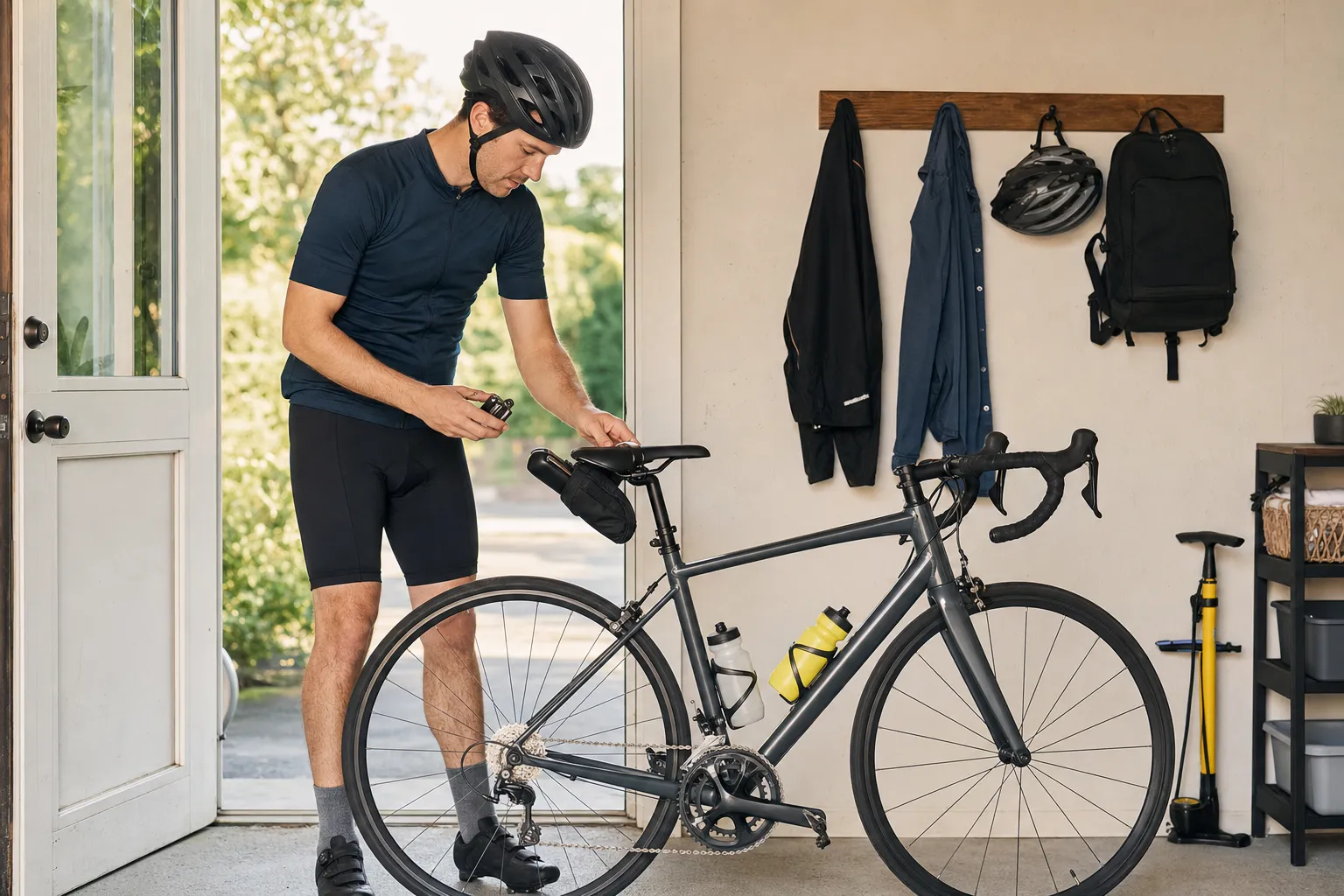
- Control: a roadworthy bicycle with functioning steering, brakes, wheels, tyres, and drivetrain.
- Protection and legality: a suitable helmet where required or chosen, plus required lights and reflectors.
- Hydration and communication: water, identification, and a charged way to call or pay for help.
- A likely puncture or breakdown: a compatible repair method, inflation, and the skill to use them—or a dependable rescue plan.
- Secure clothing: shoes, laces, trousers, and bags that cannot enter moving parts.
The detailed essential road cycling gear guide helps you build this minimum around the ride rather than a generic shopping list. If you are about to shop, use the starter gear checklist first so helmet, lights, water, phone, and compatible repair gear do not get crowded out by upgrades.
Use a three-ride waiting rule
Unless something affects immediate safety, wait through three ordinary rides before buying it. Write down each recurring problem: cold hands, no place for food, unreliable navigation, saddle discomfort, or insufficient carrying space.
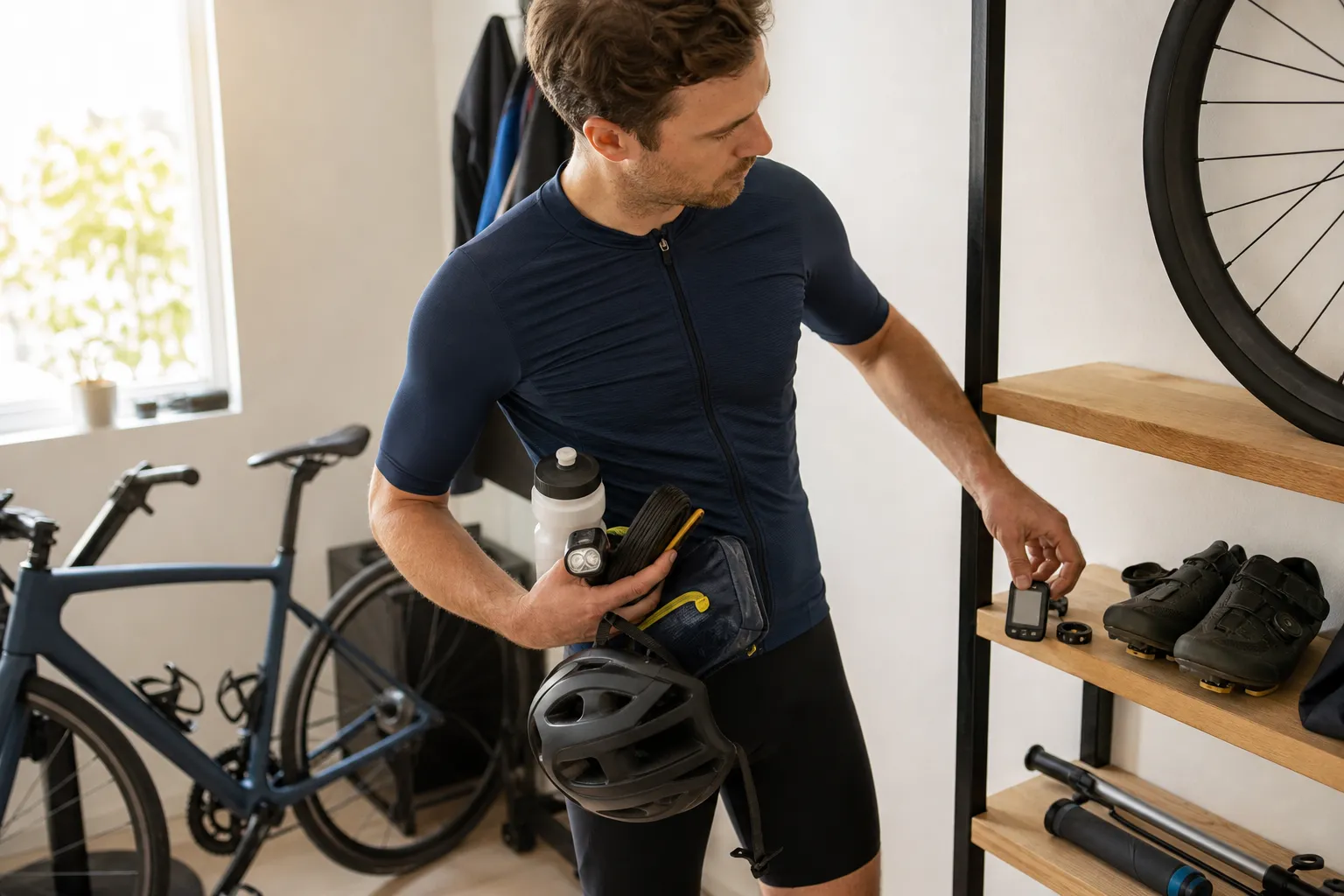
After three rides, buy the simplest item that addresses the repeated problem. This turns equipment into a response to experience instead of an entry fee.