Walking a steep hill is a cycling skill
Getting off and walking a steep road-bike hill can be the safest beginner choice when the gear, gradient, traffic, or effort is beyond today's ride.
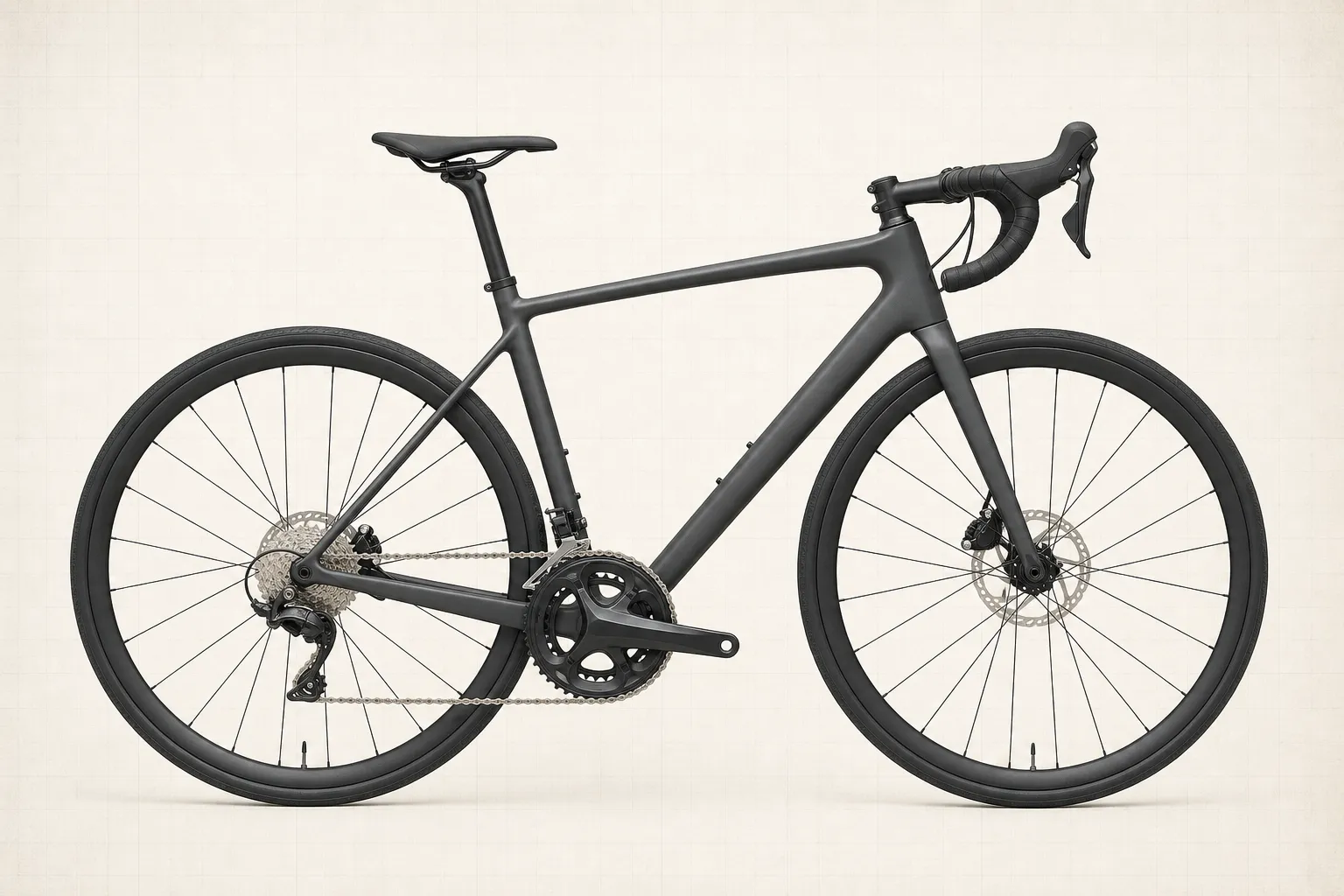 Field guide / walking-a-steep-hill-is-a-cycling-skill
Walking a steep hill is not failing at cycling. It is one of the choices a road cyclist can make when the hill, gear, traffic, surface, fatigue, or confidence level has gone past what is useful today.
The short answer: if you are running out of gear, wobbling, breathing in panic, or worrying about a hill restart, get off while you still have control. Walk on the safe edge, reset at the top or a flatter section, and treat the hill as information for next time.
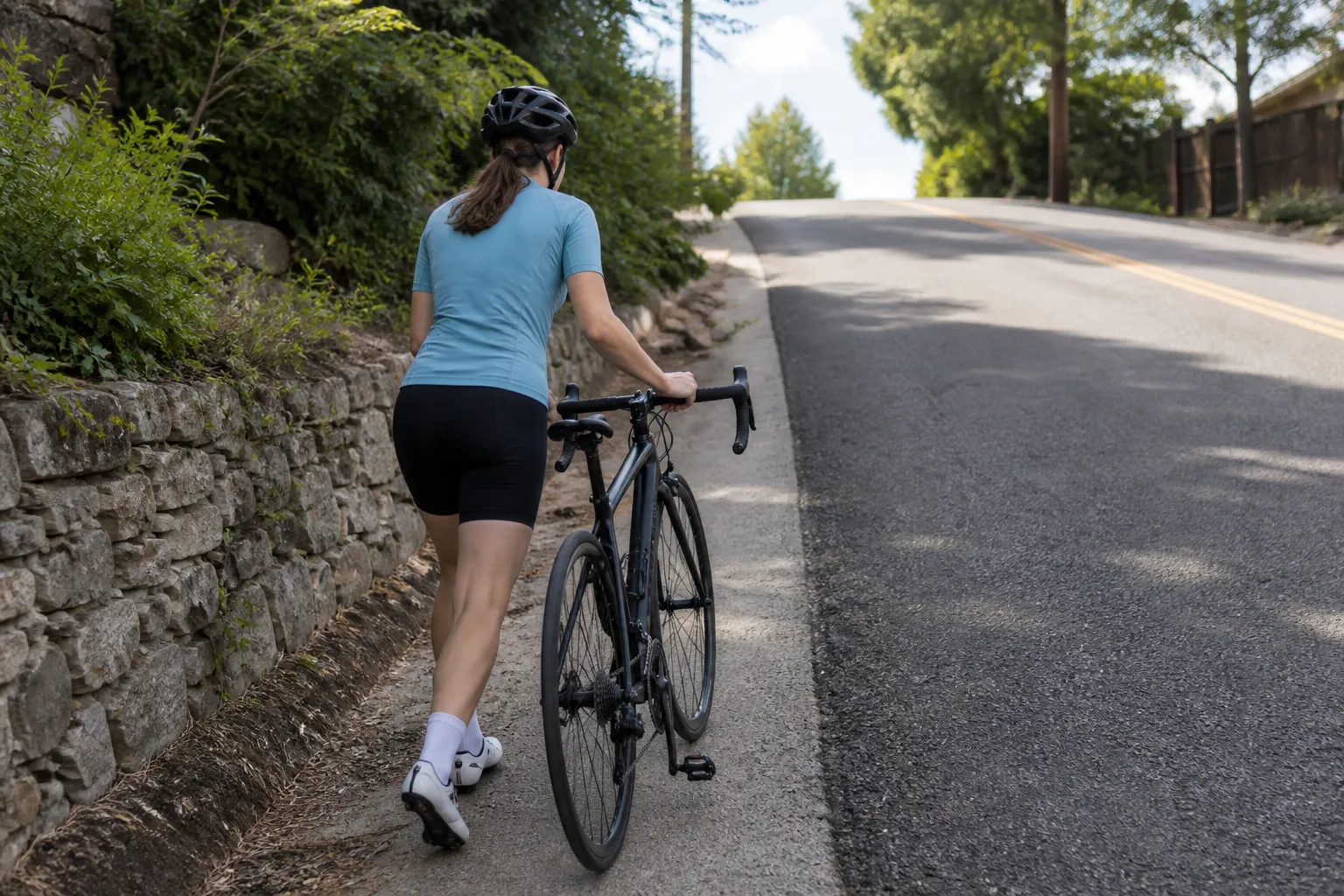
Why beginners ask this
Fresh beginner threads keep circling around the same worry: “Should I avoid steep hills?”, “Why can everyone else climb them?”, and “Is it embarrassing to get off?” In a current r/cycling discussion about hills as a beginner, replies focused on low gears, bike condition, saddle height, fitness, and the simple permission to walk a tough hill. Another recent thread from a new rider who was afraid of climbs showed the other side: hills often feel less intimidating after a few weeks of regular, manageable riding.
Both can be true. Walking today can be sensible, and improving over time can still be real.
Walk before the hill chooses for you
The mistake is not walking. The mistake is waiting so long that the bike is nearly stopped, your front wheel is wandering, and you have no calm place to put a foot down.
NHTSA tells road cyclists to be predictable, ride a working bike, choose lower-traffic routes when possible, and watch for hazards that may cause a fall (NHTSA bicycle safety). That applies on climbs too. A controlled stop at the edge is more predictable than a last-second swerve across the lane.
Use this boundary:
- If your pedal strokes are slowing but the bike is still straight, shift easier if you can do it smoothly.
- If you are out of gears, losing your line, or breathing too hard to think, look for a safe edge.
- Ease off the pedals, brake smoothly, and put one foot down before the bike stalls.
- Walk until the road, traffic, and your breathing feel manageable again.
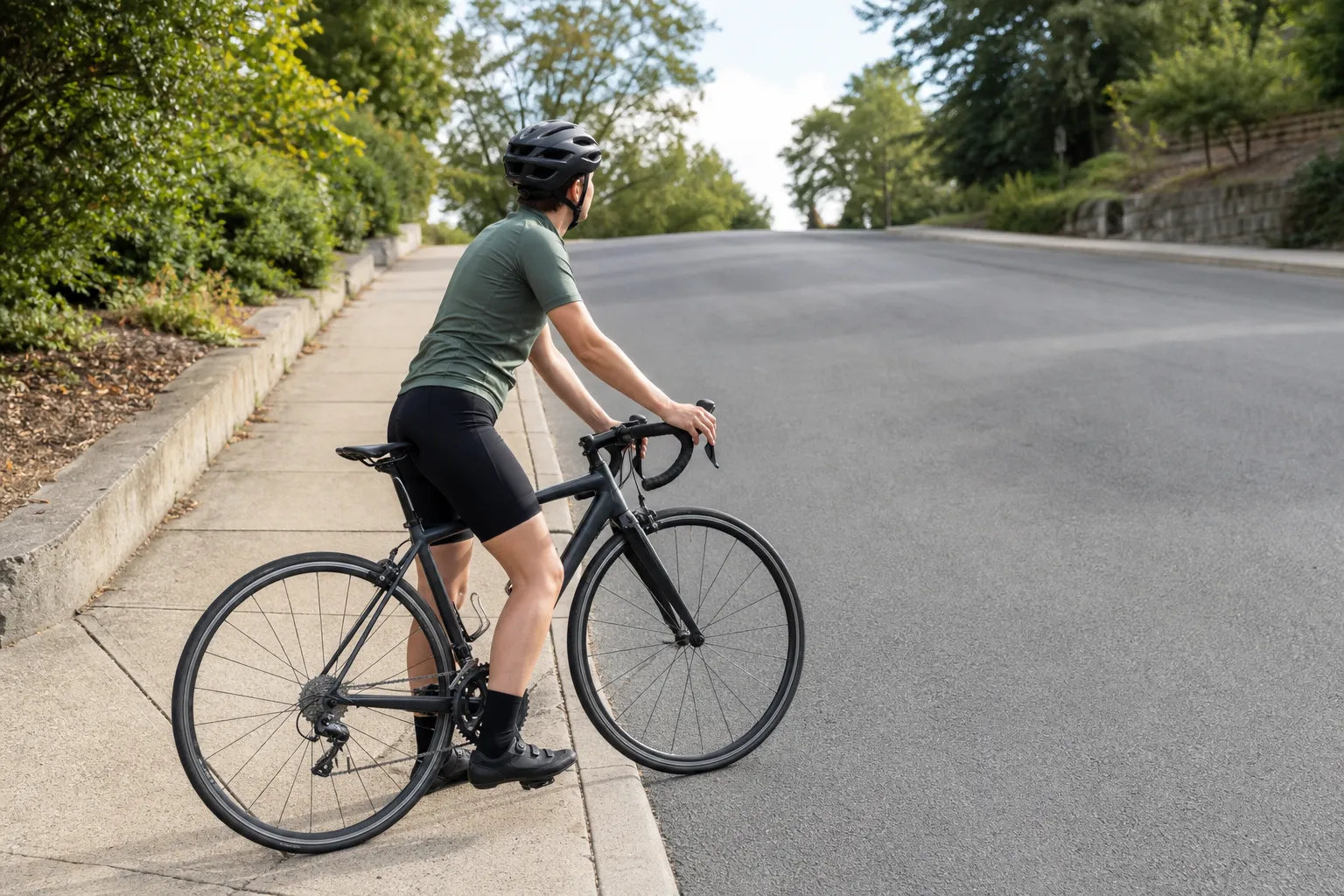
If you use clipless pedals, this boundary matters even more. Release one foot before the climb turns into a balance problem. The fuller clipless guide explains the same stopping habit in clipless pedals without the fear.
Try the easy gear before pride gets involved
Walking is valid, but it is still worth giving the hill a fair setup. Most beginner climbing problems become worse because the rider hits the slope too hard, too fast, or in too big a gear.
Cycling UK advises dropping to an easier gear just before the hill and starting easier rather than harder, while British Cycling tells riders to think ahead with gear selection and avoid shifting under heavy load, especially between chainrings (Cycling UK climbing guide, British Cycling climbing tips). The League of American Bicyclists gives the beginner version: when pedalling gets harder, shift into an easier, lower gear (League starting, stopping, and shifting).
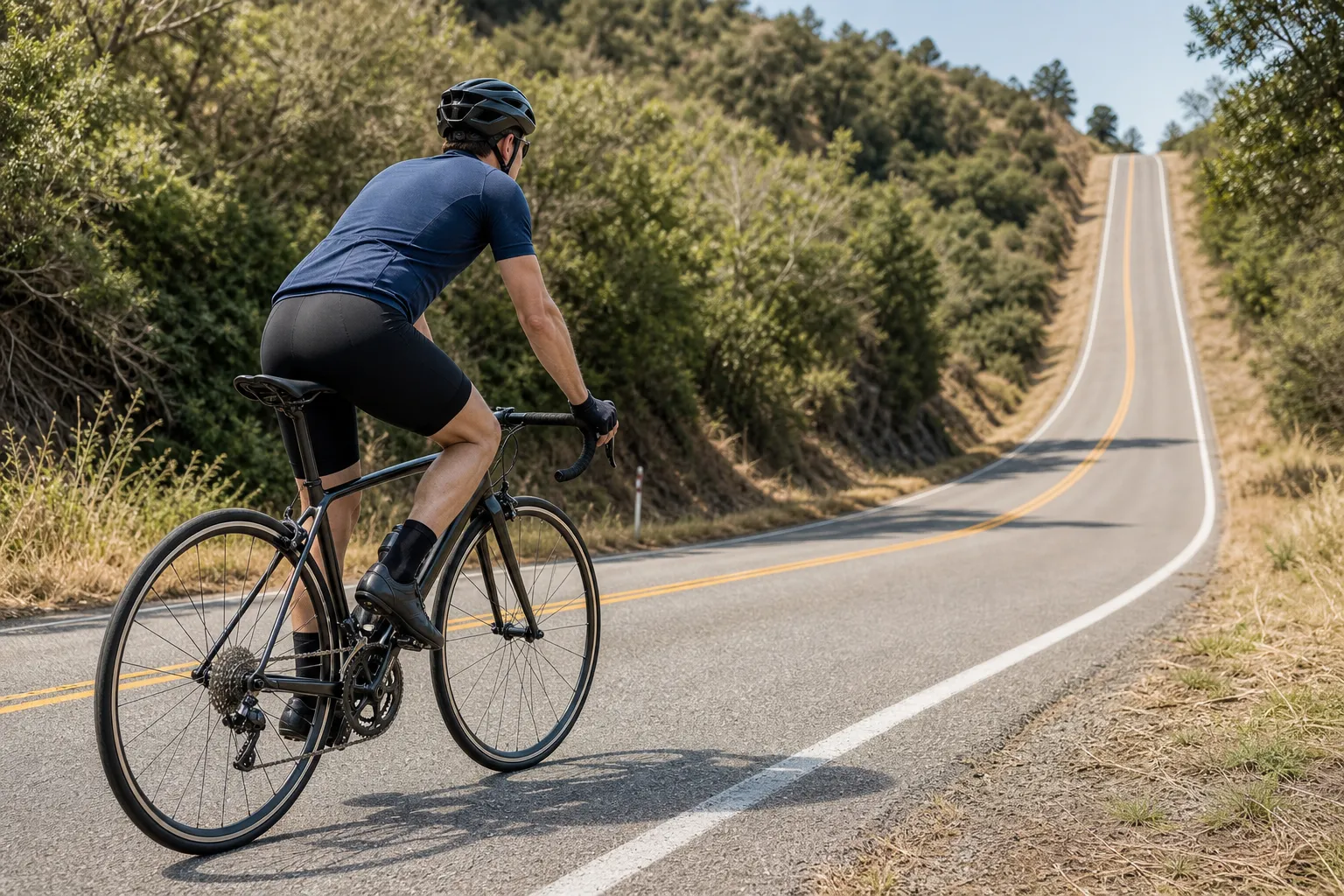
A simple climbing attempt looks like this:
- shift easier before the road kicks up;
- stay seated unless standing feels controlled and short;
- relax your grip and keep your line steady;
- aim for one visible marker, not the whole summit;
- stop while you still have balance if the effort becomes messy.
For the shifting habit in more detail, read shift before the hill, not during the struggle or the full guide on how to use road bike gears.
Check the bike before blaming yourself
If every small hill feels impossible, do not assume you are weak. The bike may be making the job harder.
Check the basics first: tyres inflated to a sensible pressure, wheels spinning freely, brakes not rubbing, chain clean enough to move through the gears, and saddle high enough that your knees are not cramped. The five-minute pre-ride bike check is enough for this first pass. If a brake pad is dragging, a wheel is rubbing, or the bike will not shift into its easiest gear, walking the hill is not the issue. The bike needs attention.
Also check whether your lowest gear is realistic for where you ride. A bike shop can look at your chainrings, cassette, derailleur capacity, and drivetrain condition before you spend money. Do not buy parts from a forum comment without confirming compatibility.
Know the health boundary
Hard breathing on a climb can be normal. Chest pressure, faintness, severe or unusual shortness of breath, pain spreading to the jaw, neck, back, arm, or shoulder, nausea, vomiting, or unusual tiredness are not things to prove yourself through. The CDC lists those as possible heart-attack symptoms and says to call 911 immediately if they appear (CDC heart attack symptoms).
That does not mean every hard hill is a medical emergency. It means your pride does not get to overrule warning signs.
Your next step
Pick one hill you can revisit safely. On the next ride, shift early, ride as far as you can while staying straight and calm, and choose a marker where walking would still be controlled. If you walk, remember where you got off. Next time the target is not “never walk”; it is “make one better decision before the hill makes it for me.”
For now, build the habit: easy gear early, steady line, safe stop, no shame. When the fuller hill-riding guide is ready, this post can sit beside it without needing to carry the whole climbing lesson by itself.
Sources and further reading
- NHTSA: Bicycle Safety
- Cycling UK: a beginners’ guide to climbing hills on a bike
- British Cycling: how to climb - 10 top tips for beginners
- League of American Bicyclists: starting, stopping, and shifting
- CDC: about heart attack symptoms, risk, and recovery
- r/cycling reader context: hills as a beginner
- r/cycling reader context: afraid of climbs