Is a used-bike deal too good to be true?
Check identity, ownership, crash history, compatibility, and repair costs before treating a suspiciously cheap road bike as a bargain.
 Field guide / used-bike-deal-too-good-to-be-true
Before you view or pay
Check fit, condition, and starter gear first
Use the buying checklist to choose the right path: used-bike viewing, first-bike fit and type, hidden repair costs, or starter gear.
A cheap used road bike is not automatically a scam, stolen, or damaged. It is a reason to slow the purchase down. When the price is far below comparable bikes, your job is to explain the gap before money changes hands—not to let the discount explain it for you.
The short answer: verify the seller and frame number, inspect the exact bike in daylight, ask for its history in writing, price the immediate repairs, and walk away if the seller blocks reasonable checks. A bargain remains a bargain after scrutiny.
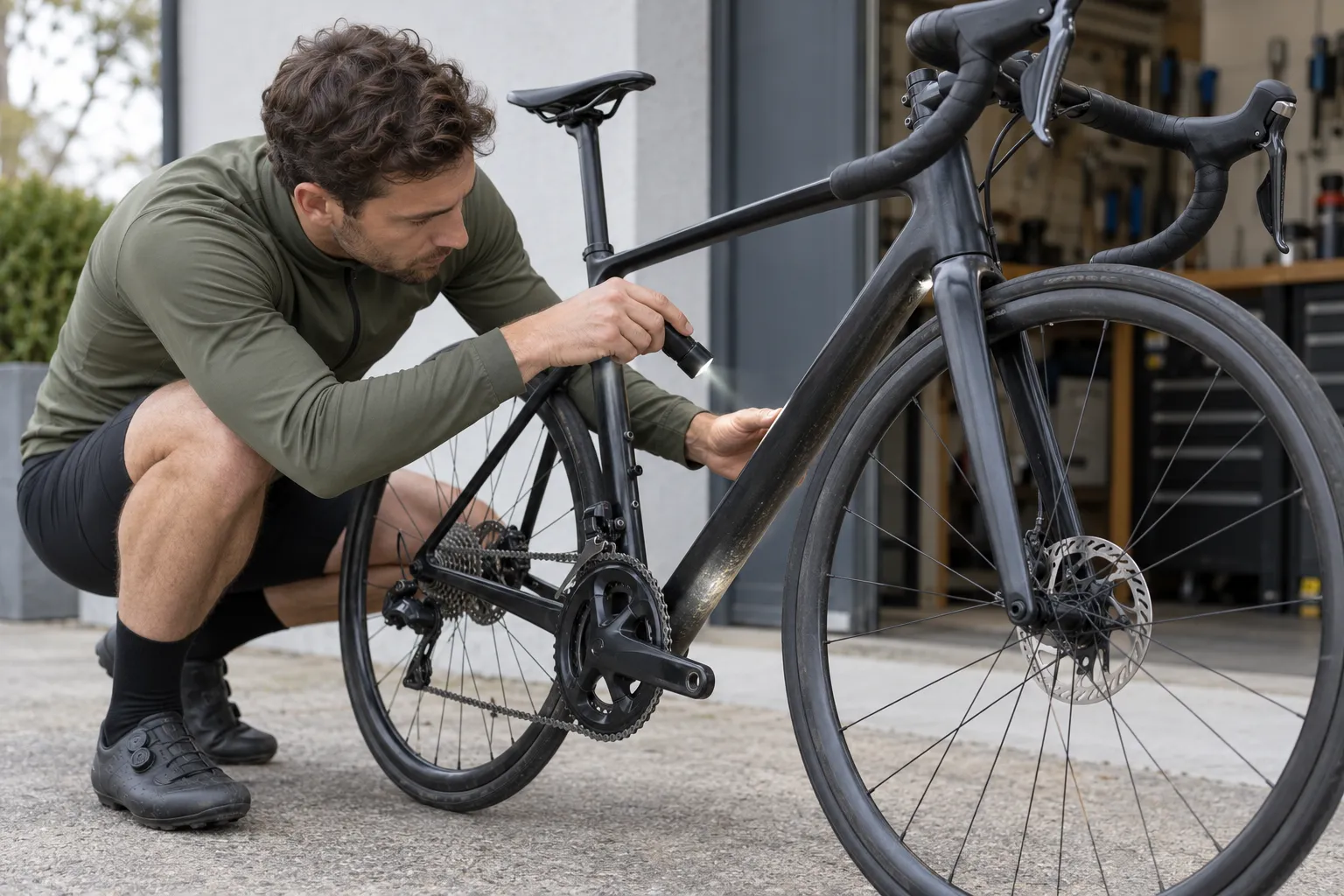
Why a very low price needs an explanation
Legitimate reasons exist: a fast move, an unpopular size, cosmetic wear, an old rim-brake platform, a seller who values convenience, or a bike needing obvious service. Less reassuring explanations include a fake listing, stolen property, hidden crash damage, counterfeit parts, finance or ownership disputes, and a repair bill that destroys the apparent saving.
A current Reddit buying discussion compared several older road bikes with two recent high-spec models at almost implausibly low prices. Replies immediately raised tyre clearance, carbon condition, and the possibility that a pristine recent bike at that price deserved extra scrutiny. That discussion is a useful demand signal, but it cannot verify any individual listing.
Start by comparing the candidate with several genuinely similar bikes: same model generation, frame material, brake type, groupset, condition, and local market. The existing used-bike fair-price guide shows how to compare like with like rather than anchoring on the seller’s claimed original price.
Run an identity and ownership check first
Ask the seller for these items before arranging a long journey:
- a clear current photo of the complete bike;
- the frame serial number and a photo showing where it is stamped;
- the exact model, size, approximate year, and major component changes;
- proof of purchase or another credible ownership trail;
- a plain explanation for the price and sale;
- confirmation that you may inspect and test the bike before paying.
Search the serial number on the stolen-bike registers used in your country and through a normal web search. A clean result is not proof of ownership: a theft may not have been reported or registered. A missing, filed-off, repainted, inconsistent, or deliberately concealed number is a stop signal.
Compare the seller’s name, location, receipt, listing history, and story. The goal is not to demand a perfect archive from someone selling a ten-year-old bike. It is to see whether the facts form one coherent history. Use the fuller guide to avoiding a stolen used bike if anything does not line up.
Never send a deposit because the seller claims several other buyers are waiting. Use a payment method with an accurate description and record. Do not mislabel a purchase as a gift or friends-and-family transfer to save a fee.
Inspect the bike, not the listing
Meet in daylight at a safe place where a proper test is possible. Confirm that the bike, components, serial number, and defects match the photos. A freshly cleaned bike can still be sound; it can also make leaks, grime patterns, and recent repairs harder to interpret.
Work through five zones:
- Frame and fork: inspect around the head tube, fork crown and steerer area, bottom bracket, dropouts, chainstays, seat cluster, and every place a component clamps to the frame. Look for cracks, dents, ripples, soft spots, mismatched paint, unusual clear-coat lines, or repair work.
- Steering and wheels: apply the front brake and rock the bike to check for headset play. Spin both wheels, then check rims, spokes, hubs, tyre damage, and secure axle retention.
- Brakes: inspect pads, rotors or rim tracks, hoses and cables. Confirm that each lever operates the intended brake firmly and returns normally.
- Drivetrain: check chain wear, chainrings, cassette, crank play, shifting across all gears, and damage around the rear derailleur and hanger.
- Fit and proprietary parts: confirm the size, saddle-height range, brake reach, cockpit adjustment, charging equipment, and availability of unusual spacers, seatposts, hangers, or integrated parts.
Use the used road-bike test-ride procedure and used-bike checklist rather than improvising under pressure.
Treat uncertain carbon history as a safety decision
Carbon is not inherently unsafe, but impact damage can be difficult for a beginner to judge. Trek’s current owner manual tells riders to stop and seek inspection when carbon parts may have been damaged, and to replace a suspect part when its integrity remains in doubt. That guidance is written for Trek products, but the decision principle is sensible for any used carbon purchase: the seller’s reassurance is not an inspection.
Ask directly:
- Has the bike or any carbon component been crashed, dropped, clamped, repaired, or transported in an incident?
- Are there marks hidden by tape, protectors, bags, or accessories?
- Has the fork ever been removed so the steerer could be inspected?
- Will the seller permit an independent pre-purchase inspection?
If the price only works when you assume an unexplained mark is cosmetic, it does not work. Read paint crack or frame crack and pay a qualified shop or carbon inspection specialist when the uncertainty matters.
Calculate the ride-ready price
The listing price is only the first line. Add realistic costs for:
- an independent inspection and initial service;
- tyres, tubes or tubeless setup;
- chain, cassette, chainrings, cables, housing, pads, rotors, or rim wear;
- seized bearings or a worn freehub;
- missing electronic-shifting batteries and chargers;
- a suitable saddle, stem, bar, pedals, or fit appointment;
- obsolete or proprietary replacement parts;
- safe transport and buyer protection fees.
Obtain prices before negotiating. “It probably just needs a tune-up” is not a cost estimate. Our first service after buying used guide separates inspection items from automatic replacement.
A newer entry-level bike with a warranty can be better value than an older flagship needing tyres, drivetrain parts, and specialist frame assessment. Conversely, an honestly worn, standard-component bike can be excellent value when the faults are visible and parts remain available.
Use three possible decisions
Do not reduce the outcome to buy or reject.
Buy
Buy when ownership is credible, the bike matches the advert, fit is workable, condition is understood, and the total ride-ready cost remains competitive.
Buy only after inspection or a revised price
Pause when the bike may be sound but a carbon mark, mechanical fault, unknown electronic system, or repair estimate needs expert confirmation. Make any offer conditional on that result.
Walk away
Leave when the serial number is concealed, stories change, payment is rushed, the seller refuses inspection, significant damage is minimized, or you are asked to rely on screenshots and promises instead of the bike.
Walking away costs less than proving that your suspicion was justified.
Your next step
Open the beginner road-bike buying checklist, record the serial number and ride-ready repair estimate, and decide only after every unexplained discount has a credible answer.