How to avoid buying a stolen used bike
Check the frame serial number, seller's ownership story, theft registries, documents, listing details, and written receipt before paying for a used bike.
 Field guide / how-to-avoid-buying-stolen-used-bike
Before you view or pay
Check fit, condition, and starter gear first
Use the buying checklist to choose the right path: used-bike viewing, first-bike fit and type, hidden repair costs, or starter gear.
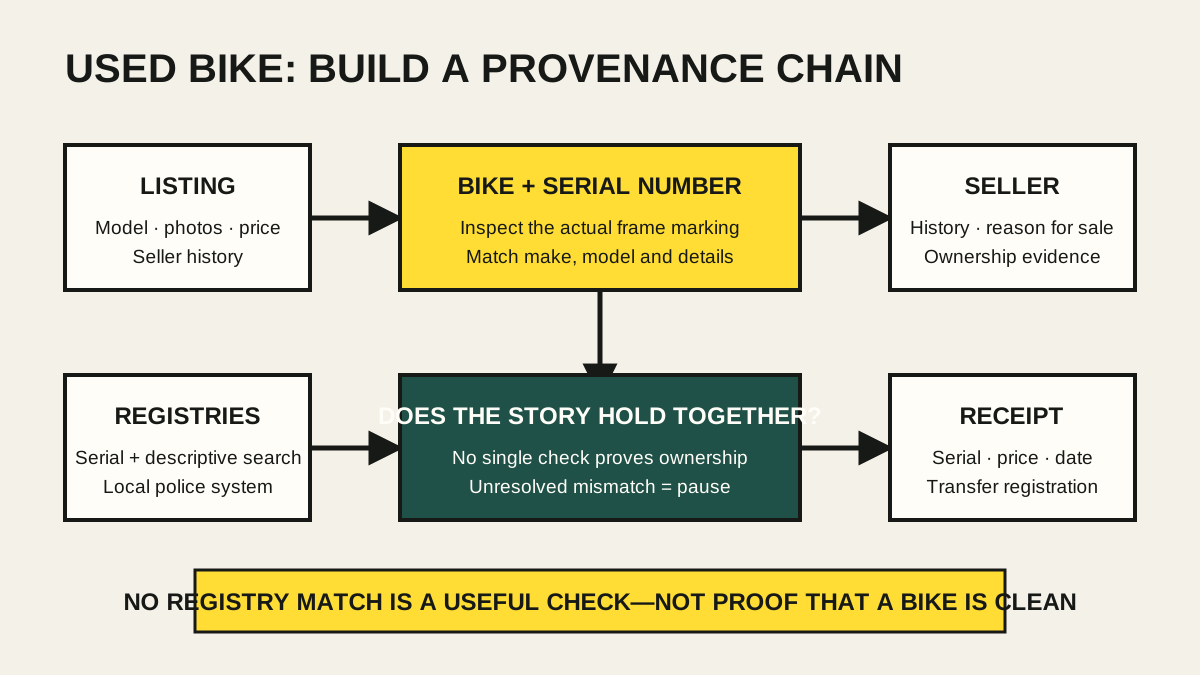
To reduce the risk of buying a stolen used bike, verify the actual frame serial number before payment, search more than one relevant theft registry, ask for ownership evidence, and put the serial number on a written receipt. No single clean search proves ownership; the listing, bike, seller, records, and handover should tell one consistent story.
The short answer: ask for the serial number early, then inspect it on the bike yourself. Search Bike Index, 529 Garage, and any local police or registration database. Pause for removed or altered markings, contradictory model details, unexplained urgency, refusal to document the sale, or an unresolved match.
Why this deserves a place in the bike inspection
Recent Reddit threads include a widely discussed stolen-bike recovery that prompted readers to record and check frame serial numbers and a buyer asking how to interpret a vague used-bike listing. The lesson is not to copy anyone’s confrontation or judge ownership by writing style. It is to build a repeatable buyer check before money changes hands.
Buying stolen property can cause serious financial and legal problems, but rules differ by jurisdiction. This guide is a due-diligence workflow, not legal advice. When a database match or suspicious fact appears, use the registry’s contact process and local police guidance.
Start with the listing
Save the public listing details you legitimately need for the transaction: URL, date, stated make and model, price, photos, seller’s description, and advertised components. Do not collect unrelated personal information or publish accusations.
Look for consistency rather than stereotypes:
- Do photos show the same bike in every image?
- Does the stated model match the frame graphics and component level?
- Is the size plausible and clearly stated?
- Are serial-number areas visible or deliberately obscured?
- Does the seller’s other public sales activity create reasonable questions?
- Is the price merely competitive, or unexplained relative to condition and market value?
A short description or limited bike knowledge is not proof of theft. Legitimate owners can know very little about what they own. A polished listing is not proof of legitimacy either.
Use the fair-price guide to separate an attractive deal from a price that only works if important facts are ignored.
Ask ordinary ownership questions
Ask calmly, before arranging travel:
- How long have you owned the bike?
- Where did you get it?
- Why are you selling it?
- What size and model year is it?
- What has been changed or repaired?
- Do you have the original receipt, shop record, manual, registration, or dated photos?
- Will you provide the frame serial number and sign a receipt containing it?
The answers do not need to be encyclopaedic. You are checking whether the story remains coherent when compared with the bike and records.
A seller may reasonably avoid sending a complete serial number to an anonymous stranger because serials can be misused. A sensible compromise is a partial number in advance, followed by full inspection and registry searches together before payment. Refusing any verification at any stage is different.
Find the actual frame serial number
The serial is commonly under the bottom bracket shell, near a dropout, on the seat tube, or beneath the crank area, but location varies. It may be stamped, engraved, printed on a label, or encoded with other production numbers.
At the viewing:
- Ask the seller to point out the serial.
- Clean only enough to read it, with permission.
- Photograph or transcribe every character accurately.
- Compare it with receipts, registrations, and the listing.
- Confirm the make and model attached to any database record.
- Look for grinding, repainting, an altered label, or a missing section of marking.
Do not confuse a component serial, barcode, part number, or suspension-fork number with the frame serial. Ask the manufacturer or a dealer if the marking format or location is unclear.
Search more than one relevant registry
Search the full serial on Bike Index and 529 Garage. Also check the seller’s local police, municipal, university, or national registration system when one exists.
Search again using descriptive details such as make, model, colour, and location. A theft report may contain a mistyped, incomplete, or unavailable serial. Conversely, serials are not guaranteed globally unique across every manufacturer and year, so compare all details before deciding that a record matches.
A result of “not found” means only that the search found no matching report in that database at that moment. The bicycle may never have been registered, the owner may not yet have noticed or reported the theft, or the record may sit elsewhere.
Build positive evidence of ownership
The strongest transaction has multiple pieces that agree:
- original purchase receipt or shop record;
- registration in the seller’s name, transferred where supported;
- dated photos showing the seller with the bike over time;
- service receipts matching the frame or model;
- accessories, manuals, spare keys, chargers, or proprietary parts expected with the bike;
- a credible explanation for missing documents on an older bike;
- willingness to identify the bike and sale on a written receipt.
None is perfect alone. Receipts can be lost, photos can be copied, and accessories can change. You are looking for an unbroken, plausible chain rather than one magic document.
For an expensive or unusual bike, consider completing the handover at the original dealer or an established bike shop that agrees to inspect the serial and model. Ask in advance; a shop is not automatically an ownership-verification service.
Pause when facts do not reconcile
Walk away or delay payment when:
- the frame serial is removed, damaged, altered, or does not match documents;
- a registry result matches the bike;
- the make, model, colour, or components contradict the seller’s account;
- the seller refuses reasonable serial inspection or a written receipt;
- the handover location or payment method changes unexpectedly;
- urgency is used to stop you completing checks;
- you feel unsafe.
Do not confront the seller, seize the bike, threaten exposure, or arrange a vigilante recovery. Preserve the listing information lawfully, leave, and use the relevant registry and police reporting channels. Emergency and non-emergency procedures vary by place.
Put the bicycle identity on the receipt
A written bill of sale should reflect local requirements and normally include:
- date and agreed price;
- bicycle make, model, colour, and frame size;
- complete frame serial number;
- names and agreed contact details of buyer and seller;
- known included items such as wheels, battery, charger, or power meter;
- a statement that the seller owns the bike and is entitled to sell it;
- both signatures or the platform’s equivalent documented transfer.
Use a traceable payment method where practical and keep the listing, receipt, and messages. Cash is not inherently suspicious, but cash plus no serial, no identity, and no receipt leaves a poor evidence trail.
Immediately register the bike to yourself in the appropriate registry and record clear photos, distinctive marks, component details, and the purchase document.
Provenance does not replace the mechanical check
A legitimate bike can still be unsafe or uneconomical. After the ownership check, inspect fit, frame and fork condition, wheel and tyre condition, brakes, drivetrain wear, and hidden service costs.
Use the used road-bike checklist at the viewing. If you buy it, plan the first service after a used-bike purchase before treating “it rides” as proof that it needs nothing.
Your next step
Add four blank fields to your viewing plan now: frame serial, registries checked, ownership evidence, and receipt completed. Open the road-bike buying checklist before arranging the meeting so provenance, fit, condition, repair budget, and starter gear are decided together.