Is it a paint crack or a cracked bike frame?
Treat a suspicious line in a road-bike frame as unresolved damage: stop riding, document it, check recalls and impact history, and get a qualified inspection.
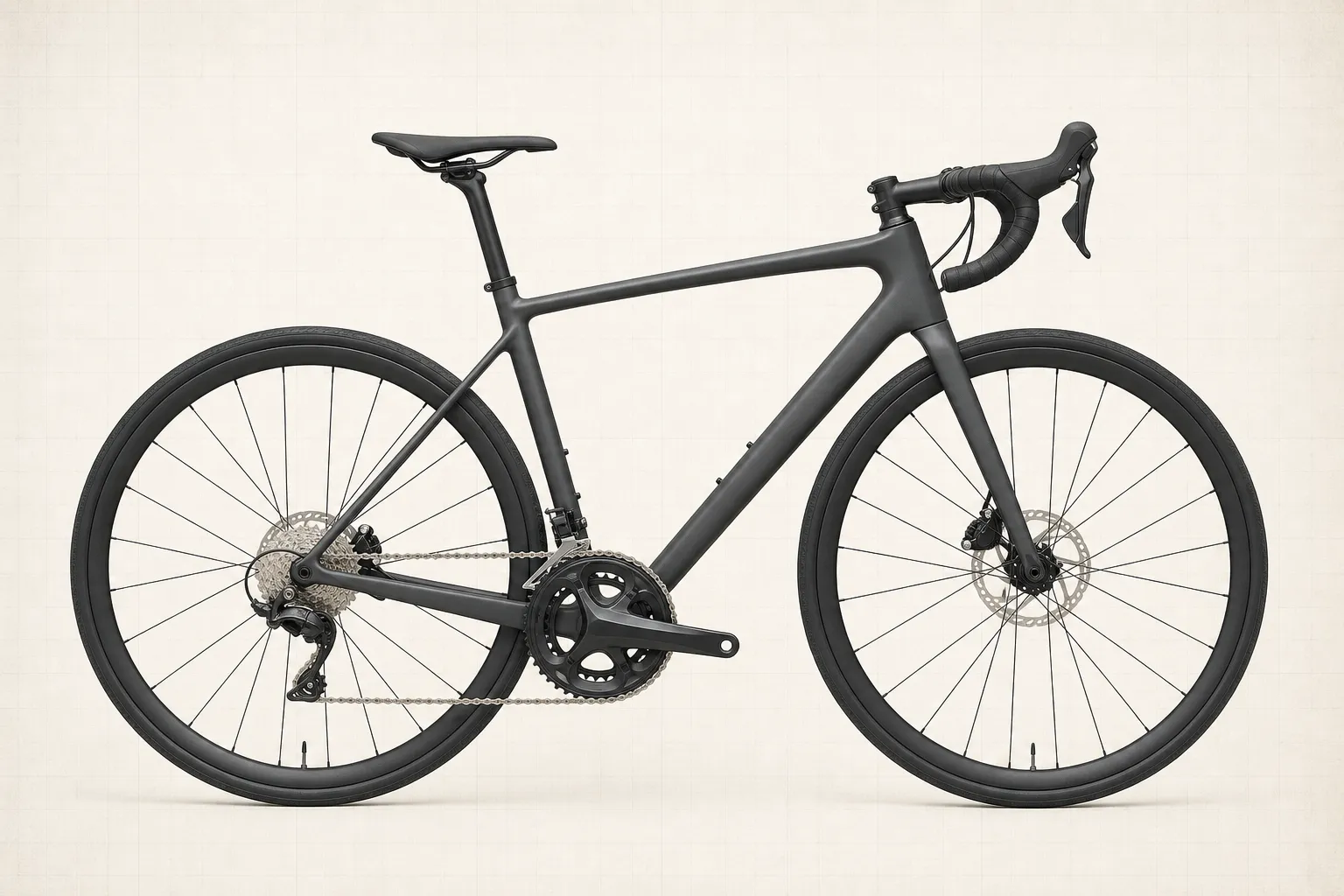 Field guide / paint-crack-or-frame-crack-road-bike
You cannot reliably clear a suspicious frame line from one photograph. It may be only paint or clear-coat damage, but if a structural crack remains possible, stop riding and have the bike assessed by its manufacturer, authorised dealer, or an appropriately qualified frame specialist.
The short answer: do not sand, drill, flex, tap, or “test ride” the line. Photograph it, record its location and history, check the exact model for recalls, and obtain a written professional assessment. Until then, treat it as a crack.
Why an online photo is not enough
Current repair discussions include a rider asking whether a hairline line under the paint is an aluminium-frame crack and another highly discussed case involving a visible crack in a used aluminium bike. These posts show the recurring uncertainty; replies are not an inspection of your bicycle.
Paint can crack where a finish is thick, where two surfaces meet, or after a minor chip. Structural damage can also begin as a subtle line. Lighting, dirt, image compression, and paint hide depth. Carbon damage may exist beneath an intact-looking surface, while metal frames may show a line near a weld, dent, stress concentration, or corrosion site.
The 2026 Trek bicycle owner manual tells riders to stop after suspected impact damage and take the bicycle to an authorised retailer. That is brand-specific guidance, but its uncertainty rule is sensible for any safety-critical structure: do not convert doubt into permission to ride.
Stop immediately for these red flags
Keep the bike out of service when the line:
- crosses a tube, weld, lug, bonded joint, or clamp area;
- opens or changes when the bike is gently unloaded or handled normally;
- has a raised edge, gap, loose fibre, flaking material, bulge, dent, or deformation;
- appeared after a crash, pothole strike, vehicle impact, roof-rack incident, shipping damage, or overtightened clamp;
- is accompanied by new creaking, clicking, altered handling, or alignment;
- sits on the fork, steerer, handlebar, stem, crank, rim, seatpost, or another part whose failure could cause immediate loss of control;
- matches a recall description for the model.
Do not ride slowly “just to the shop.” Walking, collection, or safe transport protects both the rider and the evidence.
Preserve evidence before anyone touches it
- Leave the finish intact.
- Clean only with the maker-approved mild method; do not use solvent around the line.
- Photograph the whole bicycle, the whole tube, and close views from several angles with scale and good side-light.
- Record brand, model, year, frame serial number, purchase source, and owner history.
- Write down when you first saw it and any recent impact, travel, repair, or clamp adjustment.
- Mark the location on a separate photograph, not on the frame.
- Save receipts and contact the seller before authorising irreversible work if warranty or consumer rights may apply.
Sanding paint away can remove useful evidence, alter a protective finish, weaken some treatments, complicate warranty assessment, and still fail to reveal the full damage. Drilling the end of a crack is not a beginner repair.
Material changes the inspection—not the safety decision
Carbon fibre
Carbon can conceal impact damage and does not need to show a metal-like bend before failure. Look for surface disruption, loose fibres, whitening, a ridge, a soft or changed-feeling area, and new sounds, but do not use those signs as a complete home test.
A specialist may use controlled visual, tactile, ultrasonic, thermographic, or other inspection appropriate to the part. The meaningful question is not “can someone scan carbon?” but whether the inspector is competent, the method suits the suspected damage, and the frame maker accepts the result or repair.
Aluminium
A line near a weld or highly loaded junction deserves particular caution. Do not assume welding makes every aluminium frame economically or safely repairable: alloy, heat treatment, alignment, wall thickness, damage location, and the maker’s policy matter. Ask a specialist who can evaluate the complete structure.
Steel and titanium
Repair may sometimes be possible, but neither material is automatically safe once cracked. Corrosion, denting, tube thickness, joint design, alignment, and heat effects all matter. “Steel is repairable” is not the same as “this steel frame should be ridden.”
Check recalls before paying for an inspection
Search the frame and complete bicycle using brand, exact model, model year, size, serial or batch number, and country. Use the maker’s official safety page plus the recall regulator where the bike was sold.
This step is not theoretical. The US CPSC has published bicycle recalls where hairline cracks in a frame created a fall hazard. A matching recall may provide a defined remedy and inspection route.
Questions to ask the inspector
- What material, joint, and load area is involved?
- Does the maker have an inspection or warranty procedure?
- Can you distinguish finish damage from substrate damage here?
- What inspection method will you use, and what can it not detect?
- If repair is proposed, who specifies the process and verifies alignment afterward?
- Will the repair preserve the maker’s warranty and intended use?
- What written conclusion will I receive?
If the answer remains uncertain, replacement is the conservative result. A cheap frame does not make failure cheaper.
Buying a used bike with a suspicious line
Do not accept “the previous owner said it is paint” as evidence. Pause the purchase and arrange an independent inspection before money changes hands. If the seller refuses, leave.
Price the bicycle as unridable until cleared, including inspection, disassembly, possible replacement, labour, and compatibility costs. Use the used-road-bike viewing checklist and repair-versus-replace assessment before treating attached components as a bargain.
Your next step
Stop riding, take the seven-documentation photos and notes, then contact the frame maker or authorised dealer with the serial number and impact history. Search recalls while you wait. Do not remove paint or commission a repair until the responsible inspector has seen the original condition.