What does 28-622 mean on a bicycle tyre?
Use the ISO/ETRTO number on a bicycle tyre and rim to match diameter first, then check width, rim, frame, brake, and pressure compatibility.
 Field guide / read-iso-etrto-bicycle-tyre-size
Before you buy
Check the starter kit first
Print the one-page buying brief for helmet, lights, water, phone, and repair compatibility before comparing upgrades.
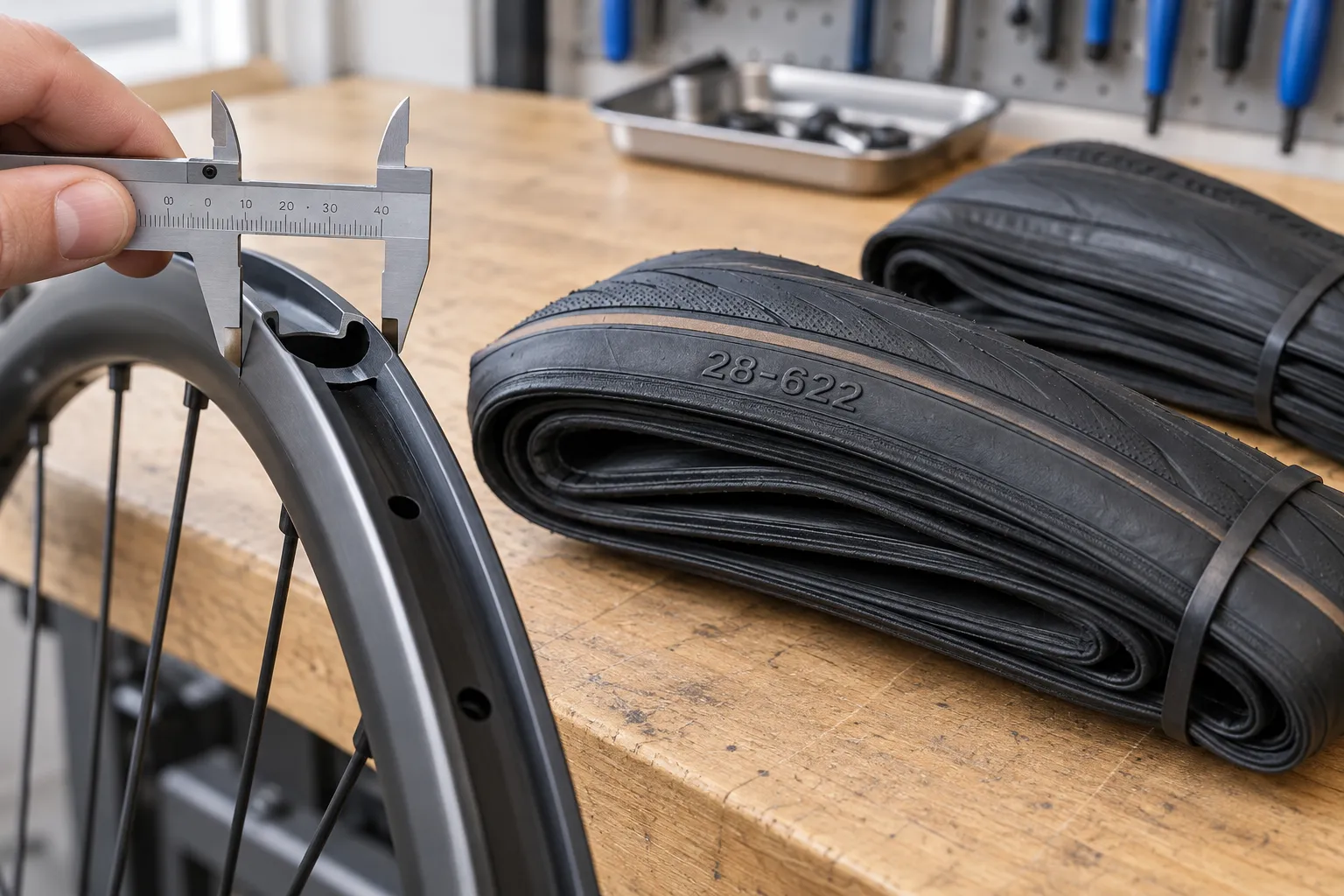
On a bicycle tyre marked 28-622, the first number is the nominal tyre width in millimetres and the second is the bead-seat diameter in millimetres. The 622 must match the rim’s 622 mm bead-seat diameter. Width is a separate compatibility decision: a 28 mm tyre still needs to suit the rim, frame, fork, brakes, tube or tubeless system, and permitted pressure.
The short answer: shop by the two-part ISO/ETRTO size, not by “26 inch,” “28 inch,” “29 inch,” or “700C” alone. Match the second number exactly. Then verify the first number against the rim maker’s width table and measure real bicycle clearance.
Decode the two numbers
Take 28-622 as an example:
- 28 is the tyre’s nominal section width in millimetres under the maker’s measurement conditions;
- 622 is the tyre’s inner or bead-seat diameter in millimetres.
The second number is the hard match. A 622 tyre belongs on a 622 rim, not a 630, 635, 590, 584, 571, or 559 rim. A tyre can look close while still being dangerously wrong.
The first number is not a promise that the installed tyre will measure exactly 28 mm. Actual width changes with the tyre model, rim internal width, pressure, construction, and manufacturing tolerance. That measured width is what matters for frame and brake clearance.
Why the familiar names cause mistakes
Traditional inch and French labels describe approximate outside sizes or historical families, not one unambiguous rim diameter.
- Many road bikes called 700C use a 622 mm rim.
- A 29-inch mountain-bike tyre also commonly uses a 622 mm rim, although it is much wider.
- Several genuinely different rim diameters have been sold as 26 inch.
- The older 27-inch road standard is usually 630 mm, not 622 mm.
That does not make every 622 tyre interchangeable. A 29 × 2.4 mountain-bike tyre and a 28-622 road tyre can share bead-seat diameter while being completely unsuitable for each other’s rim width, frame space, and use.
A safe tyre-buying sequence
1. Read the old tyre
Look around both sidewalls for a moulded size such as 25-622, 28-622, or 32-622. Photograph it before removing the tyre.
If the old tyre may itself be wrong, find the rim label or wheel manual. Do not assume the bike’s model name proves which wheel is installed; wheels are commonly replaced.
2. Match the bead-seat diameter exactly
The number after the hyphen on the new tyre must match the rim. If the rim documentation says 622, buy a tyre ending in 622.
3. Check tyre width against rim width
Find the rim’s internal width and its manufacturer’s tyre compatibility table. A tyre that is too narrow for a wide rim or too wide for a narrow rim can have a poor profile or be disallowed. Generic charts are a fallback; the current wheel maker’s limits take priority.
4. Check the tyre system
Confirm whether the rim and tyre are:
- tube-type clincher;
- tubeless-ready with hooks;
- hookless or straight-side tubeless;
- tubular, which uses an entirely different attachment method.
“Tubeless ready” is not permission to ignore the rim’s tyre and pressure limits. If you are unsure what is installed, first identify whether the tyre has a tube and check whether the rim is hooked or hookless.
5. Measure bicycle clearance
Check the fork crown, fork legs, chainstays, seatstays, seat tube, brake calipers, mudguards, and any cable or electronic-shift hardware near the tyre. Leave margin for wheel flex, debris, imperfect trueness, and differences between labelled and measured width.
Do not copy a stranger’s “maximum tyre” just because the frame model sounds similar. Model year, rim width, wheel alignment, brake type, and tyre casing can change the answer. Use the bike maker’s stated limit and your measured bike.
6. Recheck pressure limits
The safe ceiling is the lowest applicable limit from the tyre, rim, rim tape, and bicycle documentation. That printed maximum is not a daily pressure target. Use the principles in the maximum tyre pressure is not a target after compatibility is established.
What about inner tubes?
An inner tube is labelled with a range, such as 25/32-622, because one tube can expand across several tyre widths. Its diameter must still match the tyre and rim family. Then choose a tube whose width range includes the tyre’s labelled width and whose valve suits the rim depth and valve-hole type.
Use the road-bike inner-tube size guide for the full check.
Common buying mistakes
- ordering by wheel nickname alone;
- treating 27 inch, 27.5 inch, and 700C as a sequence of compatible sizes;
- matching only the first number;
- assuming two tyres labelled 28 mm will measure the same;
- ignoring rim internal width or hookless restrictions;
- checking frame clearance before inflating and seating the tyre;
- using the largest printed pressure because it appears on the sidewall.
Your next step
Photograph the complete size marking on your current tyre and the label on your rim. Write the diameter after the hyphen at the top of your shopping note. Only compare tread, puncture protection, and price after that number matches exactly.
If your goal is a wider tyre on an older bike, continue with how to fit 28 mm or 30 mm tyres on an older rim-brake road bike.
Sources and further reading
- Schwalbe: tyre size designations and why ETRTO is unambiguous
- Schwalbe: matching tyre diameter and width to the rim
- r/bikewrench discussion about incompatible tyres sharing a “26-inch” label — used as an editorial question signal, not as the technical authority.