Is an old road bike worth repairing?
Decide whether an old or neglected road bike is worth repairing by separating safety-critical faults, baseline service costs, fit, parts availability, and project value.
 Field guide / is-old-road-bike-worth-repairing
Before you view or pay
Check fit, condition, and starter gear first
Use the buying checklist to choose the right path: used-bike viewing, first-bike fit and type, hidden repair costs, or starter gear.
An old road bike is worth repairing when the frame and fork are sound, the bike fits its intended rider, compatible parts are available, and the cost to make it safely rideable is sensible compared with a ready-to-ride alternative. Surface dirt and a worn chain are service jobs; a cracked frame, badly corroded structure, or wrong size can end the calculation immediately.
The short answer: pay for an assessment before paying for upgrades. Price the safe baseline—frame, fork, wheels, tyres, brakes, steering, drivetrain, and labour—then compare that complete total with another bike that already fits and works.
Why a free or cheap bike can still be expensive
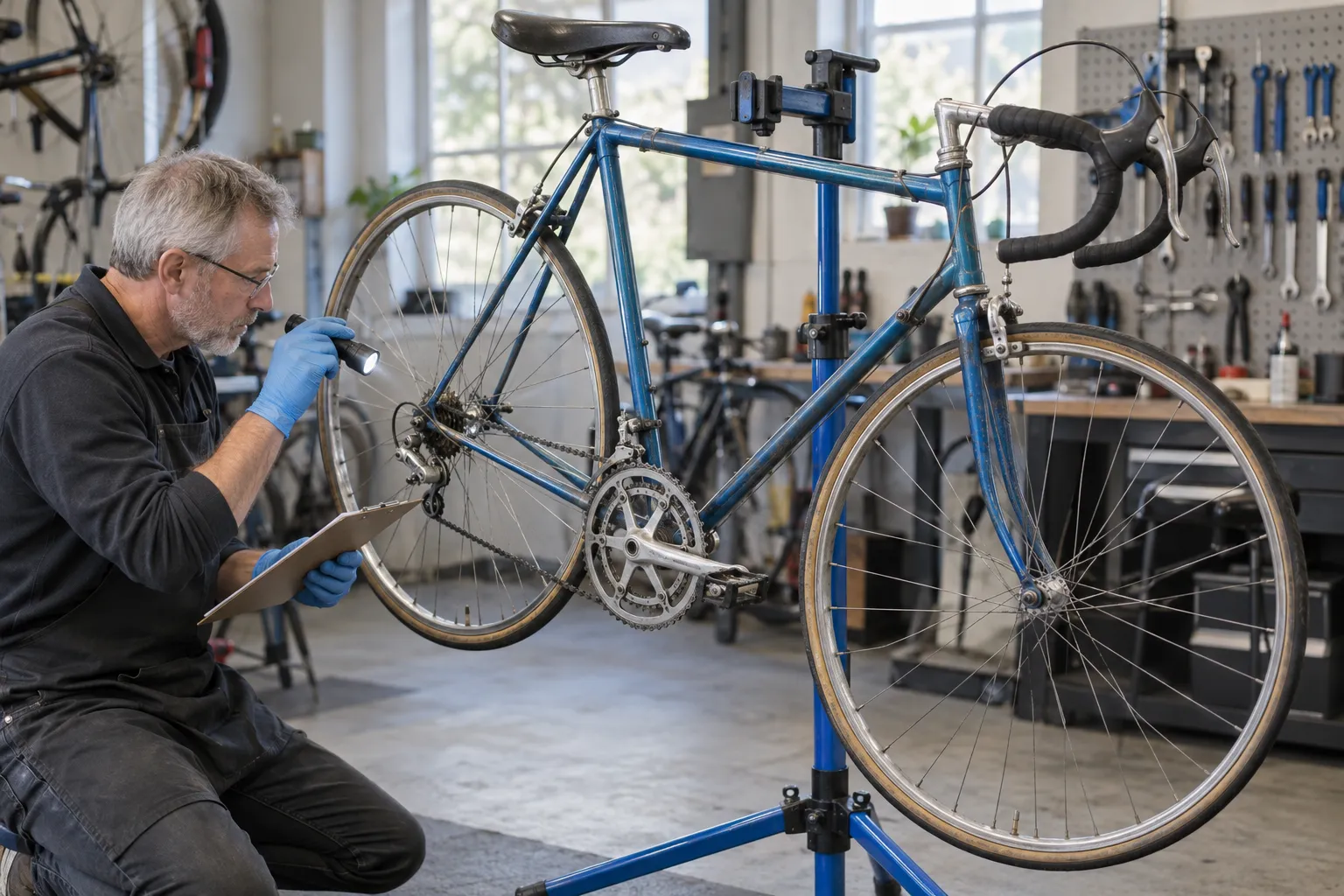
A recent repair discussion asked whether a weathered bike found with cracked tyres, poor brakes, heavy rust, and missing contact parts was financially worth reviving. That individual bike needs hands-on inspection, but the underlying question repeats whenever a neglected bike, garage find, or unusually cheap listing appears.
The purchase price is only the entry. A safe baseline can require tyres, tubes, brake pads, cables and housing, chain, cassette or freewheel, bar tape, bearings, wheel work, and labour. Buying each part separately can exceed the value of a complete working bike even when no single item looks expensive.
That does not make every restoration irrational. Learning, sentimental value, a rare fit, and enjoyment of the project are real benefits. Just separate them from the claim that the bike is the cheapest transport option.
Gate 1: confirm the bike fits the intended rider
Do this before making a parts list. A bike that is far too large, has inadequate stand-over clearance, or cannot achieve a safe saddle and cockpit position is a poor foundation.
Confirm:
- The rider can stop, start, steer, and reach both brakes confidently.
- Saddle height can be set without exceeding seatpost insertion limits.
- The stem and handlebar can be positioned within their adjustment and insertion limits.
- The frame is not so small or large that extreme parts are needed to compensate.
Use how to tell if a road bike is too big or too small for the first pass. Fit cannot be repaired with a fresh drivetrain.
Gate 2: stop for structural red flags
Clean enough dirt away to inspect the frame and fork under bright light. Do not polish over evidence before a mechanic sees it.
Stop the project and obtain a professional assessment for:
- Any visible crack, tube separation, or opening joint.
- A bent, creased, or heavily dented frame tube.
- A fork blade, crown, steerer, or dropout that looks bent or cracked.
- Deep corrosion, swelling, or perforation around joints and tube openings.
- Crushed or delaminated carbon, soft spots, or impact damage.
- A seatpost or stem seized in a position that prevents safe fit or service.
- Missing frame identification when it prevents a recall or compatibility check.
Structural condition is not something a photo price-check can settle. The US Consumer Product Safety Commission has documented recalls where hairline frame cracks created a fall hazard. Search the exact brand, model, model year, and serial information in the relevant national recall database before investing.
Gate 3: inventory the safe baseline
Price what the bike needs to be safe and dependable, not what would make it fashionable.
Wheels and tyres
Check that both wheels are secure, rims and spokes are sound, hubs turn without obvious play or grinding, and braking surfaces are within the manufacturer’s wear limits. Old tyres with open cracks, exposed casing, damaged beads, or bulges need replacement; when to replace road-bike tyres covers the decision.
A slightly out-of-true wheel may be serviceable. A damaged rim, seized spoke nipples, obsolete hub, or multiple broken spokes can change the economics.
Brakes and controls
Both brakes must apply, release, and provide strong predictable stopping. Inspect pads, cables, housing, calipers, levers, and the relevant rim or rotor surfaces. Hardened pads and rusted cables are not improved by spraying lubricant around the brake.
Confirm that replacement pads and control parts match the actual brake system. “Universal” is not a compatibility standard.
Steering and contact points
The handlebar, stem, headset, saddle, seatpost, pedals, and cranks must be secure and undamaged. Perished bar tape is cheap; corrosion hidden underneath the tape or damage around a clamp is not the same problem.
Drivetrain
Measure chain wear and inspect the cassette or freewheel, chainrings, derailleurs, cables, and shifters. A rusty chain alone may be straightforward. A worn chain plus worn sprockets, seized shifters, damaged derailleur, and unavailable small parts is a system replacement.
Use how to check chain wear and do not assume a new chain will run cleanly on heavily worn sprockets.
Bearings and seized parts
Check headset, hubs, bottom bracket, and pedals for play, roughness, or seizure. Serviceability depends on the exact design. Older standards are not automatically bad, but identify them before buying tools or parts.
Build two budgets, not one
Ask a shop for an assessment or make a written, model-specific list.
Budget A: safe baseline
Include:
- Every safety-critical part and consumable.
- Labour for work you cannot correctly perform.
- Small parts, cables, housing, tape, fluids, and disposal fees.
- A contingency for faults revealed during disassembly.
Budget B: optional improvements
Keep cosmetics, lighter parts, extra gears, new wheels, and styling separate. Do not let an attractive upgrade hide an unfinished brake or tyre problem.
Now compare Budget A plus the bike’s purchase cost with a local, correctly sized, ready-to-ride alternative. Use actual quotes and current local listings; global internet prices omit shipping, taxes, tools, and labour.
When repair usually makes sense
The case is strongest when:
- The frame and fork pass inspection.
- The bike fits without extreme changes.
- Most faults are normal consumables and adjustments.
- Replacement parts are available at ordinary cost.
- You already own the tools and can perform the work correctly, or labour fits the budget.
- The bike has sentimental, learning, utility, or historical value beyond resale price.
When replacement is the cleaner answer
Walk away or treat the bike as a non-riding project when:
- Structural integrity is uncertain or a recall has no satisfactory remedy.
- It is the wrong size for the intended rider.
- Several expensive systems need replacement at once.
- Key proprietary or obsolete parts cannot be sourced safely.
- A complete working alternative costs less than the safe baseline.
- The plan depends on riding it “for now” with questionable brakes, tyres, wheels, or steering.
Do not justify unsafe interim use because new parts are on order.
Do not count on recovering upgrade money
Resale value rarely equals the sum of retail parts and labour. A careful restoration may make a bike more usable without making it more valuable to the next buyer. Keep invoices and disclose remaining faults honestly, but make the repair decision around your use—not a guaranteed profit that does not exist.
If you are assessing a bike before purchase, combine this guide with how to tell whether a used road bike is fairly priced and the used-bike viewing checklist.
Your next step
Do not order parts yet. Confirm fit, run the structural red-flag check, search recalls, and write the complete safe-baseline budget with labour. If the frame or fork is uncertain, pay for a professional inspection. If the bike passes, prioritise the work using the first service after buying a used road bike.