Which cycling gear should you buy new, and what is safe to buy used?
Save money on used cycling gear without gambling on helmet history, hidden carbon damage, worn safety parts, poor fit, or incompatible components.
 Field guide / which-cycling-gear-buy-new-or-used
Before you buy
Check the starter kit first
Print the one-page buying brief for helmet, lights, water, phone, and repair compatibility before comparing upgrades.
Buy a helmet new from a trustworthy seller. Used clothing, tools, racks, lights, trainers, and many metal components can be sensible purchases when they are clean, complete, compatible, and inspectable. Treat carbon structural parts, worn braking parts, tyres, chains, cassettes, and cleats as case-by-case items whose remaining life can erase the saving.
The short answer: buy new when hidden history can change protection, hygiene matters to you, fit is highly personal, or wear is difficult to price. Buy used when condition is visible, function is testable, compatibility is verifiable, and replacement parts remain available.
Why one blanket rule does not work
Recent beginner discussions asked whether to buy the bike and equipment new or used and whether a used bike is as safe as a new one. The useful signal is uncertainty about history and inspection—not proof that all used equipment is unsafe.
Split the shopping list by consequence and inspectability.
Buy these new by default
Bicycle helmet
A used helmet may have suffered an impact or poor storage without an obvious crack. The US Consumer Product Safety Commission says to replace a bicycle helmet after a significant impact even when damage is not visible and to follow manufacturer replacement guidance.
Buy the correct activity standard and size from a seller whose supply chain you trust. Then fit the helmet level and secure. A new helmet that fits badly is not a good purchase.
Consumables when remaining life is unclear
Chains, brake pads, rim-brake rims, tyres, sealant, cables, and bar tape all wear. Some used examples are perfectly serviceable, but beginners usually cannot price their remaining life confidently. A nearly worn chain or tyre can cost more in diagnosis and replacement than buying the right new part once.
Personal-contact items when fit or hygiene matters
Bib shorts are inexpensive enough that most riders prefer a fresh pad. Shoes and saddles can be bought used, but only when size, shape, wear, and return options make sense. Do not let a low price persuade you to tolerate a poor contact-point fit.
Used can be excellent value
Basic tools
Quality hex keys, torque wrenches with documented calibration, repair stands, track pumps, tyre levers, and cleaning tools can last years. Check that measuring tools work, jaws and drivers are not damaged, and proprietary adapters are included.
Clothing without protective history
Jerseys, jackets, warmers, overshoes, and gloves are straightforward to inspect and wash. Check zips, reflective panels, seams, waterproof coatings, and return restrictions.
Trainers, racks, and luggage
Confirm every adapter, strap, key, spacer, axle interface, and load limit. A cheap trainer that needs a freehub body and two adapters may not be cheap. For car racks, follow the vehicle, rack, and bicycle makers’ compatibility and load instructions.
Metal components with clear identification
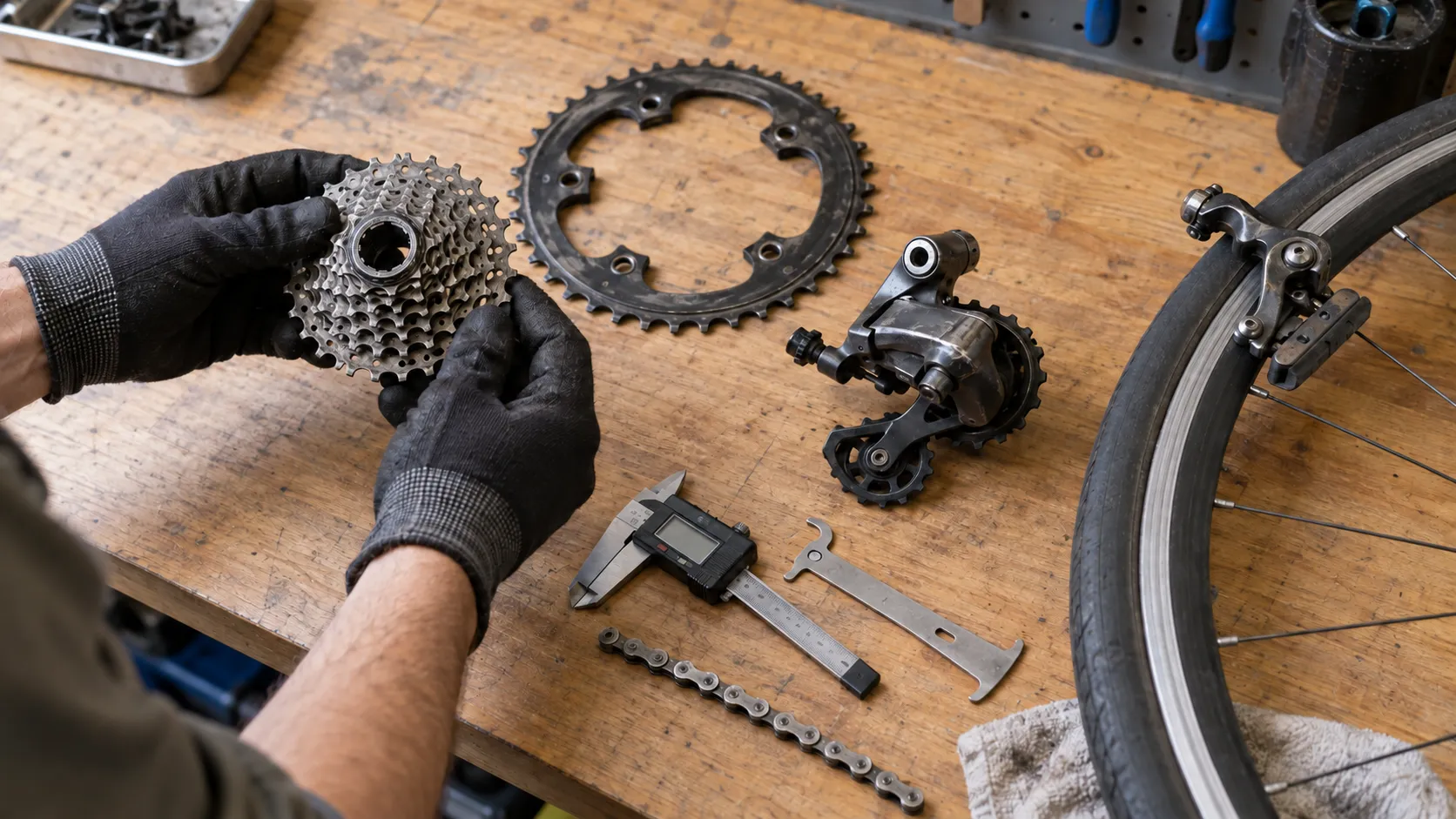
Aluminium handlebars, stems, seatposts, cranks, cassettes, and pedals can be viable if the exact model is compatible and inspection reveals no crash damage, cracks, deformation, stripped threads, deep corrosion, or excessive wear. Still ask why the part was removed and reject an uncertain story after a crash.
Apply a higher bar to used carbon
Carbon is not automatically fragile, but impact damage can be hidden. Trek’s owner guidance warns that a damaged carbon part may look normal and can fail suddenly; suspected impact damage should be taken out of service and professionally assessed.
For a first purchase, used carbon forks, handlebars, stems, seatposts, rims, and frames should have credible history, close inspection, and a price that still makes sense after professional evaluation. “It only has a cosmetic scratch” is not a diagnosis.
Use the used-parts inspection guide and walk away if you cannot verify the model, compatibility, torque history, or crash history.
Check wear items with model-specific indicators
Do not guess from appearance alone. For example, Shimano describes specific wear features on its SPD-SL cleats and says worn engagement surfaces can affect secure retention. Other pedal systems use different criteria.
For any used item:
- Identify the exact model and generation.
- Download its instructions.
- Verify interfaces and dimensions.
- Inspect every safety-critical surface.
- Price missing hardware and immediate service.
- Compare the complete cost with a new item and warranty.
A simple budget order
Spend first on a sound, correctly sized bike; a new well-fitting helmet; reliable tyres and brakes; lights appropriate to your riding; and a compatible puncture kit. Buy comfort and performance extras later, once actual rides tell you what matters. The essential gear guide separates ride-now needs from upgrades.
Your next step
Make two shopping columns: history-sensitive and fully inspectable. Put the helmet in the first column. For everything else, require the exact model, a condition check, compatibility proof, and a complete-cost comparison before paying.