When is a professional bike fit worth paying for?
Decide whether to use a DIY setup, standard shop adjustment, performance fit, or clinician-led fit based on symptoms, goals, bike choice, and deliverables.
 Field guide / when-professional-bike-fit-worth-it
A professional bike fit is worth paying for when it can prevent an expensive wrong-bike purchase, solve a persistent position problem that careful basic adjustments have not solved, or adapt the bike around meaningful mobility, injury-history, disability, or performance requirements. It is not mandatory before every beginner’s first ride.
The short answer: start with correct frame size, safe brake reach, neutral saddle setup, and one-change-at-a-time testing. Pay for a qualified fit when the decision or problem exceeds those basics—and buy clear deliverables, not a promise that one set of angles is universally perfect.
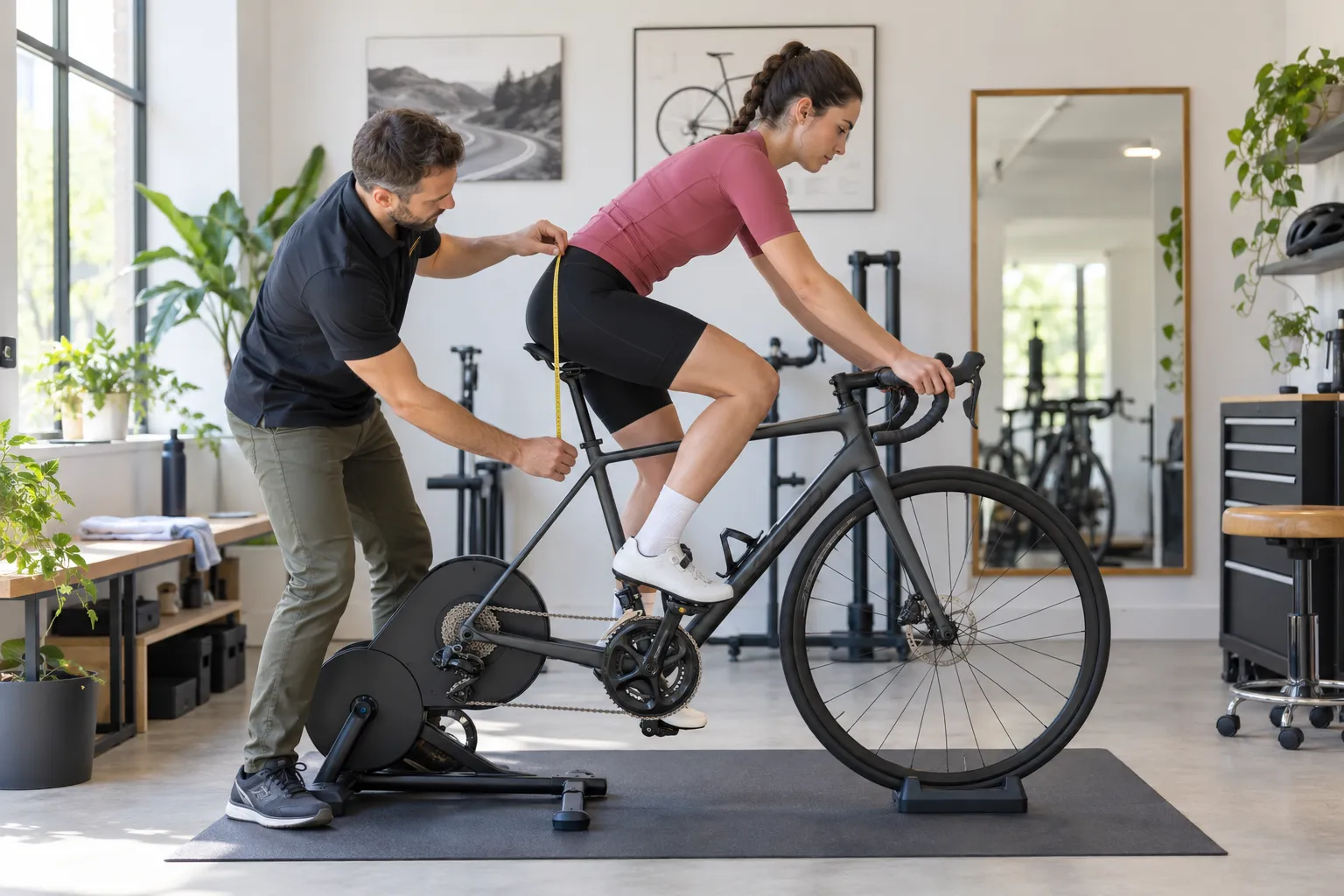
Four different services hide behind “bike fit”
Clarify what you are buying:
- Basic shop setup: saddle height, lever reach, and safety checks on a bike you own.
- Pre-purchase sizing: comparing frame sizes and cockpit ranges before purchase.
- Dynamic performance or comfort fit: observing you pedalling under controlled load and testing changes.
- Clinician-led fit: combining cycling setup with appropriate assessment when pain, injury history, surgery, disability, or reduced mobility is relevant.
The most expensive package is not automatically the right one. A beginner choosing between two sizes may gain more from pre-purchase measurements than from motion capture after buying the wrong frame.
A professional fit has high value in five situations
You are about to make an expensive or hard-to-reverse purchase
Integrated cockpits, cut steerers, unusual geometry, and final-sale bikes can make correction costly. A pre-purchase fit should produce a usable range of stack, reach, saddle height, cockpit, and component assumptions—not merely “you are a medium.” See what a pre-purchase fit should deliver.
Persistent discomfort survives sensible basics
If neutral settings, gradual adaptation, and one controlled change at a time do not resolve discomfort, a skilled fitter may identify interactions that isolated internet advice misses. British Cycling recommends considering professional advice when discomfort persists and notes that problems can involve both position and individual physical factors.
Pain is not proof that the bicycle alone is responsible. A fitter should refer out when the issue appears medical rather than continuing to sell components.
Your body or equipment needs individual adaptation
Reduced mobility, a major asymmetry, previous surgery, adaptive equipment, or a significant injury history can justify a clinician-led service. Ask about relevant qualifications and scope; “certified” is meaningful only when you know the certifying body and what it covers.
You need a sustainable aero or triathlon position
A position can look fast but fail because the rider cannot see ahead, breathe comfortably, control the bike, or hold it for race duration. Fit aero changes only after basic handling is secure and with the exact event, bike, cockpit, and running needs in view.
You cannot separate several interacting changes
Saddle, cleats, shoes, crank length, bar width, lever position, reach, and training load can overlap. Paying for structured testing and records can be cheaper than buying several speculative parts.
When a DIY setup is a reasonable start
Begin at home when the bike is clearly the correct size, you have no concerning symptoms, the components offer normal adjustment, and the goal is comfortable recreational riding. British Cycling’s DIY guide recommends stabilising and levelling the bike, making one change at a time, and testing rather than changing several variables together.
Use the beginner fit-and-comfort guide and record every starting measurement. Small adjustments need safe torque and insertion checks.
Ask these questions before paying
- What training and experience does the fitter have for my specific goal?
- Is the service sizing, comfort, performance, clinical assessment, or a combination?
- Will the fit use my normal shoes, pedals, clothing, and riding intensity?
- Which changes and replacement parts are included?
- Will I receive complete before-and-after measurements?
- Is follow-up included after real rides?
- What happens if the current frame cannot reach the recommended position?
- When will the fitter refer me to a healthcare professional?
A useful fit should leave you able to reproduce the setup and understand which changes were hypotheses to test.
Red flags
Be cautious when a fitter:
- promises pain elimination or injury prevention;
- uses one “ideal” angle without your goals or feedback;
- changes several parts without preserving starting measurements;
- insists discomfort is normal because the position is aerodynamic;
- sells a specific bike before defining your fit range;
- cannot explain follow-up or referral boundaries.
Our guide to choosing a bike fitter turns those questions into a shortlist.
Your next step
Write one sentence describing the decision or symptom you want the fit to solve. If it is a purchase decision, book the fit before buying. If it is discomfort, record when it starts, where it occurs, and what you already changed, then choose a fitter or clinician whose scope matches the problem.
Sources and further reading
- British Cycling: DIY road-bike fit and when to consider professional help
- British Cycling: lower-back discomfort can involve fit, mobility, conditioning, and other factors
- Cycling UK: a critical DIY perspective and limits of one-size-fits-all fitting
- r/cycling reader context: what riders paid for bike fits and whether they valued them — anecdotes informed the decision questions, not claims about typical price or outcomes.