What to wear on your first road-bike ride
Dress for your first road-bike ride with clothes you already own, then add padded shorts, pockets, layers, and weather protection only when they solve a real problem.
 Field guide / what-to-wear-first-road-bike-ride
Before you view or pay
Check fit, condition, and starter gear first
Use the buying checklist to choose the right path: used-bike viewing, first-bike fit and type, hidden repair costs, or starter gear.
You do not need a full matching cycling kit for your first road-bike ride. Start with close-fitting, breathable sports clothing, a certified helmet that fits, shoes that grip your pedals, and a layer suitable for the weather. Padded cycling shorts become useful when saddle comfort—not appearance—is limiting your ride.
The short answer: wear what lets you pedal, steer, brake, and manage temperature without loose fabric reaching moving parts. For a short fair-weather ride, ordinary sportswear is enough. Buy one cycling-specific item only after you can name the problem it will solve.
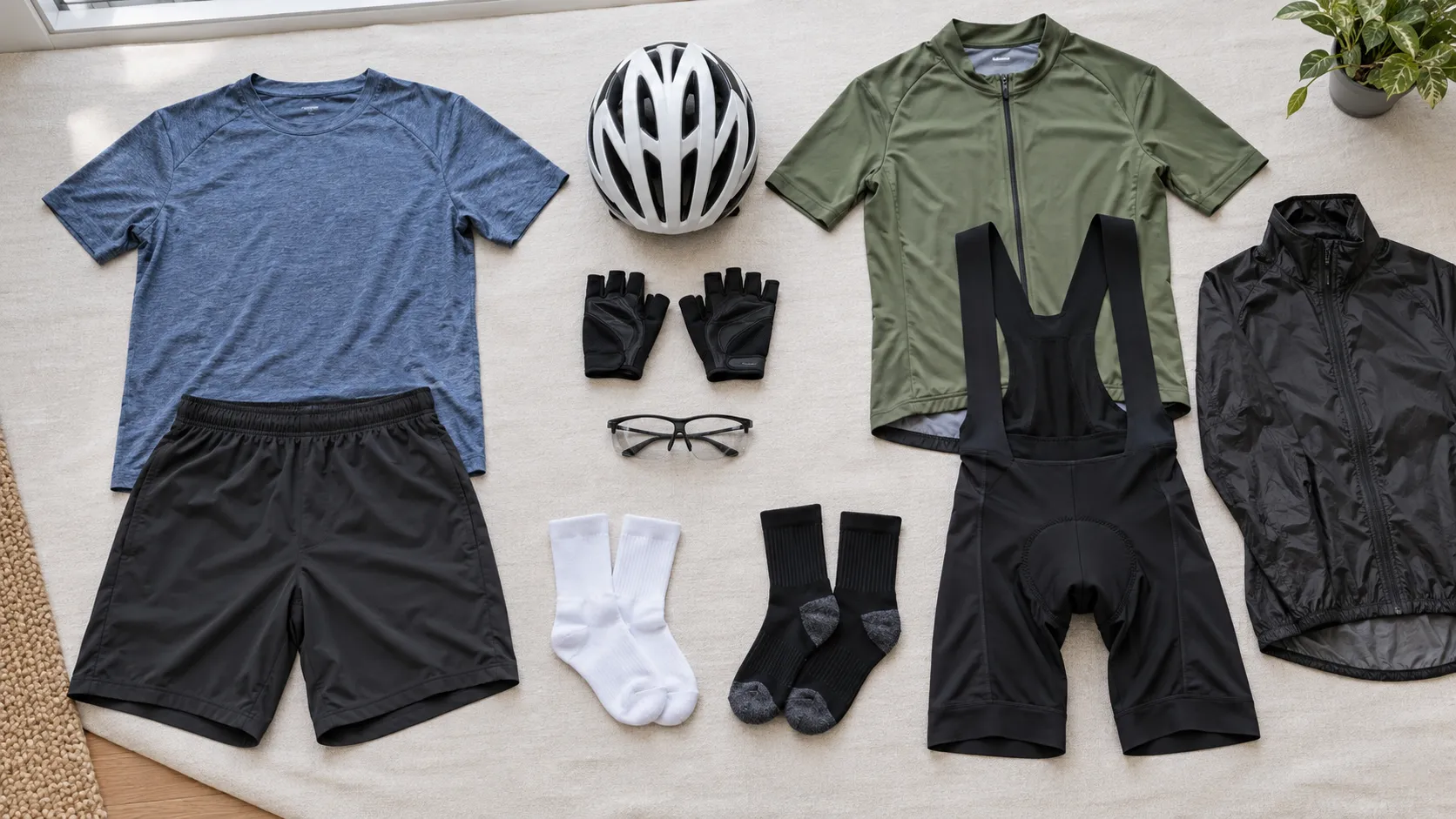
The minimum practical outfit
For a 30–60 minute ride in mild, dry weather, choose:
- a bicycle helmet that fits level and securely;
- a breathable sports top;
- fitted shorts, leggings, or trousers secured away from the chain;
- socks without painful seams;
- trainers with a firm, grippy sole for flat pedals;
- eye protection if insects, dust, or road spray are likely;
- a light wind layer if the temperature may fall.
Avoid wide trouser legs, long dangling drawstrings, open coats, unsecured bags, and loose shoelaces. Tie hair and straps so they cannot reach a wheel or drivetrain.
The U.S. Consumer Product Safety Commission requires bicycle helmets sold in the country to meet its standard and carry a compliance label. Other regions use their own standards. Fit and local compliance matter more than matching the bike.
When padded shorts are worth buying
Padded cycling shorts or bib shorts place a smooth pad—called a chamois—between you and the saddle. They can reduce seams and manage moisture on longer rides. They do not fix a saddle that is dramatically too high, a bike that is the wrong size, or escalating numbness.
Consider one pair when:
- ordinary shorts bunch or have thick seams under your sit bones;
- rides are becoming long enough that friction limits you;
- you ride often enough to wash and rotate kit predictably;
- the bike is otherwise reasonably adjusted.
Wear cycling shorts next to the skin unless the garment maker says otherwise. Ordinary underwear adds seams and can trap moisture. Read what to wear under cycling bib shorts before the first long ride.
Recent Reddit questions show why the simple answer matters: beginners ask what clothing is actually needed, how to avoid buying too much gear, and how to replace sweaty joggers and a hoodie in cool wet weather. Those experiences signal the question; they do not create a universal shopping list.
What a jersey adds
A cycling jersey is optional. Its useful features are:
- a hem that stays in place while you lean forward;
- rear pockets that keep small items stable;
- a zip for ventilation;
- fabric that dries quickly;
- close fit that does not flap at speed.
If your sports top already handles sweat and you carry essentials in a secure saddle bag, the jersey can wait. Do not put hard keys or a large unsecured phone where a fall could press them into your spine.
Dress for the ride, not the temperature at the door
Cycling creates airflow, especially on descents. You may feel cool at the start, warm on a climb, then cold while descending in damp clothing. Flexible layers work better than one heavy garment.
Use:
- a thin breathable base or top next to the skin;
- an insulating layer only when conditions require it;
- a wind-resistant outer layer you can open or pack;
- full-finger gloves and covered knees when the conditions and your comfort call for them;
- a waterproof shell when rain is likely, while accepting that hard effort can still create sweat inside.
Check the forecast for the whole ride and carry for the coldest exposed section. Our 10°C road-cycling clothing guide gives a concrete cool-weather example.
Shoes and pedals can stay simple
Flat pedals and ordinary trainers are valid road-bike equipment. The sole should grip the pedal and the laces should be short and secured. Very soft running shoes can feel vague on a small pedal, but you do not need stiff racing shoes for the first ride.
Do not buy clipless shoes until you have chosen a compatible pedal system and want its specific benefits. You do not need clipless pedals to be a real cyclist.
Buy in this order
After the safety essentials, let your rides choose the sequence:
- Friction or seam discomfort: one pair of well-fitting padded shorts.
- No secure storage: jersey pockets or a small bike-mounted bag.
- Cold wind on descents: packable wind layer.
- Sweaty cotton staying wet: a breathable sports top.
- Cold hands or feet: weather-specific gloves or covers.
- Repeated rain: a cycling-cut shell with enough movement and visibility.
One outfit that works is better than a drawer full of speculative purchases. Wash padded shorts after each ride according to the care label and let them dry fully.
Your next step
Lay out one complete outfit you already own and perform a moving-parts check: tuck laces, secure cuffs and straps, fill your pockets, bend into the riding position, and make sure nothing hangs toward the chain or wheels. Add the rest of the ride essentials with the beginner road-cycling gear guide.