What to eat and drink on beginner bike rides
Plan simple food and water for beginner road rides without copying race nutrition, overbuying gels, or ignoring heat and medical boundaries.
 Field guide / what-to-eat-and-drink-on-beginner-rides
For most beginner road rides, the right food and drink plan is simple: start normally fed, bring water, carry one familiar snack before the ride feels big, and add more food, fluid, refill points, and heat planning as the ride gets longer. You do not need to copy a race fueling plan to ride for an hour, but you also should not head into a longer or hotter ride with nothing.
The short answer: under about an hour, water and normal meals are often enough for an easy ride. For 60 to 90 minutes, bring water and a familiar snack as backup. For rides that may pass 90 minutes, plan food before you feel empty, know where you can refill, and avoid testing new products on the same day you test a new distance.
Why beginners get confusing advice
Current cycling-community wording jumps between extremes. Some riders ask what to eat on longer rides that is not just gels. Others ask about one- to two-hour ride nutrition or whether they can ride 40 to 50 miles without water or snacks.
That range is why advice sounds contradictory. One rider may be fine with water on a short easy route. Another may need steady carbohydrate on a harder, hotter, hillier ride. A third may be talking about a four-hour ride, not your quiet 45-minute loop.
The useful beginner question is not “what do cyclists eat?” It is:
- how long might this ride actually take;
- how hard will it feel;
- how hot, cold, windy, or remote is it;
- did you eat normally today;
- can you refill or buy food;
- do you have any medical reason to personalize the plan.
Start with normal food, not cycling products
For ordinary recreational riding, a normal balanced diet is the foundation. The British Dietetic Association says carbohydrate is the main fuel for exercising muscles, that harder and longer sessions need more carbohydrate, and that people following a general fitness programme can usually meet carbohydrate needs through a normal healthy diet.
That matters for beginners because the first few rides are usually not limited by a perfect sports product. They are limited by route stress, bike control, comfort, weather, and whether you remembered to drink.
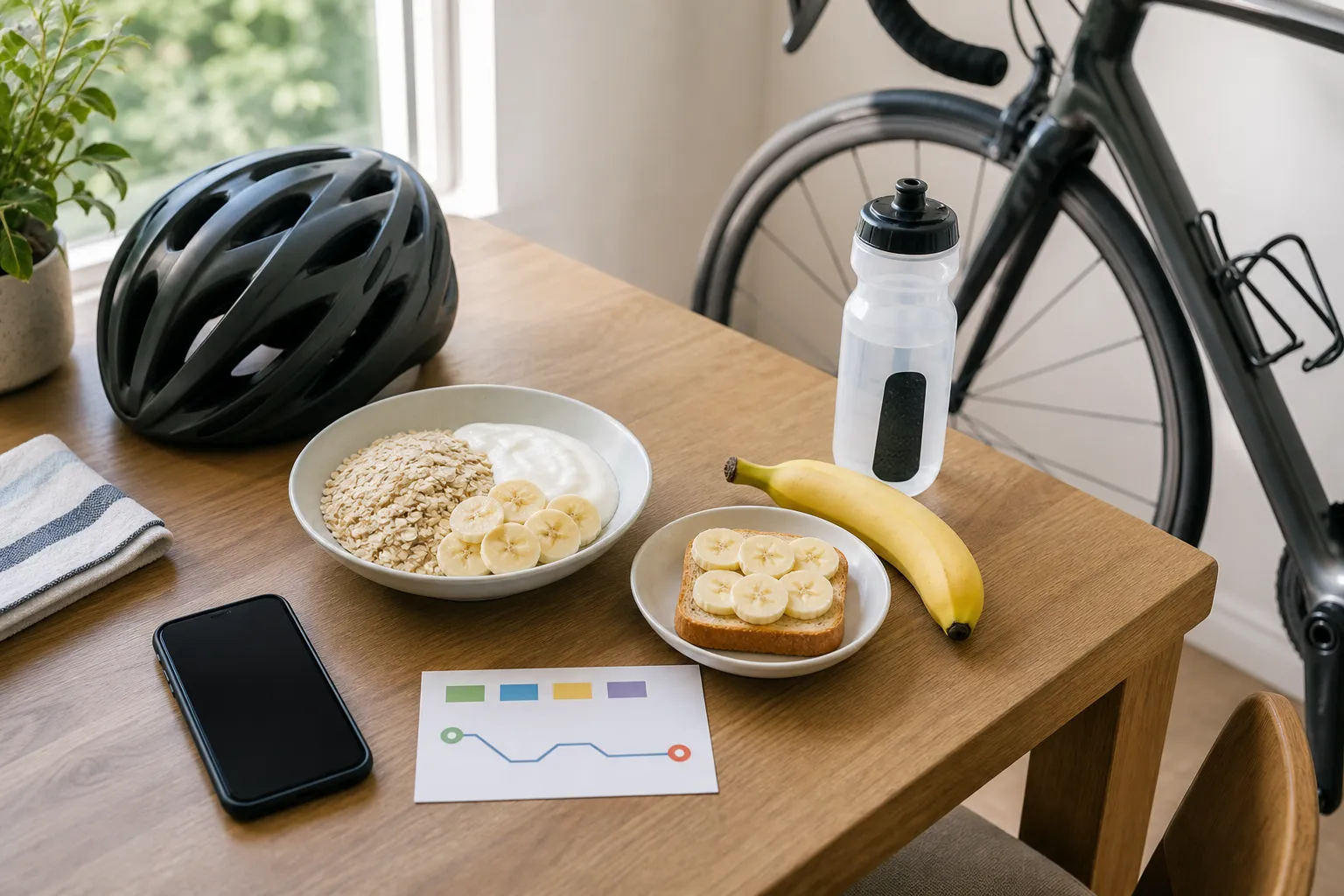
Before an easy ride, choose the least fussy option that fits the timing:
| Ride situation | Simple food plan | Why it works |
|---|---|---|
| You ate a normal meal in the last few hours | Bring water; carry a small snack only if the route could grow | You are not starting empty, so the snack is insurance |
| You are riding early or between meals | Eat a small familiar carbohydrate-rich snack if you tolerate it | Familiar food is less likely to surprise your stomach |
| You are doing hills, group pace, or a new distance | Bring food you can eat in small bites before you feel drained | Harder riding turns a snack from optional to useful |
| You are nervous about digestion | Keep the ride easy and use food you already know | Do not test traffic, distance, and new nutrition together |
Carbohydrate-rich does not have to mean expensive. Bananas, toast, bagels, cereal bars, rice cakes, dried fruit, jam sandwiches, potatoes, pretzels, and ordinary sweets can all work if your stomach accepts them. Gels and sports drinks are convenience tools, not proof that the ride is serious.
If your only question is whether a gel is necessary for a short ride, read do you need energy gels for a one-hour ride?. This guide is the broader plan for food, water, heat, and longer beginner rides.
Use ride length as a packing trigger
Do not turn the table below into a rigid medical or training prescription. Use it as a practical packing check for easy to moderate beginner rides, then adjust for heat, hills, fitness, refills, and personal advice.
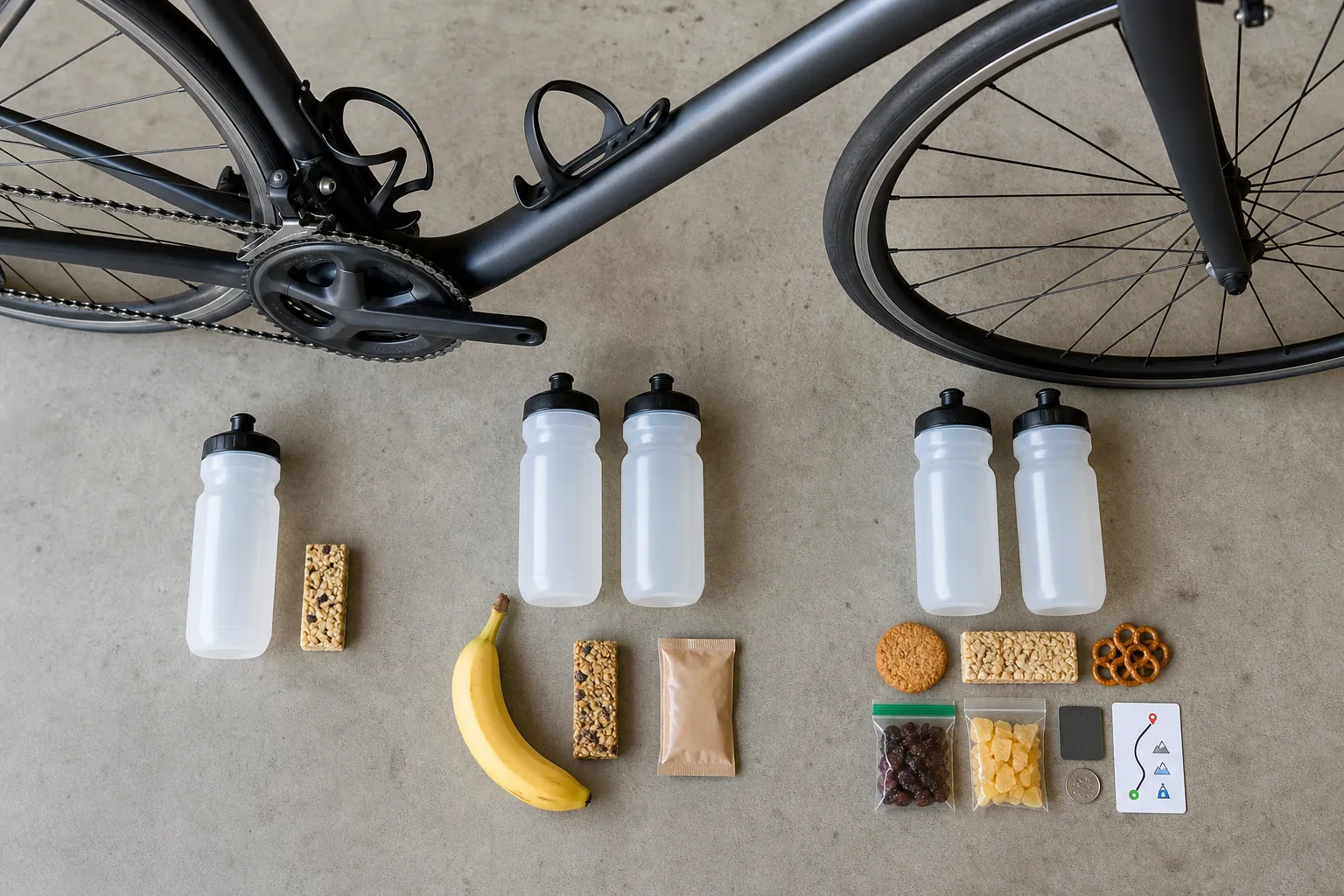
| Planned ride | What to carry | What to avoid |
|---|---|---|
| Up to about 45 to 60 minutes, easy effort, close to home | One bottle of water; optional small snack if you are hungry or uncertain | Buying special fuel because you feel you are supposed to |
| About 60 to 90 minutes, or a short ride that might stretch | Water plus one familiar snack | Waiting until you feel shaky before deciding food mattered |
| More than about 90 minutes, hilly, hot, or far from easy help | Water, planned snacks, refill or shop options, and a backup food source | Treating the first longer ride like a test of toughness |
| Event, group ride, or route with limited stops | Rehearsed food, known drink setup, backup snack, payment, and route exits | Trying a new gel, drink mix, saddle bag, and distance all at once |
The British Dietetic Association notes that carbohydrate during exercise can enhance performance when exercise is hard and lasts longer than an hour. Nationwide Children’s Hospital’s sports-medicine guidance similarly says eating may not be necessary for activity under 60 minutes, while a carbohydrate-rich snack can help during longer activity.
That does not mean every 61-minute ride needs a packet on a schedule. It means the longer and harder the ride becomes, the less wise it is to rely on “I will probably be fine.”
Drink early enough to stay useful
Water is usually the first bottle choice for beginner rides. For most short, easy rides, it is simpler than powders, tablets, or sports drinks. The British Dietetic Association advises starting exercise well hydrated, taking appropriate fluids during exercise, and drinking to just stay ahead of thirst so you avoid both too little and too much.
A good beginner bottle habit is simple:
- Put the bottle on the bike before you leave.
- Practise removing and replacing it somewhere quiet.
- Drink during easy moments, not in the middle of a junction or rough corner.
- Stop safely if drinking while riding pulls attention away from control.
- Notice whether you return with an empty bottle, a full bottle, or a headache and dry mouth.
If the weather is hot, the route is exposed, or you sweat heavily, the water plan needs more respect. NIOSH heat-stress hydration guidance says water is generally sufficient for hydration during heat exposure, gives a work-heat reference of 24 to 32 ounces per hour, and warns not to drink more than 48 ounces per hour because too much fluid can create a medical emergency from low blood salt.
Cycling is not the same as industrial heat work, so do not copy those numbers blindly. Use the principle: carry enough, drink regularly, plan shade or refills, and do not force huge amounts of plain water because someone told you thirst is always too late.
The CDC Yellow Book also warns that excessive water intake contributes to exercise-associated hyponatremia, a low-sodium condition that can be dangerous. For a beginner, the practical message is balanced: dehydration is bad, but “you cannot drink too much” is also bad advice.
When electrolytes or sports drink make sense
Electrolytes are minerals such as sodium and potassium. You lose some in sweat. Most short beginner rides do not need a special electrolyte product if you ate normally and the conditions are mild.
Consider an electrolyte drink, salty food, or a sports drink when several of these are true:
- the ride is long enough that you will be sweating for a while;
- the day is hot or humid;
- refills are limited and you need a drink you will actually use;
- you are a salty sweater, with white marks on clothing or helmet straps;
- you are riding harder than normal;
- a qualified clinician or dietitian has given you a personal plan.
Sports drinks can combine fluid, carbohydrate, and sodium, which is useful when one bottle needs to do several jobs. They also contain sugar, and some products include caffeine or other ingredients. Energy drinks are a separate category from sports drinks and are not automatically hydration products. If caffeine is part of your ride food or drink, count the total; the FDA says sensitivity varies and some people should ask a health care provider.
Pack food you can actually eat
The best beginner ride snack is not the product with the most aggressive marketing. It is the food you will remember, open, chew, swallow, and tolerate while tired.
Good starter options:
- banana;
- cereal bar or oat bar;
- jam, honey, or peanut butter sandwich if it sits well for you;
- dates, raisins, dried apricots, or other dried fruit;
- pretzels or crackers when salty food sounds better;
- small sweets for a quick backup;
- an unbranded gel or chew only if convenience solves a real problem.
For a first longer ride, bring variety. A sweet bar that sounds perfect at home may become unappealing after two hours, while a sandwich may feel comforting early and awkward later. Also check the packaging: you need to open it, eat it, and pack the wrapper away without making the bike harder to control.
Plan the refill, not just the bottle
Two bottles are not the same plan on every route. On a cool route with shops, parks, toilets, and water fountains, two bottles plus payment may be plenty. On a hot route with closed facilities, no shade, and no safe shops, the same two bottles may be irresponsible.
Before a new longer ride, mark:
- where you can refill water;
- where you can buy food;
- where shade or shelter exists;
- where public toilets or cafes are likely;
- where you can turn around, take transit, or call for pickup;
- where phone signal may be weak.
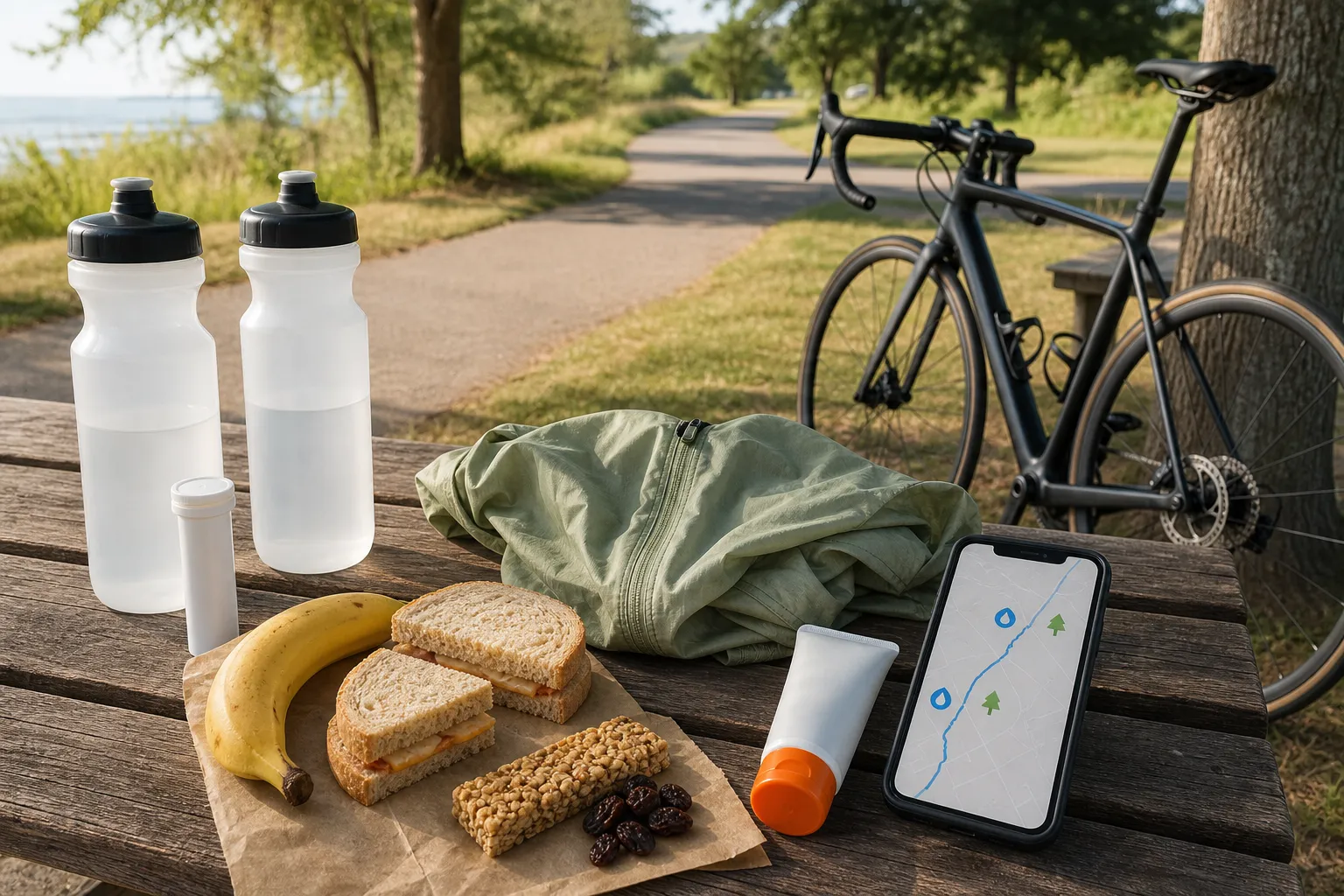
This connects directly to how to plan your first road cycling route. A food and drink plan is not only what fits in your pockets. It is the route’s support system.
What to do if you get it wrong
If you feel hungry, flat, or distracted but still in control, stop somewhere safe. Eat a familiar snack, drink, and give it time. Do not try to unwrap food while wobbling through traffic. If you feel better, shorten the ride and treat the lesson as useful data.
If you feel faint, confused, unusually weak, nauseated, chilled in heat, severely dizzy, short of breath in a worrying way, or unable to control the bike, stop riding and get help. If you have diabetes or another condition where food and exercise interact with medication, the plan belongs with a clinician or registered dietitian. The American Diabetes Association notes that people with type 1 diabetes may need carbohydrate before activity when blood glucose is low, especially after recent insulin or for exercise longer than 30 minutes.
Common beginner mistakes
Starting a new distance underfed because the ride is “only cycling.” Hills, wind, traffic, or route mistakes can stretch the ride. Carry backup food before pride makes the decision.
Using gels to cover poor planning. A gel can be useful, but it does not replace water, a known route, refills, or food your stomach accepts.
Waiting until hunger or thirst dominates your attention. Eat and drink while you still feel normal enough to make calm decisions.
Trying a new drink mix on the longest ride yet. Test new food and drink on an easy ride first.
Packing food you cannot reach or open. A snack buried under tools is emergency food, not ride food.
Forcing huge amounts of plain water. Hydration is not a contest. Drink enough for conditions and effort, but respect the overdrinking boundary.
Ignoring caffeine. Caffeinated gels, tablets, coffee, cola, and energy drinks all count.
A simple plan for your next ride
Use this quick decision before you leave:
- Ride length: will this be under an hour, 60 to 90 minutes, or possibly longer?
- Effort: easy spin, hills, group pace, or new distance?
- Weather: mild, hot, humid, windy, cold, or changeable?
- Support: can you refill, buy food, find shade, or shorten the route?
- Body: did you eat normally, and do you have any medical reason to follow a personal plan?
Then choose the smallest reliable setup:
- Short easy ride: water, normal meals, optional backup snack.
- Medium ride: water plus one familiar snack you can open easily.
- Longer, hotter, or less supported ride: planned snacks, enough drink or refill points, payment, shade or shelter options, and a bailout.
Your next step
For your next ride, pack one bottle and one familiar snack even if you think you may not need the snack. When you get home, write one sentence: “I drank enough, too little, or too much because…” and “I ate early enough, too late, or did not need food because…”
That note will teach you more than a stranger’s exact bottle mix. Once the route is longer than your current easy range, pair this guide with how far should a beginner cyclist ride? and how to plan your first road cycling route.
Sources and further reading
- British Dietetic Association: sport and exercise nutrition
- Nationwide Children’s Hospital Sports Medicine: fueling and hydrating before, during and after exercise
- NIOSH / CDC: heat stress hydration
- CDC Yellow Book: heat and cold illness in travelers
- FDA: how much caffeine is too much?
- American Diabetes Association: exercise and type 1 diabetes
- r/cycling reader context: on-bike nutrition that is not gels
- r/cycling reader context: nutrition and hydration for a 1-2 hour ride
- r/cycling reader context: riding 40-50 miles without water or snacks