Soreness versus pain on a new bike
Tell the difference between ordinary first-ride soreness, fit clues worth adjusting, and pain or numbness that should stop the ride.
 Field guide / soreness-versus-pain-on-a-new-bike
A new road bike can make your body aware of places it has not loaded before. That does not mean every ache is harmless, and it also does not mean the bike is wrong after one awkward ride. The useful question is what the sensation is doing: fading, repeating, spreading, sharpening, or changing how you control the bike.
The short answer: mild, broad soreness that eases after the ride is usually a reason to reduce ride length and observe. Sharp pain, numbness, tingling, swelling, weakness, or discomfort that makes you grip, brake, steer, sit, or pedal differently is a reason to stop and investigate. Fit changes should be small, recorded, and reversible.
Sort the signal before changing the bike
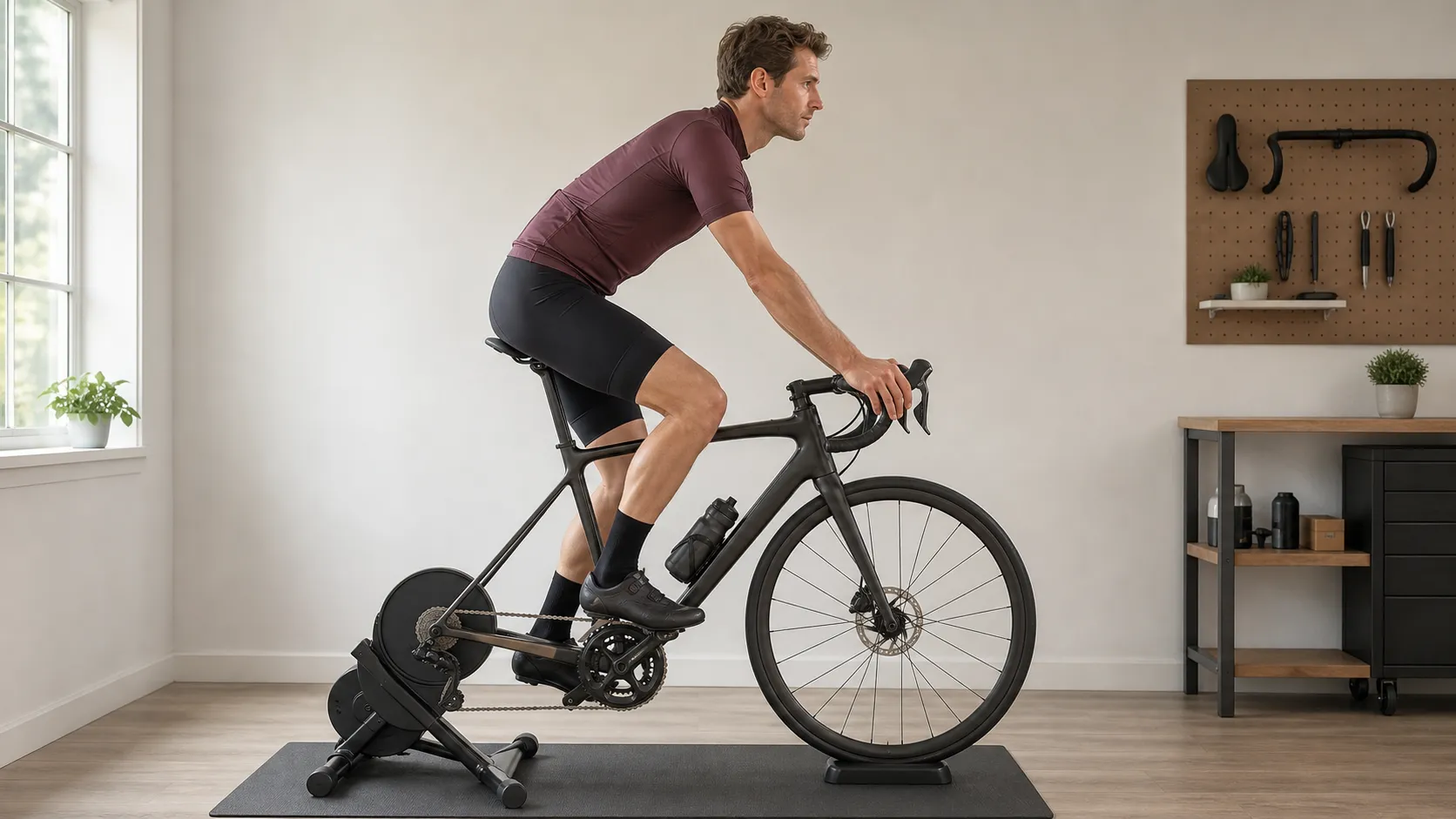
Beginner discomfort usually falls into three buckets.
| What you notice | What it often means | What to do next |
|---|---|---|
| Mild muscle fatigue in legs, shoulders, or core that eases after the ride | Your body is adapting to a new position or effort | Make the next ride easier or shorter and compare |
| Repeated pressure at one contact point, such as hands, saddle, neck, or feet | The riding position, saddle, clothing, or ride length may need attention | Record when it starts and change one variable at a time |
| Sharp pain, numbness, tingling, swelling, weakness, or loss of control | This is beyond ordinary “breaking in” language | Stop the ride and seek appropriate help |
That last boundary matters. Cleveland Clinic lists severe pain that is not improving, extreme bruising or swelling, deformity, and inability to move or use the injured part as signs to seek medical care for a sports injury. Mayo Clinic says tingling, weakness, or pain in the hands or feet deserves medical care because nerve symptoms should not be ignored.
Mild soreness should improve, not escalate
After a first road-bike ride, it is common to feel generally tired through the legs, upper back, shoulders, or sit-bone area. The key word is general. It feels like your body did unfamiliar work, not like one small spot is being stabbed, burned, crushed, or going numb.
Treat ordinary soreness as feedback:
- Shorten the next ride.
- Stay mostly on quiet, simple routes from your first month of road cycling.
- Note when the sensation starts: immediately, after 10 minutes, after climbs, after sitting still, or only the next morning.
- Change only one thing before the next test.
Do not keep adding distance to prove the bike will “break in.” A saddle, shoe, glove, or handlebar position can feel different after a few rides, but worsening symptoms are not a training plan.
Saddle pain is not a badge
The saddle should support your sit bones more than your soft tissue. Adventure Cycling Association’s saddle-adjustment guide makes the same practical distinction: some new-ride soreness can happen, but persistent sharp pain, swelling, or numbness is a problem to solve, not a normal price of cycling.
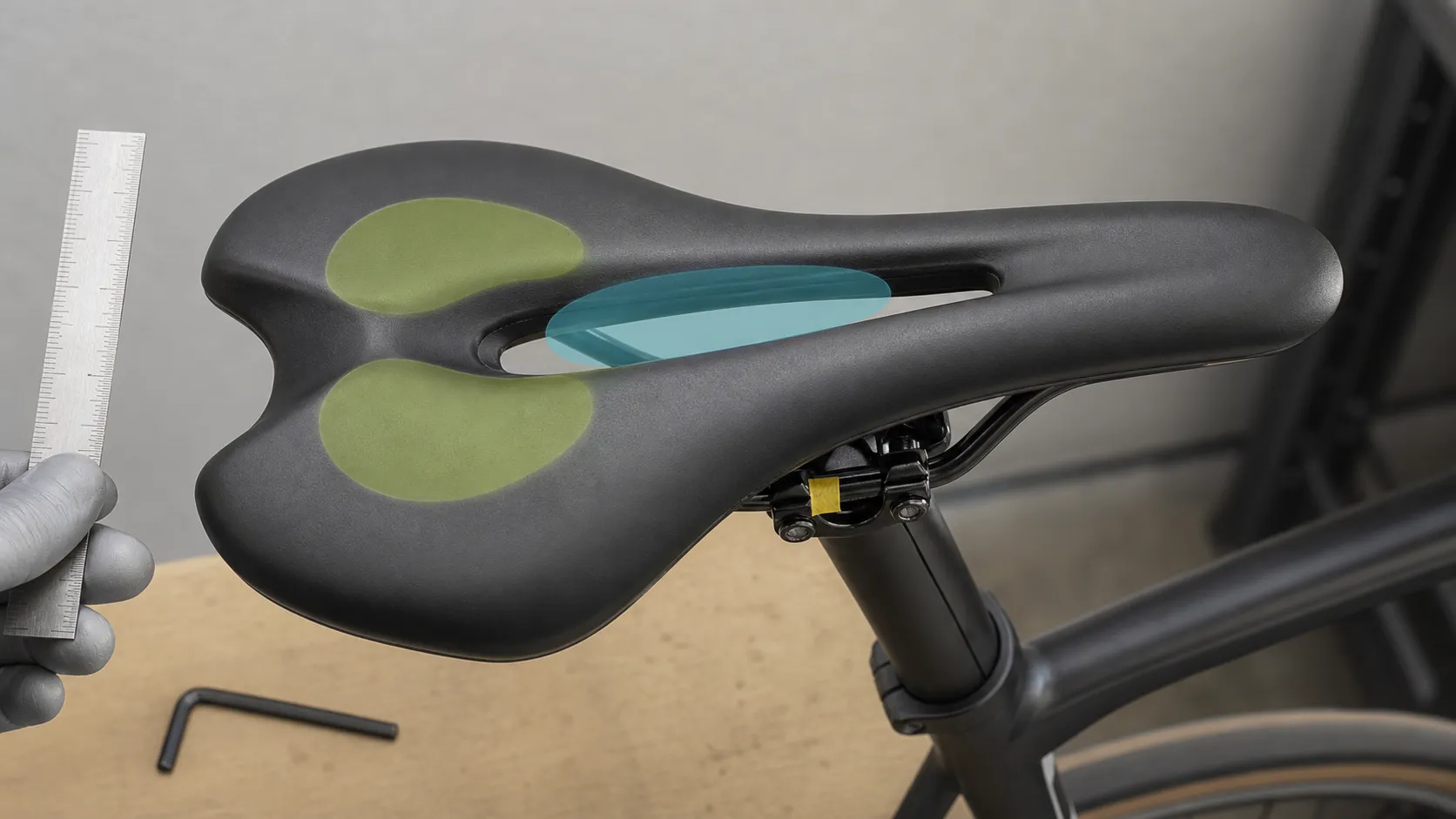
Start with simple checks before buying a new saddle:
- Is the saddle roughly level, rather than nose-up or dramatically nose-down?
- Are you sliding forward and loading your hands?
- Does the discomfort begin immediately, or only after a ride that was too long for your current adaptation?
- Are shorts, seams, underwear, or clothing folds creating a pressure point?
- Is the saddle securely clamped, with no movement when you push it by hand?
Trek’s owner’s manual notes that saddle fore-aft position changes both reach to the handlebars and weight distribution. Cannondale’s owner manual also warns that a loose saddle clamp can damage parts or cause loss of control, and that a different saddle may be needed if careful height, tilt, and fore-aft adjustment still leave it uncomfortable. If you loosen bolts, use the bike or component maker’s torque instructions; do not guess on carbon parts or unfamiliar clamps.
Hand, wrist, and neck symptoms often point to load
New riders often describe “too much weight on my hands” or a neck that feels busy after only a short ride. Sometimes that is ordinary upper-body fatigue. Sometimes it is a fit clue: reach may be too long, the handlebar may be too low, the saddle may be pushing you forward, or you may be locking your elbows and gripping because the route feels stressful.
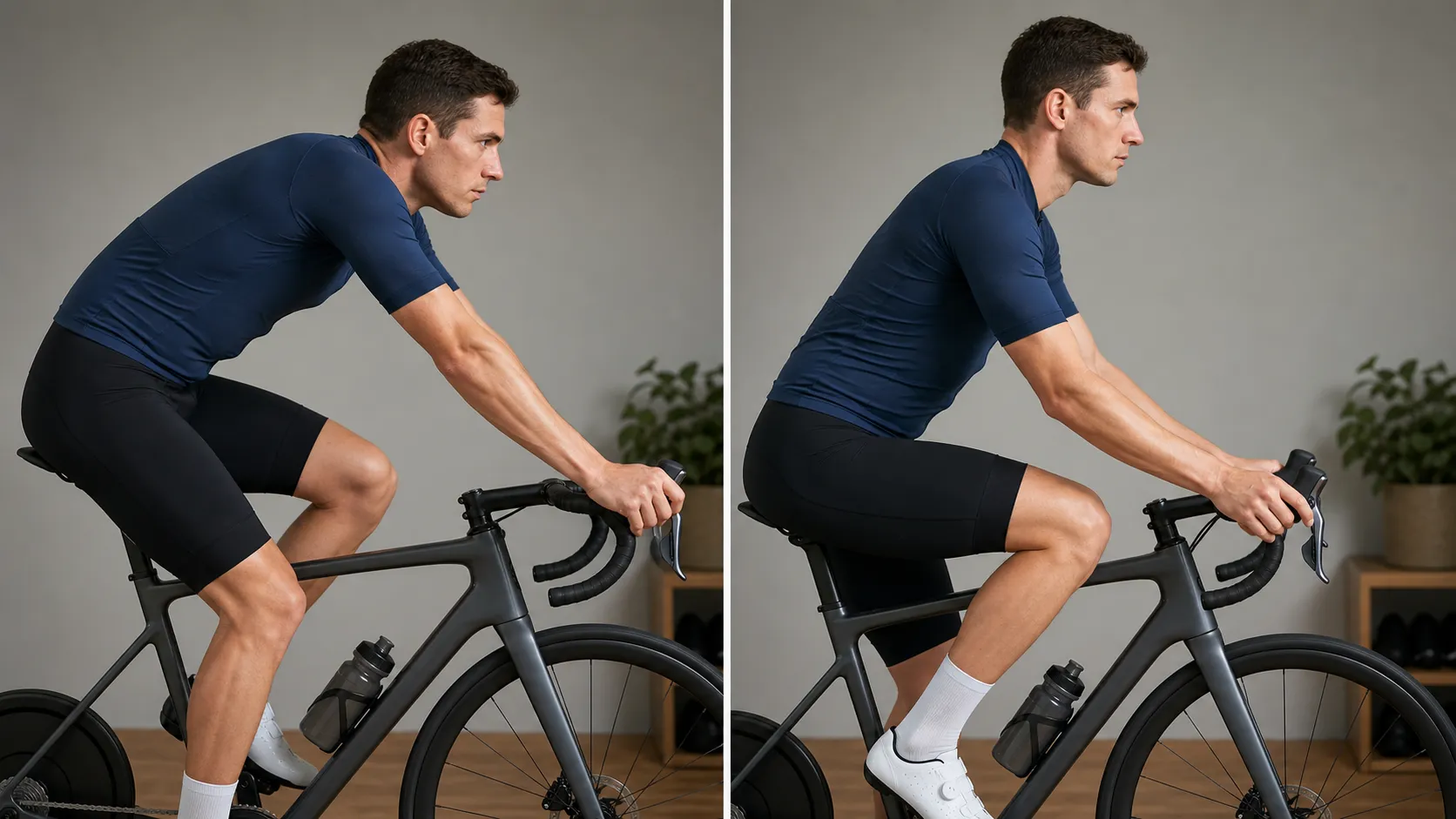
Try this on a stationary trainer, supported doorway, or quiet safe place:
- Put your hands on the brake hoods, where you normally ride.
- Soften your elbows and drop your shoulders away from your ears.
- Check whether your wrists are bent sharply or whether you are hanging on the brake levers.
- Move between hoods, tops, and drops only where you can still brake and steer safely.
- If tingling or numbness appears, stop the test rather than “riding through it.”
If the bike felt too stretched from the start, revisit the fit checks in how to choose your first road bike. If you are still learning the names of the contact points, road bike anatomy for beginners will make the shop conversation easier.
Keep a tiny comfort log
You do not need a spreadsheet. After each early ride, write four lines:
- Where: saddle, hands, wrists, neck, knees, feet, lower back, or general fatigue.
- When: immediately, after a certain time, on climbs, in drops, while braking, or after the ride.
- What changed: route, duration, clothing, tyre pressure, saddle position, handlebar position, shoes, or weather.
- What happened next: disappeared, improved, repeated, worsened, became numb, or affected control.
This log helps a bike shop, fitter, mechanic, or healthcare professional separate fit clues from injury clues. It also stops you from making three changes at once and never knowing which one helped.
One focused next action
Before your next ride, choose one simple test: shorten the route, check that the saddle is secure and close to level, or practise a relaxed hand position somewhere safe. If discomfort is sharp, numb, swollen, worsening, linked to a crash, or changing how you control the bike, skip the test ride and get qualified help first.