Predictability beats bravery in traffic
Ride more calmly in traffic by making early, visible, boring decisions instead of trying to prove you belong on the road.
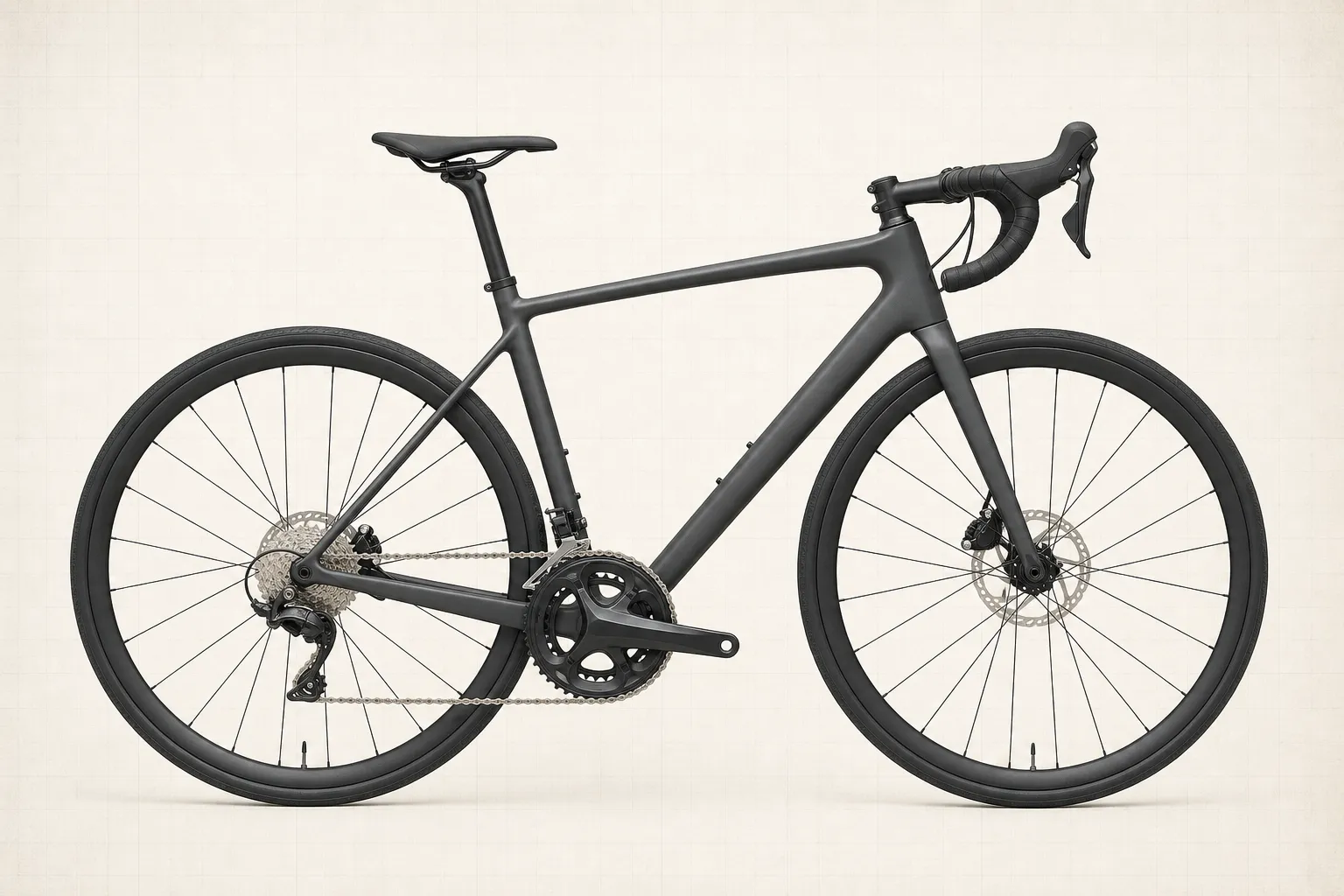 Field guide / predictability-beats-bravery-in-traffic
The beginner traffic skill is not bravery. It is making your next move easy for other road users to understand: steady line, early scan, clear signal, legal route choice, and no sudden darting.
The short answer: ride like you want to be boringly readable. Hold a steady line, signal before you turn or change position, look before you move, obey the rules where you ride, and choose calmer roads until those habits feel automatic.
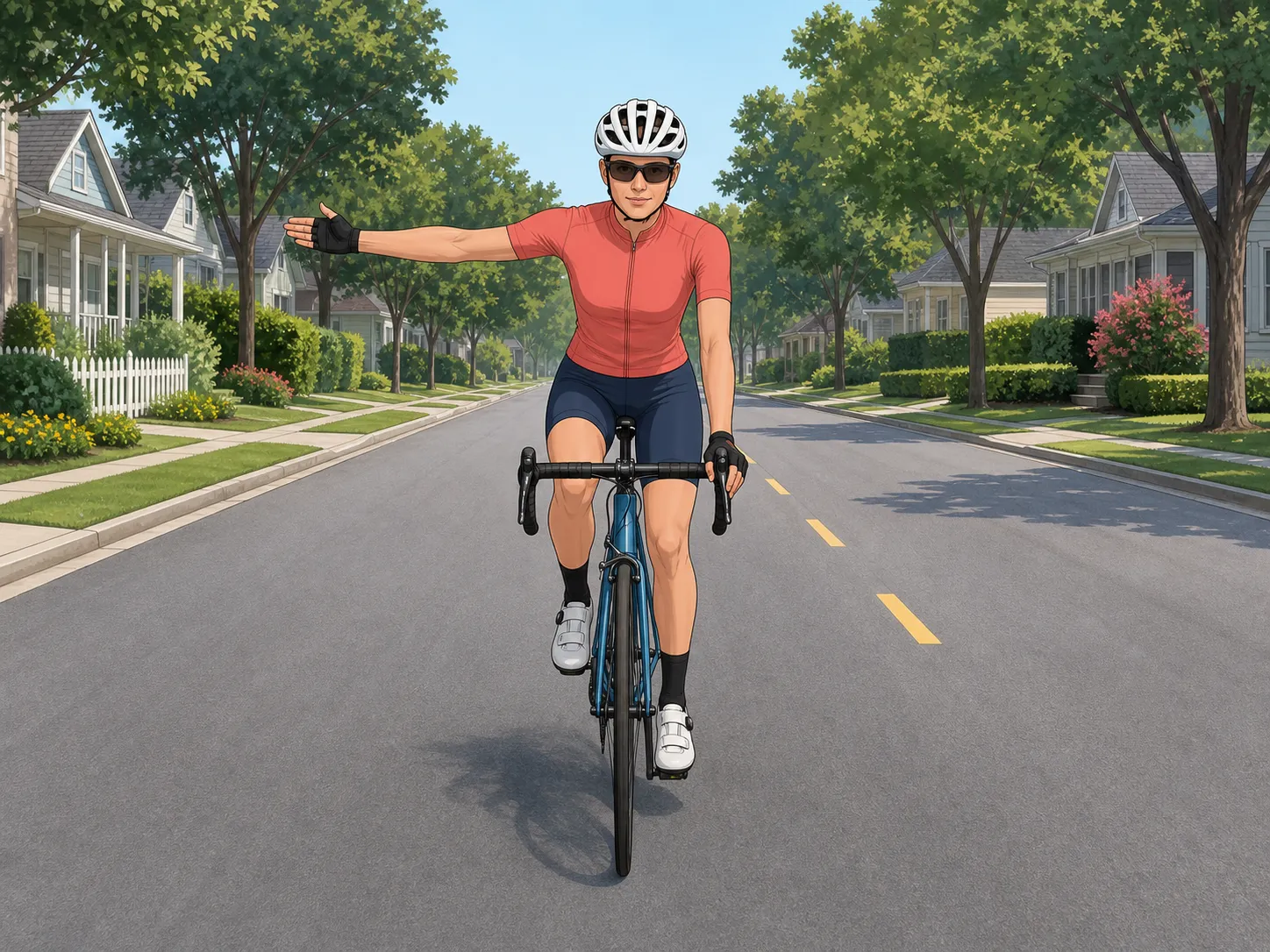
Why beginners ask this so anxiously
Recent cycling-community questions rarely sound like a neat rulebook problem. A new rider in r/cycling wrote about being shaken by cars, honks, and aggressive passes. Another thread about what road cyclists should know in 2026 included the tension between “assume you are invisible” and being visible enough to take an appropriate lane position. A driver asking cyclists for advice was told, repeatedly, that predictable movements and patience matter around bikes in a recent r/cycling discussion.
That is the real beginner question: “How do I ride without freezing, swerving, or trying to be fearless?”
The answer is to make fewer surprising decisions.
Predictable does not mean invisible
Some beginners try to be polite by disappearing into the gutter, weaving into every gap between parked cars, or giving up their line whenever a vehicle appears behind them. That can feel courteous, but it can also make your path harder to read.
NHTSA bicycle safety guidance tells riders to choose routes with less traffic and slower speeds when riding on the road, ride a bike that fits and works, and follow rules that make them visible and expected. Its adult bicycle-safety material also tells cyclists to ride with traffic, obey signs and signals, and signal before turns so others can anticipate what they will do.
For a beginner, predictable usually means:
- riding with traffic where that is the legal rule;
- holding a line that does not suddenly weave around every drain, parked car, or rough patch;
- scanning before a change, not while already moving across;
- signaling early enough to be useful;
- waiting when the gap is not obvious;
- choosing a quieter route instead of forcing confidence on a hostile road.
This is not a complete road-positioning guide. It is the small habit underneath the bigger guide: make your movements readable before you make them assertive.
Build a three-part traffic habit
Use this simple sequence before turns, lane-position changes, moving around parked cars, or joining another road.
1. Look early
Look ahead for junctions, parked cars, potholes, drain covers, bus stops, driveways, and traffic speed. Then look behind before changing your line. If looking back makes the bike wobble, practise that skill somewhere quiet before depending on it in traffic.
The League of American Bicyclists lane-positioning guidance says intersection risk is reduced by being visible and positioning yourself clearly, generally in the right-most lane that goes where you are going. That “clearly” is the beginner gold: do not make other people guess where you are headed.
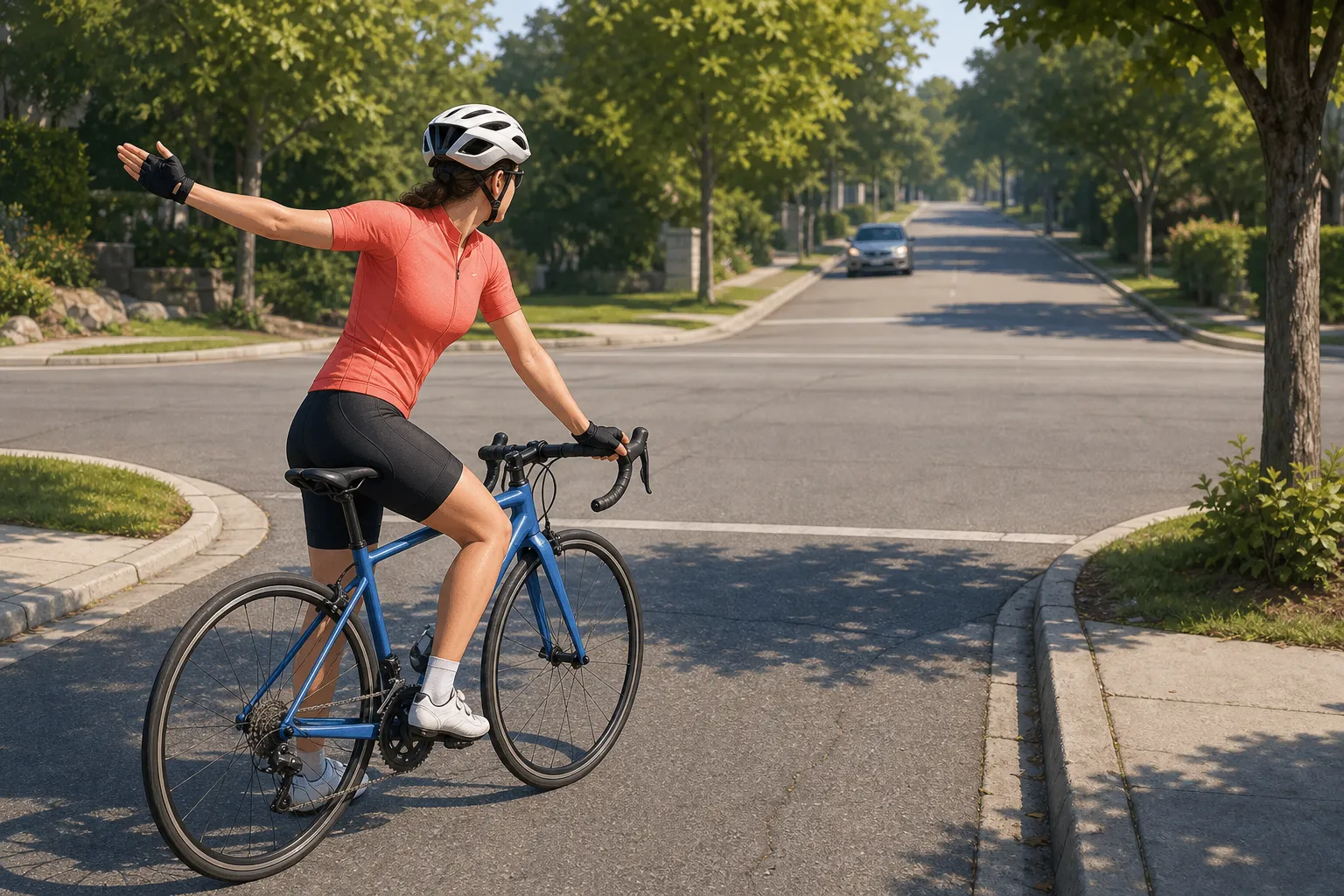
2. Signal like a sentence, not a surprise
A signal is communication, not armor. It tells people what you intend, but it does not create a safe gap by itself.
The Pennsylvania Bicycle Driver’s Manual makes that boundary explicit: a signal does not make a lane-position change safe; the driver’s response and the available space matter. That is a useful rule everywhere, even though the exact hand signals and legal duties vary by place.
Signal early, then put your hand back on the bar when you need full control. If the road is rough, wet, crowded, or downhill, bike control comes first. A short clear signal before the maneuver is better than a long wobbly one during it.
3. Move steadily or wait
Once you have looked and signaled, either move on a smooth line or wait. The worst beginner option is the half-move: drifting out, changing your mind, cutting back in, then trying again.
If the gap is not clear, hold your current line and wait somewhere predictable. If the route keeps demanding stressful moves, use how to plan your first road cycling route to choose roads with fewer fast passes, complex junctions, and last-second decisions.
The parked-car mistake
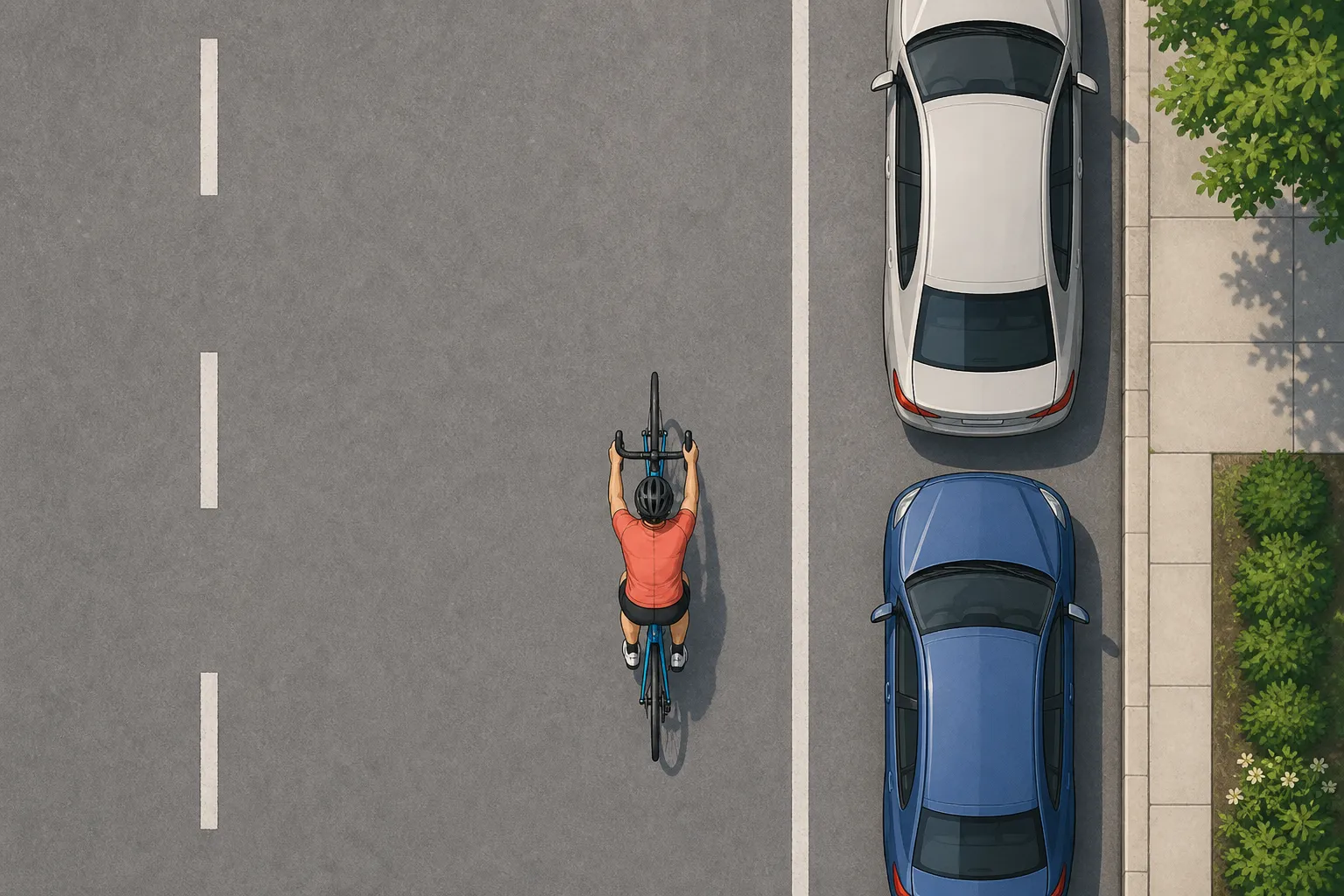
Parked cars create a common beginner trap. You ride close to the curb, pass one parked car, move left around it, then dive back toward the curb before the next one. From behind, that can look like repeated swerving.
A steadier approach is often safer and easier to understand: choose a line that accounts for the row of parked cars, road edge, debris, drains, and local rules, then hold it instead of weaving. The exact position depends on lane width, traffic speed, bike lanes, road surface, and law.
The League of American Bicyclists explanation of taking the lane is useful here because it frames lane position as a visibility and safety decision, not a personality statement. Sometimes the clearer position is not the one closest to the edge.
What not to prove
You do not need to prove that you are brave enough for every road. You do not need to match a faster rider’s lane choices. You do not need to keep going through traffic that is using up all your attention.
Beginners make better progress by lowering the number of decisions per minute. Use quieter roads, protected paths, familiar loops, and simple junctions while you learn. NHTSA specifically recommends planning routes with less traffic and slower speeds when riding on the road; that is not weakness, it is good risk management.
You also do not need to win an argument with a driver, pedestrian, or another cyclist from the saddle. Your job is to get home with control. If a situation feels heated, confusing, or legally unclear, move to a safe place, stop if needed, and reset.
A one-ride practice task
On your next easy ride, pick one calm street or path connection and practise only this:
- Notice your next turn or position change earlier than usual.
- Look behind while keeping the bike steady.
- Signal briefly and clearly.
- Put both hands back on the bar.
- Move smoothly only if the space is there.
If any step feels rushed, the route is doing too much teaching at once. Repeat the skill somewhere quieter before adding faster traffic, hills, wet roads, darkness, or group riding.
Your next step
Before the next ride, choose one route where you can practise predictable decisions without proving anything. If traffic choice is the stressful part, read how to plan your first road cycling route. If bike control is the stressful part, start with braking and cornering with confidence and beginner road bike fit and comfort before putting yourself in busier conditions.
Sources and further reading
- NHTSA: bicycle safety
- NHTSA: seven smart routes to bicycle safety for adults
- League of American Bicyclists: lane positioning and intersections
- League of American Bicyclists: why are bicyclists in the middle of the road?
- Pennsylvania Bicycle Driver’s Manual
- r/cycling reader context: recently started biking and traffic fear
- r/cycling reader context: road-bike advice in 2026
- r/cycling reader context: driver asking cyclists for advice