How to keep cycling fitness through winter without living on the trainer
Use a minimum viable winter week, flexible indoor and outdoor options, and a restart rule to preserve consistency without turning winter into a second racing season.
 Field guide / keep-cycling-fitness-through-winter
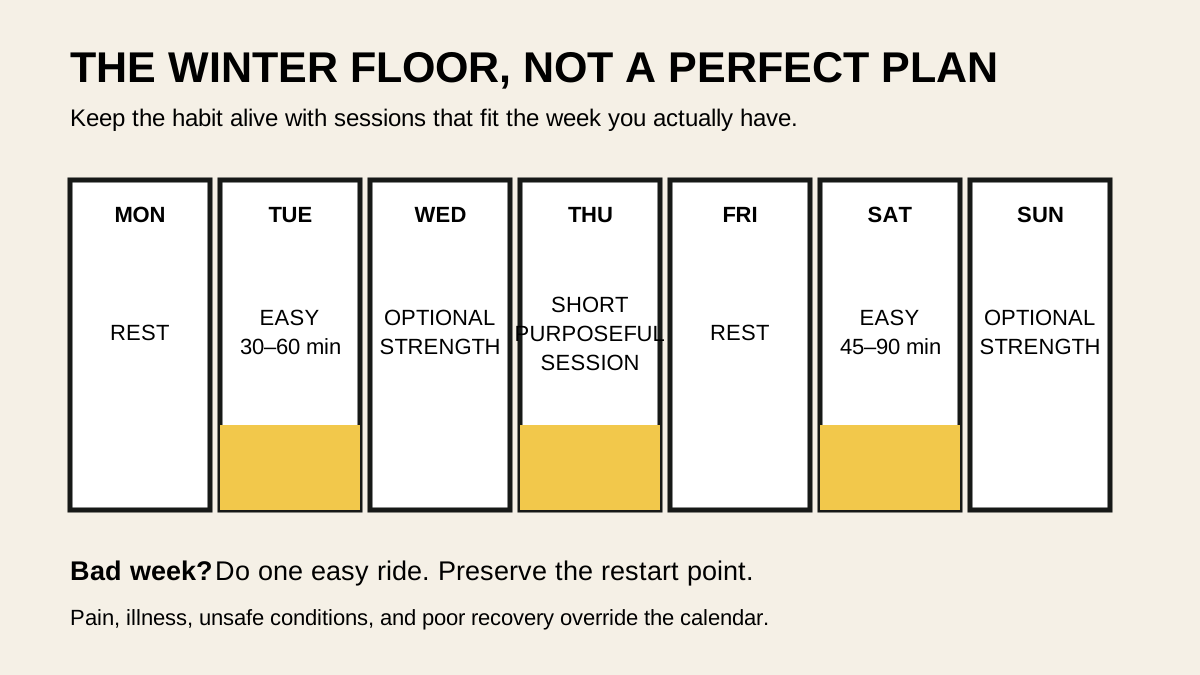
The best winter plan is not the most impressive one. It is the smallest repeatable week that prevents every spring from becoming another full restart. For many recreational cyclists, that means two easy aerobic sessions, one short purposeful ride, optional strength work, and permission to scale down when life or weather intervenes.
The short answer: define a weekly floor before a ceiling. Keep one or two sessions unmistakably easy, use only one demanding cycling session, and keep an outdoor, indoor, and non-bike substitute ready. Missing a week is a scheduling problem; turning it into two months is the problem to prevent.
Solve the real winter problem first
A current r/cycling question asked how to improve after several seasons in which riding was regular from spring to autumn and exercise largely stopped through winter. The useful signal is the recurring gap: riders often search for an advanced workout when the main limit is month-to-month continuity.
Research on detraining supports taking prolonged cessation seriously, but it does not justify panic. A 2024 review found that complete training cessation can reduce endurance adaptations and noted that partial training reduction may limit losses. The studies largely concern trained athletes, so they cannot tell every beginner exactly how many minutes to ride. The practical lesson is narrower: some consistent activity gives you a better spring starting point than none.
Set a floor you can complete in a bad week
Choose the minimum before building the ideal plan. A useful floor might be:
- one 30–45 minute easy aerobic session;
- one short bike session that includes a few controlled, purposeful efforts;
- one optional easy ride, walk, swim, or other aerobic session;
- one or two brief strength sessions when recovery and experience allow.
If three rides already fit reliably, use the illustrated template. If they do not, begin with two. The US Physical Activity Guidelines recommend that adults build toward regular aerobic activity plus muscle-strengthening work, while also making clear that some activity is better than none. That public-health target is not a race plan, but it is a useful guardrail against making the winter all-or-nothing.
Give each session one job
Easy aerobic session
Ride at a pace where full sentences remain comfortable. Use 30–60 minutes indoors or outdoors. The purpose is frequency, aerobic work, and finishing fresh enough to train again.
If every winter ride turns into a hard virtual race, intensity stops being purposeful and begins consuming the rest of the week.
Short purposeful cycling session
After an easy warm-up, include four to six controlled efforts lasting two to four minutes, with generous easy recovery. Aim for repeatable work, not exhaustion. End the set when posture, cadence, or control deteriorates.
Beginners do not need maximal intervals. The training plan without a power meter explains how to use the talk test and elapsed time instead.
Longer easy option
When weather and schedule cooperate, ride 60–90 minutes at conversational effort. Indoors, you may prefer two shorter sessions because cooling, contact pressure, and boredom can make a trainer feel harder than the same time outside.
Strength option
Strength training can complement cycling, but it adds load rather than functioning as free recovery. Start with movements you can perform safely and place them away from the most demanding ride. Use the cycling and strength weekly guide instead of stacking hard leg sessions on consecutive days.
Build three versions of the same session
For every planned ride, write three versions:
| Plan | Example | When to use it |
|---|---|---|
| Outdoor | 60-minute easy local loop | Safe surface, light, weather, and traffic |
| Indoor | 45 minutes with a fan and drink | Darkness, rain, time pressure, or unsafe roads |
| Substitute | 30-minute brisk walk plus mobility | No bike access, travel, maintenance, or low motivation |
The substitute is not physiologically identical to cycling. Its value is preserving the exercise appointment and reducing restart friction. More experienced riders with specific performance goals may need a coach to decide how much cycling specificity to retain.
Make indoor riding physically tolerable
Indoor discomfort can end consistency faster than a modest training plan. Before buying screens or subscriptions, arrange:
- strong airflow directed at your torso and face;
- a stable bike and trainer interface;
- water within safe reach;
- a towel and frame protection from sweat;
- a session short enough that contact pressure remains manageable;
- gearing that lets you ride easily rather than grind.
See the first indoor setup priorities and why a trainer feels less comfortable before assuming you need a new saddle.
Progress one variable, then hold it
After two or three repeatable weeks, change only one item:
- add 10–15 minutes to one easy session;
- add one controlled effort;
- add a short third aerobic session;
- make one familiar session slightly more specific to a spring goal.
Do not add duration, intensity, and frequency together. If sleep, soreness, mood, or willingness to train worsens across several days, repeat or reduce the week. A winter plan succeeds by surviving ordinary disruption.
Use a 48-hour restart rule
When you miss a planned session, do not “repay” it with a double workout. Put one easy restart session into the next realistic 48-hour window. If illness, injury, or severe fatigue caused the gap, recovery takes priority and the restart may need clinical guidance.
After a longer interruption, shorten both duration and intensity. The goal of the first week back is to re-establish rhythm, not test what disappeared. The return-to-cycling guide gives a more gradual route after a substantial break.
Decide what success means by spring
Use process measures that survive weather:
- weeks in which you completed the minimum;
- number of easy sessions that truly stayed easy;
- whether one purposeful session remained repeatable;
- whether normal sleep, mood, and motivation stayed stable;
- whether you can begin spring training without a painful workload jump.
Outdoor average speed is a poor winter score because wind, clothing, temperature, traffic, and surface change it. Trainer platform rankings are equally optional.
Your next step
Put two sessions into next week’s calendar: one easy and one purposeful. Write an outdoor, indoor, and substitute version for each. Then define the smallest session that still counts on a difficult week. Build from completed weeks, not from the plan you hoped to follow.
Sources and further reading
- US Physical Activity Guidelines for Americans, second edition
- 2024 review: cardiorespiratory and metabolic consequences of detraining in endurance athletes
- Study: effects of five weeks of training cessation in young trained road cyclists
- r/cycling reader context: recurring winter continuity and training questions — used as an editorial signal; personal outcomes were not treated as evidence.