How to ride a road bike safely in the rain
Adjust speed, braking, cornering, visibility, line choice, and route decisions for wet roads—then use a simple test before committing to the ride.
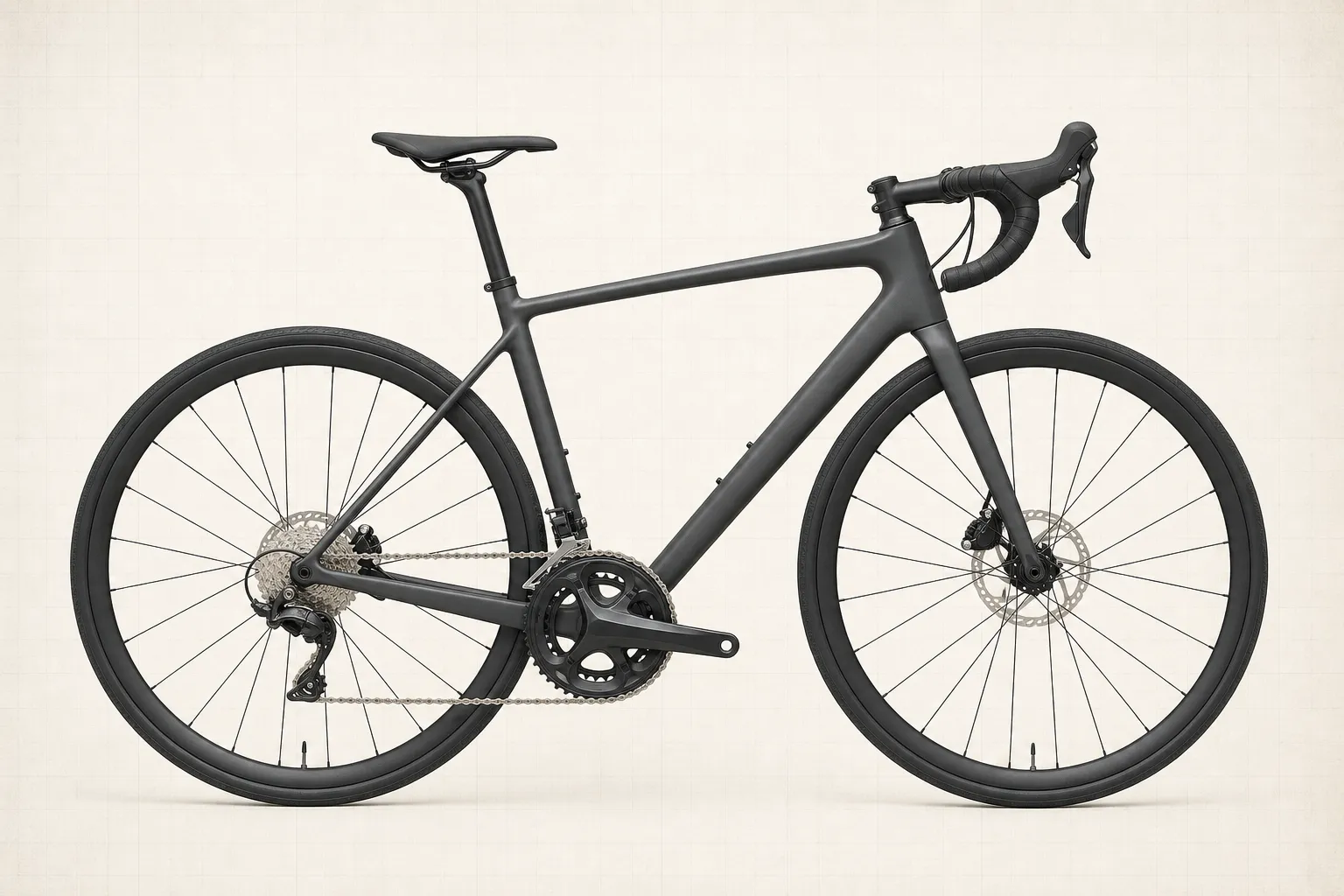 Field guide / how-to-ride-road-bike-safely-in-rain
You can ride a road bike in ordinary rain, but the wet ride should be slower and less ambitious than the dry version. Brake earlier and more gently, reduce cornering speed before the turn, keep the bike more upright, avoid abrupt steering or pedalling forces, and leave extra space.
The short answer: rain reduces your margin. Make every input earlier, smoother, and smaller. If you cannot see the surface, be seen, stop predictably, or control the bike in gusts, stop somewhere safe and use your bailout plan.
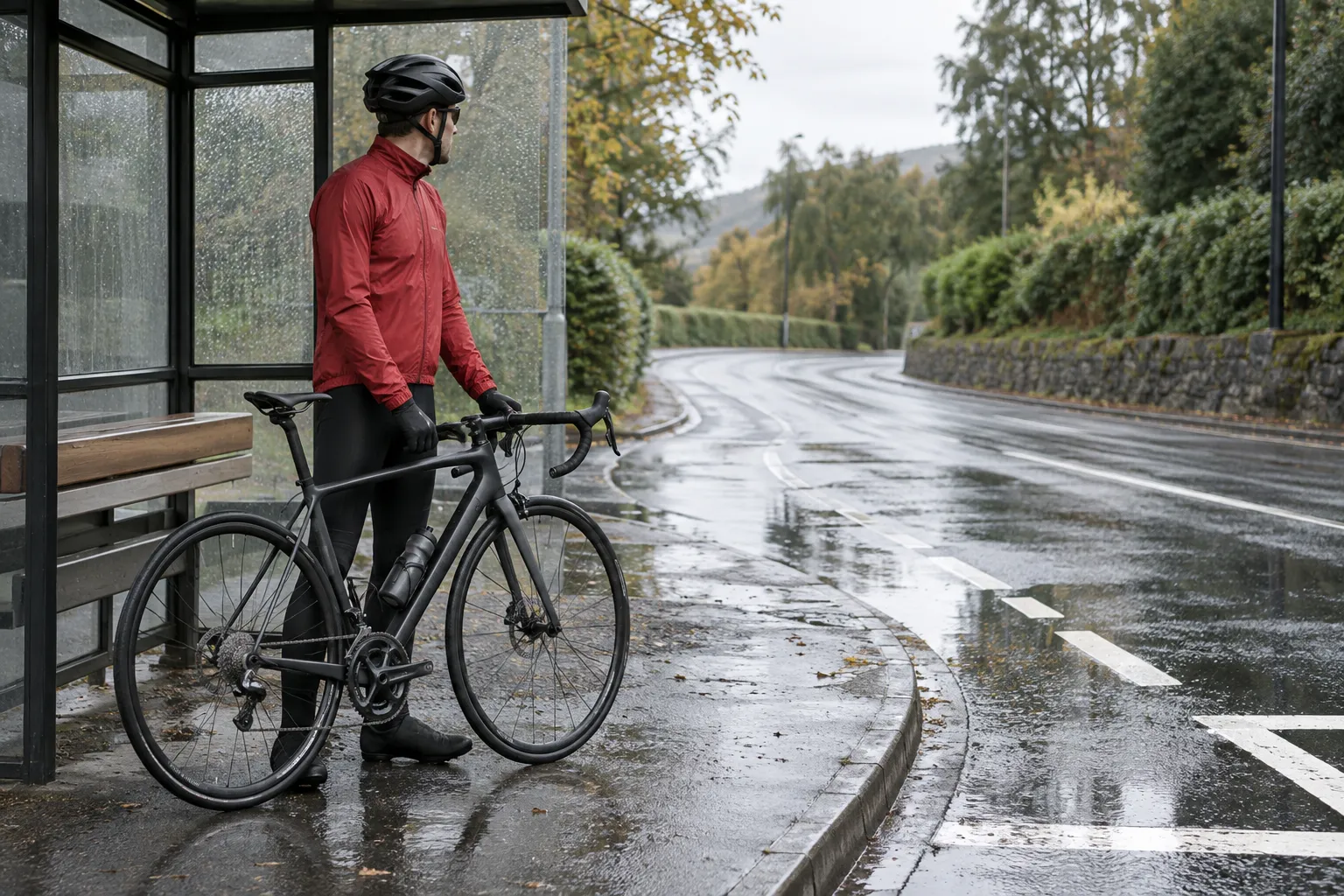
Rain riding is mainly a margin problem
Recent Reddit discussions ask whether people ride in the rain at all and how to handle intense rain safely. The recurring concerns are traction, stopping distance, visibility, hidden potholes, clothing, and post-ride care.
Reddit experiences cannot establish a safe wind speed, rainfall rate, tyre, or stopping distance for you. Surface material, contaminants, tyre condition, brake system, temperature, traffic, and rider skill all change the result. Use a conservative process instead of a universal threshold.
Decide whether this rain is rideable
Before leaving, check the complete route and the return window—not only the current view from the door. Cancel or shorten the ride when:
- thunderstorms or lightning are nearby;
- flooding, fast water, debris, or landslips are possible;
- standing water hides the road surface;
- drivers and riders cannot see far enough to react;
- gusts can move you across your line;
- temperature plus wet clothing creates a cold-risk problem;
- your brakes, tyres, lights, or vision are already compromised.
Use a familiar, flatter route with easy exits. Avoid a first wet ride on unfamiliar descents, high-speed group routes, exposed ridges, or roads that drain poorly.
Check the bike before committing
Complete the five-minute pre-ride check, with extra attention to:
- tyre damage, embedded debris, and appropriate pressure;
- secure wheels and no new wheel or tyre wobble;
- predictable front and rear brake operation;
- adequate pad and rim or rotor condition;
- lights, reflectors, and legally required equipment;
- clear lenses and clothing that will not obstruct controls.
Shimano’s brake guidance states that required braking distance is longer in wet weather and advises reducing speed and braking early and gently. Your exact brake manufacturer’s current manual takes priority.
Do a walking-speed brake check in a traffic-free area. If a lever pulls unusually close to the bar, braking is inconsistent, or the wheel locks unexpectedly, do not proceed.
Brake before the corner
The wet-road sequence is simple:
- Look through the turn and assess the surface early.
- Reduce speed while the bike is upright.
- Release excess braking before adding meaningful steering angle.
- Enter slower than you think necessary.
- Keep your body calm and the bike relatively upright.
- Accelerate smoothly only when the bike is straightening.
Tyres have limited grip to share between braking, cornering, and acceleration. Demanding a large amount of two at once shrinks your margin. Avoid a hard brake application after leaning into the turn.
Keep both hands where you can operate the brakes securely. Use both brakes progressively. The front brake remains important, but an abrupt grab on a low-grip surface can overwhelm the front tyre. Practise dry-road braking first with braking and cornering with confidence.
Read the surface, not just the route
Give extra caution to:
- painted lines, arrows, crossings, and coloured lanes;
- metal covers, bridge joints, rails, and grates;
- leaves, mud, gravel, diesel, and oily patches;
- polished cobbles and smooth paving;
- standing water and puddles that may hide holes;
- shaded bends that stay wet after the rest of the road dries.
Cross a suspect strip as upright and straight as possible, without abrupt braking or acceleration. Do not swerve into traffic to avoid a small patch. Slow earlier, check behind, and choose a predictable line.
Never ride into floodwater. Depth, current, contaminants, missing covers, and damaged road edges may be invisible.
Create more time around other people
Increase following distance and avoid sitting directly behind a rider whose spray blocks your view. In a group, ride smoothly, call hazards early, and do not overlap wheels. If you cannot see the road ahead, increase the gap rather than trusting the rider in front.
Around vehicles, assume mirrors and windows may be wet and stopping distances longer. Avoid squeezing into gaps that depend on another person seeing you immediately. Use lights and reflective details as local rules and conditions require, but never treat visibility gear as proof that you have been seen.
On shared paths, slow more than usual near walkers, dogs, children, blind bends, and wet wooden bridges. The shared-use path guide covers predictable passing.
Manage cold and visibility
Choose layers that preserve control and vision. Gloves must still let you shift and brake. A cap brim can help keep rain from glasses, but it must not block your view. Clear or suitable low-light lenses may be more useful than dark sunglasses.
If you begin shivering, lose hand function, or cannot see clearly, stop. Wet descents can cool a rider quickly even when the climb felt warm. Carry a compact outer layer on changeable days and keep your phone protected.
After the ride
Dry yourself first. Then follow road-bike care after riding in rain: rinse damaging grit if needed, dry the bike, deal with the chain correctly, inspect brake surfaces without contaminating them, and let kit dry fully.
Do not spray lubricant toward rotors, rims, pads, or tyres. Recheck the bike before the next ride if it passed through deep water, heavy grit, or any impact.
Your next step
Choose a short, familiar, low-traffic loop for your first deliberate wet ride. Mark two safe places to stop or exit. Before the first corner, test the brakes gently while upright and recalibrate your speed. If the surface, visibility, or wind is worse than expected, turn back.