Genital numbness while cycling is a stop signal, not normal soreness
Genital or perineal numbness on a bike means pressure needs attention. Stop, let sensation return, check the fit systematically, and know when to seek medical care.
 Field guide / genital-numbness-while-cycling
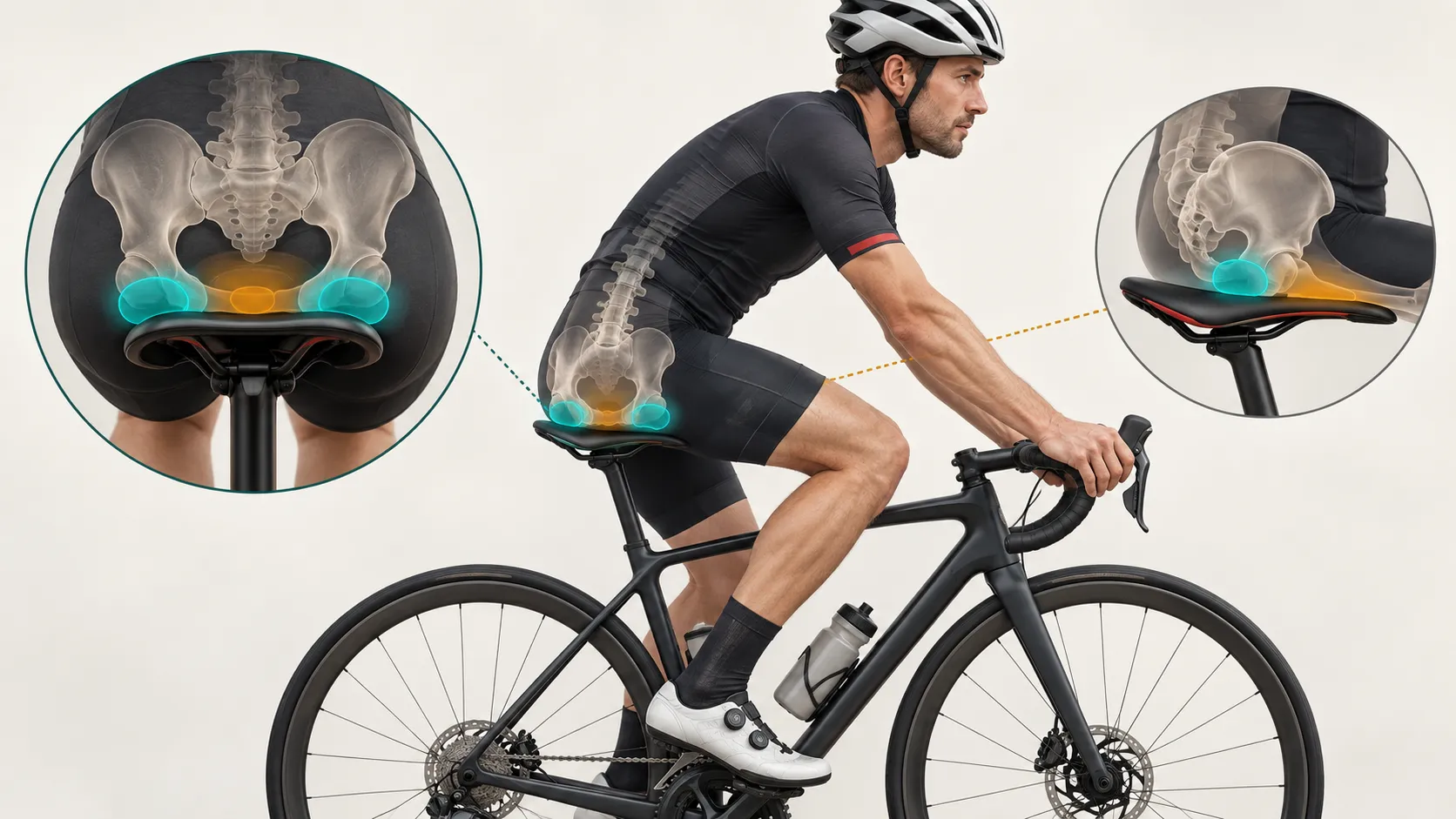
Genital or perineal numbness while cycling is not ordinary “sit-bone soreness” that you should tough out. It means soft tissue, nerves, or blood vessels are being compressed. Stop, get off the saddle, and let normal sensation return. Before the next proper ride, check the whole position rather than buying a thicker pad and hoping.
The short answer: a saddle can be the wrong shape even when its width sounds correct or it has a cutout. Saddle height, tilt, setback, handlebar reach and drop, riding posture, damaged hardware, and long static trainer sessions can all change where pressure lands. Make one measured change at a time, and get qualified help if numbness returns.
Why this question keeps returning
Recent Reddit discussions describe numbness after only 20–30 minutes on a road-bike saddle and pressure on both an indoor bike and a road bike. Replies tend to prescribe one saddle, one tilt, or one height change.
Those anecdotes reveal the demand, but they cannot identify the cause for another rider. Laboratory research has measured a relationship between cycling impacts and increased perineal pressure, while other studies show that saddle design changes pressure distribution. The important practical point is simpler: numbness is a pressure warning, and no single saddle feature works for every body.
First separate soreness from numbness
New riders can feel tenderness under the sit bones after an unfamiliar amount of riding. That sensation should be local, should ease off the bike, and should improve as ride duration builds gradually.
Numbness is different. It can feel like reduced sensation, tingling, pins and needles, or the area “going to sleep.” Stop when it begins. Standing briefly may remove pressure, but it does not make a repeatedly bad position acceptable.
Skin chafing, saddle sores, and numbness can occur together, but they need different responses. Read our saddle-sore guide for friction and skin problems; use this guide for loss of sensation.
Check the system in this order
1. Inspect the saddle and clamp
Make sure the saddle shell and rails are not cracked, bent, loose, or sagging and that the clamp cannot rotate under load. A saddle that slowly tips nose-up can create pressure even if its previous setup was comfortable. Stop using damaged parts.
Record the current saddle height, setback, and angle before adjusting anything. A phone photograph beside a level helps you return to the baseline.
2. Check height before chasing tilt
A saddle that is too high can make the pelvis rock, encourage the rider to reach for the bottom of the pedal stroke, and shift contact across the saddle. A saddle that is too low can also change pelvic position and load. Use our saddle-height setup guide as a starting point, not a medical prescription.
Change height in small, recorded increments. If you cannot pedal without hip rocking, toe-reaching, or side-to-side movement, stop adjusting alone and use a competent fitter.
3. Keep tilt changes small
Do not point the nose steeply downward to escape pressure. That can make you slide forward, brace with your arms, and create hand, shoulder, or saddle problems elsewhere. Start near the saddle maker’s recommended angle and change only a small amount at a time.
4. Look beyond the saddle
Long reach or excessive handlebar drop can rotate the pelvis forward and move pressure onto soft tissue. A short or cramped cockpit can also prevent a stable position. Check whether you are constantly pushing yourself back, locking your elbows, or sitting on the narrow nose.
The saddle should not be moved far forward simply to shorten the reach; saddle position affects pedalling as well as cockpit length. Use the beginner fit-and-comfort guide before buying a shorter stem or different bars.
5. Test saddle shape, not only padding
A cutout helps only when its size and location match your anatomy and riding position. More padding can compress and bunch into the same sensitive area. The useful variables include support width, side-to-side profile, fore-aft curve, nose shape, relief channel, and where you naturally sit.
Choose a retailer or fitter that allows structured saddle trials. Test one change on the same short, low-risk route and stop at the first return of numbness.
Indoor riding can expose the problem sooner
On a trainer, the bike stays fixed and riders often hold one posture for longer. Check that the bike is level axle-to-axle according to the trainer maker’s instructions, use a fan, change hand position, and stand periodically. Those steps may reduce uninterrupted pressure, but they do not replace correcting a poor fit.
If the same numbness appears indoors and outdoors, treat that repeatability as useful evidence for a fitter. If it appears only indoors, inspect trainer levelling and static posture as well as the bike fit. Our guide to indoor-trainer discomfort covers the wider setup.
When to involve a fitter or clinician
Use a qualified bike fitter when careful baseline checks do not solve the problem, when several symptoms appear together, or when you cannot identify which variable changed. Give them the onset time, exact area, indoor versus outdoor pattern, riding position, and adjustments already tested.
Medical assessment matters when sensation persists off the bike, symptoms recur despite removing pressure, or any red-flag symptom in the safety note appears. A bike fit can change contact pressure; it cannot diagnose a nerve, vascular, skin, pelvic-floor, or spinal condition.
Your next step
Do not start another long ride to “see if it happens again.” Inspect the saddle and clamp, record the current setup, and book a short controlled test only after one defensible change. If normal sensation has not returned or you are worried about the symptoms, contact a clinician before riding.