Your first organized bike ride: a calm event-day checklist
Prepare your bike, route, food, clothing, check-in, pacing, and group-riding habits without turning a short first event into a crisis.
 Field guide / first-organized-bike-ride-checklist
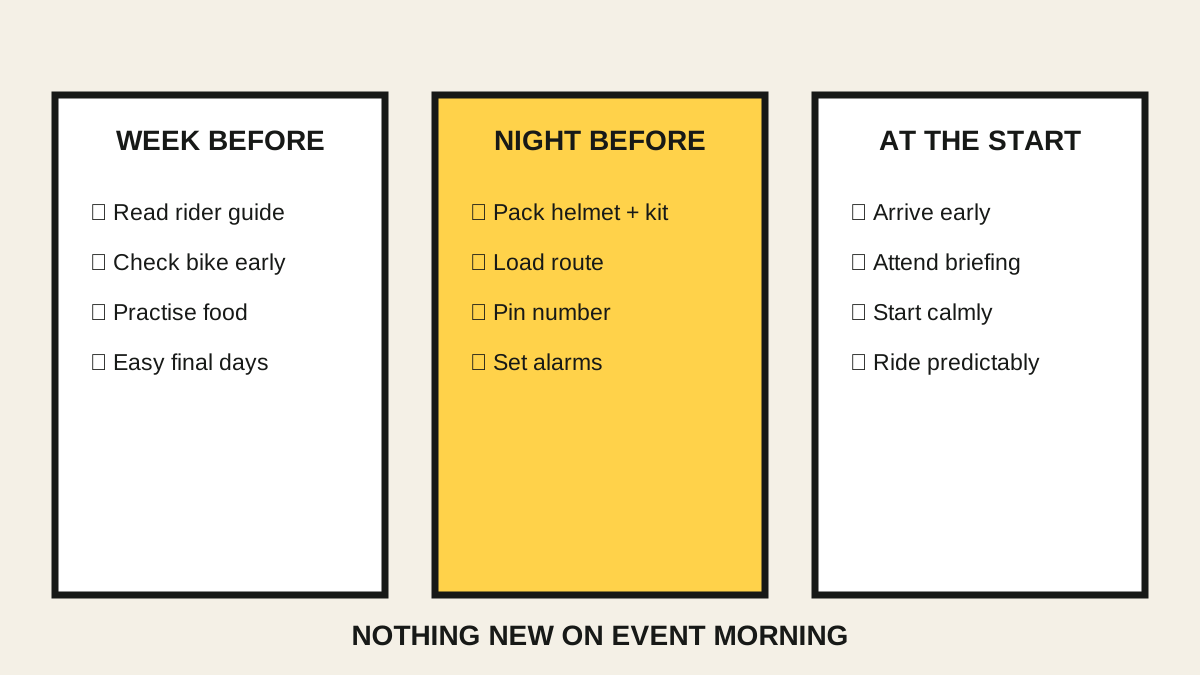
Your first organized ride does not require a new bike, race tactics, or a heroic final week. If you can already ride close to the distance comfortably, the highest-value work is logistical: read the event instructions, make the bike reliable, practise your food and drink, arrive early, and begin below your excitement level.
The short answer: use familiar equipment, food, and pacing. Pack the night before, attend the briefing, ride predictably around others, and know the event’s route, cut-offs, support, and emergency process. A sportive or charity ride may be timed, but it is not automatically a closed-road race.
Confirm what kind of event you entered
A recent first-event question came from a rider already completing regular rides close to the event distance. That is a different problem from training for a long gran fondo from scratch.
Read the organizer’s rider guide and identify:
- exact distance and climbing;
- open or closed roads;
- mass start, waves, or individual start;
- competitive race, timed sportive, charity ride, or social ride;
- mandatory helmet, lights, number placement, licence, ID, or waiver;
- check-in and start times;
- course markings and downloadable route;
- aid stations and what they supply;
- mechanical and medical support;
- cut-off times and short-route options;
- cancellation, weather, and emergency procedures.
Do not rely on last year’s instructions or a friend’s memory. Rules and routes change.
Use the final week to remove problems
If the event distance is already within reach, do not cram fitness into the final days. Keep riding familiar and reduce fatigue. The goal is to arrive rested with a bike you trust.
Inspect the bike early enough for a shop to help:
- tyres inflated and free of cuts, bulges, or exposed casing;
- wheels secure and spinning without serious wobble or rub;
- brakes working with adequate pad life;
- gears shifting without skipping;
- chain clean and appropriately lubricated;
- bolts and components checked to manufacturer instructions;
- batteries charged for lights, shifting, computer, or radar;
- repair kit matched to your valves, axles, and tyre system.
Do not install an unfamiliar saddle, shoes, cleats, tyres, or drivetrain parts the night before unless the old part is unsafe and there is no alternative. Test any necessary repair on a short ride.
Pack the night before
Lay everything out and check it against the organizer’s list:
- helmet and required clothing;
- shoes, socks, gloves, and weather layers;
- number, pins or ties, ID, licence, and confirmation;
- filled bottles and familiar food;
- phone, route, and emergency contact;
- tube or plugs, inflation, tyre lever, and essential tool;
- sunscreen and any personal medication;
- dry clothes, food, and transport items for after the finish.
Load the route to your device and also know what the official course markings look like. A phone screenshot of key event information can help where reception is poor. Keep the organizer’s emergency number accessible, not buried in an email.
Eat and drink what you have practised
Event aid stations can be generous, but unfamiliar gels, concentrated drink, or rich food can upset your stomach. Use the breakfast, snacks, and drink concentration that already work on rides of similar duration.
For a short event near your normal ride length, you do not need to force an elaborate race-fuelling plan. Bring a small reserve for delays. For longer rides, practise timing and quantities during training and use the beginner ride food-and-drink guide rather than improvising on the start line.
Arrive earlier than feels necessary
Parking, queues, toilets, check-in, number attachment, tyre inflation, and a last-minute question all take time. Arriving early lowers stress and gives you time to hear changes.
Before rolling to the start:
- Check in and attach the number as directed.
- Confirm the start wave and route.
- Visit the toilet.
- Perform the five-minute bike check.
- Spin easily for a few minutes if space and the organizer allow it.
- Attend the briefing and listen for hazards or route changes.
Do not warm up through a crowded car park or against event traffic.
Start calmer than the crowd
The first minutes feel easy because excitement is high and riders surround you. Let faster groups go. Ride at a pace you know you can sustain and leave room to respond smoothly.
Around other riders:
- hold a predictable line;
- look ahead, not only at the wheel in front;
- avoid overlapping wheels;
- signal or call hazards according to the briefing;
- do not brake abruptly without reason;
- move aside safely before stopping;
- pass only when there is room and announce yourself if appropriate;
- never assume a group will obey the same etiquette you know.
If you have not practised close group riding, leave extra space. You can complete an organized ride without drafting closely.
Have a plan for problems
Know how to contact support and what happens if you leave the course. If you puncture, move fully out of the riding line before working. If a mechanical issue affects steering, wheel security, frame, fork, or brakes, stop riding and ask for qualified help.
After a crash, check people before bikes. Follow the organizer’s incident process, and use the group-ride crash guide for a calm sequence.
Your next step
Open the organizer’s current rider guide now and turn every requirement into a personal checklist. Then do one easy shakedown ride with the exact bike, clothing, bottles, food, and repair kit you will use.
Sources and further reading
- Reddit: recent question about preparing for a first cycling event — editorial demand signal only; personal comments were not treated as universal rules.
- British Cycling: first sportive tips
- USA Cycling: first-time racer guide