How to clean and lubricate a road bike chain
Clean a beginner road bike chain, dry it properly, apply bike-specific lubricant to the rollers, and wipe the outside without turning the drivetrain into a dirt magnet.
 Field guide / clean-lubricate-road-bike-chain
Clean the chain first, let it dry, put a small amount of bike-specific lubricant on the chain rollers, then wipe the outside until it no longer feels wet. That simple order matters more than owning a perfect workshop kit.
The short answer: for an ordinary beginner road bike, wipe loose grime away, clean the chain with a bike-safe cleaner or degreaser, remove the cleaner, dry the chain, apply one small drop of lube to each roller, wait as directed, and wipe the outside. Do not solve a dirty chain by adding more oil.
When a chain actually needs cleaning
Recent cycling-maintenance threads show the same beginner questions in different words. Riders ask how often to clean and lube a drivetrain, whether they should fully degrease when switching lubricants, and what to do after someone used WD-40 as chain lubricant.
The useful beginner question is not “How obsessive should I be?” It is “Is the chain clean enough that lubricant can reach the moving parts?”
Clean the chain when it is black and gritty to the touch, noisy after a normal lube, wet from a dirty ride, visibly caked with grime, or leaving paste on the cassette and chainrings. You can also do a light wipe after ordinary dry rides so dirt does not build into a bigger job.
You do not need to deep-clean the chain before every ride. The five-minute pre-ride bike check is for departure safety. This guide is for the fuller maintenance routine when the chain is dirty enough that a simple wipe-lube-wipe is no longer enough.
What you are trying to clean
A chain is not just a shiny strip of metal. Shimano explains that a chain is made from repeating links with side plates, pins, and rollers, and that those moving parts need cleaning and lubrication to reduce friction and work efficiently in the drivetrain. In a dealer manual, Shimano also tells users to clean the chain and QUICK-LINK regularly with appropriate chain cleaner, and warns against alkali- or acid-based solvents such as rust cleaners because the chain or QUICK-LINK could break.
That gives this guide its boundary: remove grit without attacking the chain, then replace the cleaner with lubricant where the links articulate. If a product label, bicycle manual, or component manual says something more specific for your chain, follow that.
Set up before cleaner comes out
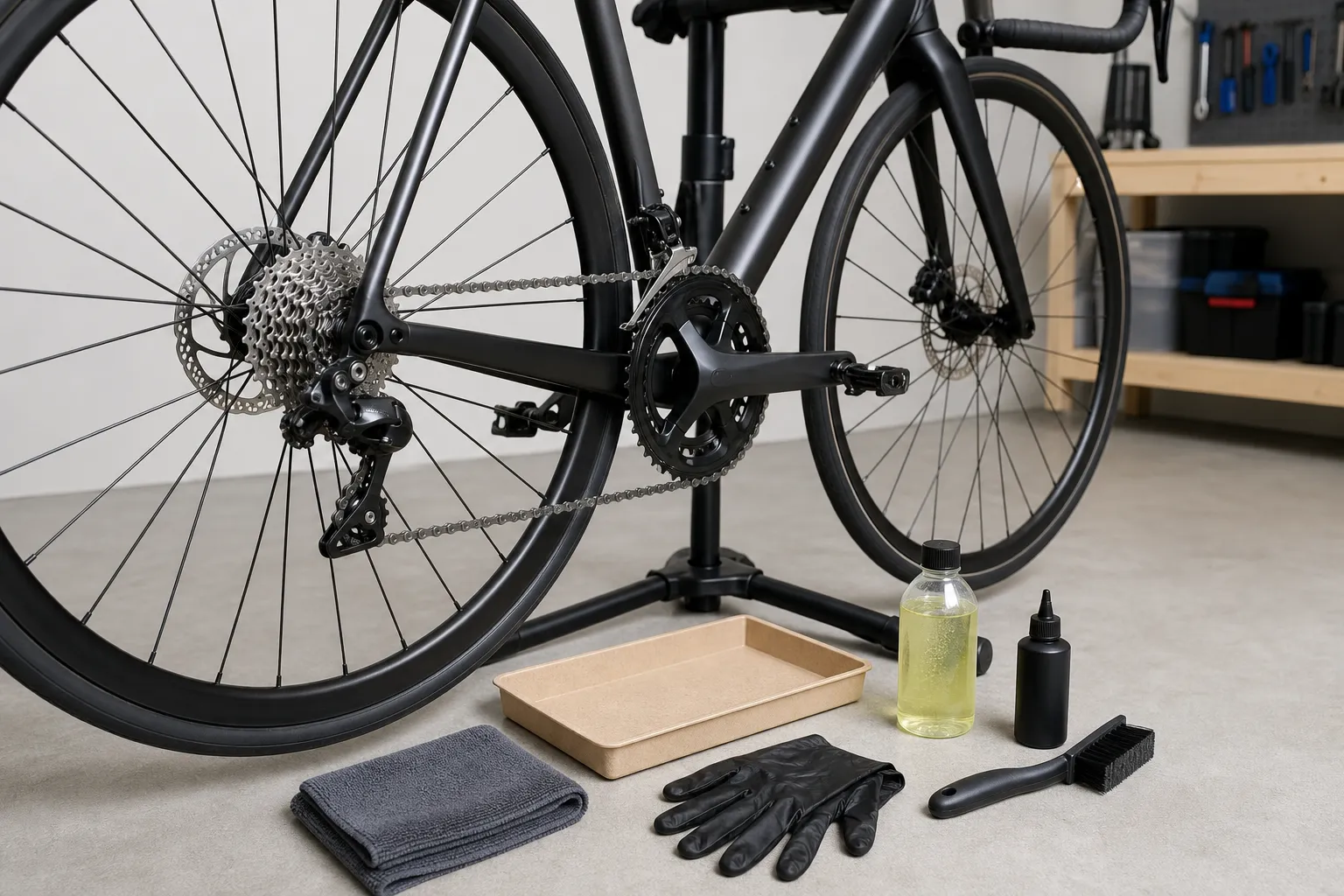
Choose a stable place away from traffic, pets, children, carpet, food surfaces, and open flames. Put the bike in a work stand if you have one, or place it somewhere it cannot fall. Lay cardboard, a tray, or an old towel under the drivetrain.
Collect:
- a bike-specific degreaser or mild cleaner;
- a soft brush, old toothbrush, or chain-cleaning tool;
- several clean dry rags;
- bike-specific chain lubricant;
- gloves if you want easier cleanup;
- eye protection if your product instructions call for it.
Do not use mystery solvents, rust removers, petrol, or anything that ignores the chain maker’s instructions. If you use an aerosol cleaner, control overspray carefully. Cleaner or oil on disc rotors, brake pads, or rim braking surfaces can leave you with weak or contaminated brakes.
The safe beginner cleaning sequence
For a normal dirty road-bike chain, keep the chain on the bike and work in short sections. The safest beginner habit is simple: move the drivetrain only when hands, rags, and brushes are clear, then stop it before touching the chain again.
- Shift to a gear that makes the chain easy to reach, usually a middle rear sprocket and the big chainring if your bike has two chainrings.
- Wipe the outside of the chain with a dry rag to remove loose black grime.
- Apply cleaner to the brush or chain-cleaning tool, not blindly across the whole bike.
- Scrub the lower run of chain, then the side plates you can reach.
- Move your hand and brush clear, rotate the pedals slowly to expose the next section, then stop.
- Repeat until the whole chain has been cleaned.
- Brush the teeth and pulleys that touch the chain if they have black paste built up.
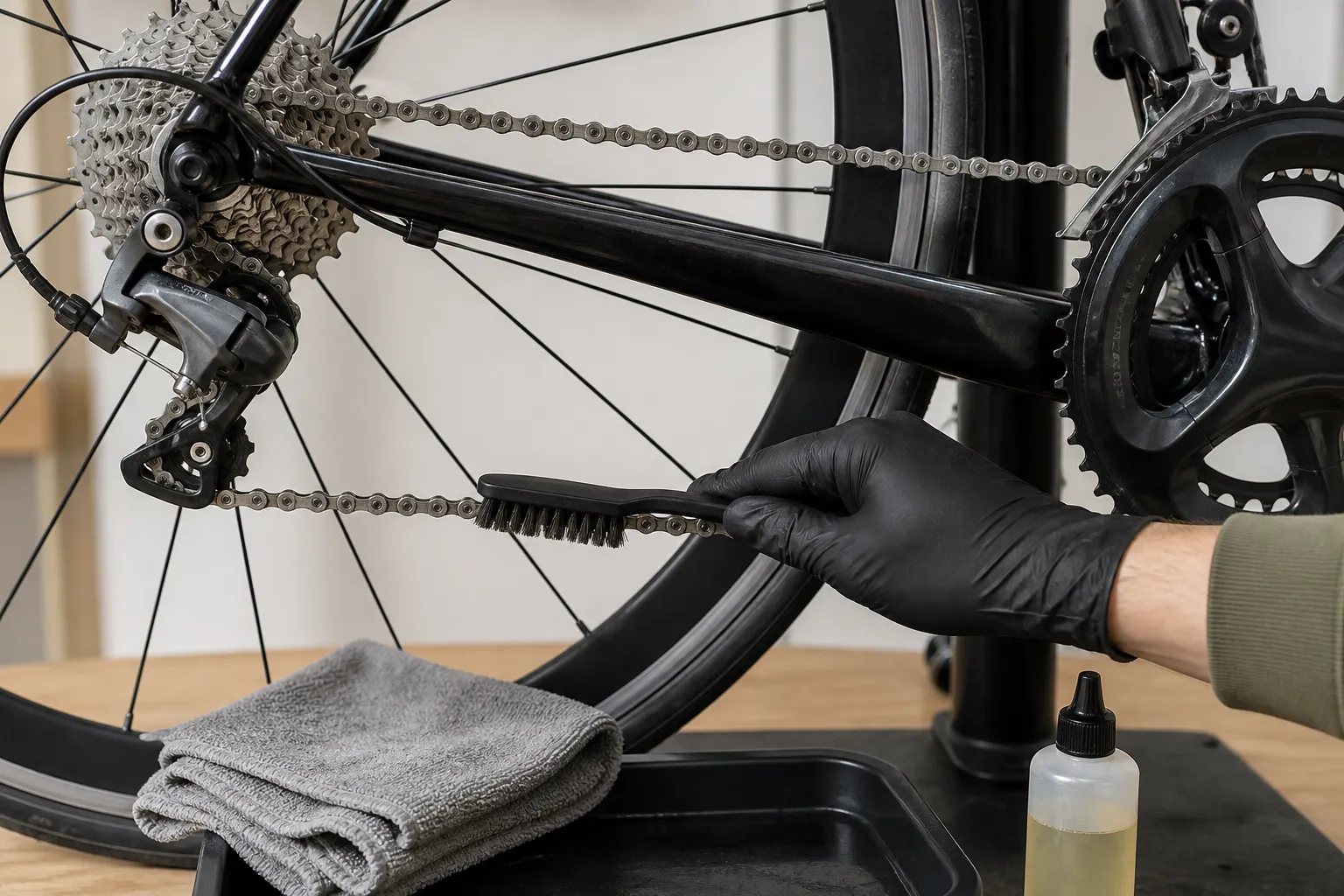
Trek’s home chain-cleaning instructions teach the same basic jobs: degrease with a chain cleaner or brush, remove excess degreaser, choose an appropriate lube, apply a small drop to each roller, and wipe off excess. The beginner adjustment here is to slow the process down so fingers and rags never share space with moving gears.
Remove cleaner and dry the chain
Cleaner is not chain lubricant. Once it has lifted the dirt, it needs to come off before fresh lube goes on.
Follow the cleaner’s instructions. For many home routines, that means wiping with a damp rag or carefully rinsing the chain area, then wiping again until the chain is no longer carrying dirty cleaner. Avoid forcing water into bearings, hubs, bottom brackets, pedals, or headset areas, and do not blast the bike with high pressure.
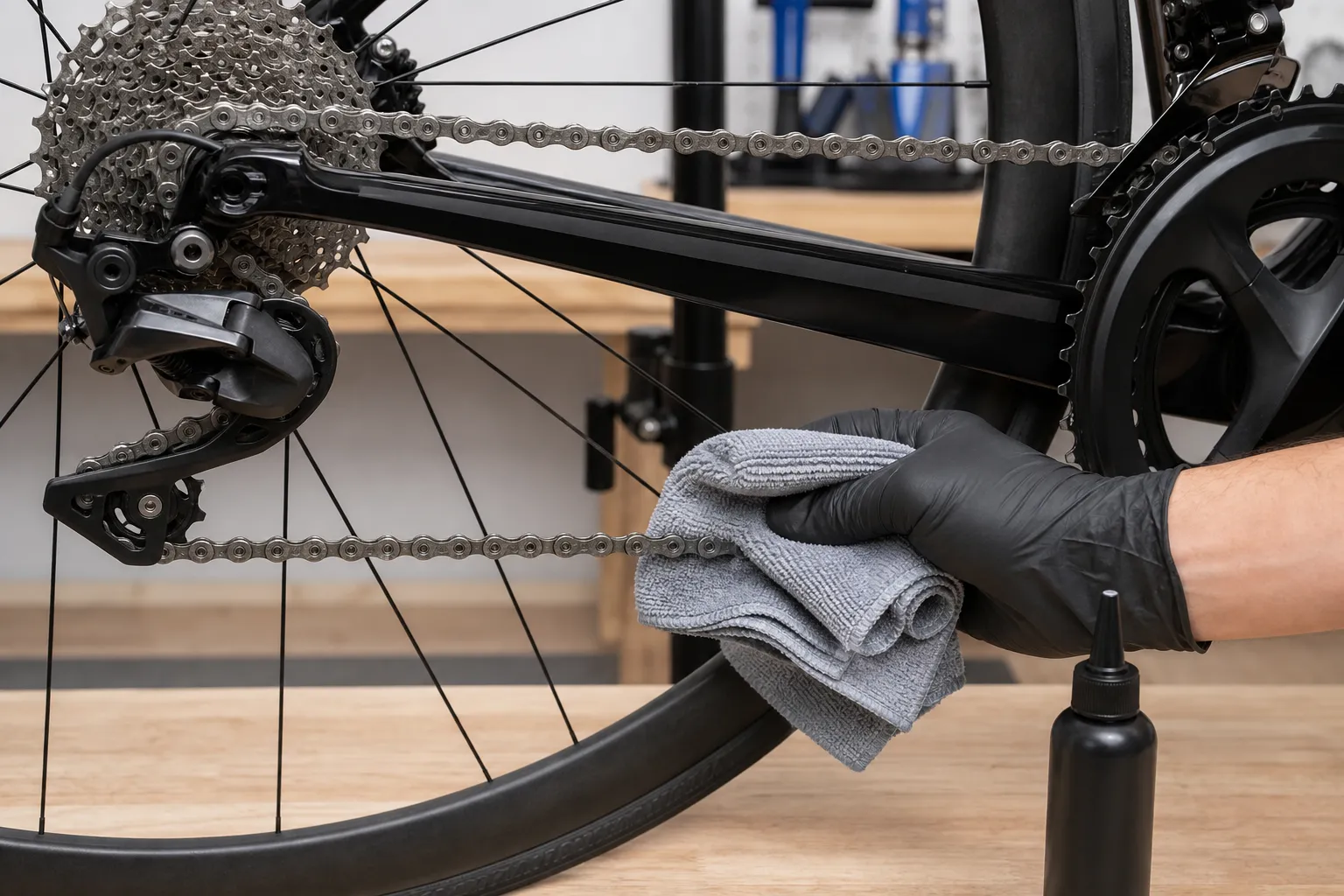
Then dry the chain. Use a clean rag on the lower run, work section by section, and give the chain enough time to stop looking wet. If you lubricate while water or degreaser is still sitting in the rollers, the new lube has a harder job and may not stay where you need it.
Apply lubricant to the rollers, not everywhere
Use a bicycle chain lubricant, not a general-purpose spray you found under the sink. The product should tell you whether it is meant for dry, wet, wax-based, or all-condition use, and how long to wait before riding.
The basic method:
- Put one small drop on each chain roller.
- Move to the next section only after your hand is clear.
- After the whole chain is done, turn the pedals a few times with hands, rag, and clothing away from the drivetrain.
- Wait for the time on the lube instructions.
- Wipe the outside of the chain until it no longer feels wet.
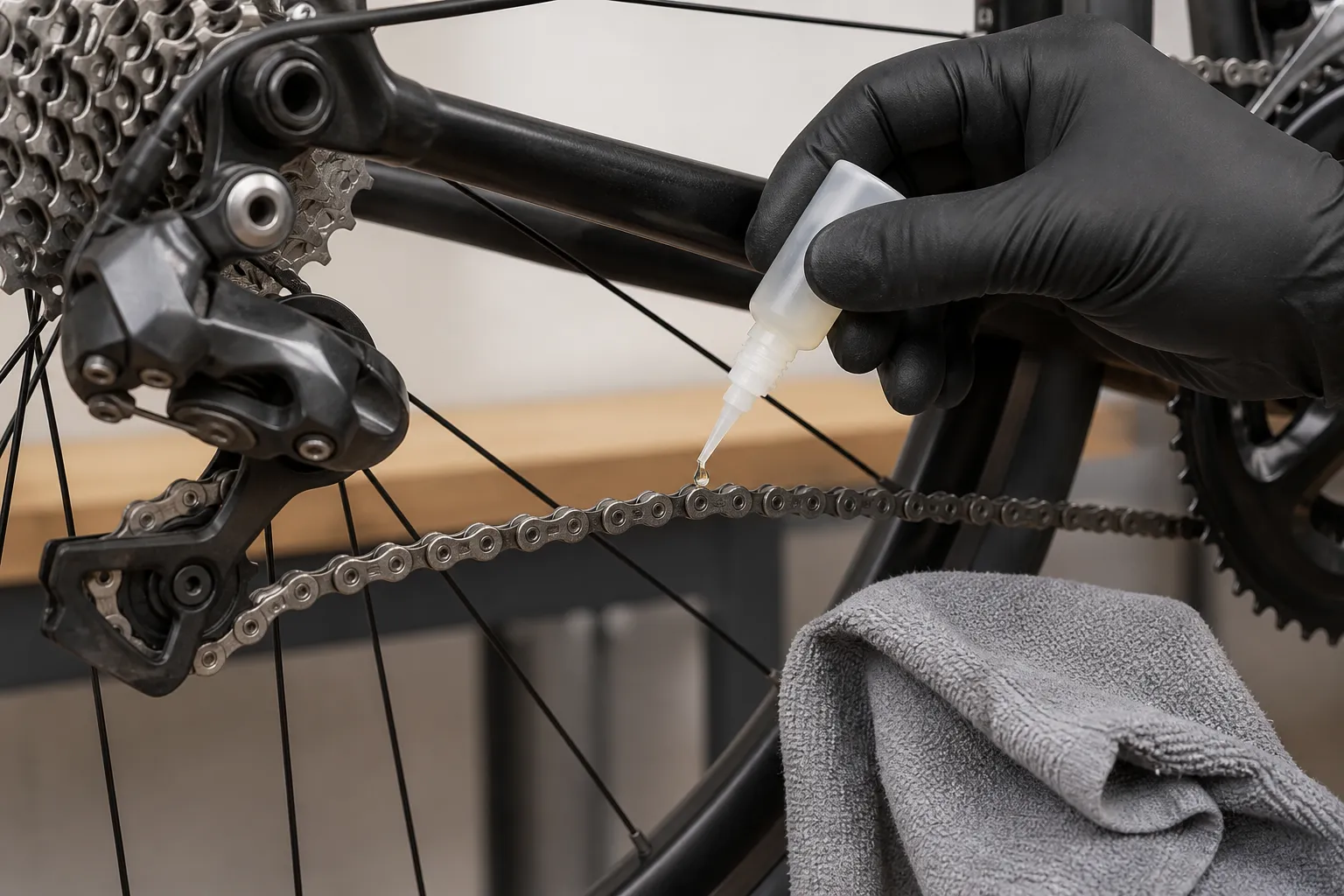
Park Tool’s chain-cleaning guide says to apply a small drop to each rivet and wipe off excess so dirt does not collect. Trek gives the same practical target: aim at the rollers, because lubricant on the outside of the chain picks up dirt.
That is the key distinction from more chain lubricant is not better. That post explains the wipe-lube-wipe habit. This guide adds the full clean, remove cleaner, dry, lubricate, and final wipe sequence.
Wet lube, dry lube, and wax without the argument
You do not need to join a lube debate before cleaning your first chain. Choose a product that fits your conditions and follow its instructions.
Shimano’s clean-chain article explains the common tradeoff: dry lubes are usually cleaner and less greasy but may need more frequent reapplication, while wet lubes cling better in rain and muck but require more cleaning because dirt sticks to the oil-based film. Muc-Off’s chain-lube instructions also point riders toward applying lube to the inside of the chain and letting it penetrate the links.
Waxed-chain systems can be clean and effective, but they usually demand more careful preparation, compatibility awareness, and repeated process control than a simple beginner drip-lube routine. If you bought a bike with a waxed chain or want to switch systems, read the wax product’s instructions first rather than mixing cleaners, oils, and waxes casually.
Common beginner mistakes
| Mistake | Why it causes trouble | Better habit |
|---|---|---|
| Adding lube to a gritty chain | Oil can carry grit into the moving areas and make black paste | Wipe and clean first when the chain is dirty |
| Using harsh solvents or rust removers | Chain makers warn some solvents can damage chain or quick-link integrity | Use chain-safe cleaner and follow the label |
| Forgetting to remove cleaner | Degreaser left behind can interfere with new lubricant | Wipe, rinse only as directed, and dry |
| Spraying near brakes | Contaminated brakes may lose stopping power or make noise | Keep cleaner and lube away from rotors, pads, and rim braking surfaces |
| Holding a rag on a moving chain | Fabric and fingers can be pulled into the drivetrain | Stop the drivetrain before wiping by hand |
| Leaving the chain wet outside | The outer film collects road dirt | Wait as directed, then wipe excess |
When to stop and get help
Cleaning is not a repair for a damaged chain. Stop and ask a mechanic if the chain has a stiff kink that will not free up, a cracked plate, a bent link, heavy rust, repeated skipping under pressure, a quick link that looks wrong, or a chain that has already broken.
Also stop if you accidentally contaminate a brake rotor, brake pad, or rim braking surface with oil or degreaser. Brakes are not the place for “probably fine.”
Your next step
Put a rag, brush, bike-safe cleaner, and chain lube together before the next dirty-chain day. When the chain looks black and gritty, do one slow clean-dry-lube-wipe routine from start to finish.
After that, add the chain check to the five-minute pre-ride bike check and use road bike anatomy for beginners if any drivetrain part names still feel fuzzy.
Sources and further reading
- Shimano dealer manual: Chain and QUICK-LINK
- Shimano: A clean chain is a fast chain
- Trek: Best way to clean and lube a bike chain at home
- Park Tool: How to clean and lubricate a bicycle chain
- Muc-Off: How to lube a bike chain
- r/cycling reader context: how often to clean and lube a drivetrain
- r/bikewrench reader context: fully degreasing when switching lubricants
- r/cycling reader context: WD-40 used as chain lubricant