More chain lubricant is not better
Use enough bike chain lubricant to reach the chain rollers, then wipe the outside so a beginner drivetrain does not become a dirt magnet.
 Field guide / more-chain-lubricant-is-not-better
More chain lubricant does not make a bike chain better. The useful habit is smaller and cleaner: put bike-specific lubricant where the chain moves, give it a little time to work in, then wipe the outside of the chain until it no longer feels wet.
The short answer: the lube belongs inside the chain’s moving joints, not as a shiny coating over the outside plates. A wet, oily outer chain picks up road grit, makes black paste, and turns a simple maintenance job into a mess.
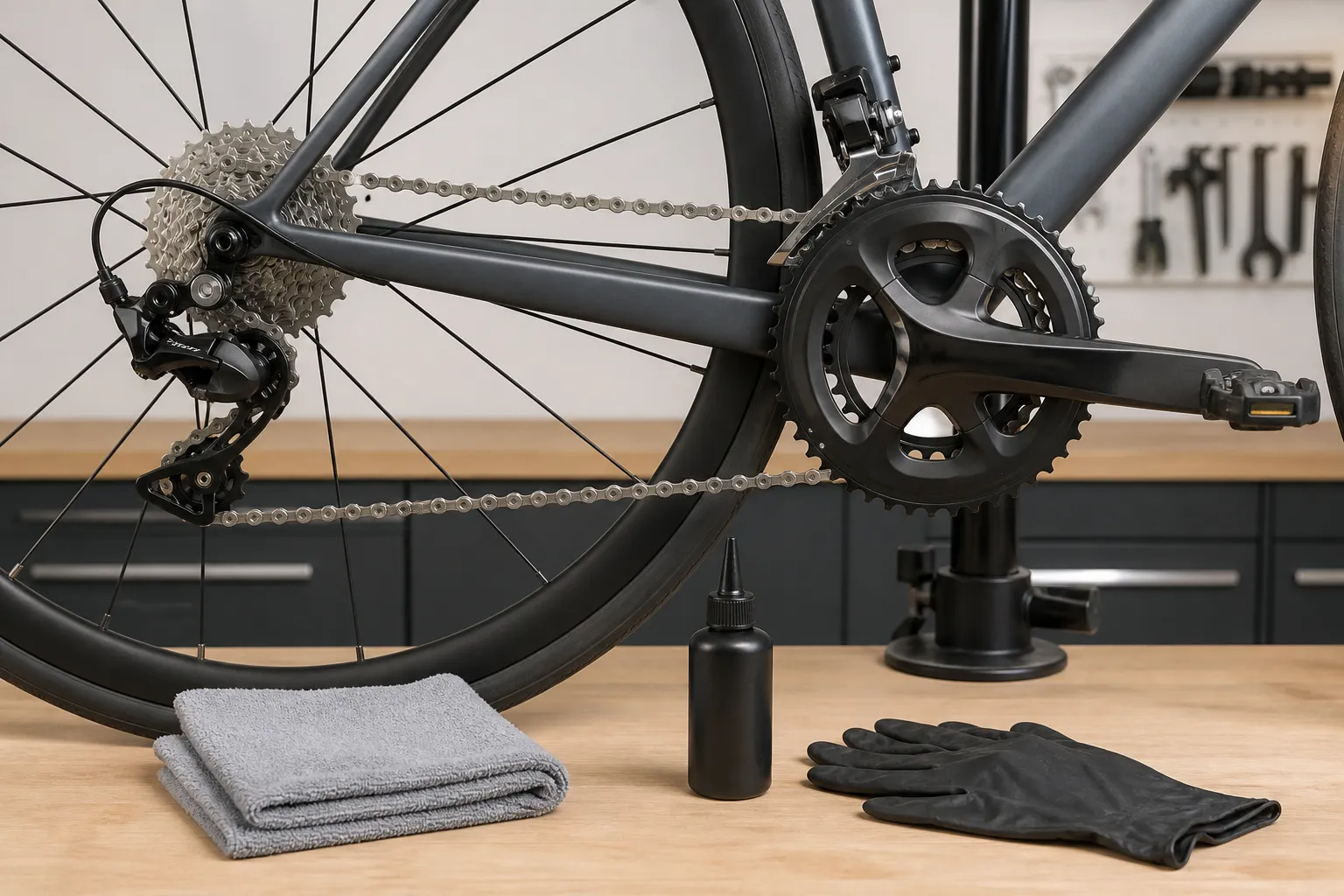
Why beginners overdo it
Recent bike-maintenance threads show the same confusion in different words. Riders ask why instructions say to wipe off excess lube, whether a road-only bike needs a monthly degrease and lube routine, and what to do after using WD-40 around a chain.
Under those questions is one reasonable beginner fear: “If a little lube is good, will more protect the bike better?”
Usually, no. Park Tool’s chain cleaning and lubrication guide says to apply a small drop to each rivet, then wipe excess lube from the chain to prevent dirt from collecting. WD-40’s bike dry chain lube instructions also tell users to let the product penetrate for a few minutes before wiping excess from the chain.
That is the principle this post is about. It is not a deep-cleaning guide, a wax-versus-oil argument, or a product ranking.
Where the lubricant needs to go
A bicycle chain is made of repeating links with rollers, pins, and side plates. The important motion happens where those parts articulate as the chain bends around the chainrings, cassette, and derailleur pulleys. If those internal contact areas are dry, the chain can squeak, grind, shift poorly, and wear faster.
Shimano’s chain dealer manual says periodically washing gears with neutral detergent and lubricating them, and cleaning and lubricating the chain and QUICK-LINK, can help extend chain and QUICK-LINK life. In plain beginner terms: a chain should be clean enough to move freely and lubricated enough that the moving joints are not running dry.
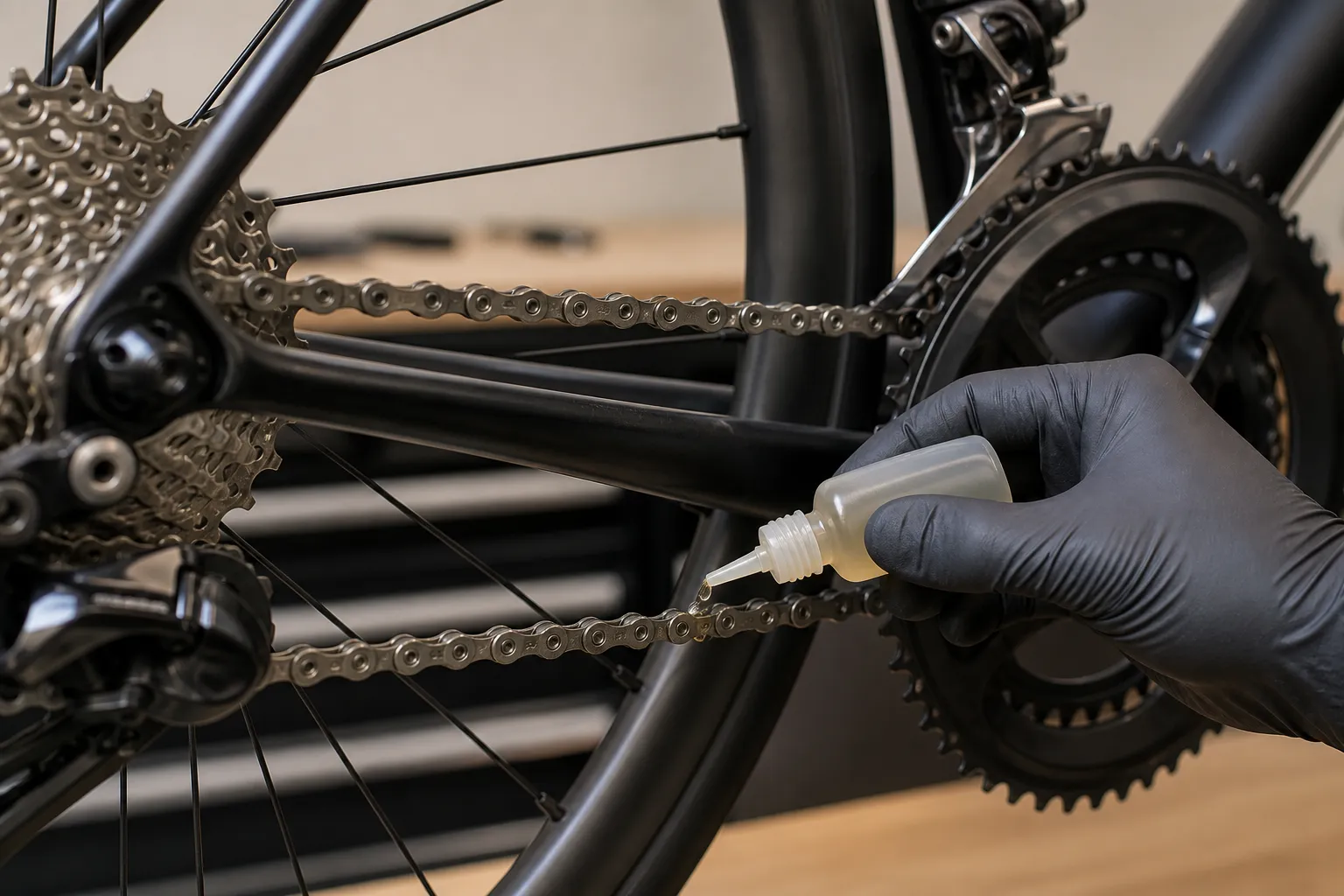
The outside of the chain is different. It has to pass through air, dust, rain spray, road grit, trouser legs, and sometimes your hands. A thin residue is normal. A wet black coating is not a maintenance badge.
The beginner wipe-lube-wipe routine
Use this for an ordinary road bike that is not caked in mud or neglected into rust. If the drivetrain is filthy, noisy, or damaged, the fuller cleaning job belongs in a future chain-cleaning guide or with a mechanic.
- Put the bike somewhere stable and away from traffic.
- Wipe the chain’s outside with a dry rag to remove loose black grime.
- Apply one small drop of bike-specific lube to each roller, or follow your product’s exact directions.
- Backpedal gently only if the bike is safely supported and your hands and rag are clear.
- Wait a few minutes, or the time your lube instructions specify.
- Wrap the rag around the lower chain run and wipe the outside until the chain no longer feels wet.
- Check that no rag, glove, bottle, or loose clothing can touch the chain before riding.
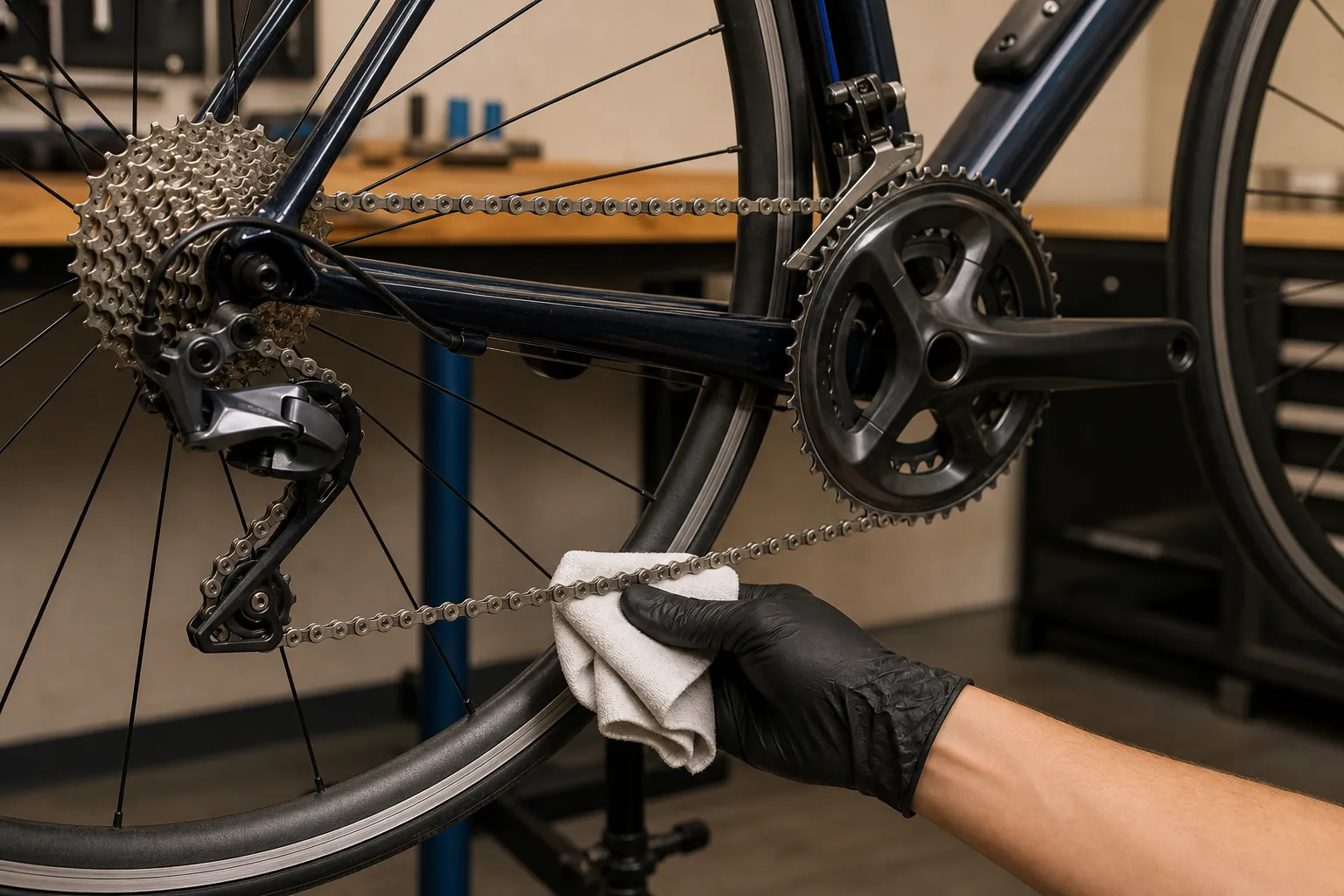
If you wipe and the rag keeps coming away thick and black, do not keep adding more oil to hide the noise. That is a sign the drivetrain may need a proper clean, a different lube for your conditions, or inspection for wear.
Wet lube, dry lube, and the dirt problem
The type of lube changes how often you clean and reapply, but it does not remove the need to wipe excess. Shimano’s clean-chain article explains the basic tradeoff: dry lube is usually cleaner but may need more frequent reapplication, while wet lube clings better in rain and muck but needs more cleaning because dirt and contaminants stick to the oil-based film.
That is why “my chain is quieter when I leave it soaking wet” can still be a bad long-term habit. It may sound smooth at first because there is excess oil everywhere. The cost is the grit that sticks to that oil and rides around the drivetrain.
For most new road cyclists, the useful goal is not a spotless display bike. It is a chain that is lubricated inside, reasonably dry outside, and checked often enough that squeaks, skipping, rust, or heavy grime do not become normal.
Common beginner mistakes
| Mistake | Why it causes trouble | Better habit |
|---|---|---|
| Coating the whole chain until it shines | The outside film collects road dirt | Apply small drops, wait, then wipe |
| Skipping the first wipe | New lube sits on top of old black grime | Wipe loose dirt before relubing |
| Riding immediately after a wet application | Some lubes need time to penetrate or set | Follow the product’s wait time |
| Using drivetrain noise as the only trigger | A chain can be dirty, worn, or misadjusted too | Inspect before simply adding more |
| Letting rags near moving gears | Fabric can catch in the drivetrain | Keep the bike still while wiping by hand |
One focused next action
Before your next ride, look at the chain from the side. If it is dry or squeaky, do one careful wipe-lube-wipe routine. If it is already wet and black, wipe the outside before adding anything.
For the part names, use road bike anatomy for beginners. For the broader departure routine, add this chain habit to the five-minute pre-ride bike check.
Sources and further reading
- Park Tool: how to clean and lubricate a bicycle chain
- Shimano dealer manual: chain and QUICK-LINK
- Shimano: a clean chain is a fast chain
- WD-40 Specialist Bike Dry Chain Lube instructions
- r/bikewrench reader context: wiping off excess while lubricating chain
- r/cycling reader context: how often to degrease and lube a chain
- r/bikewrench reader context: WD-40 on a chain after cleaning