Can you store a road bike outside?
Indoor storage is safer for the bike, but outside may be unavoidable. Reduce rain, condensation, sunlight, corrosion, and theft with a realistic storage routine.
 Field guide / can-you-store-road-bike-outside
You can store a road bike outside, but it is a compromise rather than an equal alternative to a dry indoor space. A roof and ventilated cover reduce direct weather; they do not remove humidity, condensation, temperature swings, ultraviolet light, theft risk, or the need for more frequent inspection.
The short answer: first exhaust compact indoor options such as a vertical stand or wall mount. If outdoor storage is unavoidable, choose the driest sheltered location, keep the bike off persistently wet ground, use a cover that sheds rain without sealing moisture inside, secure the frame to a fixed anchor, and check the bike before every ride.
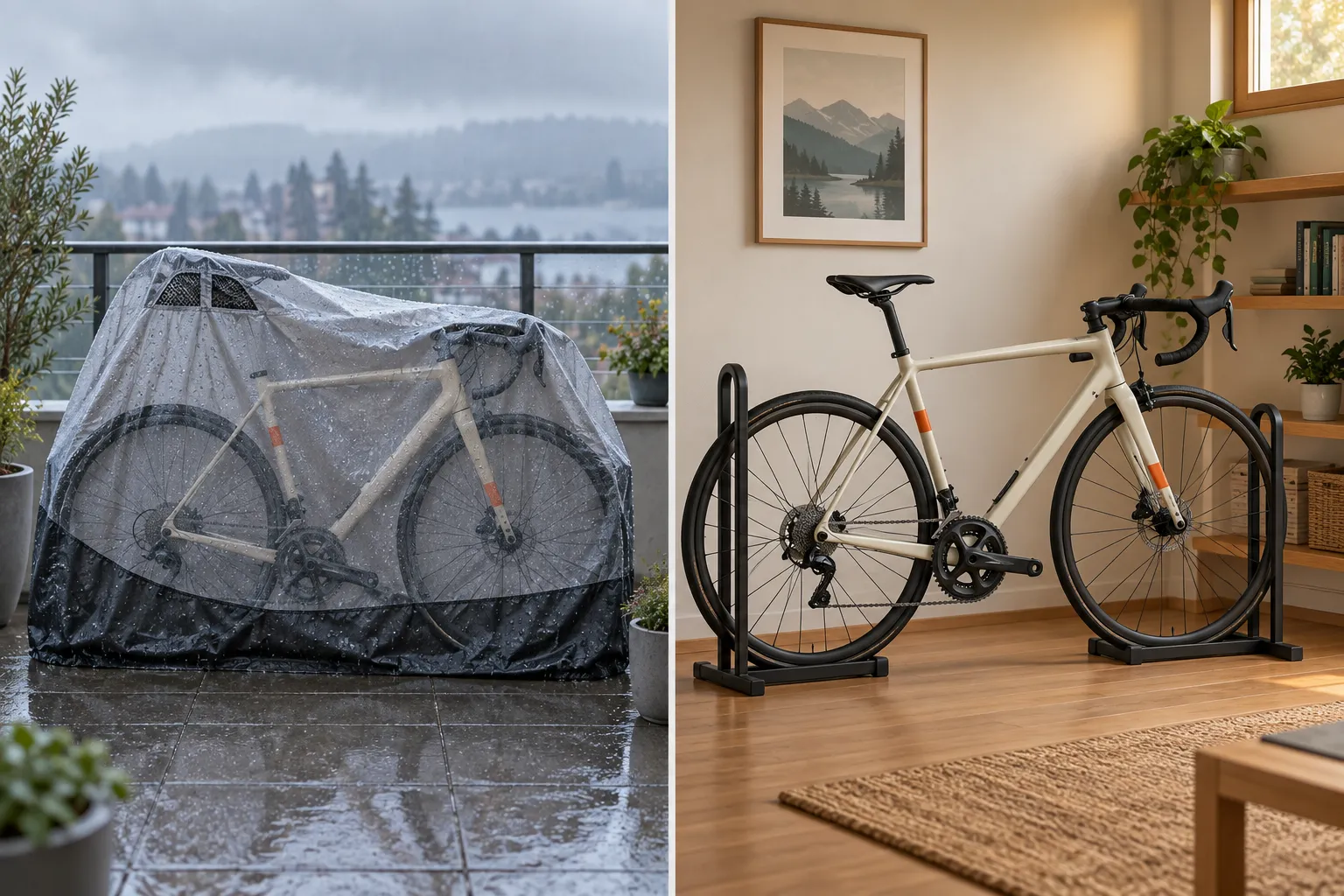
Why a cover does not make outside the same as inside
An r/cycling storage question from an apartment rider asks for ways to keep a road bike on a terrace. The replies mix workable mitigation with unverified product advice and absolute claims. The useful signal is that space, landlord rules, and shared homes make “just bring it inside” unrealistic for some riders.
Trek’s 2026 owner manual advises protecting a bike from rain, snow, hail, and direct sunlight when possible. Weather reaches more than the steel chain: water can enter interfaces, sunlight can age finishes and rubber, and repeated wet-dry cycles encourage corrosion on fasteners, cables, bearings, and exposed metal.
A waterproof sheet can also trap moisture rising from a damp floor or left on a wet bike. The aim is not to seal the bicycle in a plastic bag. It is to block direct weather while allowing airflow.
Try compact indoor storage first
Measure the bike and the available wall height before deciding there is no indoor option. Common approaches include:
- a freestanding vertical rack that does not require drilling;
- a wall hook fixed into a suitable structural point;
- a horizontal wall rack above a desk or low furniture;
- removing the front wheel and using a narrow floor stand;
- a shared indoor storage room with an anchored lock point.
Confirm that the mount is rated for the bike and installed into the correct wall material. Do not hang a bike from a component the bicycle or wheel maker prohibits. Protect floors and walls from dirty tyres and chain contact.
Indoor storage still needs security and ventilation, but it avoids direct rain and usually reduces condensation and ultraviolet exposure.
Choose the least-bad outdoor location
Look for these features in order:
- A roof: a deep balcony, locked shed, or covered alcove is better than an open railing.
- Distance from spray: avoid gutter overflow, sprinklers, road salt, sea spray, and air-conditioner runoff.
- Air movement: the cover should have vents or an open lower edge without becoming a sail.
- Drainage: do not leave tyres and metal hardware in standing water.
- Shade: reduce long periods of direct sun when possible.
- A fixed anchor: the frame and at least one wheel should lock to something that cannot be lifted or easily cut free.
Balcony height is not security. Bikes can be visible from nearby buildings or accessible from shared areas. A thin cover can conceal the model but does not replace a lock and anchor.
Set up the cover correctly
Use a cover designed to shed water and sized so that it does not pool large amounts of rain. Secure it at the lower edge against wind while keeping its vents open. Keep sharp pedal, lever, and rack edges from tearing it.
Before covering the bike:
- wipe off standing water and wet road grit;
- let a freshly washed bike drain and dry as much as possible;
- clean and lubricate the chain correctly;
- keep lubricant and protective sprays away from brake rotors, pads, rims, and tyre tread;
- close frame-bag zips and remove electronics that are not intended for continuous outdoor storage.
Do not use a pressure washer to force water from dirt into bearings and seals. Follow the component maker’s cleaning instructions.
Use a shorter inspection interval
An outdoor-stored bike needs observation based on conditions, not a calendar promise. After heavy rain, coastal wind, freezing weather, or a long unused period, check sooner.
Before every ride
- uncover the bike early enough to see it in good light;
- check tyre condition and pressure with a gauge;
- squeeze both brakes and inspect braking surfaces;
- turn the handlebar and check for smooth, secure steering;
- inspect the chain, cassette, chainrings, cables, axles, and visible fasteners;
- look for fresh rust, cracks, swelling, staining, seized links, animal damage, or signs of tampering;
- run the five-minute pre-ride bike check.
After a wet ride
Remove grit, dry accessible surfaces, and service the chain rather than putting the bike away wet under a cover. Follow road-bike care after riding in rain for the complete sequence.
Surface rust on a replaceable bolt and corrosion at a structural frame, fork, brake, or steering interface are not the same problem. Do not sand, spray, or paint over damage just to hide it. Ask a mechanic when the part, material, or depth is uncertain.
Prepare for longer storage
If the bike will sit for weeks or months, clean and service it first. Inflate tyres to the maker’s storage guidance and recheck them periodically; a completely flat tyre can leave the casing folded under the bike’s weight. Remove detachable lights, computer, and battery-powered accessories and store them according to their manuals.
Do not leave a wet chain with a thick coating of random household oil. Use a bicycle drivetrain lubricant in the amount described by its maker, wipe the outside of the chain, and inspect for stiff links before the next ride. More chain lubricant is not better.
Record the frame serial number, keep purchase evidence and photos somewhere separate, and check the conditions of any insurance or building policy. Storage and lock requirements vary; never assume a balcony or shared shed is covered.
What outside storage costs over time
The cost is not only possible rust. It is the extra attention required to keep small problems visible:
| Exposure | Likely consequence | Mitigation |
|---|---|---|
| Direct rain and splash | Water and grit at the drivetrain and interfaces | Roof, ventilated cover, prompt drying |
| Condensation | Repeated moisture even without obvious rain | Airflow, dry location, regular uncovering |
| Sunlight and heat | Ageing of finish, plastics, rubber, and adhesives | Shade and suitable cover |
| Wind | Cover abrasion, bike falling, debris impact | Stable parking and secure cover |
| Easy public access | Theft or tampering | Fixed anchor, suitable locks, indoor alternative |
| Neglect between rides | Flat tyres, seized links, hidden corrosion | Shorter inspection and maintenance interval |
If these controls are not possible, use inexpensive indoor space more creatively or consider whether a less valuable, simpler utility bike should take the outdoor-storage role.
Your next step
Measure one indoor corner and price a stable vertical solution before buying an outdoor cover. If outside is the only workable choice, inspect the location for roof coverage, drainage, airflow, shade, and a real anchor. Set a pre-ride inspection routine before the first night outside—not after corrosion appears.