Why your first route should feel almost too short
Choose a first road-cycling route that is short, simple, low-traffic, and easy to repeat so you can learn without wasting attention.
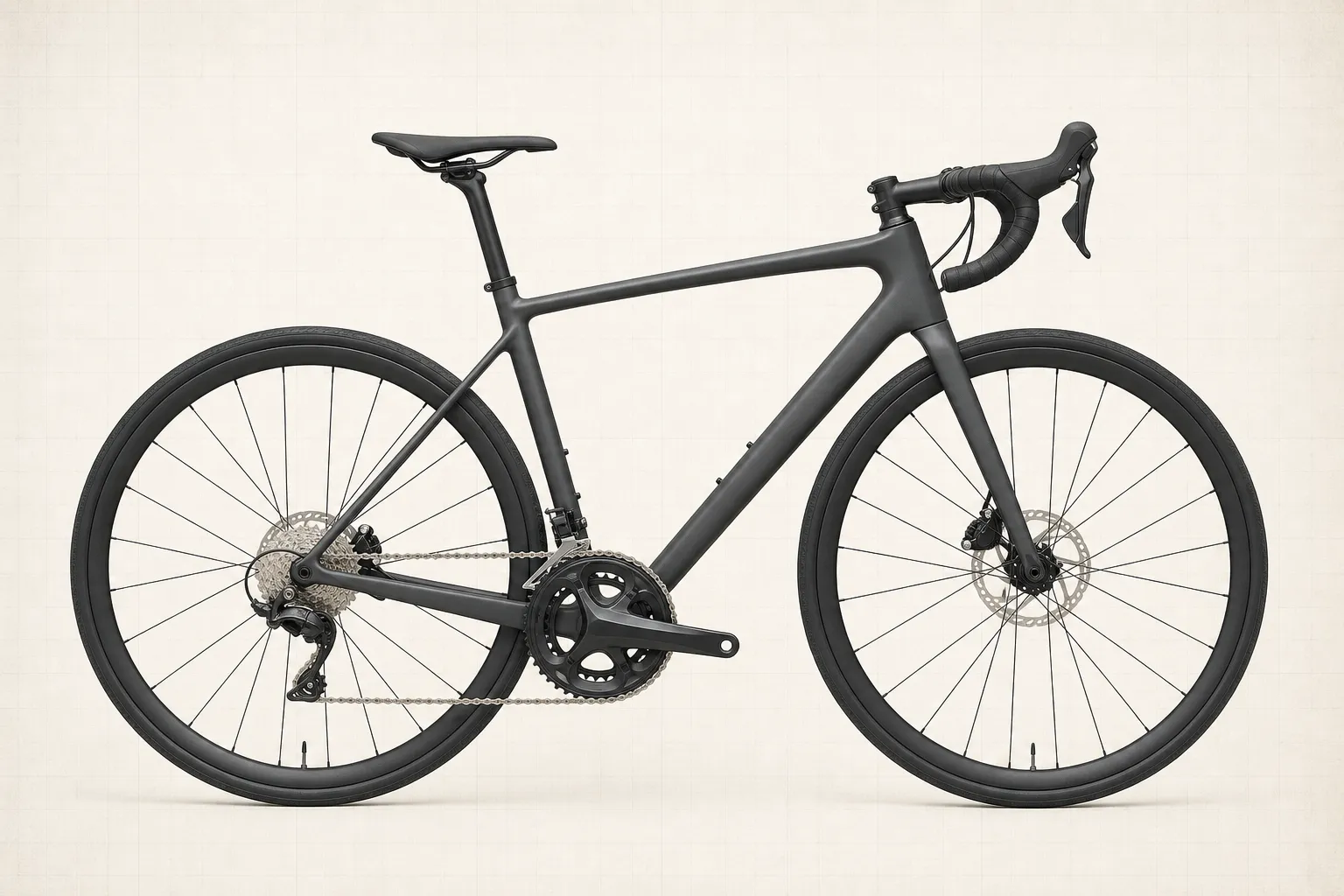 Field guide / why-your-first-route-should-feel-almost-too-short
Your first road-cycling route should probably feel a little too short on paper. That is not a lack of ambition. It is how you leave attention for traffic, braking, shifting, road surface, navigation, and the small surprises that make a new bike feel new.
The short answer: choose the shortest route that lets you practise calmly and finish wanting more. A good first route is easy to explain, has low traffic or protected space, includes a safe turnaround, avoids difficult junctions and descents, and stays close enough to help that a small problem does not become a rescue.
Short protects your attention
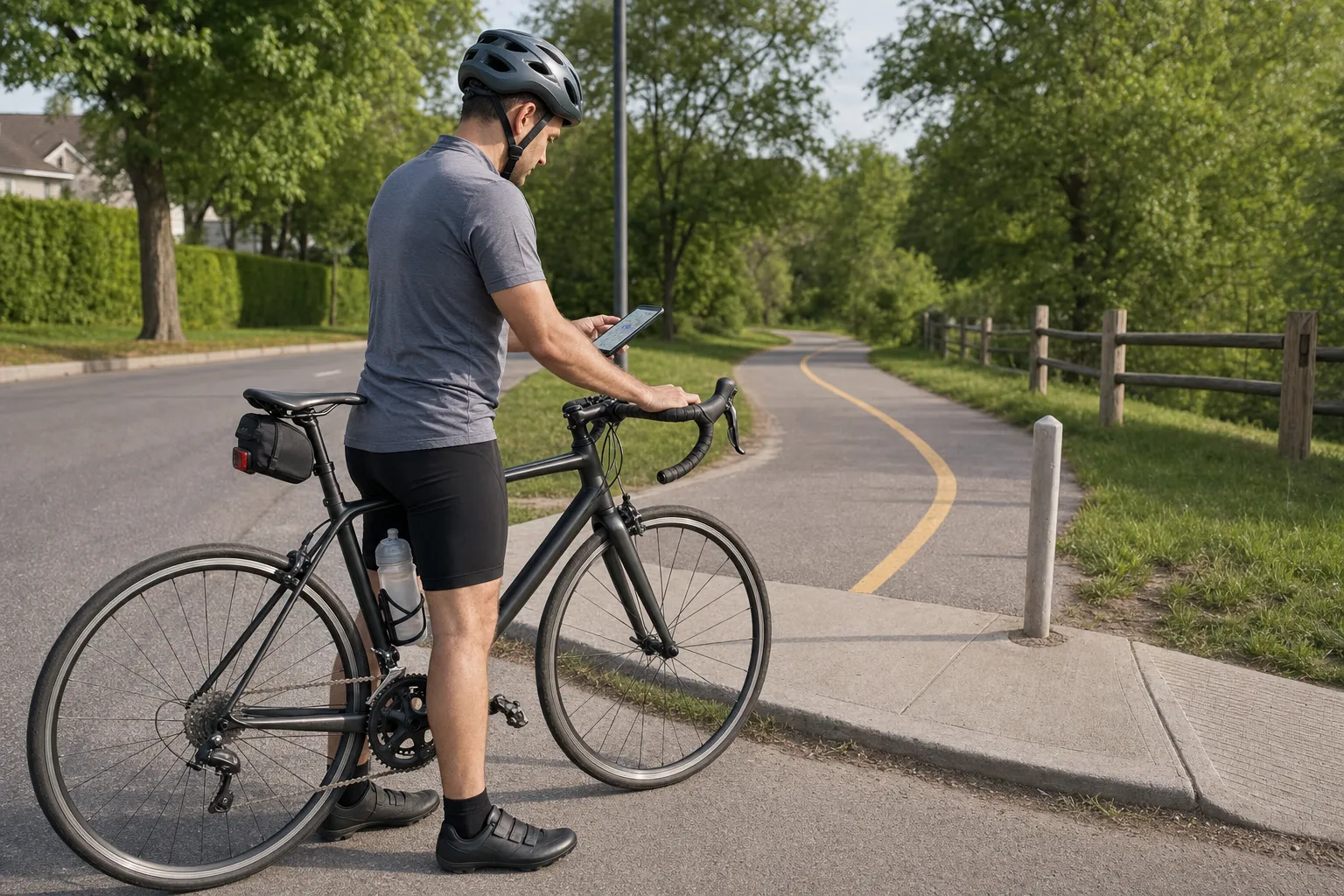
Recent beginner cycling threads keep circling the same worries: traffic feels harsher than expected, route planning feels like guesswork, and distance numbers from experienced riders can make a normal first ride look tiny. The useful answer is not to copy somebody else’s mileage. It is to manage attention.
NHTSA’s bicycle safety guidance tells riders to plan routes with less traffic and slower speeds, and notes that the safest route may be away from traffic in a bike lane or on a bike path. British Cycling’s route-planning advice also warns against roads where speed differences, hills, crests, and dips make a rider harder to see.
That is why “almost too short” works. A shorter route gives you enough brain space to notice the road instead of only surviving the distance.
Pick a route with fewer jobs
Do not judge the first route by kilometres alone. Judge how many jobs it asks you to do at the same time.
Prefer:
- a loop, out-and-back, or there-and-back route you can describe in one sentence;
- protected paths, bike lanes, quiet streets, or very low-traffic roads where they are legal and appropriate;
- wide sight lines and ordinary surfaces;
- familiar turns instead of a long chain of tiny navigation decisions;
- one clear cafe, park, station, shop, or safe stopping place;
- a route close enough to home, transit, or pickup that you have a fallback.
Avoid, for the first few rides:
- fast main roads, multi-lane junctions, and complicated roundabouts;
- steep descents before braking and cornering feel calm;
- loose gravel, wet leaves, metal covers, pothole-heavy roads, or rough shoulders;
- routes that become dark, remote, or hard to leave if you are tired;
- a plan that depends on your phone battery being perfect.
Transport for London gives a simple beginner-friendly example: find something nearby, such as a local park or a cafe-and-back ride, while checking where cycling is allowed. That kind of small destination can be much better than an impressive line on a map.
Use a one-variable rule
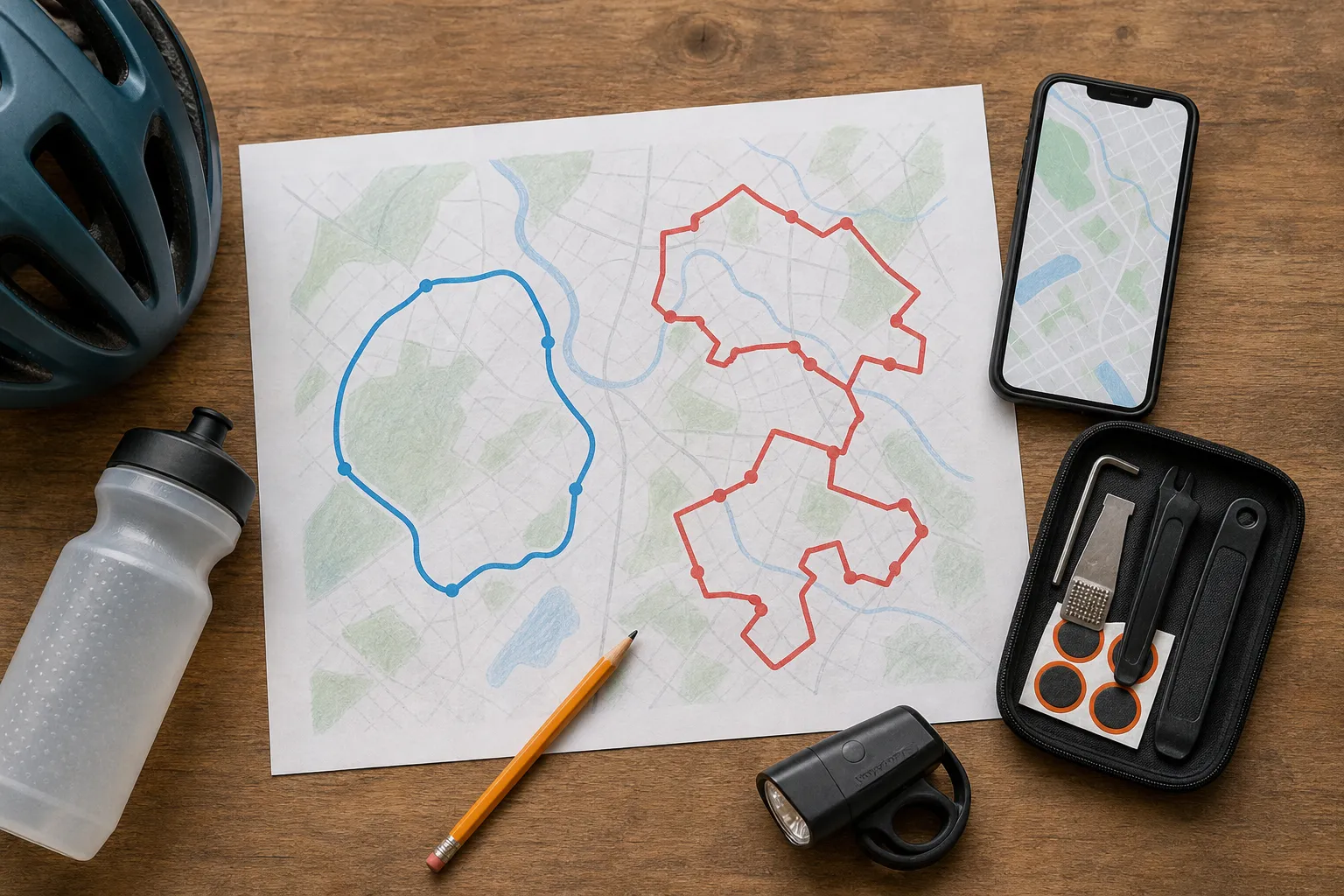
If you are new to road bikes, the first route should not add distance, traffic, hills, poor surfaces, navigation, group riding, and fading daylight all at once. Change one thing at a time.
For example:
- If the road bike controls are new, keep the route flat and familiar.
- If traffic is the worry, choose separated space or the quietest legal roads first.
- If fitness is uncertain, make the route short enough that you can stop before technique gets messy.
- If navigation is new, use an out-and-back with one obvious turnaround.
- If the weather is poor, postpone the outdoor test or shorten it further.
This matches the beginner path in your first month of road cycling: start with a simple route, practise one skill at a time, and add complexity only after the current version feels manageable.
Build in a graceful exit
A beginner route needs an exit that does not feel like failure. That might be a safe turnaround, a train station, a cafe, a shop, a flat shortcut, a pickup point, or simply a route that never gets far from home.
Before leaving, answer these questions:
- Where can I stop without blocking a path or road?
- Where can I turn around without making a rushed traffic move?
- What is the easiest way home if the wind, weather, bike, or body feels worse than expected?
- Can I shorten the ride without inventing a new route while tired?
If you cannot answer those questions, the route is probably not too short. It is too complex.
The quick first-route test
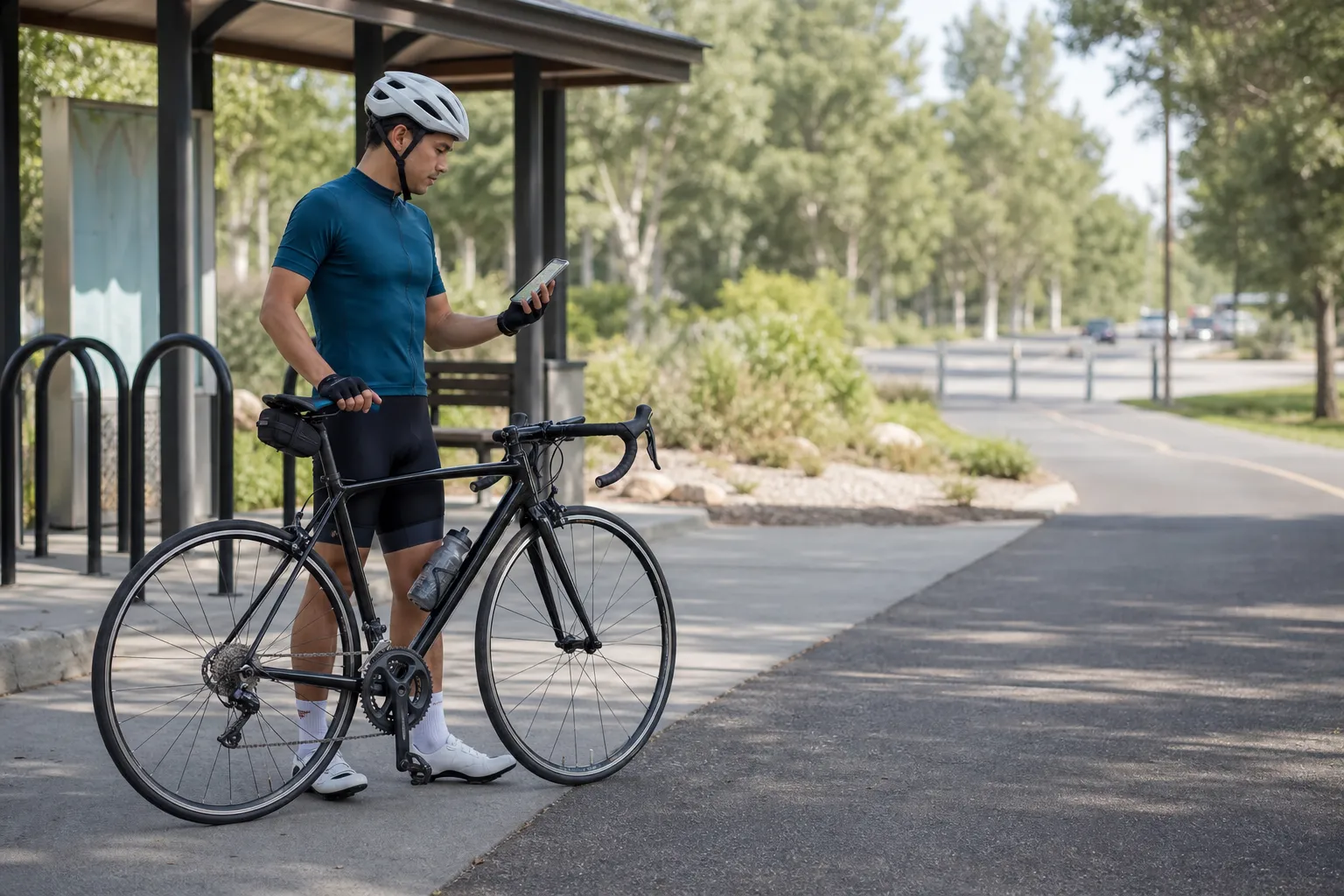
Use this before you press start on the map:
| Question | Good first-route answer |
|---|---|
| Can I explain the route simply? | Yes: one loop, one out-and-back, or one destination and return |
| Is traffic exposure modest? | Yes: lower speeds, lower volumes, protected space, or very quiet roads |
| Are the hardest turns predictable? | Yes: no surprise multi-lane decisions or blind fast junctions |
| Is the surface ordinary? | Yes: dry, paved, familiar, and not full of loose or hidden hazards |
| Do I have an exit? | Yes: a safe turnaround, shortcut, transit, pickup, or easy ride home |
| Will I finish with attention left? | Probably: the route feels almost too short |
The win is not the number. The win is returning with the bike under control, the route understood, and a clear idea of what to repeat or gently extend.
One focused next action
Plan a first route that you could shorten by half without embarrassment. Check the bike with the five-minute pre-ride bike check, ride the simple version, then write down the one part that demanded the most attention.
If the answer is “nothing much,” that is perfect. Repeat it once, then add one small change next time.