Why do you spin out on flat roads—and do you need a new bike?
Work out whether fast pedalling with no more speed comes from gear choice, cadence, a genuinely low top gear, brake drag, or an unsuitable bike before upgrading.
 Field guide / why-you-spin-out-bike-gears
Before you view or pay
Check fit, condition, and starter gear first
Use the buying checklist to choose the right path: used-bike viewing, first-bike fit and type, hidden repair costs, or starter gear.
If your legs spin quickly on flat roads but the bicycle will not accelerate, first make sure you are actually in the hardest available gear: the largest front chainring and smallest rear sprocket. If you are, record the tooth counts. A genuinely low top ratio may limit speed, but tyre pressure, brake drag, fitness, wind, and riding position can create the same feeling.
The short answer: shift one step harder until resistance returns while keeping a smooth cadence. If you reach the smallest rear sprocket and still spin out during ordinary flat riding, calculate the top ratio and compare bikes by gearing, fit, tyres, and intended use—not by “1×9” or “road bike” labels alone.
What “spinning out” actually means
Spinning out means you have reached the bicycle’s highest gear and cannot pedal comfortably faster enough to add useful speed. It is not simply breathing hard, bouncing in the saddle, or feeling that the bike is slower than someone else’s.
A recent r/cycling post described a rider enjoying longer weekend rides on a 1×9 utility bike but feeling limited on flat roads. The underlying question is common: is the bicycle under-geared, or is it time to improve setup and technique?
You need three numbers:
- teeth on the front chainring;
- teeth on the smallest rear sprocket;
- your approximate cadence when the limit appears.
The basic top ratio is:
front chainring teeth ÷ smallest rear sprocket teeth
A 40×11 top gear has a ratio of 3.64. A 50×11 road top gear is 4.55—about 25% higher for the same wheel size. “Nine speed” only describes how many rear positions exist; it does not reveal the top ratio.
Confirm you are selecting the hardest gear
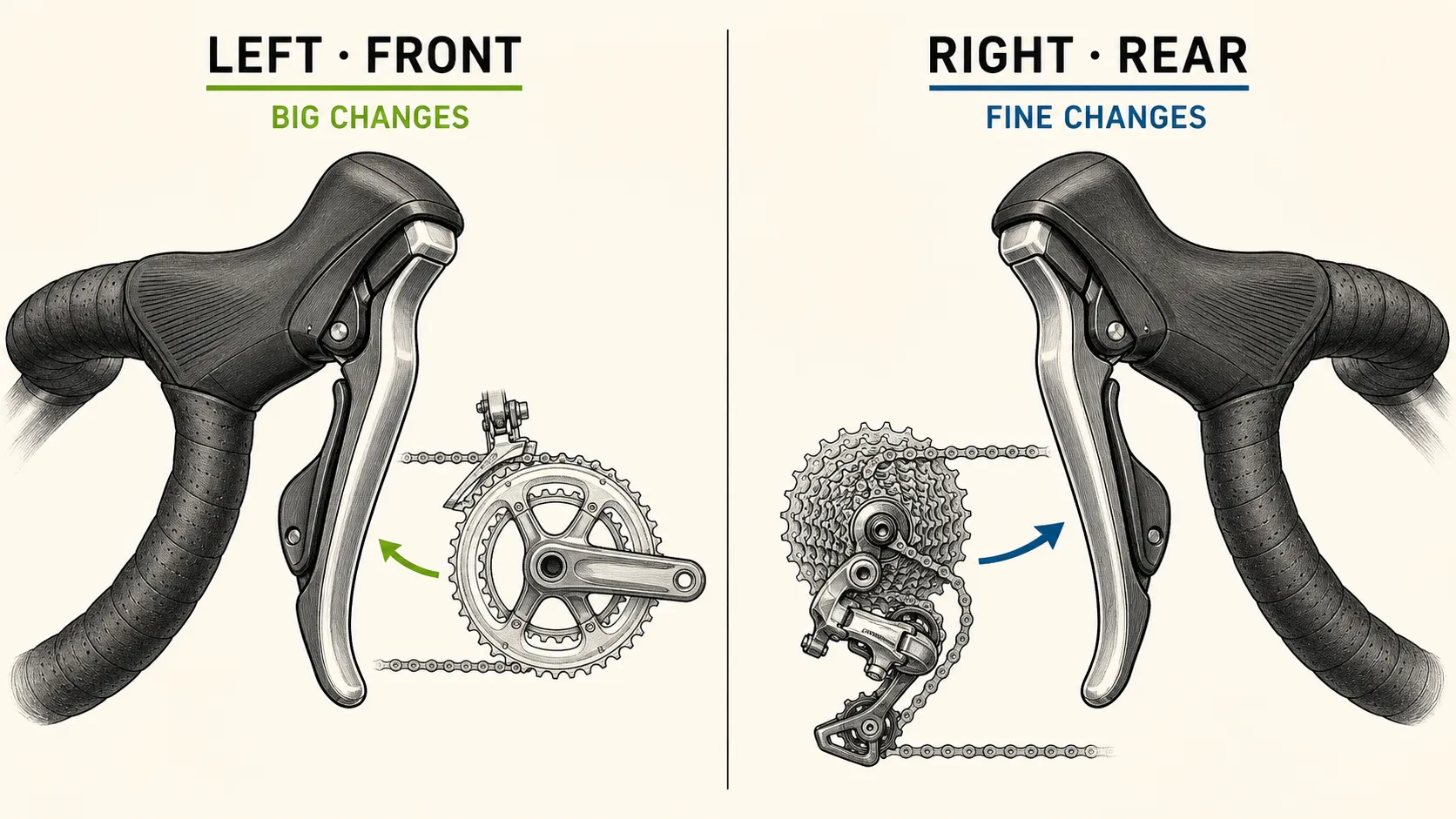
On a conventional derailleur bike, the smallest rear sprocket is the hardest rear gear. If the bike has two front rings, the larger front ring is the harder one.
Use a stand or look while stationary to identify the positions. Then test on a quiet flat road:
- Start in an easy gear.
- Pedal smoothly and shift the rear derailleur one sprocket smaller at a time.
- Let the shift complete under light pedal pressure.
- Stop shifting when cadence and resistance feel appropriate.
- Note whether any smaller sprocket remains unused.
If the shifter clicks but the chain does not reach the smallest sprocket, the problem may be indexing, cable travel, a limit setting, or a bent hanger—not insufficient gearing. Use the rear-derailleur indexing guide or a mechanic rather than changing the limit screw blindly.
Separate cadence discomfort from a gear limit
New cyclists often pedal in a gear that is either too easy and bouncy or too hard and grinding. A smooth cadence is learned, and there is no single compulsory number for everyone.
Try one gear harder. If the bike accelerates and your upper body becomes quieter, you were probably under-geared by choice rather than by hardware. If the harder gear makes each pedal stroke a slow push, return one step easier.
Our beginner cadence guide explains how to find a repeatable range without treating a computer reading as a command.
Rule out drag before buying speed
A bike that feels held back may have a perfectly adequate top ratio. Check:
- tyres are inflated to an appropriate measured pressure;
- both wheels spin without heavy brake rub;
- tyres are seated evenly and not damaged;
- wheel bearings do not feel rough or loose;
- the chain is clean, lubricated, and not badly worn;
- the saddle height is not forcing you to bounce or reach;
- no rack, mudguard, or accessory contacts a wheel.
Also test on an out-and-back route. A headwind or gentle false flat can be hard to see and can dominate speed. Weekend pace is not a laboratory measurement of the bicycle.
When a higher top gear is useful
A higher top ratio may genuinely help when:
- you repeatedly reach the smallest sprocket on flat roads, not only descents;
- cadence is already smooth and controlled;
- the drivetrain is adjusted correctly and the bike rolls freely;
- faster road riding is now a central goal;
- your routes and group pace justify the trade;
- the new gearing still leaves low enough gears for local climbs.
Do not enlarge only the front chainring without checking crank, chainline, frame clearance, chain length, derailleur capacity, and maker limits. Read whether larger chainrings fit before ordering.
Upgrade the drivetrain or change the bicycle?
Converting an inexpensive utility bike to drop bars or road gearing can require shifters, brake levers, bars, stem, cables or hoses, derailleurs, crank, cassette, chain, and labour. The controls and brakes must be compatible. A seemingly small conversion can cost more than selling the existing bike and buying a suitable used road or all-road bike.
Keep the current bike when it fits, remains useful for commuting, and the speed limit is occasional. Consider a different bike when you consistently ride longer distances and want several changes together:
- drop-bar hand positions;
- road-oriented gearing;
- lower aerodynamic drag;
- lighter wheels or tyres appropriate for the surface;
- wider-range or closer-spaced ratios;
- geometry that fits your longer rides.
For broken asphalt and compact light gravel, tyre clearance matters more than the word on the top tube. Use how much tyre clearance a first road bike needs and the road-bike buying checklist to compare the complete bike.
A practical buying brief
Write this before shopping:
- current front and rear tooth counts;
- easiest and hardest gears you actually use;
- longest normal ride;
- steepest regular climb;
- roughest surface and desired tyre width;
- must-have mounts for commuting or luggage;
- fit measurements and any pain points;
- complete budget including pedals, repair kit, and service.
Then test whether a candidate gives both a higher useful top gear and an easier-enough climbing gear. A bigger chainring paired with an unsuitable cassette may solve the flat and spoil the hills.
Your next step
Count the teeth on your current chainring and smallest sprocket, confirm the chain reaches that sprocket, and test one quiet out-and-back route. If you still spin out on both directions of ordinary flat riding, use those numbers as the minimum top ratio in your next-bike shortlist.
Sources and further reading
- Shimano dual-control lever user’s manual: shifting to smaller and larger sprockets
- Shimano current drivetrain compatibility information
- r/cycling demand signal: utility-bike rider spinning out on longer flat rides — used as an editorial question signal, not technical evidence.