When is it time to buy a new road bike?
Decide whether a new road bike solves a real limitation by comparing fit, safety, repair cost, compatibility, riding goals, and the complete price of changing bikes.
 Field guide / when-is-it-time-to-buy-new-road-bike
A new road bike is justified when it solves a specific problem that repair, setup, or one sensible component change cannot solve well. Age, envy, and a sale price are not problems by themselves. Poor fit, an unsafe or uneconomic frame, unavailable parts, unsuitable gearing, or a genuinely different use can be.
The short answer: write down what your current bike prevents you from doing. Price the smallest safe fix and the complete replacement—including fit changes, pedals, accessories, and first service. Buy the new bike when the replacement solves the limitation clearly enough to justify that full cost.
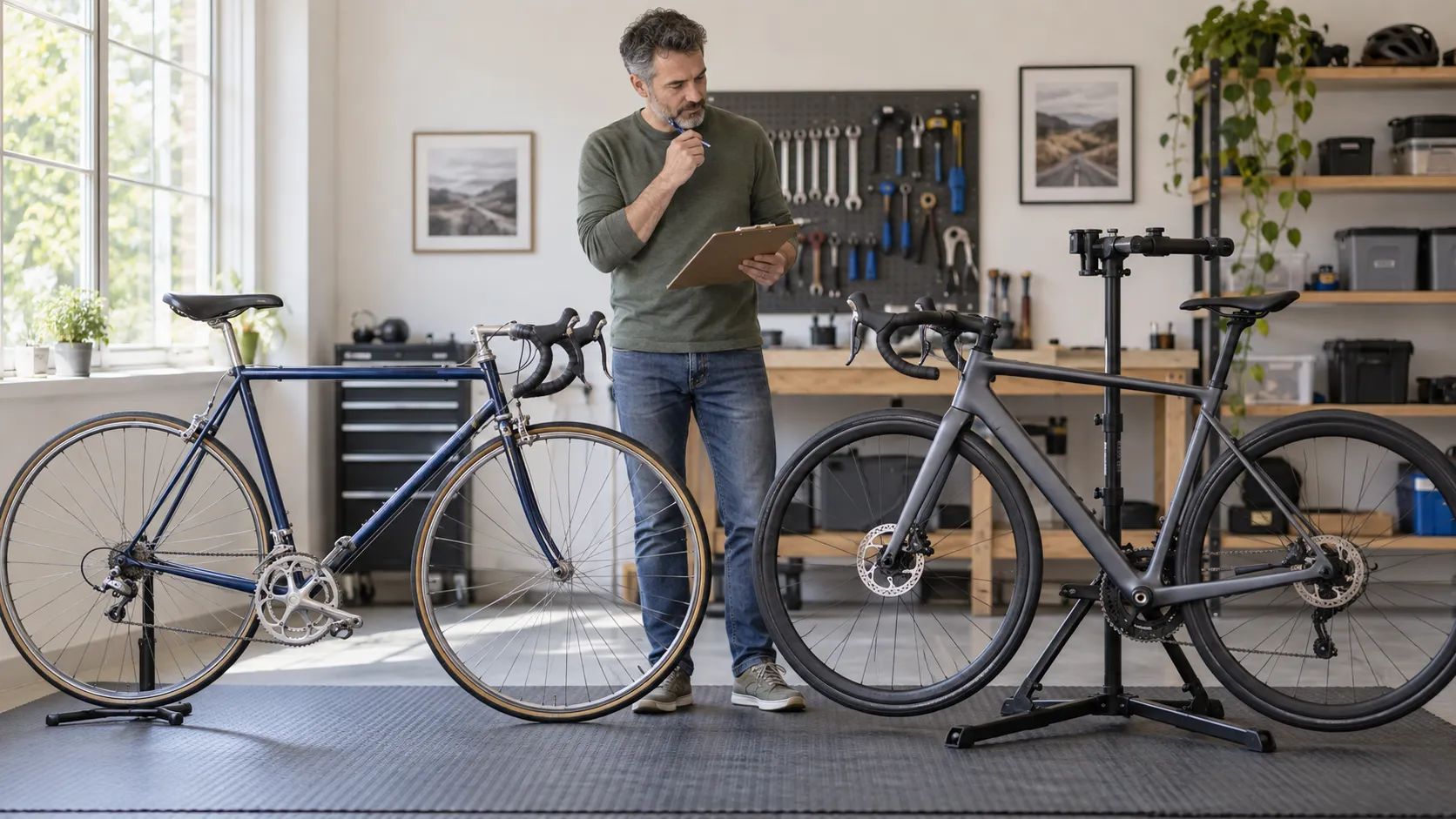
Start with the problem, not the product
Complete this sentence: “I need a different bike because my current bike cannot safely or reasonably…”
Useful endings include:
- fit me without extreme or unavailable parts;
- accept gearing low enough for my routes;
- carry the tyres, mudguards, or luggage my riding requires;
- provide dependable braking after a proper service;
- use replacement parts that are still realistically available;
- support the events or terrain I now ride regularly.
“It looks old” and “people I ride with have newer bikes” are honest feelings, but they do not predict a useful improvement. If desire is the reason and the purchase fits your finances, that is enough—you simply do not need to disguise it as necessity.
Two current r/cycling discussions show the same decision from different angles: one rider asks when performance and racing goals justify replacing a capable older bike, while another asks what a second, more serious road bike should be. Those conversations are demand signals, not evidence that a particular purchase is right for you.
Fix, upgrade, or replace?
Use this order:
- Restore the bike. Worn tyres, a stretched chain, poor indexing, dry bearings, and tired cables can make a good bike feel finished.
- Correct the setup. Tyre pressure, saddle position, hood reach, and cleat setup can matter more than a lighter frame.
- Change one limiting part. Easier gearing, suitable tyres, or a correctly sized contact point may solve the actual issue.
- Replace the bike. Do this when the frame, standards, geometry, or total repair bill makes the smaller fixes poor value.
If you cannot identify the fault, book an inspection before shopping. Our guide to when a road bike needs a mechanic separates useful diagnosis from repeated adjustment.
Five strong reasons to change bikes
The fit cannot be made sensible
A dramatically short or long stem, a saddle at the rail limit, insufficient standover, or no safe way to reach the brakes may point to the wrong frame. Check whether the bike is too big or too small before buying more parts to defend it.
The bike has a safety-critical problem
A suspected frame or fork crack needs qualified inspection. Replacement may be the only rational answer when a structural repair is unavailable, uncertain, or costs too much relative to a sound alternative. Do not test ride a suspected structural fault to “see how it feels.”
Your use has genuinely changed
A dry-weather race bike may not accept the tyres, gearing, mounts, or riding position needed for loaded commuting or rough all-road routes. That is a requirements mismatch, not an insult to the old bike.
Parts or service are becoming impractical
Older standards are not automatically bad. They become limiting when the exact wear part is unavailable, incompatible substitutes create a chain of extra changes, or routine service depends on scarce specialist work.
The complete repair cost no longer makes sense
Add tyres, drivetrain, bearings, wheels, brake work, labour, and any fit corrections. Compare that total with a suitable replacement—not with an aspirational flagship model. A repair can still be worthwhile for a loved bike, but make that emotional choice consciously.
Weak reasons that deserve a pause
- A single slow ride: wind, stops, route, fatigue, and riding position can hide or exaggerate equipment differences.
- A small weight saving: carry the bike, bottles, tools, and rider as one system before paying heavily to remove a few grams.
- One noisy component: diagnose it first. Many sounds come from installation or maintenance, not an obsolete bicycle.
- A discount deadline: the wrong size at 30% off is still the wrong bike.
- Future upgrades: buying an unsuitable bike because it can later become suitable often costs more than buying the right specification once.
Use what to upgrade first on a road bike if the current frame and use case are sound.
Compare the complete changeover cost
The ticket price is only the beginning. Include:
- pedals if the bike does not include them;
- a compatible cassette or trainer setup;
- bottle cages, computer mounts, and lights;
- any required tubeless supplies or spare tubes;
- fit changes such as stem, bar, saddle, or crank length;
- delivery, assembly, and the first follow-up service;
- insurance or secure storage where relevant;
- the realistic sale value of the old bike, not the hoped-for listing price.
Then test ride the candidate on the hand positions, gradients, and surfaces that matter. A specification sheet cannot tell you whether the brake controls are comfortable or the gearing suits your local climb.
Your next step
Write a one-line problem statement and three columns: service current bike, targeted upgrade, replacement bike. Price each route completely. If replacement still wins, take the result through the road-bike buying checklist and buy for the next several years of real riding—not for the car-park comparison.