What to do if you bonk on a bike ride
Recognise a suspected cycling bonk, stop safely, take in familiar carbohydrate, reassess before moving, and know when symptoms need urgent help.
 Field guide / what-to-do-if-you-bonk-on-bike
A suspected bonk is not something to “push through” in traffic. Stop somewhere safe, sit down, take in a familiar source of carbohydrate that you can tolerate, drink according to thirst and conditions, and give yourself time to reassess. If your thinking or bike control is affected, arrange a lift rather than riding home.
The short answer: stop, get safe, fuel, wait, and reassess. A bonk is a rider’s description, not a diagnosis. Heat illness, dehydration, illness, medication effects, and medical emergencies can feel similar, so treat unusual or severe symptoms seriously.
Why this question keeps appearing
A recent highly discussed Reddit thread about beginner lessons put bonking near the top of the list, while another beginner described a first bonk during a city ride. A separate discussion asked why post-ride fatigue lasted for days.
These stories are demand signals, not medical evidence. Riders use “bonk” loosely for a sharp loss of energy and performance during prolonged exercise. The cause cannot be confirmed from a post, and the safe response must account for other possibilities.
First, get off the road
At the first sudden combination of weakness, shakiness, difficulty concentrating, poor coordination, or an effort that collapses despite slowing:
- Signal and move completely out of traffic.
- Dismount before opening food or a phone.
- Sit somewhere safe, shaded or sheltered as conditions require.
- Tell a riding partner what is happening.
- Check for injuries, chest pain, severe breathlessness, confusion, or heat-illness signs.
Do not weave home slowly on a busy road. Low energy plus poor attention is a control problem, not merely a disappointing workout.
Take in familiar carbohydrate
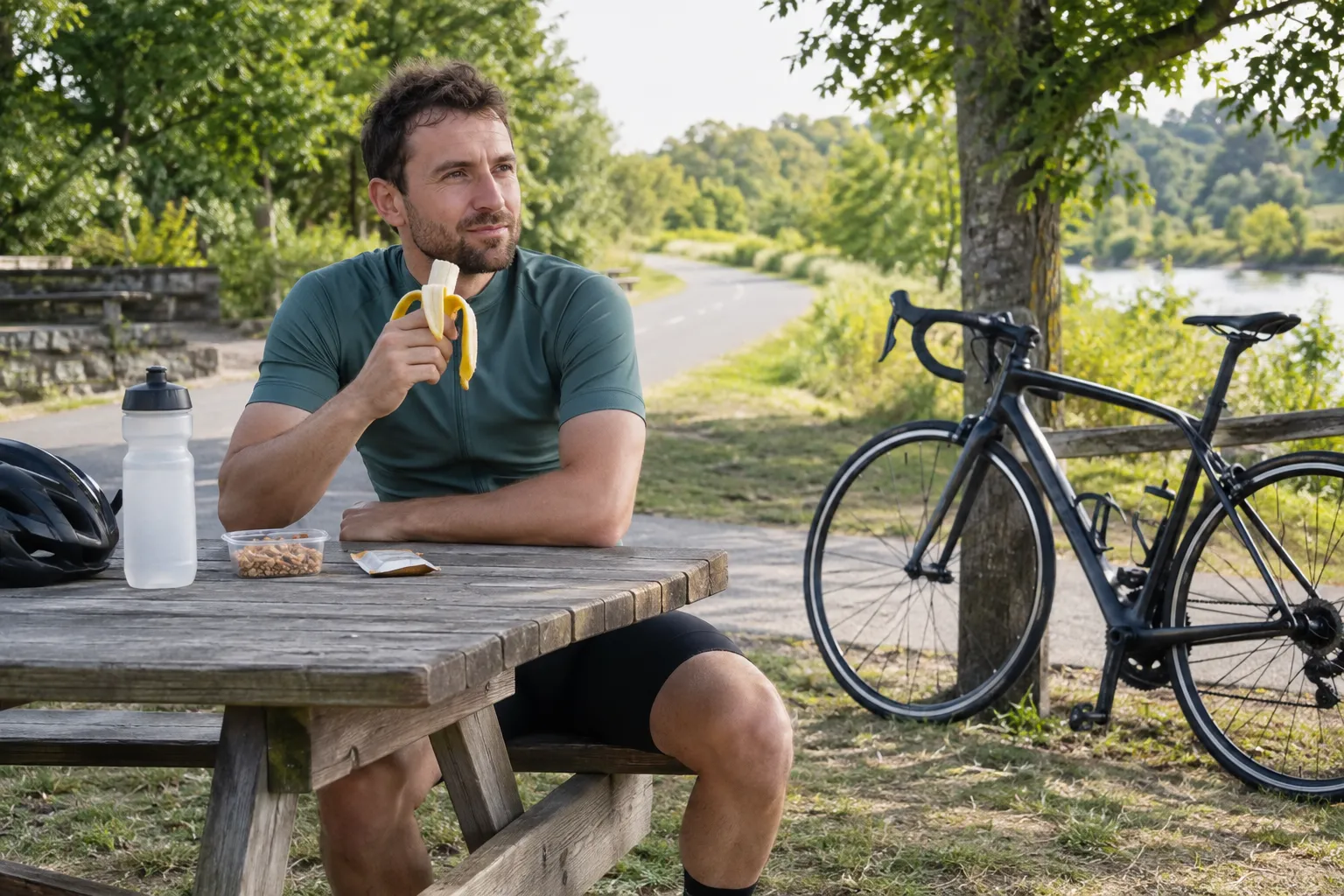
Choose something easy to chew and swallow: a banana, jam sandwich, soft bar, chews, ordinary sweets, sports drink, or gel you have used before. Carbohydrate is the useful feature; a sports label is not required.
The Australian Institute of Sport explains that carbohydrate-rich sports foods can be practical during endurance exercise, while ordinary foods may do the same job. Its guidance also stresses practising a plan that suits the event, hydration needs, and gut comfort.
Do not swallow a large amount in panic or experiment with an unfamiliar high-caffeine product. Take a manageable portion, sip fluid, and wait. If you have diabetes or another condition that changes your glucose plan, follow the plan provided by your clinician rather than a general cycling article.
Reassess before you move
There is no universal number of minutes or grams that proves you are safe to ride. Recovery depends on what actually caused the symptoms, what you consumed, the environment, and the person.
Ask four questions:
- Can I think clearly and hold a normal conversation?
- Can I stand and walk steadily?
- Have the symptoms clearly improved rather than merely stopped worsening?
- Is there a low-risk route home, or is a lift the safer option?
If any answer is no, do not ride. Call for help. Even after improvement, end the training goal and choose the easiest safe exit. Avoid technical descents, heavy traffic, hard efforts, and riding alone.
When it may not be a bonk
Stop treating the problem as routine nutrition if symptoms are severe, unfamiliar, or out of proportion. Heat illness can involve headache, nausea, dizziness, weakness, heavy sweating, or confusion. Dehydration, infection, a cardiac problem, medication effects, and other conditions can overlap with a rider’s idea of bonking.
Seek urgent help for:
- fainting, seizure, confusion, or inability to coordinate;
- chest pressure or pain;
- severe or unusual shortness of breath;
- face droop, arm weakness, or speech trouble;
- signs of serious heat illness;
- a crash or head impact;
- symptoms that persist, recur quickly, or worsen after stopping and eating.
Do not give food or drink to an unconscious person.
Prevent the next episode with a ride plan
Match fuel to duration and intensity
Short, easy rides after normal meals often need no special sports food. Longer or harder riding may benefit from carbohydrate during the ride. The AIS table gives broad ranges by exercise duration, but those are performance-nutrition guidelines—not a compulsory target for every beginner.
Use what to eat and drink on beginner rides to build a simple plan. Practise on ordinary rides before an event and begin before deep hunger or weakness.
Pack an emergency reserve separately
Carry one small, shelf-stable carbohydrate portion that is not part of your planned food. A sealed pack of chews, sweets, or a gel can stay in the saddle bag until needed. Replace it when expired, damaged, or used.
Keep a bailout route
Know where you can refill water, buy food, board public transport with a bike, or meet a lift. On a first long ride, loops near home are safer than a straight line to a remote turnaround. The first-route guide helps build exit options.
Record what happened
Note the start time, last meal, food and fluid carried, weather, duration, intensity, symptoms, and what improved them. Do not turn one episode into a diagnosis, but use the record to improve planning or give a clinician useful context if it recurs.
What not to do
- Do not deliberately underfuel a long or hard ride to accelerate weight loss.
- Do not wait for severe hunger as your only reminder on long rides.
- Do not treat caffeine as a substitute for carbohydrate, rest, or medical care.
- Do not resume intervals because food made you feel slightly better.
- Do not assume every sudden weak spell is a bonk.
Your next step
Put one familiar emergency carbohydrate portion in your ride kit today. Before the next ride beyond your normal duration, decide when you will eat, where you can refill, and how you will get home without riding if your control or concentration deteriorates.