What to do when a bike shop declines your repair
Respond when a bike shop will not repair your bicycle by clarifying the reason, requesting a safety assessment, comparing complete costs, and finding realistic alternatives.
 Field guide / what-to-do-bike-shop-declines-repair
Before you buy
Check the starter kit first
Print the one-page buying brief for helmet, lights, water, phone, and repair compatibility before comparing upgrades.
If a bike shop declines a repair, first ask for the specific reason. The problem may be unsafe structure, unavailable parts, a repair whose labour exceeds the bike’s replacement cost, previous assembly damage, or simply work the shop does not accept. Those reasons lead to different next steps.
The short answer: request a clear fault list and safe-baseline estimate, do not argue from the bike’s purchase price, and seek a second qualified assessment when the explanation is vague. If the safe repair is uneconomic, compare it with a correctly sized ready-to-ride used bike or a community workshop—not with riding the faulty bike as it is.
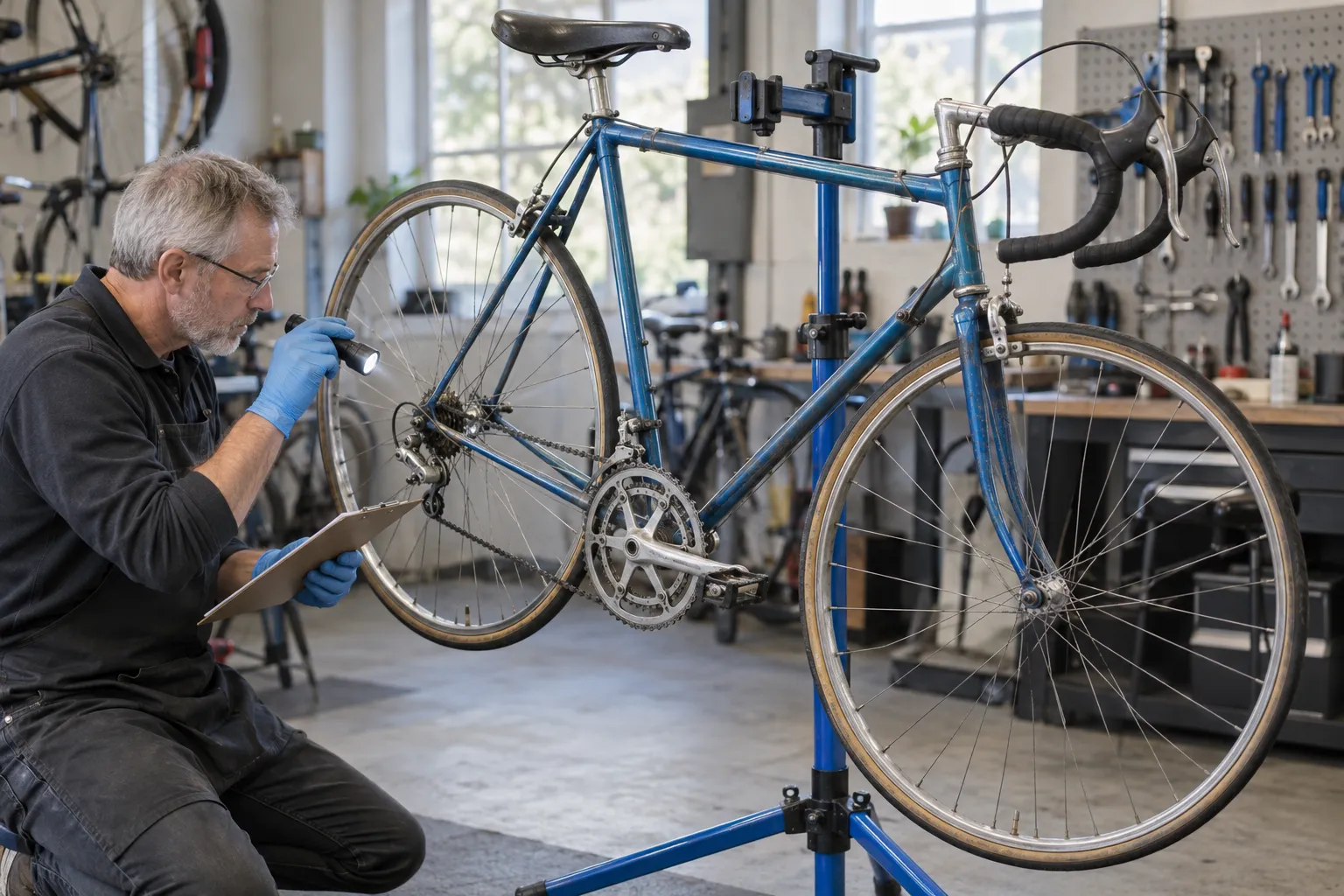
A refusal can mean four different things
The bike has a safety or liability problem
A suspected frame or fork crack, damaged brake mount, stripped critical thread, badly bent structure, or incompatible modification may leave no repair the shop is willing to stand behind. Ask whether the concern is confirmed, suspected, or awaiting inspection.
Do not move the bike to another shop while hiding the first assessment. Give the next mechanic the full fault information.
The complete repair costs more than a working alternative
A cheap or donated bicycle can need tyres, tubes, cables, brake parts, chain, sprockets, wheel work, bearings, and labour at the same time. The shop may believe the responsible estimate will be difficult to justify.
That is an economic judgment, not a statement about the rider. Ask for the safe-baseline total so you can make your own comparison.
The parts or construction are difficult to service
Some bicycles use low-cost integrated controls, nonstandard fittings, damaged threads, or parts for which reliable replacements are unavailable. Others arrive with assembly faults that turn a simple gear adjustment into several connected repairs.
Ask which exact part or operation blocks the job. “We cannot obtain a compatible brake lever” is actionable; “not worth it” is not enough information.
The shop does not offer that type of work
Workshops differ. One may avoid e-bikes it is not authorised to service, carbon repair, suspension, vintage restoration, internally geared hubs, cargo bikes, or bicycles from particular direct-sales systems. Capacity and insurance can also affect what is accepted.
A scope refusal does not necessarily predict what another qualified shop will decide.
Ask five calm questions
A widely discussed Reddit thread about a shop interaction involving a low-cost bicycle exposed two real concerns: repair economics can be difficult, and dismissive communication leaves a beginner without a safe next step. The thread is a demand signal, not verification of either party’s account.
Use these questions:
- Which faults prevent you from accepting the job?
- Is the bicycle currently unsafe to ride?
- What is the minimum work required for safe, dependable use?
- Which parts or labour make the estimate uncertain?
- Can you recommend a workshop that handles this type of bicycle?
Ask for the answers in writing if the estimate is complex. Pay a reasonable assessment fee when required; diagnosis takes workshop time even if you decline the repair.
Separate safe baseline from “make everything perfect”
Tell the mechanic how the bike will be used: a short flat commute, longer road rides, carrying a child, or something else. Ask them to divide the estimate into three columns:
- Must do before riding: brakes, tyres, secure wheels, steering, structural faults, loose cranks, or other control-critical work.
- Needed for dependable use: worn drivetrain parts, rough bearings, unreliable shifting, damaged contact parts, lights when required, or recurring puncture causes.
- Optional: cosmetic work, extra gears, lighter parts, upgrades, and accessories.
Do not ask a mechanic to return a bike while knowingly leaving a safety-critical fault. A shop may reasonably refuse partial work if the finished bicycle would still be dangerous.
Compare complete options
Create three real totals.
Option A: repair this bicycle
Include inspection, parts, labour, tax, and a contingency for faults discovered during disassembly. Add any missing essentials such as a lock, lights, pump, or helmet separately so they do not distort the mechanical comparison.
Option B: buy a ready-to-ride used bicycle
Include a pre-purchase inspection, immediate service, and any fit changes. A low advertised price is not the final price. Use the used-bike viewing checklist and avoid repeating the same problem with a different neglected bicycle.
Option C: use a community repair route
Search for a bicycle cooperative, charity workshop, repair café, training project, or tool library. Some provide supervised bench time, refurbished bikes, low-cost parts, or mechanical classes. Confirm what supervision, liability rules, and safety checks they provide.
DIY can reduce labour cost only when the work is within your skill and you can verify the result. Brake, wheel, steering, and structural work are poor places to learn by hopeful trial and error without competent oversight.
When to seek a second opinion
A second assessment is sensible when the first explanation was vague, the shop did not inspect the bicycle, the quoted work includes optional upgrades, or the bicycle requires a specialist the shop lacks.
Bring:
- the exact brand, model, and approximate year;
- clear photos and the serial number for recall checks;
- the first shop’s fault list;
- your intended use and rider size;
- any service history; and
- your maximum repair budget.
Do not shop around merely for someone willing to ignore a documented structural or brake fault. A lower quote is useful only if it reaches the same safe outcome.
Decide without shaming the bike or the rider
An inexpensive bicycle may still provide essential transport, and replacing it may not be financially easy. Equally, purchase price cannot make an unsafe repair smaller. The useful conversation is about condition, parts, labour, fit, and alternatives.
If the safe-baseline cost is higher than a suitable working alternative, replacement may be the rational choice. If the bike fits, the structure is sound, parts are available, and the repair creates dependable transport, spending more than its resale value can still make sense.
Read is an old road bike worth repairing? for the full condition-and-cost decision. Resale value and usefulness are not the same number.
Your next step
Ask the shop for the five answers and a split estimate. Mark every safety-critical item, then compare the complete repair total with one inspected, correctly sized alternative and one community-workshop option. Do not ride the bike while that decision is unresolved.
Sources and further reading
- US CPSC: bicycle requirements and safety systems
- Park Tool: repair-help reference library
- r/cycling reader context: repair access and communication around a low-cost bicycle
Reddit was used to identify the repair-access question. The article does not determine what happened in one shop or whether one individual bicycle was repairable.