What is an all-road bike, and is it a good first road bike?
Judge an all-road bike by fit, tyre clearance, gearing, mounts, and actual surface limits—not the category label—before choosing one as your first drop-bar bike.
 Field guide / what-is-all-road-bike-first-bike
Before you view or pay
Check fit, condition, and starter gear first
Use the buying checklist to choose the right path: used-bike viewing, first-bike fit and type, hidden repair costs, or starter gear.
An all-road bike is usually a drop-bar road bike with more tyre clearance and mixed-surface flexibility than a pure race bike, while keeping road-oriented handling and gearing. There is no universal all-road specification. One model may be an endurance road bike on wider slicks; another may sit close to a fast gravel bike.
The short answer: an all-road bike can be an excellent first road bike when most rides are paved but rough lanes, hard-packed gravel, commuting, or light luggage are real parts of the plan. Buy the actual fit, gearing, clearance, mounts, and use limits—not the “all-road” name.
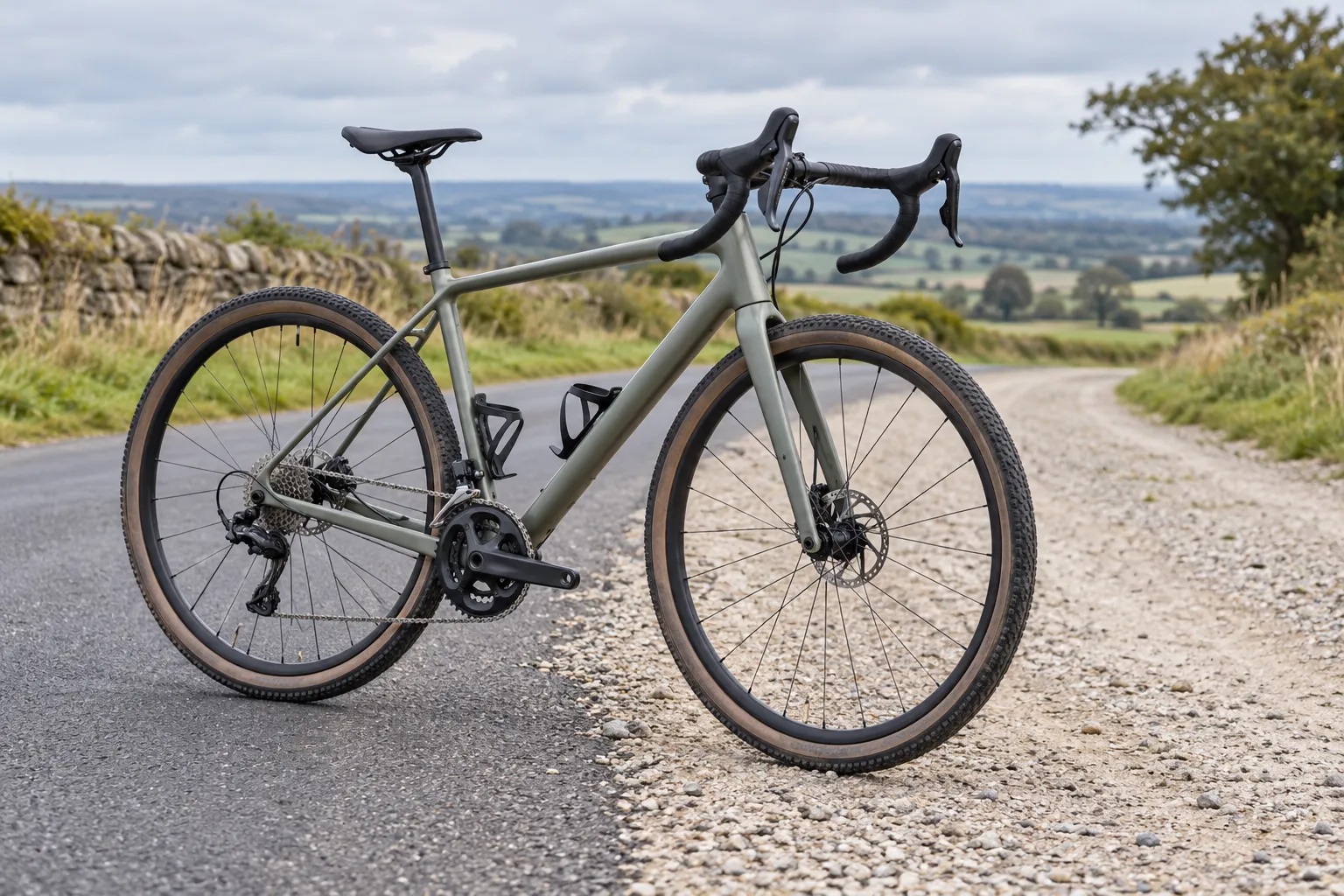
Why the label is confusing
Recent beginner discussions ask for a first bike that can cover roads, paths, and occasional gravel, while longer buying threads compare all-road, endurance-road, and gravel-race models. A highly discussed first-bike question also drew repeated recommendations for wider-tyre endurance or all-road options.
Those recommendations show demand, not a category standard. Current manufacturer examples demonstrate the variation: Canyon lists 40 mm tyre clearance for its Endurace AllRoad, while Giant’s current global Contend AR range describes clearance up to 43 mm. Those numbers belong to those exact pages and model generations; they do not define “all-road” for every brand.
Compare five things the name cannot guarantee
1. Finished riding position
All-road does not automatically mean upright. Compare frame stack and reach, supplied stem, handlebar reach, hood position, and spacer limits. A nominally versatile bike can still be too long, too low, or expensive to adjust.
Use the geometry-chart comparison guide and test the actual size. Do not choose a category to solve a fit problem.
2. Real tyre clearance
Clearance creates options for volume, comfort, grip, and tougher surfaces. Confirm the maker’s maximum for the exact frame, fork, wheel size, and model year. Mudguards may reduce the allowed width. Actual inflated tyre width changes with rim width, casing, and pressure.
Choose clearance for the roughest regular surface, not an imaginary annual adventure. The first-bike tyre-clearance guide helps translate routes into a useful range.
3. Gearing
Many road-biased all-road bikes keep a two-chainring drivetrain with close steps and a useful high gear. Gravel-biased models may use lower gearing, a single chainring, or larger jumps between rear sprockets.
Neither is universally better. For mostly paved riding with hills, check the easiest complete ratio and the spacing between everyday gears. For rougher climbs or loaded rides, lower gearing may matter more than tight steps. Compare 1x and 2x gearing before treating chainring count as quality.
4. Mounts and proprietary parts
Mudguard, rack, and top-tube mounts can make one bike genuinely practical. Confirm load limits and compatibility rather than assuming every visible bolt hole carries luggage.
Also inspect the cockpit and seatpost. A simple replaceable stem and standard round post can be easier to fit and service than integrated or proprietary parts. That flexibility matters on a first bike while your preferences are still developing.
5. Condition of use
Tyre width does not turn a road frame into a mountain bike. Read the owner’s manual for permitted surfaces, jumps, impacts, and loads. Firm gravel and broken pavement are different from roots, rock gardens, deep mud, and drops.
The tyre must also suit the surface. A wide slick can be excellent on rough tarmac and dry hard-pack but offer little bite in loose mud. Frame capability and tyre capability are separate questions.
All-road, endurance road, or gravel?
Use your normal riding split:
| Real use | Strong starting category |
|---|---|
| Nearly all pavement, speed-focused groups, clean roads | Endurance or performance road bike with adequate clearance |
| Mostly pavement, rough lanes, firm gravel, commuting | All-road or wide-clearance endurance road bike |
| Frequent loose gravel, rough tracks, low gearing, luggage | Gravel bike matched to terrain and load |
| Paved paths and casual fitness with no need for drop bars | A practical hybrid may be simpler and cheaper |
Category borders overlap. The road-versus-gravel commuting guide handles the trade-off in more detail.
When all-road is a strong first-bike choice
It is a good fit when:
- you want one bike for weekday roads and weekend mixed surfaces;
- local pavement is rough enough that tyre volume improves confidence;
- you need mudguards or modest luggage;
- you value stable handling and ordinary serviceable parts;
- the complete bike reaches your fit without extreme changes;
- the gearing is low enough for your hills.
It may be the wrong compromise when your real goal is criterium racing, fast road competition, technical off-road riding, heavily loaded touring, or the lowest-cost utility transport. A specialist bike can be simpler when the task is specific.
Test the complete bike
On a test ride, check more than comfort in the car park:
- Reach both brake levers securely from your normal hand position.
- Shift into the easiest gear before a hill and judge whether it is genuinely manageable.
- Ride rough pavement and notice control, vibration, and toe overlap at low speed.
- Confirm the supplied tyre suits the route rather than planning an immediate upgrade.
- Price mudguards, rack, pedals, fit changes, and essential gear before comparing deals.
Do not spend the entire budget on versatility you will not use. An inexpensive, well-fitting road bike with enough clearance can be a better first purchase than a premium all-road model chosen from fear of missing one future route.
Use the buying funnel without forcing the category
Once the surface and category are clear, run each candidate through the beginner road-bike buying checklist. It covers fit, brake access, used condition, hidden repair cost, and starter gear—the parts of the decision that an all-road label cannot answer.
If you are also comparing race-focused options, read endurance bike or race bike for a beginner. All-road is another trade-off, not an automatic upgrade above both.
Your next step
List the percentage of your rides on smooth pavement, rough pavement, firm gravel, and genuinely loose or technical ground. Then compare three complete bikes by fit, lowest gear, measured tyre setup, maximum clearance, mounts, and condition-of-use statement. Cross out any bike that wins only because of its category name.
Sources and further reading
- Giant: current Contend AR all-road range and stated tyre clearance
- Canyon: current Endurace AllRoad specification and stated tyre clearance
- r/cycling reader context: first bike for roads, paths, and gravel
- r/cycling reader context: comparing all-road, endurance, and gravel options
- r/cycling reader context: high-engagement beginner bike discussion