Road bike or gravel bike for commuting and weekend rides?
Choose between a road bike and gravel bike by surfaces, tyres, gearing, luggage, weather, storage, and the weekend ride you actually want—not the category label.
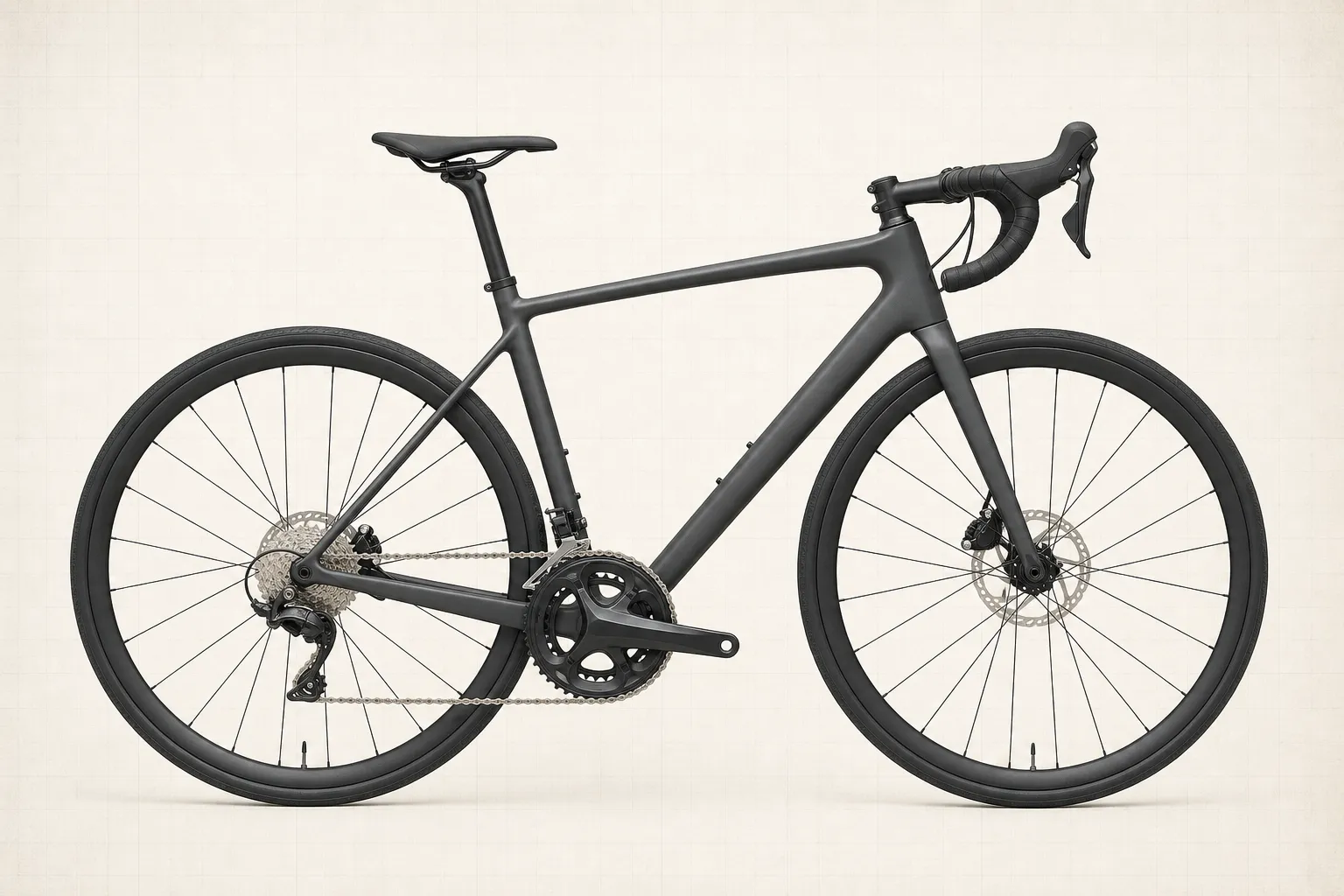 Field guide / road-bike-or-gravel-bike-for-commuting-weekend-rides
Before you view or pay
Check fit, condition, and starter gear first
Use the buying checklist to choose the right path: used-bike viewing, first-bike fit and type, hidden repair costs, or starter gear.
Choose the gravel bike when your commute or weekend route genuinely includes rough tracks, potholes, loose surfaces, wide tyres, low gears, or luggage. Choose the road bike when nearly all riding is paved and you value lighter, quicker road handling. The best one-bike answer is often the model with enough tyre clearance, mounting points, and fit—regardless of the word on its product page.
The short answer: map your roughest regular surface and heaviest regular load. If both are modest, an endurance or all-road bike with practical mounts may cover commuting and long road rides. If loose or broken surfaces are a routine part of the plan, a gravel bike provides more tyre and gearing margin. Do not buy aggressive tread or race geometry for an imagined use.
The Reddit signal is “one bike, several jobs”
Recent riders have asked whether to choose a road or gravel bike for commuting and future 50–100 km rides and whether a gravel bike makes sense when main roads feel uncomfortable and local trails are unpaved. The model suggestions in those threads are personal opinions. The repeated need is a way to translate real routes into bike features.
“Road” and “gravel” cover broad ranges. A relaxed all-road bike may sit closer to a fast gravel bike than to an aerodynamic race bike. Compare complete specifications and fit, not labels alone.
Decide from the route outward
Write down percentages for a normal month:
- smooth tarmac;
- broken tarmac, cobbles, and potholes;
- firm towpath or hard-packed dirt;
- loose gravel, mud, or rough trail;
- traffic-free paths with gates and tight turns;
- climbing while carrying work items.
Then mark the worst surface you cannot reasonably avoid. A weekly kilometre of firm towpath does not automatically require a gravel bike. A daily construction-damaged lane, wet canal path, or loose descent may justify more tyre, grip, and stability.
The practical differences
| Feature | Road / endurance bike | Gravel bike | Why a commuter cares |
|---|---|---|---|
| Tyres | Usually narrower, smoother | Usually wider; tread ranges from slick to knobbly | Comfort, puncture margin, wet/loose grip, rolling feel |
| Gearing | Often closer ratios and a higher top end | Often lower easiest gear and wider jumps | Loaded hills and stop-start riding |
| Handling | Quicker on paved roads; race models can be low and sharp | Often calmer with more stability on loose ground | Confidence, agility, and storage manoeuvres |
| Mounts | Vary widely | Rack, mudguard, and bag mounts are more common, not guaranteed | Carrying clothes, locks, and food |
| Weight/aero | Often lighter and more road-focused | Often heavier and wider at bars/tyres | Noticeable mainly when accelerating, climbing, or riding fast |
| Drivetrain | Commonly 2x for small gear steps | 1x or 2x; model dependent | Cadence gaps, maintenance, and gear range |
None of these rows is universal. Verify the exact bike.
Tyres matter more than the category argument
Tyre volume and casing affect comfort and control on imperfect surfaces. Tread affects loose-surface grip but does not create grip on every surface or replace technique. A heavily knobbled tyre can feel slow and noisy on a paved commute; a fast semi-slick gravel tyre may be a useful compromise.
Check four numbers:
- frame and fork maximum tyre clearance;
- rim internal width and approved tyre range;
- clearance remaining for mud and mudguards;
- the tyre’s actual measured width on those rims.
Do not assume a nominal 35 mm tyre measures exactly 35 mm. If buying used, confirm that the current tyres do not rub under load and that a wider tyre has not been forced into insufficient clearance.
Gearing: compare the easiest gear
Commuting with a laptop, clothes, lock, and lunch can make a short hill feel much steeper. Compare the smallest front chainring with the largest rear sprocket. A smaller result gives an easier climbing ratio.
For example, 34 front / 34 rear is a 1:1 ratio. A 40 front / 42 rear is slightly easier despite the larger front ring. Wheel and tyre size also affect the final distance travelled per pedal turn, but the simple ratio is enough for first-pass comparison.
Choose gears for your hardest repeatable climb, not your fastest imagined descent. Our beginner hill-gearing guide shows how to compare complete drivetrains.
1x or 2x for mixed use?
A single chainring removes a front shifter and can offer a wide range with simple controls. The gaps between gears may be larger, and some setups sacrifice either the highest or lowest end.
A double chainring usually gives closer steps for holding a comfortable road cadence and can provide both a low climbing gear and high road gear. It adds a front derailleur and overlapping combinations.
Neither is inherently beginner-only or advanced. Test whether you can find a comfortable gear on flat roads and a manageable gear on your loaded climb.
Fit beats theoretical versatility
A gravel bike is not automatically upright; a road bike is not automatically uncomfortable. Compare stack and reach, bar width and flare, stem dimensions, hood position, and saddle adjustment. Ride the hoods, use both brakes, look behind, and start and stop repeatedly.
A bike that claims every use but leaves you stretched, unable to reach the controls, or unstable at low speed is not versatile for you. Start with how to choose your first road bike and use bike fit before buying before ordering a size.
Commuting features people forget
Secure carrying
A rack and pannier keep weight off your back, but confirm frame mounts, rack compatibility, heel clearance, and load limits. Bikepacking straps are not automatically better for a daily laptop.
Full-length mudguards
Check real clearance around the fork crown, brake calipers, tyres, and bridges. “Mudguard compatible” may require a particular mount or maximum tyre size.
Lights and reflectors
Plan legal front, rear, and reflective equipment for your location. Rechargeable lights need a charging habit; dynamo lighting adds initial cost but can suit daily transport. Read how to ride after dark for a complete setup.
Locks and storage
A premium bike that cannot be stored securely at both ends may be the wrong commuter. Budget for a lock appropriate to local risk and a parking method that secures the frame and wheels without crushing cables or carbon tubes.
Service access
Daily use rewards replaceable hangers, common bearings, available brake pads, external or serviceable routing, and a nearby shop willing to work on the bike. Confirm those before being impressed by integrated parts.
Choose by these four common profiles
Almost all paved, fast weekend groups
Start with an endurance road or all-road bike. Look for sufficient tyre clearance, mudguard mounts, easy gearing, and a fit you can hold. A pure race bike is optional, not the definition of road cycling.
Paved commute, rough recreational paths
A fast gravel or all-road bike with semi-slick tyres is often the simpler one-bike answer. If weekend road speed becomes a priority later, a second compatible wheelset can help—but price hubs, cassette, rotors, tyres, and setup before assuming it is cheap.
Loose gravel or muddy tracks every week
Choose a gravel bike with appropriate clearance, gearing, and handling. “Gravel” does not mean technical mountain-bike trail capability; inspect the routes and manufacturer use category.
Short city commute, occasional long paved ride
Either category can work. Secure storage, control in traffic, luggage, and fit may outweigh a small road-speed difference. A practical hybrid may also be the honest answer if drop bars are not important.
Test the complete bike
On a test ride, include rough tarmac, a hill, repeated stops, shoulder checks, low-speed turns, and braking from the hoods. With permission, fit or simulate the expected luggage. Listen for tyre rub and confirm your shoes clear bags and the front wheel.
Before paying, use the beginner road bike buying checklist. It covers fit, controls, condition, hidden service costs, and the starter gear budget that category comparisons miss.