What to do the week before your first 100-mile bike ride
The final week is for arriving rested, prepared, and familiar—not gaining last-minute fitness. Use this practical taper, bike, route, and fuelling checklist.
 Field guide / week-before-first-century-bike-ride
You will not build meaningful new endurance in the final seven days before a first 100-mile ride. The useful work now is to reduce accumulated fatigue, keep the legs familiar with riding, confirm the bike and route, and remove avoidable surprises. Do not squeeze in one last epic training ride.
The short answer: reduce training volume, keep any riding short and familiar, sleep normally, eat familiar meals, check the bike early in the week, and write a route, clothing, food, water, and bailout plan. Nothing new—saddle, shoes, tyre setup, supplements, or pacing strategy—gets its first real test on event day.
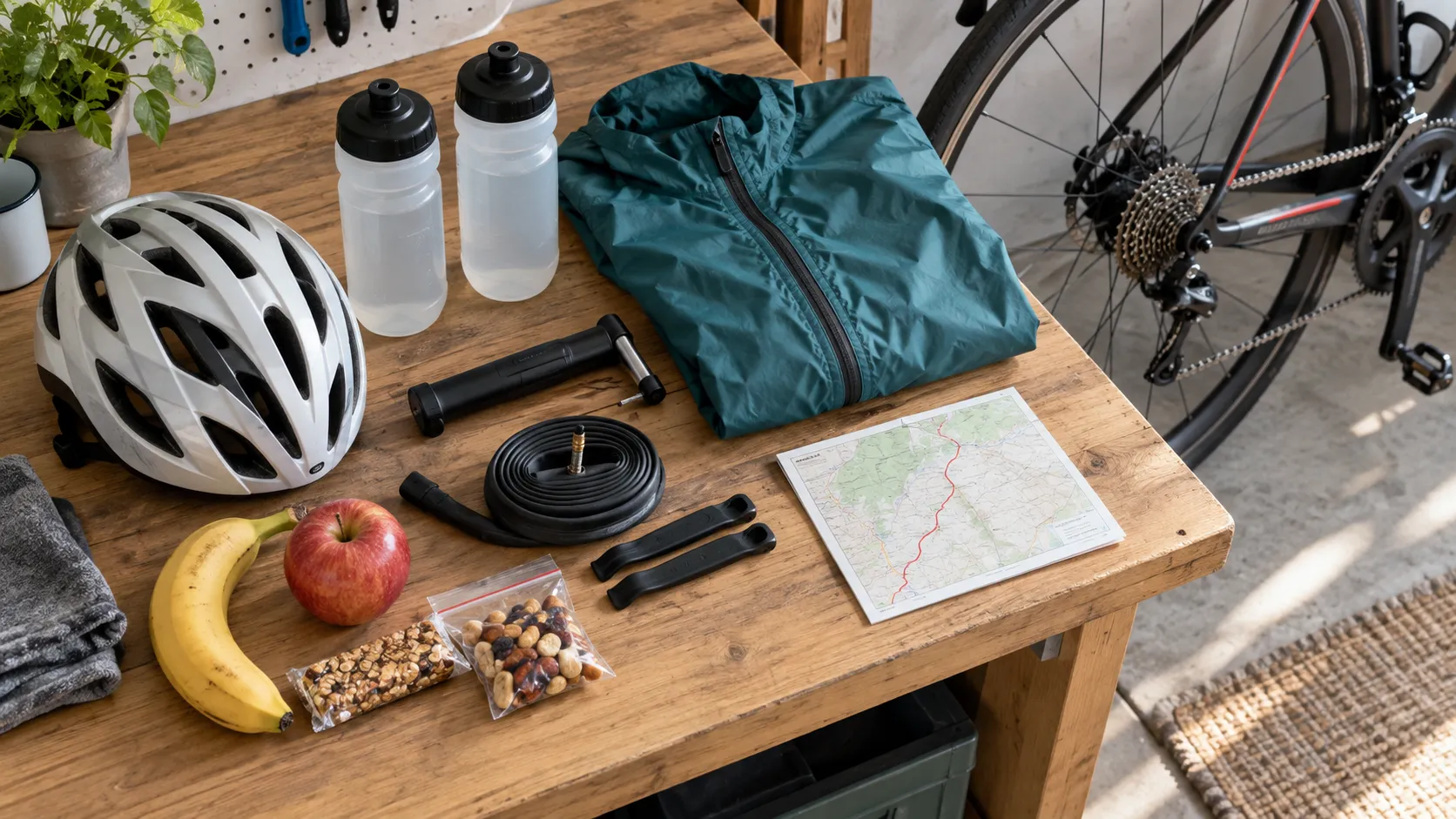
Why the final week causes so much anxiety
A current Reddit thread asked what to do with six days left before a century ride. The replies ranged from complete rest to prescribed workouts and exact nutrition targets.
Treat those replies as evidence of a recurring question, not a personal training plan. Taper research across endurance sports supports reducing training volume before competition, but the best duration and reduction depend on the athlete, training history, event, and normal weekly load. A first-time recreational century is also different from a short race: freshness, comfort, logistics, and conservative pacing matter more than chasing a perfect “opener” session.
Seven to five days before: stop proving fitness
Your final long ride should already be complete. Follow the taper built into your training plan; if you do not have one, make the week clearly lighter than a normal training week rather than inventing hard sessions.
Use one short, easy spin if it helps you feel normal. Keep the route close to home and avoid technical descents, group surges, or anything with an unusual crash or puncture risk. Rest instead if you are carrying soreness or fatigue.
This is the right time to inspect the bike:
- tyre cuts, wear, pressure retention, and valve condition;
- brake operation and pad life;
- wheel security and obvious spoke or rim problems;
- chain wear, cleanliness, and lubrication;
- gear shifting across the usable range;
- cleat, bottle-cage, saddle, stem, and rack-bag fasteners; and
- charged lights and electronic shifting batteries.
Use the five-minute pre-ride check as the baseline. If a shop repair is needed, doing it now leaves time for a short confirmation ride.
Four to three days before: lock the plan
Route and support
Download the route for offline use and confirm the start, finish, elevation, surface, road closures, feed stations, water points, cut-off times, and event rules. For a solo ride, mark shops and refill points that will actually be open.
Create at least two bailout options. A train station, pickup point, shorter loop, or direct route home is planning—not failure.
Pacing
Choose a first-hour effort that feels almost too easy. Early excitement, groups, and tailwinds hide effort. If you have trained with heart rate or power, stay inside the ranges you already know; event day is not when to discover a new threshold.
Food and drink
Use only foods, drink mix, and timing that worked on long training rides. Calculate how many portions you can carry and where you will refill them. Separate “I packed enough calories” from “I can actually eat and digest this every hour.”
Our beginner ride nutrition guide explains the variables without pretending one intake target suits every rider, temperature, intensity, or medical need.
Two days before: protect the boring basics
Eat normal meals with familiar carbohydrate sources and enough fluid to satisfy thirst. Do not turn the evening into an eating contest, test a new supplement, or force excessive water. If you have a medical condition or prescribed nutrition plan, follow your clinician or sports dietitian.
Check the forecast several times, including wind direction, temperature change, precipitation, and any official warnings. Set out layers that you have already worn together. Pack sunscreen, identification, payment, phone, and any personal medication.
Aim for your normal sleep routine. One imperfect night does not erase training, and anxiety about achieving “perfect sleep” can be more disruptive than the event itself.
The day before: make fewer decisions
Do a brief easy ride only if that is normal for you and the bike needs a post-service confirmation. Shift through the gears and brake gently. This is a function check, not training.
Then:
- inflate tyres to your established pressure, not the sidewall maximum;
- charge lights, computer, phone, and shifting system;
- load the route and verify navigation works offline;
- attach bottles and bags, then check they cannot eject or rub;
- put clothing and food in the order you will use them;
- confirm transport, registration, and start time; and
- tell a trusted person the route and expected finish window.
Do not fit a new saddle, switch pedal systems, convert to tubeless, install unfamiliar tyres, or perform a major drivetrain overhaul unless the alternative is not riding. A safety-critical fault is a reason to repair properly or withdraw, not to rush.
Event morning and the first hour
Eat the familiar pre-ride meal you rehearsed. Arrive early enough to avoid sprinting through setup. Do a final tyre, wheel, brake, and bag check.
Start below the pace that feels exciting. Eat and drink according to the practised plan before hunger or thirst becomes urgent. Let faster groups go. A successful first century is one you can manage safely at mile 80, not one that wins the first ten miles.
Reassess at planned checkpoints. Weather, stomach comfort, pain, equipment, and alertness can change. Shortening the route is the correct choice when safety or health says so.
What if training was not enough?
A taper cannot replace preparation. If your longest recent rides were far shorter, you have not tested several hours of contact-point comfort, or you cannot fuel and repair a puncture independently, changing the goal may be wiser than relying on determination.
Consider a shorter event distance, a supported route, or postponement. Build from our first-100-kilometre training guide before returning to a 100-mile goal.
Your next step
Write a one-page plan today: final easy rides, bike check deadline, route and bailout points, forecast, clothing, food, water, start pace, and pickup contact. Once it is written, stop shopping for last-minute fitness and let the work you already did show up.