Should you switch to shorter cranks on a road bike?
Shorter cranks can change hip and knee angles, but they are not an automatic upgrade. Decide from symptoms, fit, compatibility, gearing, and a controlled test.
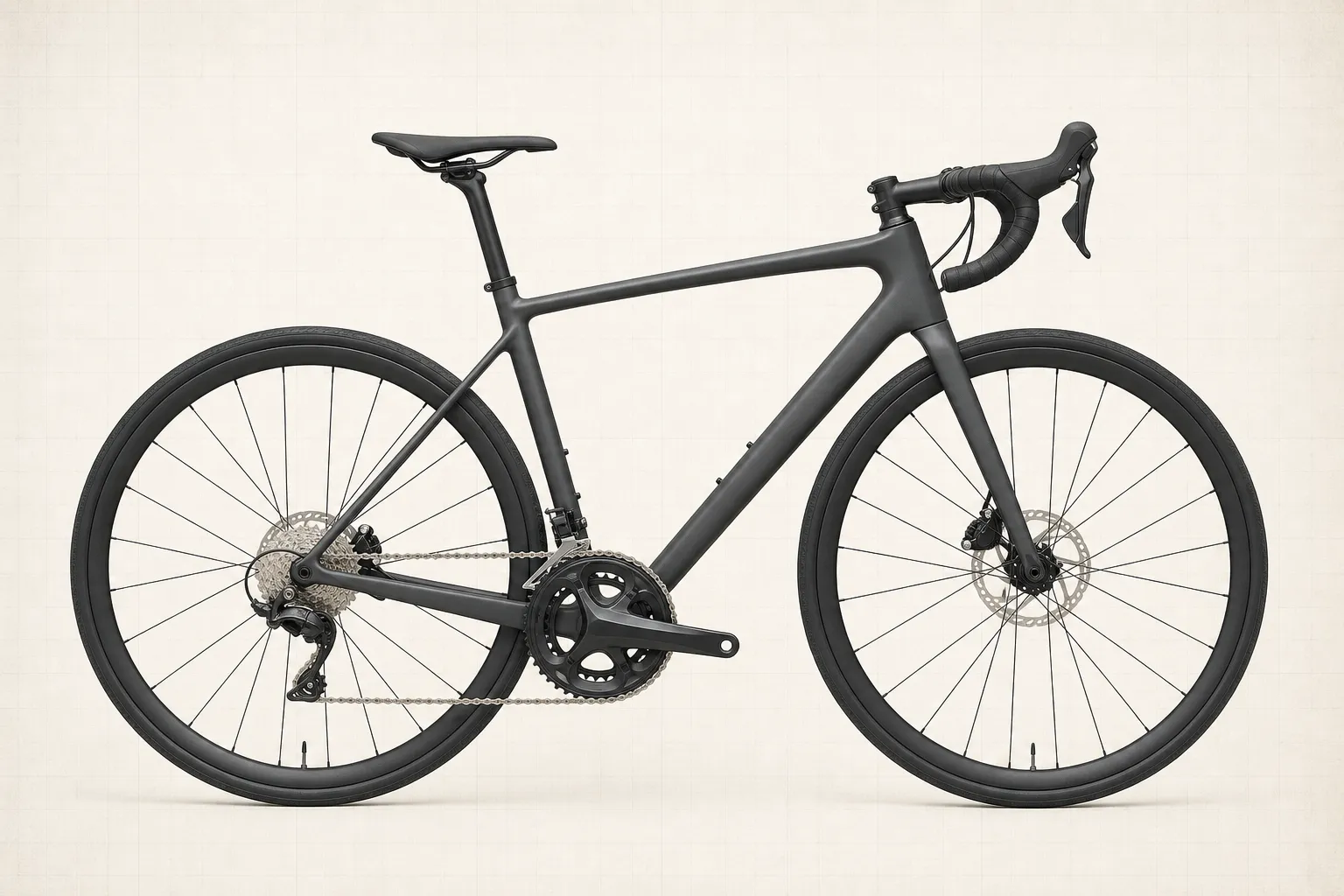 Field guide / should-you-switch-to-shorter-road-bike-cranks
Shorter cranks can give your hip and knee more room at the top of the pedal stroke. They can be useful when the existing crank circle feels too large, but they are not a universal speed upgrade and they do not repair an otherwise poor bike fit.
The short answer: keep your current cranks if you are comfortable and have no clear fit or clearance problem. Consider a shorter, compatible option when a qualified fit process identifies excessive joint closure, when a small frame ships with disproportionately long cranks, or when pedal clearance is a real constraint. Test the change with the saddle and gearing accounted for.
Why riders keep asking
Current Reddit discussions ask whether 165 mm cranks offer any benefit when 172.5 mm already feels fine and whether riders who changed crank length noticed a measurable difference. The replies mix fit experiences, professional-racing trends, power claims, and rules of thumb.
Those anecdotes show demand, not a prescription. Crank length interacts with saddle position, leg motion, gearing, cadence, frame clearance, and the rider’s goals. A useful decision begins with the problem you are trying to solve.
What changes when the crank gets shorter
Crank length is measured from the centre of the bottom-bracket axle to the centre of the pedal axle. Moving from 172.5 mm to 165 mm reduces the pedal circle radius by 7.5 mm.
That has several practical effects:
- the foot rises less at the top of the stroke;
- maximum hip and knee flexion can decrease;
- the pedal sits farther from the ground at its lowest point;
- the saddle normally needs to move up by roughly the crank-length reduction to preserve bottom-of-stroke leg extension;
- maintaining the same power at the same cadence requires a little more pedal force because the lever is shorter;
- riders may naturally choose a different cadence or gear.
The last two effects do not prove a performance loss. Power combines torque and angular speed, and riders adapt their cadence and gearing. Research across ordinary crank ranges does not support a simple “longer makes more power” or “shorter makes everyone faster” rule.
What the research can and cannot tell you
A controlled study of 28 trained male cyclists comparing 165, 170, and 175 mm cranks found lower perceived fatigue with the shorter options in some comparisons but no significant difference in the measured power, heart-rate, sprint, or economy outcomes. A separate small study of 14 male novice cyclists compared a much larger 175-to-145 mm change and reported improved economy with the shorter condition.
Another recent biomechanics study found that small reductions in crank length changed hip and knee flexion and some pelvic and lower-limb motion. These studies help explain possible mechanisms. They do not identify one ideal length for every body, discipline, injury history, or bicycle.
Treat the evidence as permission to test a suitable range, not as an online fitting formula.
Good reasons to investigate shorter cranks
You are compressed at the top of the stroke
You may feel the thigh crowding the torso, the knee travelling outward to make room, or the pelvis rocking despite a sensible saddle height. Those signs have several possible causes, so confirm the fit rather than buying the suggested fix from a short video.
Your bike size came with an unhelpfully long crank
Small frames have historically sometimes shared crank lengths with larger sizes. A rider’s height alone still does not produce a definitive number, but crank length deserves review when a small rider has limited hip clearance or cannot achieve a stable position.
Pedal strike or toe clearance is a genuine problem
A shorter crank increases ground clearance and may reduce toe overlap slightly. It should not be used to disguise an unsuitable frame, tyre, fork, or riding technique. Read what toe overlap means on a road bike before changing parts.
A fitter wants a controlled experiment
An adjustable fitting bike or compatible test crank can separate the effect of crank length from simultaneous saddle, cleat, and handlebar changes. That evidence is better than purchasing an entire drivetrain on speculation.
Weak reasons to change
- A professional rider uses a particular length.
- A social post says everyone below a certain height needs one number.
- You want a guaranteed wattage gain.
- Knee or hip pain has not been medically assessed.
- Your current setup is comfortable, but the part is fashionable.
- You expect shorter cranks to make an oversized frame fit.
If the bike itself feels too large or too small, use the measurements in how to tell whether a road bike is the wrong size before changing the crank.
Check compatibility before buying
A crank swap can affect more than arm length. Confirm:
- Bottom bracket and axle standard. The new crank must match the frame and bottom bracket or use an approved compatible replacement.
- Chainline and front shifting. Chainring position, size, speed designation, and front-derailleur requirements matter.
- Power meter. A crank- or spider-based meter may not transfer.
- Pedal threads and installation parts. Follow the exact manual, direction, lubrication guidance, fastener sequence, and torque.
- Frame clearance. Confirm arms, spindle, chainrings, and any power-meter pod clear the chainstay throughout rotation.
- Saddle adjustment range. Raising the saddle may exceed the maximum extension or change handlebar drop.
Use the current manufacturer compatibility chart and the exact dealer manual, not a marketplace listing that says “fits most bikes.”
Set up the comparison properly
Before removal, record crank length, saddle height, saddle setback, cleat position, and the symptoms or goal. Photograph measurement points so you can reproduce them.
After fitting a crank shorter by a known amount, a common starting adjustment is to raise the saddle by approximately that difference. That preserves a similar maximum leg extension but also raises the rider relative to the handlebar. It is a starting point, not a substitute for assessment.
Test on the same easy route at normal effort. Compare:
- comfort at the top and bottom of the stroke;
- pelvic stability;
- natural cadence and gear choice;
- ability to ride the hoods and drops;
- any joint symptoms during and after the ride;
- low-speed control and pedal clearance.
Change one variable at a time and allow several ordinary rides for unfamiliarity to settle. Stop if pain appears or worsens.
The practical verdict
Shorter cranks are a fit option, not required beginner equipment. They can open joint angles and solve specific constraints without an inevitable power penalty across commonly compared sizes. They also cost money, can create compatibility work, and require the rest of the position to be reset.
If nothing is wrong, keep riding. If something is wrong, describe it before buying the proposed cure. A professional fit before a bike purchase or a focused follow-up fit can be cheaper than an incompatible crankset.
Sources and further reading
- PubMed: effects of 165, 170, and 175 mm crank lengths in trained cyclists
- PubMed Central: cycling economy with 145 and 175 mm cranks in novice cyclists
- PubMed: minor crank-length changes and lower-body cycling kinematics
- Shimano: current specifications and compatibility documents
- r/cycling reader context: considering 165 mm cranks without an existing problem
- r/cycling reader context: experiences after changing to shorter cranks