Should you get a bike fit before buying a road bike?
Decide whether a pre-purchase bike fit, shop sizing session, or careful test ride is the right safeguard before you buy a road bike.
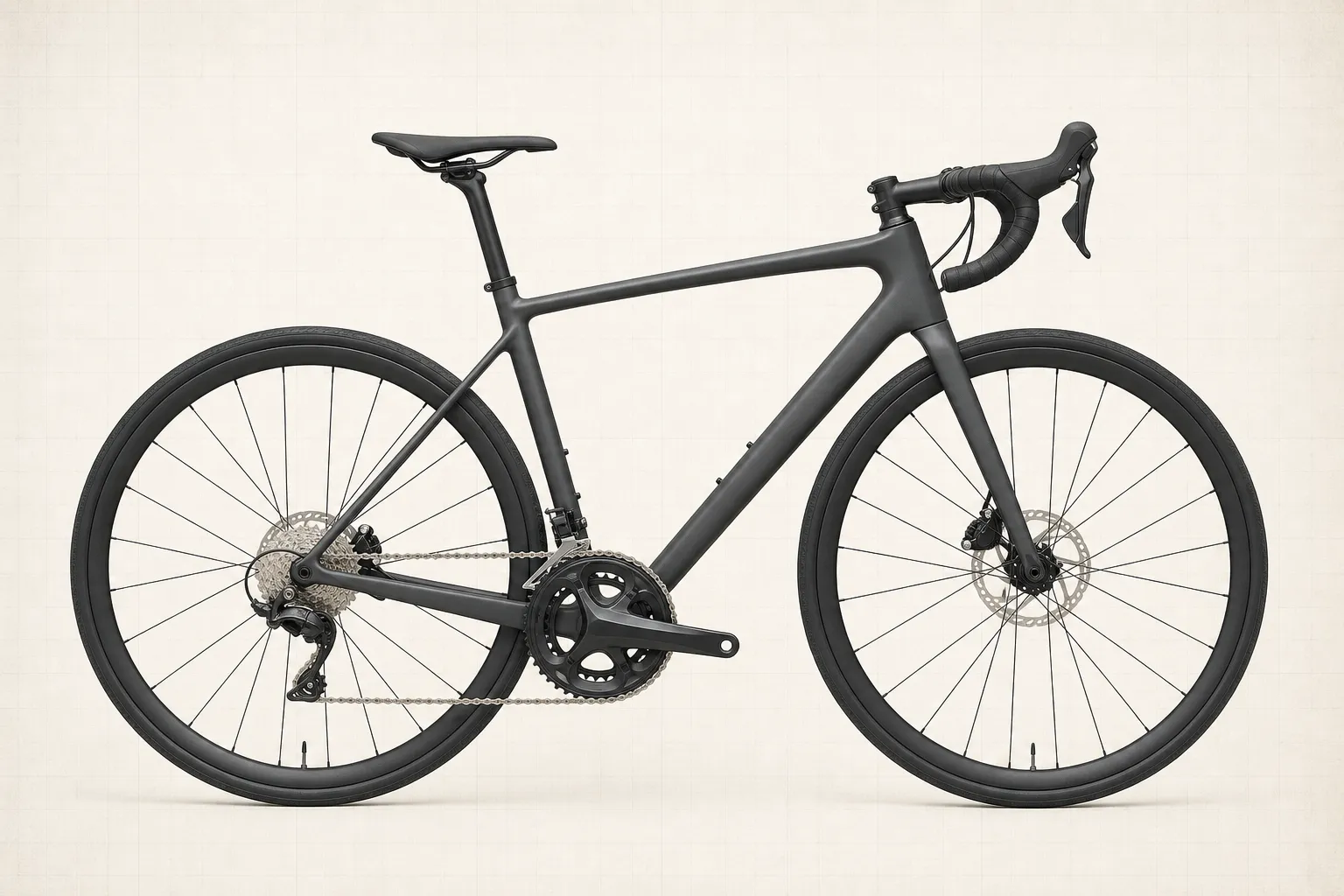 Field guide / bike-fit-before-buying-road-bike
Before you view or pay
Check fit, condition, and starter gear first
Use the buying checklist to choose the right path: used-bike viewing, first-bike fit and type, hidden repair costs, or starter gear.
A pre-purchase bike fit is most valuable when the bike is expensive, the cockpit has limited adjustability, you fall between sizes, you have unusual proportions or mobility needs, or previous bikes have caused problems. It is not mandatory for every beginner, but some sizing work before payment is essential.
The short answer: do not buy solely from height and a letter on a size chart. At minimum, compare the exact geometry, set saddle height approximately, confirm brake access, and take a meaningful test ride. If a wrong frame would be costly or hard to modify, pay for an independent pre-purchase fit before choosing the model and size.
What a pre-purchase fit actually does
Recent bike-fit discussions repeatedly show riders asking strangers to validate a road bike they are already testing. The more useful order is to establish a workable position first, then find frames and components that can produce it without extreme modifications.
A good pre-purchase service may use an adjustable fit bike or measurements from a current comfortable bike to estimate:
- saddle height, setback, and usable seatpost range;
- handlebar stack and reach;
- realistic stem length and spacer arrangement;
- handlebar width and brake-hood access;
- crank and cleat considerations where relevant;
- candidate frames whose geometry can reach that position.
It should produce numbers and ranges you can take to different sellers. It should not be a sales performance designed to justify one bike already on the floor.
When paying before purchase is sensible
Strong reasons include:
- You are between sizes. Adjacent sizes can both match a height chart while producing meaningfully different front-end positions and handling.
- You have a short or long torso, arms, or legs for your height. Overall height hides the proportions that shape reach and saddle position.
- The bike has an integrated cockpit or cut-to-length seat mast. Changing position later may be costly, limited, or irreversible.
- You have a history of pain, numbness, injury, or failed bike purchases. The fitter should work within their professional scope and coordinate with a clinician when needed.
- You cannot test the exact size. Remote and used-bike purchases remove an important reality check.
- The purchase is expensive relative to your budget. A fit fee can be cheap compared with reselling the wrong frame.
If none of those applies, a careful shop sizing session and long test ride may be enough for a modest, adjustable first bike.
What a size chart can and cannot tell you
A manufacturer chart is a screening tool. Use the chart for the exact model and model year because size labels are not standardized across brands—or even across different families from one brand.
Then compare geometry:
| Number | What it helps describe | What it does not settle alone |
|---|---|---|
| Stack | Vertical location of the frame’s front end | Final handlebar height |
| Reach | Horizontal location of the frame’s front end | Final hood reach |
| Standover | Clearance when straddling the bike | Pedalling or upper-body fit |
| Seat angle | Relationship between frame and saddle range | Exact saddle setback |
| Head angle and trail | Part of steering geometry | Whether handling will feel right to you |
Stem dimensions, spacers, bar reach, hood position, saddle rails, seatpost offset, and component limits all affect the complete position. Geometry comparison narrows the search; it does not replace sitting on the assembled bike.
Do not use the saddle to fix the handlebars
Saddle position should first support stable pedalling. Sliding it far forward to shorten handlebar reach—or far back to lengthen it—can create a different problem at the hips and knees.
Once saddle position is in a reasonable range, assess the cockpit. A modest stem or spacer change may refine a compatible bike. A very short or very long stem, a tower of spacers beyond limits, a steeply flipped stem, or controls that remain unreachable may indicate that the frame or bike category is wrong.
Read is my road bike too big or too small? before treating one discomfort as proof of a single adjustment.
How to test a road bike before buying
Wear the shoes and shorts you expect to ride in. Ask the seller to set a plausible saddle height and tyre pressure, then ride somewhere that allows starts, stops, turns, gentle climbing, and normal hand positions.
Check whether you can:
- reach and operate both brake levers securely from your normal position;
- look ahead without forcing your neck;
- keep elbows relaxed rather than locked;
- steer a predictable line at low speed;
- pedal without obvious rocking or reaching at the bottom;
- move between hoods, tops, and drops safely;
- stand over and start or stop in the way you actually use a bike.
A lap around a car park can reject an obviously unsuitable bike but cannot prove long-ride comfort. Ask about a longer demo, rental credit, or return terms in writing.
Choose the fitter independently when possible
An independent fitter can recommend across brands without needing to sell the stock on hand. If you use a shop fitter, ask:
- whether the fit fee is separate from the sale;
- what training and experience the fitter has;
- whether you receive your measurements and candidate geometry ranges;
- how follow-up adjustments work;
- whether the session covers cleats and existing injuries;
- which claims are fit advice and which require a health professional.
A credential is useful context, not a guarantee. The fitter should listen, explain uncertainty, make reversible changes, and avoid promising that one formula prevents pain.
If the bike is used or online
Ask for the exact model year, size, geometry chart, cockpit dimensions, spacer configuration, seatpost model, and uncut-steerer information. Proprietary components can make apparently simple changes expensive or impossible.
Compare the candidate against a bike you already tolerate, if available. Request clear photos, but do not try to diagnose frame fit from one side-on image. Camera angle, clothing, effort, and posture distort what the image appears to show.
Use the used road-bike checklist for condition and provenance. Fit does not make a cracked, stolen, or mechanically neglected bike a good purchase.
A practical decision rule
Get the fit before the bike when the cost of being wrong is high and adjustability is low. Use shop sizing plus a real test ride when the bike is modestly priced, conventional, highly adjustable, and clearly within the maker’s range. In both cases, reserve money and time for follow-up after several normal rides.
Do not let a bargain price force a geometry compromise. The cheapest wrong bike is often the most expensive one to correct.
For a structured comparison covering fit, condition, budget, and the first service, open the road-bike buying checklist.