Why runners' legs tire quickly when they start cycling
Use easier gears, cycling-specific effort cues, gradual volume, and recovery checks when running fitness outpaces your early bike conditioning.
 Field guide / runners-switching-to-cycling-why-legs-tire
Running fitness does not transfer to the bicycle one-for-one. Your aerobic base helps, but cycling asks you to produce force through a fixed pedal path, sustain a new posture, and choose cadence and gearing continuously. A trained runner can therefore breathe comfortably while their legs fatigue surprisingly early.
The short answer: treat yourself as aerobically fit but cycling-specific new. For the first few weeks, keep most rides conversational, shift before the legs start grinding, finish while you could still do more, and increase either duration or intensity—not both at once.
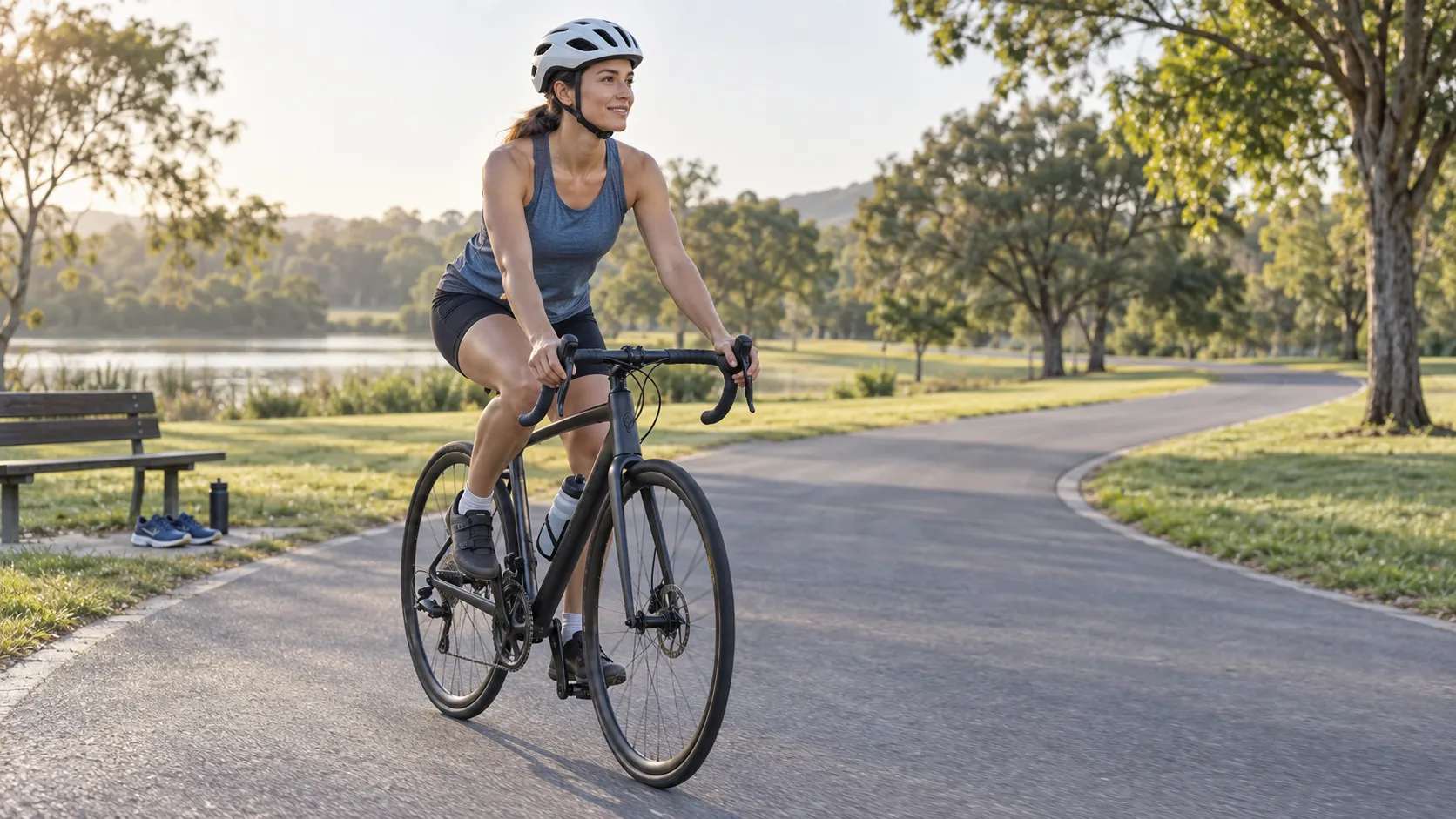
Why a strong runner can feel weak on the bike
Recent cycling discussions repeatedly describe this mismatch. One runner reported heavy legs and long recovery after short introductory rides. Another new cyclist with a running background found leg burn limiting hard cycling before breathing became the limit.
Those stories do not establish a diagnosis. They do reveal a useful beginner question: why does a good cardiovascular engine not automatically produce comfortable cycling?
Exercise mode matters. Research comparing submaximal exercise has found different heart-rate and oxygen-use responses between treadmill running and cycle ergometry. British Cycling likewise notes that running and cycling training zones can differ. Your familiar running heart-rate number should not be copied blindly onto the bike.
Cycling also lets you choose very high pedal force by selecting a hard gear. A runner with a strong engine can keep demanding that force long after the local muscles start objecting.
First fix: lower the pedal force
If your thighs burn while breathing remains controlled, shift to an easier gear and allow the pedals to turn more freely. Do this before the hill steepens, not after cadence has collapsed.
Do not chase one universal cadence. Instead, look for the range in which:
- the pedal stroke feels smooth rather than like repeated leg presses;
- your hips stay quiet on the saddle;
- you can keep the effort conversational on easy terrain;
- the gear leaves room to shift easier when the slope changes.
If every climb forces a slow grind even in the easiest gear, the route or gearing may be too demanding for an adaptation ride. Read good cycling cadence for beginners and how to choose easier gearing for hills.
Use cycling effort, not running status
A fast marathon, high running heart rate, or long weekly mileage can tempt you to skip the beginner phase. Instead, use a simple talk test: on most early rides, you should be able to speak in full sentences on level ground.
The goal is not to prove that the session was easy enough. It is to accumulate cycling time that your legs, contact points, neck, hands, and recovery can absorb.
Keep hard work scarce at first. If an easy ride still creates heavy legs for two days, making the next ride harder is unlikely to improve consistency. Shorten it, choose flatter terrain, or allow more recovery.
A two-week starting pattern
This is a conservative example, not a medical or personalised training prescription:
- Ride 1: 25–35 minutes easy, flat or gently rolling.
- Ride 2: rest or normal easy running if you feel recovered.
- Ride 3: 30–40 minutes easy.
- Ride 4: rest.
- Ride 5: repeat the ride that recovered well; add only 5–10 minutes if the next-day response was normal.
During week two, repeat before progressing. Add a third ride only if the first two no longer disrupt running, sleep, or ordinary walking. Do not add intervals and a long ride in the same week simply because the first session felt good.
If you already have a demanding running plan, count cycling as training load rather than free recovery. Place the longer ride away from key running workouts until you understand its effect.
Check the bike before blaming fitness
Some fatigue is mechanical. Check:
- saddle height is not forcing your hips to rock or knees to stay extremely bent;
- brakes are not rubbing;
- tyres are inflated appropriately;
- cleats, if used, are not forcing an awkward foot angle;
- gearing is low enough for your terrain;
- you are eating enough for the combined running and cycling load.
Sharp knee pain, one-sided symptoms, numbness, or a worsening pattern is not a badge of adaptation. Use soreness versus pain on a new bike and get qualified help when symptoms persist.
Do not use speed as the recovery test
Wind, stops, hills, and bicycle type can change average speed without changing training quality. Better early signs are:
- the same easy ride creates less next-day heaviness;
- you can use an easier gear without cadence feeling chaotic;
- your hands and shoulders remain relaxed;
- normal running sessions are no longer disrupted;
- you finish wanting another ten minutes rather than needing two days off.
Record duration, route, perceived effort from 0–10, and next-day legs. That small log is more useful than comparing your speed with experienced cyclists.
Your next step
Choose a flat 30-minute route and ride it conversationally in an easier gear than instinct suggests. Record how your legs feel immediately, the next morning, and 48 hours later. Repeat it before adding time. When recovery becomes predictable, build from the beginner cycling training plan without a power meter.
Sources and further reading
- PubMed: exercise-mode differences in heart rate and oxygen use at self-selected submaximal intensity
- British Cycling: cross-training and differences between running and cycling zones
- British Cycling: beginner and sportive training resources
- r/cycling reader context: runner experiencing heavy legs after beginning cycling
- r/Velo reader context: running fitness but cycling-specific leg fatigue