How can cyclists protect their teeth during long rides?
Reduce repeated sugar and acid exposure while still fueling long rides with purposeful intake, water rinses, normal fluoride care, and dental advice when needed.
 Field guide / protect-teeth-during-long-bike-rides
Cyclists can reduce dental risk without abandoning carbohydrate during long rides. The practical aim is to fuel for the work while limiting unnecessary, repeated contact with acidic or sugary products: use a plan, drink plain water too, rinse residue away, and keep a normal fluoride and dental-care routine.
The short answer: do not sip sports drink or suck sweets continuously for hours by habit. Take the fuel your ride requires in purposeful portions, follow with plain water when practical, avoid swishing acidic drinks, and wait before brushing immediately after a high-acid session. Ask your dentist for advice specific to your teeth and products.
Understand the two different problems
Dental erosion is the chemical loss of tooth material from acid that does not come from oral bacteria. The American Dental Association (ADA) identifies frequent exposure to low-pH drinks—including many sports drinks and fruit juices—as a risk factor.
Dental caries, or tooth decay, involves bacteria metabolising fermentable carbohydrate and producing acid at the tooth surface. A product can therefore matter because it is acidic, contains carbohydrate, is consumed repeatedly, or combines all three.
Exercise can add another factor: a dry mouth. Heavy breathing and dehydration can reduce the washing and buffering effect of saliva. This does not mean every cyclist who uses sports drink will develop erosion or decay. Product chemistry, frequency, saliva, fluoride exposure, existing dental health, reflux, and total diet all influence risk.
The evidence is not simple enough to label one ingredient universally “safe.” A recent systematic review found limited and inconsistent athlete studies, even though laboratory work shows that some carbohydrate-electrolyte drinks can dissolve enamel surfaces. That is why a sensible routine focuses on reducing repeated exposure while preserving necessary fueling.
Fuel for the ride, not for the identity
Short, easy rides often need water rather than sports drink or gels, especially when you begin normally fed. The guide do you need energy gels for a one-hour ride? helps separate training need from marketing.
Long, hard, hot, or event rides may require planned carbohydrate, fluid, and sodium. Do not remove fuel from those rides based on a dental article. Instead:
- estimate what the session actually demands;
- choose products you can tolerate and measure;
- decide when you will take them;
- carry plain water where practical;
- test the plan in training.
If you have diabetes, gastrointestinal disease, kidney or heart conditions, an eating disorder, medication-related dry mouth, dental erosion, or complex nutrition needs, get individual clinical advice.
Reduce grazing and constant sipping
The mouth benefits from time between exposures. Taking a small sugary or acidic sip every few minutes can repeatedly reset the exposure period. Purposeful portions may reduce contact frequency compared with absent-minded sipping, provided the fueling schedule still supports the ride.
Practical habits include:
- keep plain water and carbohydrate drink in separate bottles when the route and bike allow it;
- swallow sports drink rather than holding or swishing it around the mouth;
- follow a gel, chew, sweet, dried fruit, or drink portion with a sip of water;
- finish the intended portion instead of carrying one sweet in the cheek;
- avoid using a sports drink as an all-day drink before and after the ride;
- choose water for recovery hydration when carbohydrate is already coming from a meal.
Do not make large changes to concentration just to alter sweetness or acidity. Over-concentrated drink can upset fluid and carbohydrate delivery; over-dilution can change the intended sodium and energy dose. Mix products according to their label and solve dental exposure through timing, water, and product selection with professional advice.
Use plain water as a simple rinse
The ADA recommends drinking water with acidic foods or rinsing with water after them. On the bike, a swallow of plain water after fuel is often the simplest option. It helps clear residue and supports hydration without adding another carbohydrate or acid exposure.
This does not neutralise every risk instantly, and it does not replace brushing. It is a low-friction habit that works with normal fueling.
Do not add baking soda, mouthwash, or improvised “alkaline” chemicals to ride bottles without clinical and nutrition guidance. Home recipes can create dosing, taste, stomach, and equipment problems while distracting from the easier intervention: plain water.
Choose products by function and evidence
Check the ingredient list, nutrition panel, and the manufacturer’s intended mixing instructions. “Sugar-free” does not mean non-acidic, and “natural” fruit products can still be acidic and contain fermentable carbohydrate.
Likewise, a neutral-tasting carbohydrate powder is not automatically tooth-neutral. Product pH is only one part of erosive potential; buffering capacity and how long and often the drink contacts teeth also matter. Home pH strips cannot reproduce a dental assessment.
If you fuel high-volume training frequently, take the actual product names or labels to your dentist and sports dietitian. They can help you compare exposure patterns without compromising energy availability or performance.
Keep the pre-ride and post-ride routine ordinary
Maintain twice-daily brushing with fluoride toothpaste and clean between teeth according to your dentist’s advice. Do not scrub harder because you use sports drink; aggressive brushing can add mechanical wear.
After an acidic ride, rinse with water and allow time before brushing. ADA athlete guidance reports recommendations to wait 30–60 minutes after sports beverages before brushing. Use that interval for changing clothes, eating an appropriate recovery meal, and cleaning the bike.
Chewing sugar-free gum may stimulate saliva for some people, but it is not safe while riding and may not suit people with jaw, gastrointestinal, or sweetener sensitivity. Consider it only after the ride and after checking that it is appropriate for you.
Watch for signs that need a dentist
Book an assessment rather than self-treating if you notice:
- sensitivity to cold, sweetness, or touch;
- smooth, cupped, translucent, shortened, or discoloured tooth surfaces;
- a chipped, cracked, loose, or painful tooth;
- recurring mouth ulcers or persistent dry mouth;
- gum bleeding that continues despite gentle daily care;
- frequent reflux, sour taste, or vomiting;
- pain when biting or jaw swelling.
Tell the dentist how long you ride, how often you fuel, what you eat and drink, and whether you breathe with a dry mouth or experience reflux. A normal check-up before symptoms become severe is more useful than trying to identify enamel loss in a mirror.
A practical long-ride routine
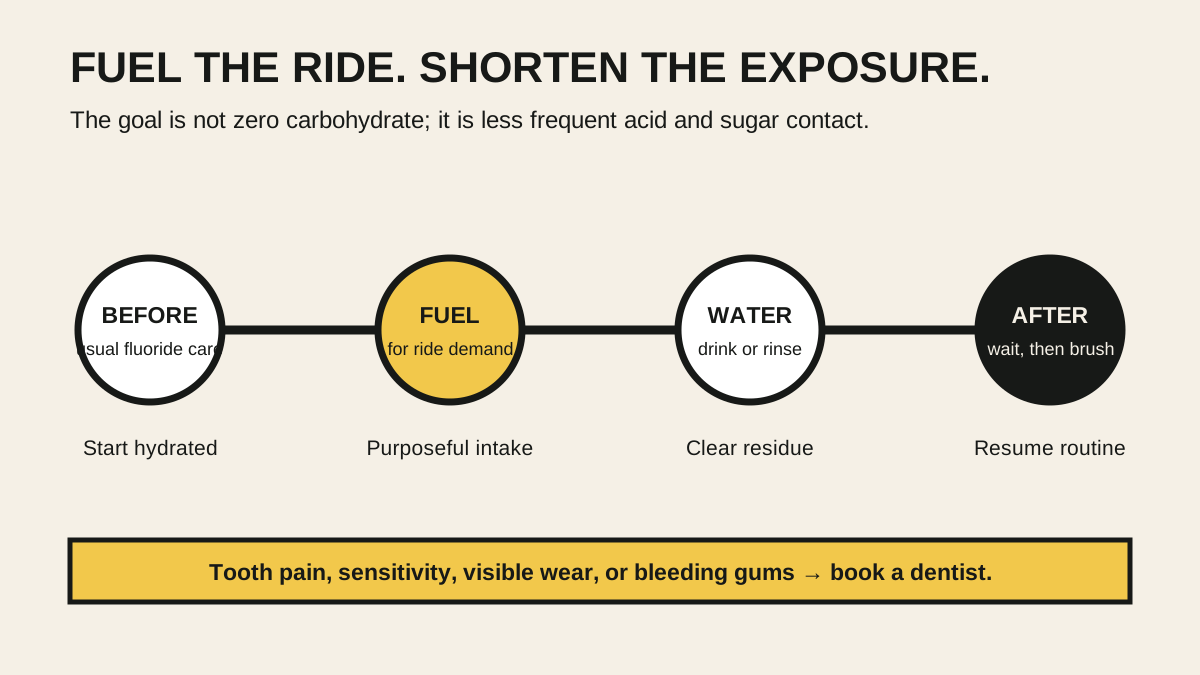
Before the ride, follow your normal dental routine and start reasonably hydrated. Build a fueling plan using what to eat and drink on beginner rides, not random grazing.
During the ride, take carbohydrate because the session calls for it, swallow rather than swish, and use plain water after fuel when practical. Do not sacrifice control to eat or drink; stop somewhere safe if you cannot handle the bike smoothly.
After the ride, rinse or drink water, eat the recovery food your training needs, and avoid stretching the sports-drink bottle across the rest of the day. Wait before brushing after acidic exposure, then resume your usual fluoride routine.
Your next step
Audit one typical long ride. Write down every gel, chew, sweet, fruit portion, and bottle, plus how often you sip. Keep the fuel that serves the ride, remove unplanned all-day exposure, add plain-water rinses, and take the list to your next dental appointment if long rides are a regular part of your week.
Sources and further reading
- American Dental Association: dental erosion, risk factors, and prevention
- American Dental Association: protecting teeth during exercise
- PubMed: systematic review of sports and energy drinks and dental erosion
- r/cycling discussion: protecting teeth during very long rides with frequent carbohydrate — used as an editorial question signal, not as clinical evidence.