How to move from two abreast to single file on a group ride
Use a clear call, stable speed, deliberate gaps, shoulder checks, and one agreed merge sequence to change group formation without wheel overlap or surprise movement.
 Field guide / move-two-abreast-to-single-file-cycling
The safe way to change a cycling group from pairs to one line is to agree on the merge pattern before the ride, make one clear call, hold a steady line, and create gaps progressively. Nobody should dive toward a half-gap, overlap a wheel, or assume a nearby rider heard them.
The short answer: use the ride’s agreed “single file” call and repeat it through the group. The lane-side rider normally maintains a predictable line while the outside rider checks behind and moves into a clearly opened gap, but the leader must define the local convention. Reduce speed gently if needed. Confirm the gap with sight and communication; never merge on a guess.
Why a simple move causes crashes
A current r/cycling post about a serious crash while one rider dropped behind another highlights the underlying question: what must happen before a rider moves into another rider’s path? The personal account cannot establish fault or a universal technique. It does show why a spoken intention alone is not enough.
Group safety depends on several things happening together:
- the call reaches both lines;
- speed changes are gradual;
- each rider keeps looking ahead;
- the merging rider knows which gap is theirs;
- the receiving rider actually creates that gap;
- nobody uses a phone or computer during the transition;
- local traffic and road position allow the move.
Define the pattern in the pre-ride briefing
There is no safe universal assumption about which side moves. Road rules, traffic side, club practice, wind, group shape, and the reason for changing formation differ. The ride leader should state:
- the call for single file and the call to return to pairs;
- which line normally holds position;
- whether the other line merges in front of or behind its partner;
- who controls the speed;
- what riders do when a gap does not open;
- where beginners should ride.
If the group has not briefed this, ask before rolling. Do not learn a moving merge from the middle of a fast pack.
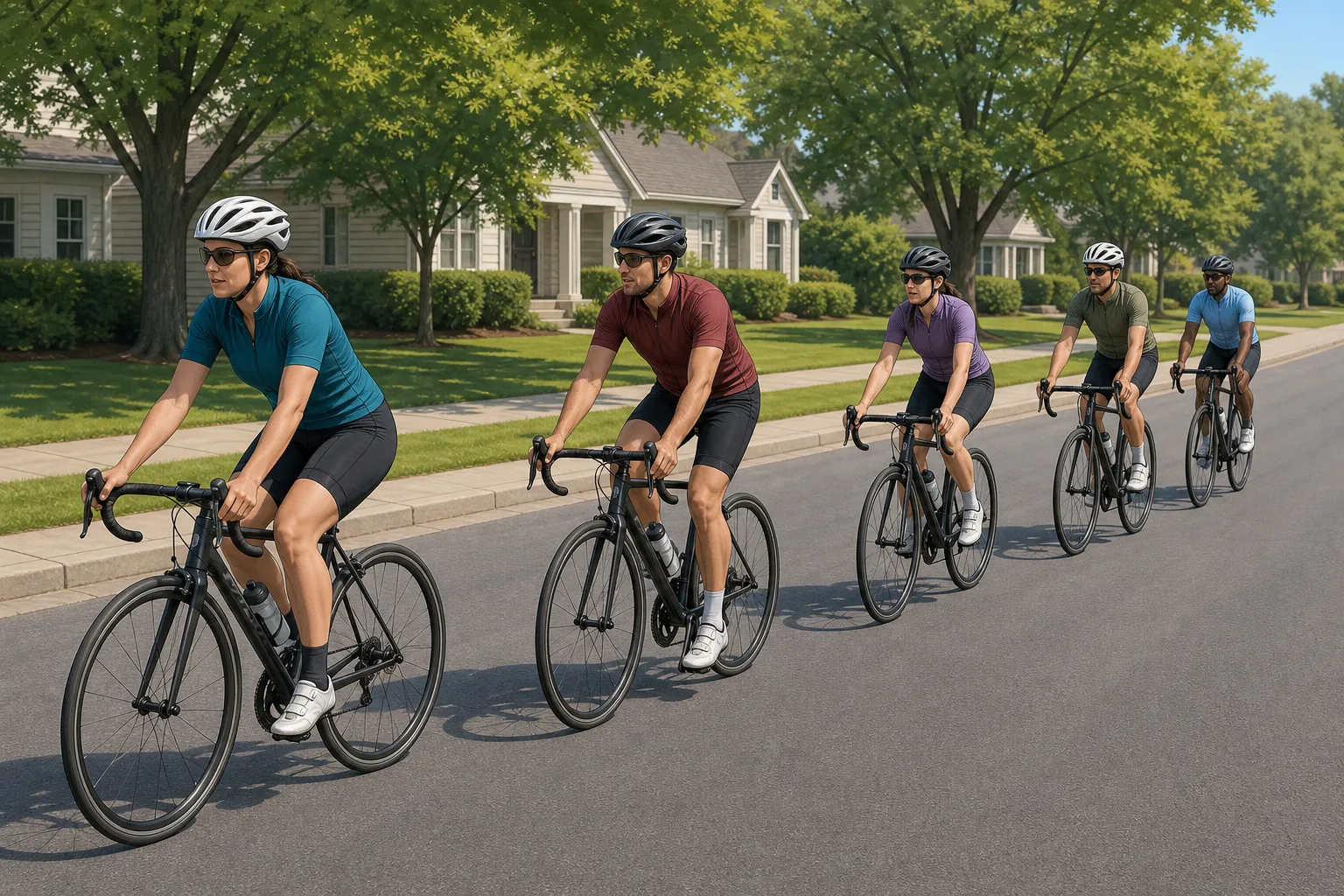
Use a six-part merge
1. Call and repeat
The leader gives the agreed call early. Every rider repeats it so the message travels backward. A nearby conversation, wind, helmet, or traffic can hide one voice.
2. Hold speed and line
Do not accelerate to “get it over with” or brake sharply to make room. The line that stays in place holds a steady path and smooth effort. USA Cycling’s paceline guidance stresses straight riding, gradual speed changes, signals, and avoiding abrupt braking.
3. Identify one gap
The receiving rider deliberately opens space by soft-pedalling or easing gradually—not by grabbing the brake. The merging rider looks for that specific gap. A half-bike-length opening that requires wheel overlap is not a gap.
4. Check before moving
The merging rider looks ahead first, then checks the intended space and traffic behind without drifting. A call such as “coming in behind” can confirm the plan, but the visual check still matters. If you cannot shoulder-check while holding a line, practise away from a group first.
5. Move diagonally and smoothly
Use a shallow, predictable path. Do not cut across the front wheel of the rider behind or steer toward the rider ahead and correct at the last moment. Keep both hands where the brakes remain available; this is not the moment to use a computer, bottle, pocket, or aero bars.
6. Rebuild spacing
Once in line, do not sprint onto the next wheel. Close excess space gradually, keep the front wheel behind the wheel ahead, and pass the “all in” or hazard call only if that is part of the group’s system.
What the rider holding the line must do
Predictability is active work. Keep scanning beyond the wheel ahead. Do not veer around a small defect without a signal and enough space. If a real hazard requires movement, call it and slow progressively; protecting the group matters more than completing the formation change.
Do not look down at a phone or computer. Do not speed up as your partner tries to move behind. Do not close the agreed gap because it feels untidy.
Abort conditions
Cancel or delay the merge when:
- a bend, crest, junction, parked vehicle, roadworks, or narrowing removes sight distance;
- a vehicle is already passing or approaching the available space;
- the group is descending quickly;
- the surface is broken, wet, loose, or icy;
- riders have not repeated the call;
- the intended gap does not open;
- someone is eating, drinking, adjusting clothing, or handling a device;
- the group is already braking or stretched.
Hold the current line if legal and safe, slow smoothly, and regroup later. Formation etiquette never outranks immediate road safety or local law.
Practise without a full group
Use two or three experienced riders in a traffic-free area. At low speed, practise calls, opening a full gap, shoulder checks, shallow merges, and aborting. Rotate roles. Add speed only after every move is boring and predictable.
New riders should first master straight-line control, braking, and cornering and review the first group-ride guide. A beginner ride can remain single file; nobody needs a rotating paceline to qualify as a cyclist.
Your next step
Before the next group ride, ask the leader which line holds, who merges, and what call confirms the change. If the answer is vague, request a slow briefing or stay out of close formation. During the ride, a missed merge is harmless; forcing one is not.
Sources and further reading
- USA Cycling: paceline communication, spacing, braking, and movement guidance
- r/cycling reader context: a crash during a change from side-by-side riding — used only as an editorial demand signal; the account was not used to assign fault.