Is a rim-brake road bike still a good first bike?
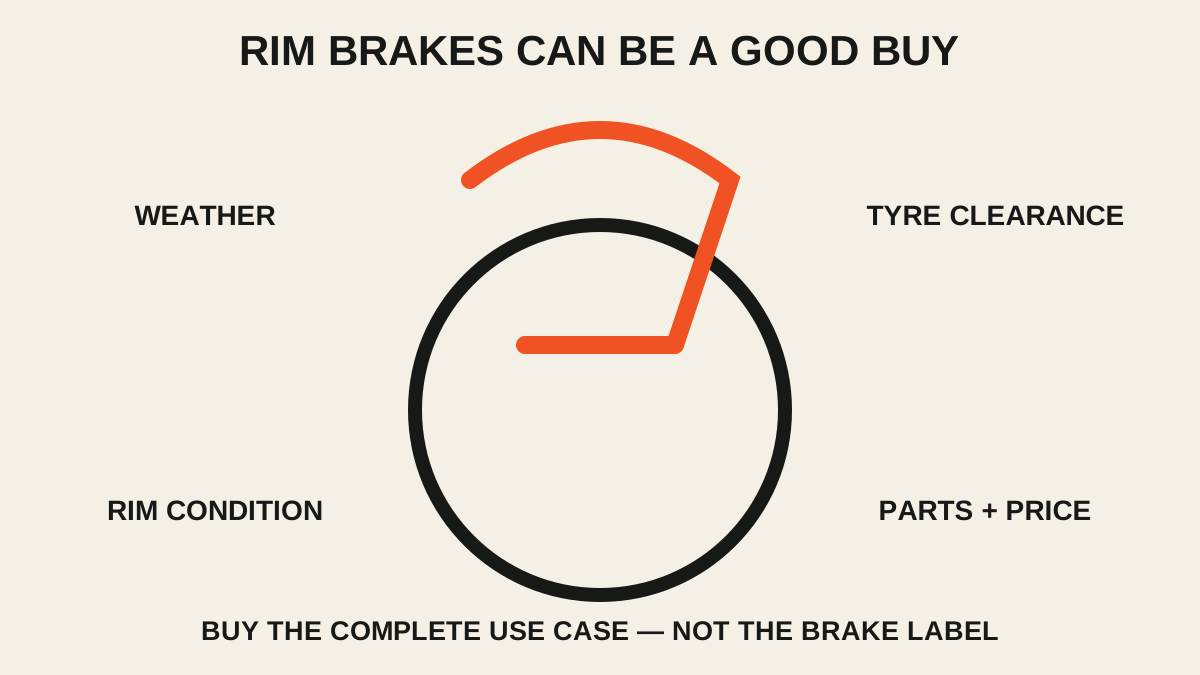
Rim brakes can be a smart used-bike buy—if braking, rim condition, tyre clearance, weather, parts, and price all fit how you will ride.
 Field guide / is-rim-brake-road-bike-good-first-bike
Before you view or pay
Check fit, condition, and starter gear first
Use the buying checklist to choose the right path: used-bike viewing, first-bike fit and type, hidden repair costs, or starter gear.
Yes. A well-maintained rim-brake road bike can be a good first bike, particularly for dry-road riding on a limited used-bike budget. The tradeoff is not simply “old brakes versus new brakes”: inspect braking surfaces, wet-weather needs, tyre clearance, replacement parts, wheel plans, fit, and the total repair cost.
The short answer: buy a rim-brake bike when it fits, stops properly, accepts the tyre width you need, has sound aluminium braking surfaces, and is priced to reflect its age and limitations. Prefer discs when frequent rain, long descents, very wide tyres, or future wheel upgrades are central to your use.
Where rim brakes still make sense
Rim calipers are light, visible, mechanically simple, and commonly serviceable with basic tools. The used market contains many high-quality road bikes that have become cheaper as new-bike ranges move toward discs.
Current Reddit buying discussions show repeated demand: beginners ask whether rim brakes make an older road bike unsafe or obsolete, while others point out the value available for dry-road use. Treat those opinions as market and question signals, not as prices or safety evidence; used-bike value varies by place, condition, size, and specification.
A rim-brake bike is a strong candidate when:
- most rides are on paved roads in dry or moderate conditions;
- the bike has aluminium rims with healthy braking tracks;
- 25–28 mm tyres meet your comfort and road needs and actually clear the bike;
- replacement pads, cables, tyres, and wheels remain available locally;
- the fit is right and the price leaves room for immediate service.
Where discs offer a practical advantage
Disc brakes move the braking surface away from the rim and generally allow frames and forks to provide more tyre clearance. Hydraulic systems can offer strong braking with lower hand effort, though they add system-specific service needs.
Prioritise a disc-brake bike when you expect frequent wet rides, long or steep descents, rough roads needing wider tyres, hand-strength limitations, or a future wheel purchase. Shimano’s user guidance notes that its hydraulic systems have different initial braking characteristics from rim brakes, so either system requires practice. It also warns that wet weather increases required stopping distance regardless of brake type.
Disc does not make a neglected bike good. Contaminated pads, worn rotors, leaking hydraulics, poor mechanical-cable setup, or a damaged frame can erase the theoretical advantage.
Inspect a rim-brake bike as a system
Braking tracks
On aluminium rims, inspect both sides for deep concavity, cracks, dents, damaged seams, or a wear indicator that has disappeared according to the rim maker. A worn braking surface means wheel or rim replacement, not stronger pads.
Carbon rim-brake wheels require the correct pads and strict heat and damage inspection. For a first used bike, aluminium rims are usually easier to assess and live with. Long descents demand good technique; Trek’s riding guidance warns that continuous braking can build heat in rims and brake components.
Pads, cables, and calipers
Pads need usable material, correct alignment, and no embedded debris. They must contact only the braking track—not the tyre. Cables should move smoothly without fraying or corrosion, and calipers should centre and return. Squeeze both levers hard: they must not bottom on the bars.
Tyre clearance
The number printed on a tyre is not its guaranteed installed width. Rim width, tyre model, pressure, and manufacturing tolerance affect the result. Check clearance at the fork crown, brake caliper, stays, and frame, allowing for wheel flex and debris. Our wider-tyre guide explains the measurement process.
Wheel replacement and future plans
Confirm wheel diameter, axle type, freehub, cassette speeds, rim width, and brake-track compatibility. If you already plan deep carbon wheels or very wide tyres, buying a disc platform now may cost less than forcing upgrades onto an older frame.
Price the first year, not just the listing
Add likely costs for tyres, tubes, rim pads, cables and housing, chain, cassette, bar tape, wheel service, and a professional safety inspection. Then compare the complete amount with a newer disc bike that needs less work.
Do not use an old retail price or a fixed depreciation formula. Search comparable local sold listings, evaluate condition, and use the used-bike fair-price guide plus the used road-bike checklist. A prestigious groupset does not compensate for a wrong size, worn rims, or 23 mm-only clearance on rough roads.
A simple decision rule
Choose the rim-brake bike if all five are true:
- It fits without extreme adjustments.
- Both brakes pass a hard functional check and the rims are sound.
- Its real tyre clearance matches your roads.
- Parts and a suitable replacement wheel are obtainable.
- The all-in price is meaningfully better than the disc alternatives you would actually buy.
If one fails, keep shopping. “Rim brake” is neither an automatic bargain nor an automatic rejection.
Your next step
At the viewing, photograph the rim sidewalls, brake pads, tyre-clearance pinch points, wheel and cassette labels, and frame serial number. Test braking in a safe area, then write down the repair budget before negotiating. Use the complete road-bike buying checklist before money changes hands.
Sources and further reading
- Trek: braking, wet-weather, and heat guidance
- Shimano: caliper-brake manuals and model search
- r/whichbike demand signal: recurring rim-brake used-bike value questions
- r/whichbike reader context: tyre clearance and rim-brake concerns on a first road bike
- r/cycling reader context: a student comparing older rim-brake bikes and tyre clearance