Is a 13 kg road bike too heavy for casual riding?
A 13 kg road bike can be perfectly usable; judge its fit, safety, gearing, tyres, carrying needs, and total value before paying only for less weight.
 Field guide / is-13kg-road-bike-too-heavy
A 13 kg (28.7 lb) road bike is not too heavy for casual weekend riding if it fits, works safely, has useful gearing, and you can lift it where your life requires. It will feel heavier than a typical lightweight road bike on climbs and during repeated acceleration, but the number alone does not tell you whether it is a good or bad purchase.
The short answer: treat 13 kg as a prompt to inspect the whole bike, not an automatic rejection. Ask what creates the weight—durable steel, racks and mudguards, wide tyres, an inexpensive suspension fork, or simply poor components. Compare condition, fit, hill gearing, serviceability, and complete price before paying to remove kilograms.
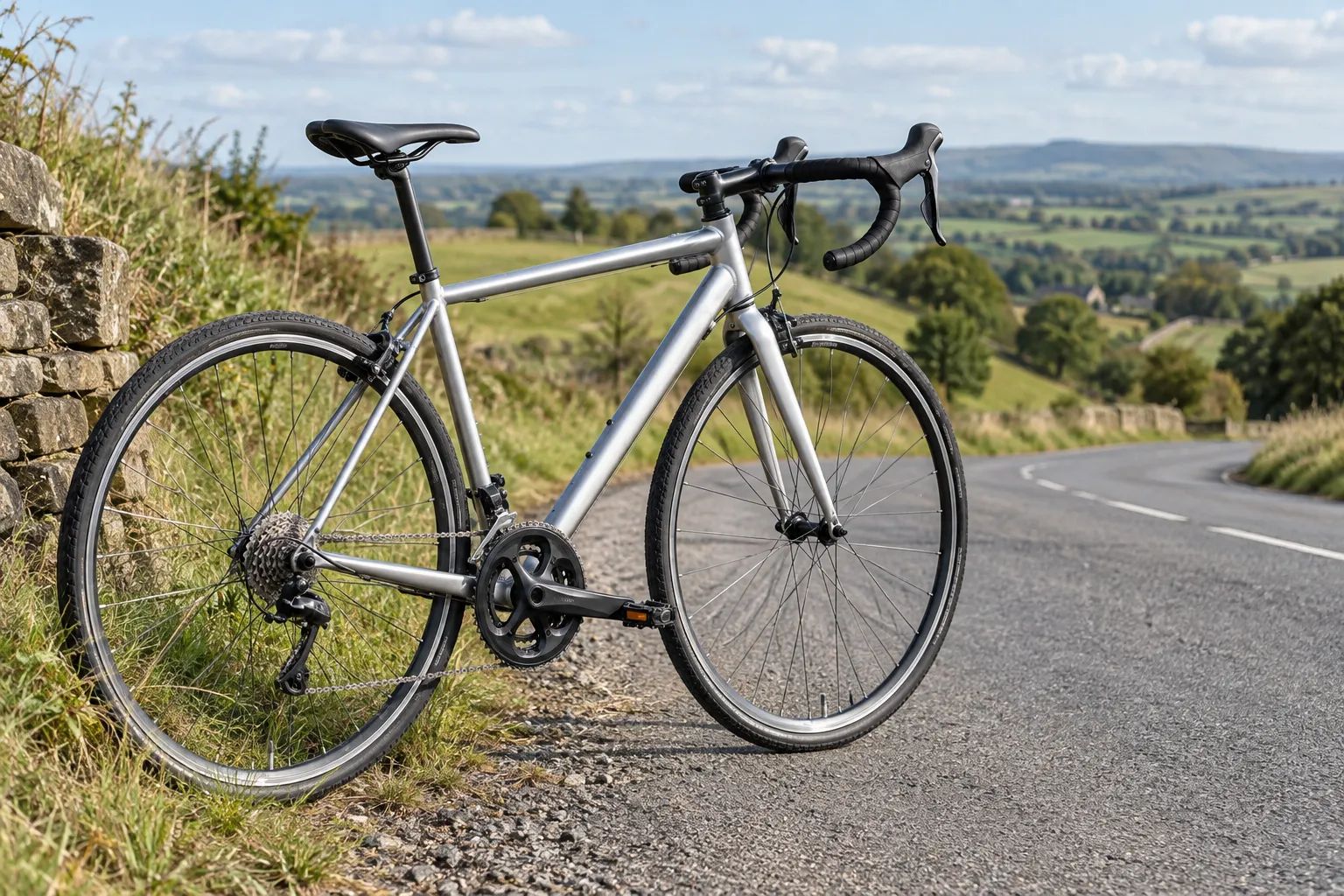
Put bike weight in the complete system
Consider an 80 kg rider on a 13 kg bike: before bottles, clothing, tools, and food, the combined mass is 93 kg. A 10 kg bike changes that to 90 kg. The bike is 3 kg lighter, but the complete rider-and-bike system is about 3.2% lighter.
That difference is real. It is simply smaller than comparing 13 kg and 10 kg in isolation suggests. It matters more on a long or steep climb, when carrying the bike upstairs, and when accelerating repeatedly. On steady flat roads, aerodynamic position and rolling resistance usually become more obvious concerns than a few kilograms of stationary mass.
Do not convert this into “weight never matters.” A lighter bike can feel livelier and be much easier to carry. The useful question is how much those benefits matter on your routes and what you give up to obtain them.
Find out why it weighs 13 kg
The same number can describe very different bicycles.
A durable steel or touring-style bike
A steel frame, robust wheels, wide tyres, mudguards, racks, and low gearing can produce a heavier but dependable machine. If you want commuting, rough roads, or luggage, those grams may be doing useful work.
A practical bike weighed with accessories
Published weights may exclude pedals, cages, lights, computer mounts, bags, and mudguards. A seller may weigh the complete ready-to-ride bike. Compare like with like before concluding that one model is several kilograms lighter.
A cheap bicycle-shaped product
High weight can also accompany poor assembly, crude bearings, weak wheels, ineffective brakes, unsuitable gearing, or parts that are difficult to service. Low price and high weight are not proof of poor quality, but together they justify a careful inspection.
An older but sound road bike
Older steel bikes can be heavier while remaining pleasant and repairable. Check tyre clearance, wheel and brake standards, gearing range, replacement-part availability, frame condition, and whether the size actually fits.
Test the jobs weight will affect
Do not judge the bike only by lifting the saddle in a shop. Use a short test route and ask:
- Can you start, stop, and turn confidently?
- Is the lowest gear manageable on a representative local hill?
- Can you carry the bike up your stairs without unsafe strain or wall damage?
- Does it accelerate adequately after junctions?
- Do the tyres roll smoothly at a suitable pressure?
- Can you reach and operate the brakes from your normal hand positions?
- Is the bike quiet, correctly adjusted, and free from play?
A lighter bike in the wrong size is not an upgrade. Neither is a light bike with hard gearing that forces you to grind every climb. Compare road-bike fit and comfort and easier gearing for hills before using the scale as the tiebreaker.
Spend first on what changes the ride
Before paying for a lighter frame or wheels, prioritise:
- a safe service and sound wear parts;
- a correct size and reachable controls;
- tyres suited to the surface, with appropriate pressure;
- gearing suited to the hills;
- a comfortable saddle and hand position after setup, not by price;
- equipment you actually need: helmet, lights, pump, spares, and weather layers.
Replacing working parts solely to lighten a budget bike often creates a poor-value chain of purchases. If the complete bike is unsuitable, save for a better complete bike instead. Use what to upgrade first on a road bike to separate useful changes from specification chasing.
When 13 kg should change your decision
Walk away or compare alternatives when:
- you must carry the bike up several flights every day;
- your rides include sustained steep climbing and similar-priced bikes fit equally well at much lower weight;
- the weight comes from unnecessary suspension or components unsuited to road riding;
- the bike’s condition means heavy wheels, tyres, drivetrain, and brakes all need replacing;
- the seller’s claimed specification or material does not match the actual bike;
- the weight is one clue among several that the bicycle is poorly assembled or hard to service.
Choose the heavier bike confidently when it fits better, has safer components, offers useful mounts or clearance, has easier gearing, and costs enough less to leave budget for service and riding essentials.
Ignore invented weight deadlines
There is no beginner date by which you must own a sub-10 kg bike. Nor does a heavy first bike automatically make you stronger in a special way. You get fitter by riding consistently with recoverable effort; you choose bike weight for handling, climbing, carrying, budget, and enjoyment.
If racing later becomes a real goal, measure the course demands and compare legal, reliable equipment then. Buying for a hypothetical race now can leave you with the wrong bike for years of actual weekend rides.
Your next step
Verify whether 13 kg includes pedals and accessories, then test the bike on one flat section, one start-stop section, one local hill, and the stairs or storage route you will use. If it fits, brakes, shifts, and passes the complete buying check, the weight is acceptable. If it fails, reject the bike for the specific failure—not because the internet chose an arbitrary kilogram limit.
Take a used candidate through how to test ride a used road bike and the full road-bike buying checklist.
Sources and further reading
The Reddit discussion was used as a demand signal. Its personal weight preferences and speed estimates are not treated as measured facts.