How to pace and fuel your first 100 km bike ride
Use a conservative four-part ride plan, eat and drink before you feel depleted, manage hills and stops, and preserve enough attention and energy for the final 25 km.
 Field guide / how-to-pace-first-100km-bike-ride
Start your first 100 km slower than feels necessary, eat and drink from the first hour using a routine already tested, and divide the ride into four manageable 25 km blocks. The goal is not to “bank time” early. It is to arrive at 75 km able to steer, brake, eat, think and choose whether continuing is still sensible.
The short answer: ride the first quarter at an easy conversational effort, keep hills below panic pace, fuel on a schedule you rehearsed, use planned refill stops, and save any increase for the final quarter. If a small early problem becomes a growing late problem, shorten the ride.
Why capable beginners still unravel late
A current r/cycling post describes a rider who extended a planned ride to 100 km, carried one bottle and no food, then abruptly lost power late. A separate recent thread asks for nutrition and fuelling advice before a first 100 km.
Those individual stories do not prove one cause, but they expose a recurring planning error: the distance changes while pace, food, water and route support remain set for the shorter ride.
A 100 km ride may take one rider under four hours and another more than seven including stops. Elevation, wind, surface, heat, traffic, fitness and group dynamics matter more than the round number. Build the plan around expected time and conditions, not only kilometres.
Do not turn a good day into an unplanned century
Decide before rollout whether 100 km is the target. Check the route profile, forecast, daylight, refill opening hours, construction and return options. Tell someone the route and expected finish.
An impulsive extension creates hidden problems:
- food and water were packed for the original distance;
- the route may move away from transport or shops;
- darkness or weather may arrive first;
- early pace was not conservative enough;
- the bike and body were not prepared for extra hours.
If the weather feels perfect halfway through a shorter ride, finish the good ride and schedule the 100 km attempt with the right supplies. Patience is part of endurance.
Use a four-part pacing plan
0–25 km: hold back on purpose
Ride at a conversational effort. Breathing should be controlled enough for full sentences, and hills should feel almost suspiciously easy. Let faster riders leave. Use easy gears before the gradient forces them.
Do not chase an average-speed target. Stops, wind and terrain make it noisy, and pushing to restore a number after every junction wastes energy. If you use heart rate or power, use only zones established from your own training—not an age formula or another rider’s settings.
Begin eating and drinking according to the routine you tested. The first intake should happen while you still feel good, not when hunger or weakness announces a deficit.
25–50 km: settle and inspect
Keep the same sustainable effort. At a planned stop, check bottles, food, tyre condition, layers and any developing contact-point discomfort. Refill before the route becomes sparse.
Ask four questions:
- Am I eating and drinking comfortably?
- Is any pain, numbness or hot spot increasing?
- Are the wind and temperature matching the forecast?
- Is the current pace still easy enough to repeat for several hours?
This is the cheapest point to shorten the route. Do not wait until the only exit requires another 30 km.
50–75 km: protect the final hour or two
Fatigue can make small climbs and accelerations disproportionately expensive. Shift early, let cadence remain comfortable, and avoid repeated surges out of junctions. If riding with others, do not borrow the group’s pace just because drafting briefly makes it feel possible.
Keep food accessible. A bar hidden under tools at the bottom of a bag is not a plan. Stop safely to open or chew food if eating while moving affects control.
At 75 km, choose deliberately: continue, shorten, or stop. The milestone does not outrank safe steering, braking, judgement or health.
75–100 km: maintain before you accelerate
If you feel steady, continue at the same effort. Only raise the pace in the final 10–15 km if the route is known, the bike is sound, attention is good, and food and fluid have remained comfortable.
If you feel depleted, reduce intensity early rather than repeatedly surging and fading. Eat a tolerated carbohydrate source, drink according to the plan and conditions, and use the safest direct route or pickup option. Our what to do if you bonk guide covers the roadside response.
Build a fuelling plan from duration
The 2026 UCI Sports Nutrition Project position statement treats nutrition as individual and periodised to workload. Endurance guidance commonly uses carbohydrate intake ranges that rise with duration and intensity, but a first 100 km is not the day to force the highest published number.
Use this process instead:
- Estimate ride time conservatively, including expected stops.
- Review what foods and drink concentrations worked on your longest training rides.
- Choose a repeatable interval—such as a small portion every 25–35 minutes—that achieves your tested hourly intake.
- Carry enough to reach the first reliable refill plus a reserve.
- Mix familiar solid and liquid carbohydrate if that improves tolerance.
- Keep a simple count so excitement does not erase the plan.
Many endurance recommendations describe roughly 30–60 g of carbohydrate per hour for exercise lasting around one to 2.5 hours, with higher intakes sometimes used for longer demanding events. Treat those as sports-nutrition reference ranges, not an instruction to jump from no food to an untested 90 g per hour. Gastrointestinal tolerance needs practice, and medical or dietary needs require individual advice.
Ordinary foods can work: bananas, small sandwiches, bars, rice cakes or other carbohydrate-rich foods you can chew and tolerate. Gels are a compact option, not a requirement. Use do you need energy gels? to separate convenience from necessity.
Make hydration conditional, not competitive
Fluid needs change with heat, humidity, wind, intensity, body size, sweat rate and access to refills. Both dehydration and excessive fluid intake can be harmful. Do not copy a fixed bottle count from a stranger without relating it to time and conditions.
Before the ride:
- start normally hydrated rather than force-drinking at the line;
- note how much you comfortably drank on a similar training ride;
- identify reliable refill points;
- carry electrolytes only in a concentration you have already tolerated;
- plan more conservatively for heat and long exposed sections.
During the ride, drink regularly according to thirst, your tested plan and conditions. Water availability should influence the route. If you cannot carry or obtain enough for the forecast, choose a shorter loop.
Stop efficiently without racing the clock
Stops are not failure. They are opportunities to refill, use a toilet, adjust layers and catch a small problem. But an unplanned 45-minute café stop can cool the body, stiffen legs, delay daylight and change fuelling.
Use purposeful stops:
- know which stop supplies water and which supplies food;
- park the bike securely and keep brake rotors away from oily surfaces;
- refill before sitting down;
- leave enough daylight margin;
- restart gently for several minutes.
Total elapsed time, not just moving time, determines clothing, battery, food and daylight needs.
Know the signs to abandon the target
Shorten or stop for a tyre or brake concern, worsening joint pain, persistent numbness, broken skin, repeated cramp that affects control, inability to keep food or fluid down, unsafe heat, confusion, faintness, chest pain or unusual severe breathlessness.
Do not describe dangerous symptoms as a normal bonk. Confusion and loss of coordination in heat can signal heatstroke and require emergency action. Use local medical guidance.
Finishing at 82 km with a safe pickup is better endurance judgement than reaching 100 km unable to ride predictably.
Your next step
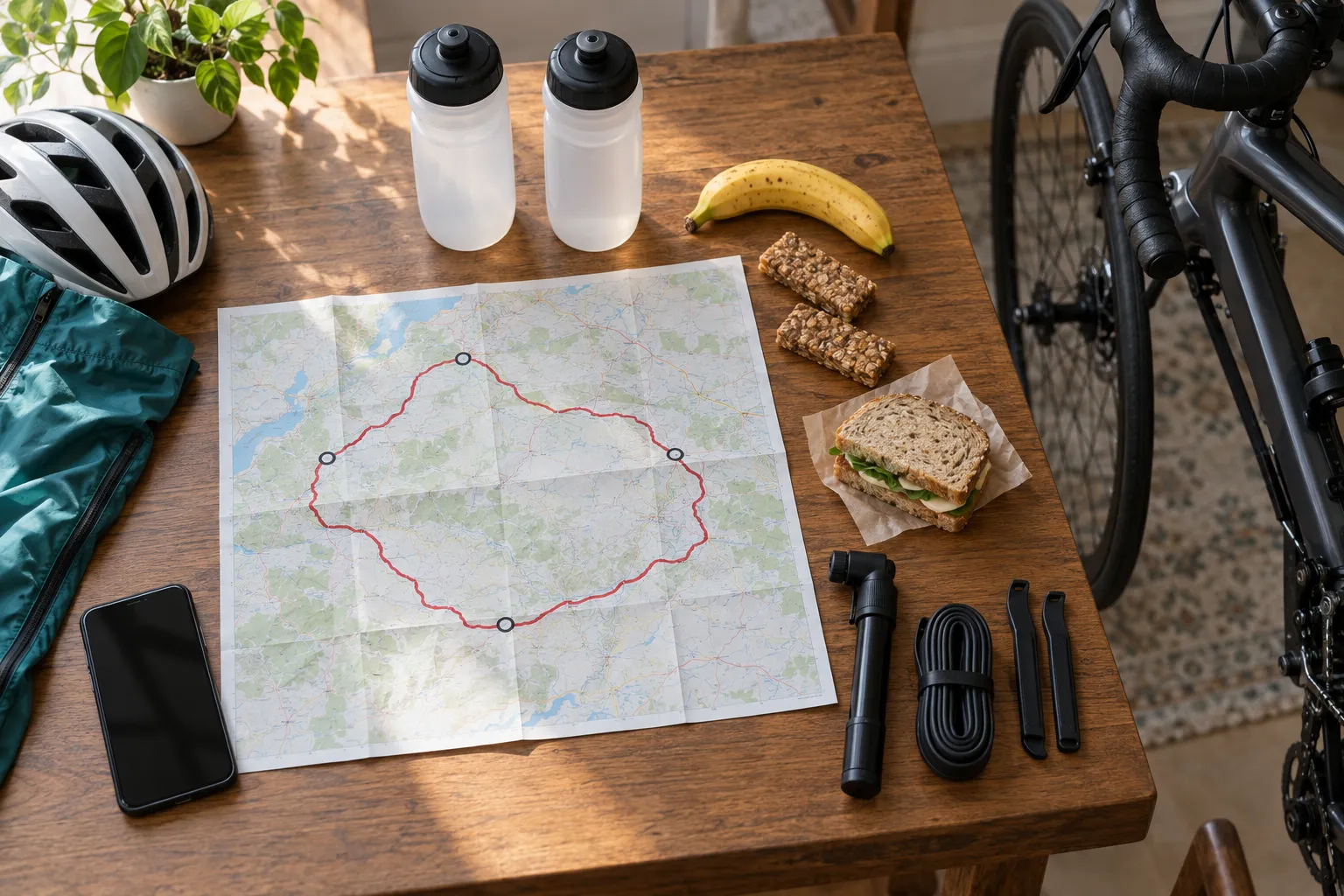
Write four route checkpoints at roughly 25, 50, 75 and 100 km. Beside each, add your effort rule, tested food portion, refill option and shortest way home. If you have not yet made 70–80 km comfortable, use how to train for your first 100 km ride before scheduling the attempt; then run the first-ride checklist the night before.
Sources and further reading
- UCI Sports Nutrition Project: position statement on nutrition for cycling
- UCI Sports Nutrition Project: race nutrition for road cycling
- British Cycling: nutrition timeline for long rides
- NHS: heat exhaustion and heatstroke warning signs
- r/cycling reader context: unplanned first 100 km and late-ride depletion
- r/cycling reader context: planning nutrition for a first 100 km