Five group-ride signals worth learning first
Learn the five group-ride calls and hand signals that help a beginner ride predictably without pretending every club uses the same language.
 Field guide / five-group-ride-signals-worth-learning-first
You do not need to memorize every club gesture before your first group ride. Learn five useful signals first: turn, slowing, stopping, road hazard, and traffic or people ahead or behind. Then ask the ride leader what their group actually uses.
The short answer: signals work because they make the group less surprised. Use them early, say the word out loud when that is clearer, repeat important calls down the line, and keep control of the bike ahead of being perfectly theatrical.
Why this feels confusing
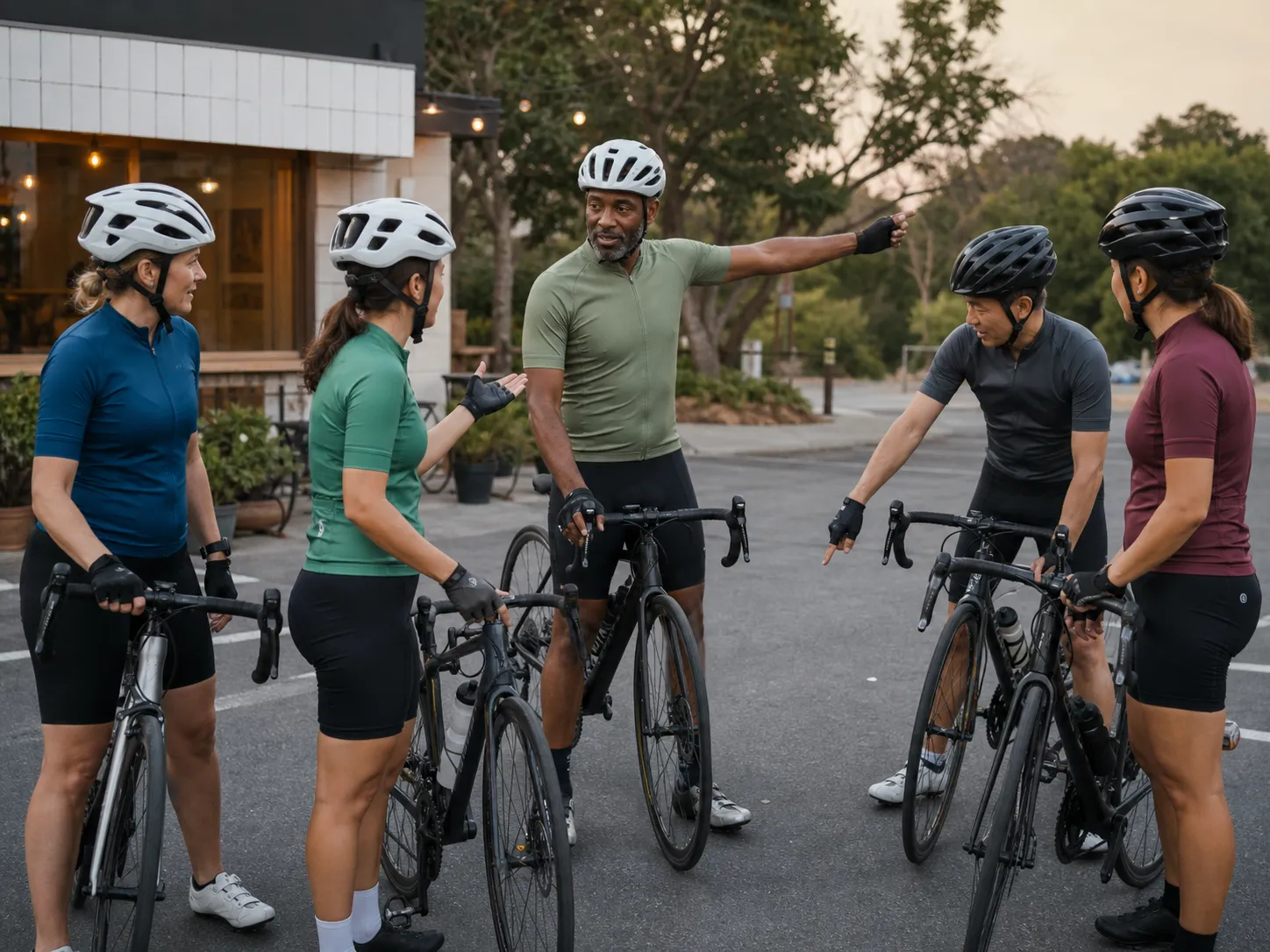
Beginner group-ride questions are full of the same nervous wording: “I don’t want to be that guy,” “what etiquette do I need?”, “what do slowing and stopping mean?”, and “are there standard terms in a pace line?” Recent r/cycling threads about first group-ride etiquette, group-ride hand signals, and a first 40 km group ride show the real worry: new riders are not just asking what to do with a hand. They are asking how not to surprise the people around them.
That is the right instinct. Cycling UK’s group-ride signals guide says riders farther back may not see hazards or changes in pace, so the group needs communication with enough notice to react. NHTSA bicycle safety guidance also tells cyclists to ride a working bike, obey signs and signals, ride with both hands on the bars unless signaling, and use equipment that helps visibility.
The caveat is important: group signals are customs, not one universal language. They vary by country, club, ride leader, road layout, and group size. Ask before rollout, then copy the group only when the signal is safe and clear.
1. Turn or change direction
A turn signal is the foundation because it speaks to both the group and other road users. The League of American Bicyclists’ signaling guidance says riders should let others know when turning, changing lanes, or stopping, and notes that signaling requirements are part of U.S. law. Exact rules still vary by place, so learn your local version before relying on memory from the internet.
For a beginner group ride:
- look before you move;
- signal early enough to be useful;
- say “left” or “right” if the group uses verbal calls;
- return your hand to the bar before braking, rough pavement, or a tight corner;
- do not follow a turn blindly just because the rider ahead went.
If signaling makes you wobble, ride at the back with more space and practise one-handed control on a quiet road before joining tighter formations.
2. Slowing
“Slowing” means the pace is easing before the group has fully stopped. It might be for a junction, bend, rough surface, rider ahead, dog, pedestrian, or general bunching.
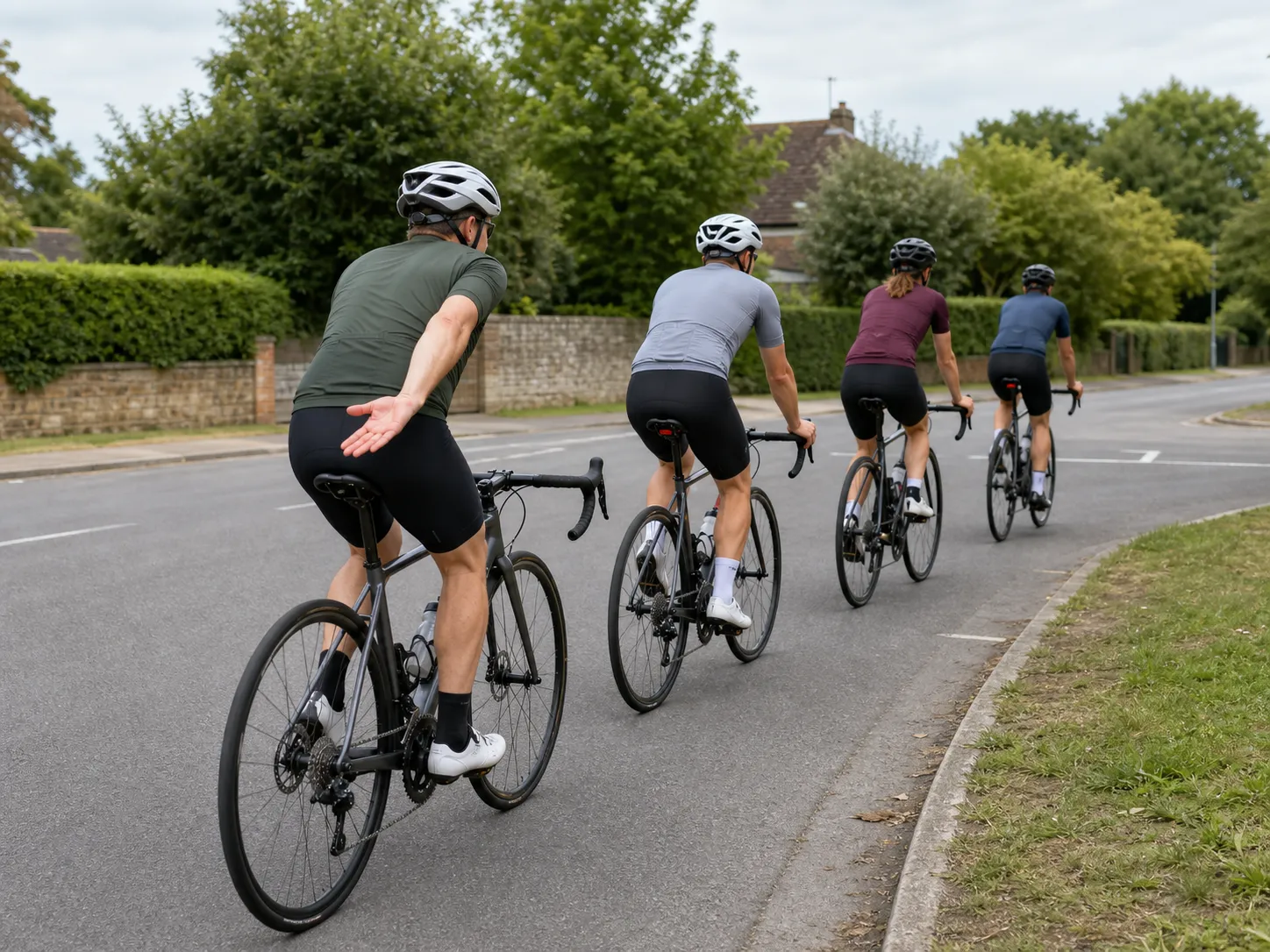
Cycling UK lists “Slowing” or “Easy” as group calls for backing off the pace, often paired with a hand signal. Bicycle Network’s group riding basics makes the same practical point: in a group, calling “Stopping” or “Slowing” as well as signaling helps riders behind react.
Your beginner version is simple: call “slowing” early, ease off smoothly, and avoid sudden braking unless there is an immediate danger.
3. Stopping
“Stopping” is different from slowing. Use it when the group is coming to a halt: traffic light, stop sign, puncture, mechanical problem, regroup point, or blocked path.
Say it clearly and repeat it if you hear it from ahead. The rider behind you may not see the reason yet. Keep a straight line, brake progressively, and leave enough space to avoid touching wheels.
Do not treat a stop call as permission to roll through a junction. Cycling UK warns that even when someone calls “Clear,” each rider is still responsible for their own safety at the junction. That is the healthy mindset everywhere: the call is information, not a guarantee.
4. Road hazard
Pointing down at a pothole, glass, drain cover, branch, gravel patch, or rough edge is one of the most useful group signals because riders behind often have a worse view than the rider in front.
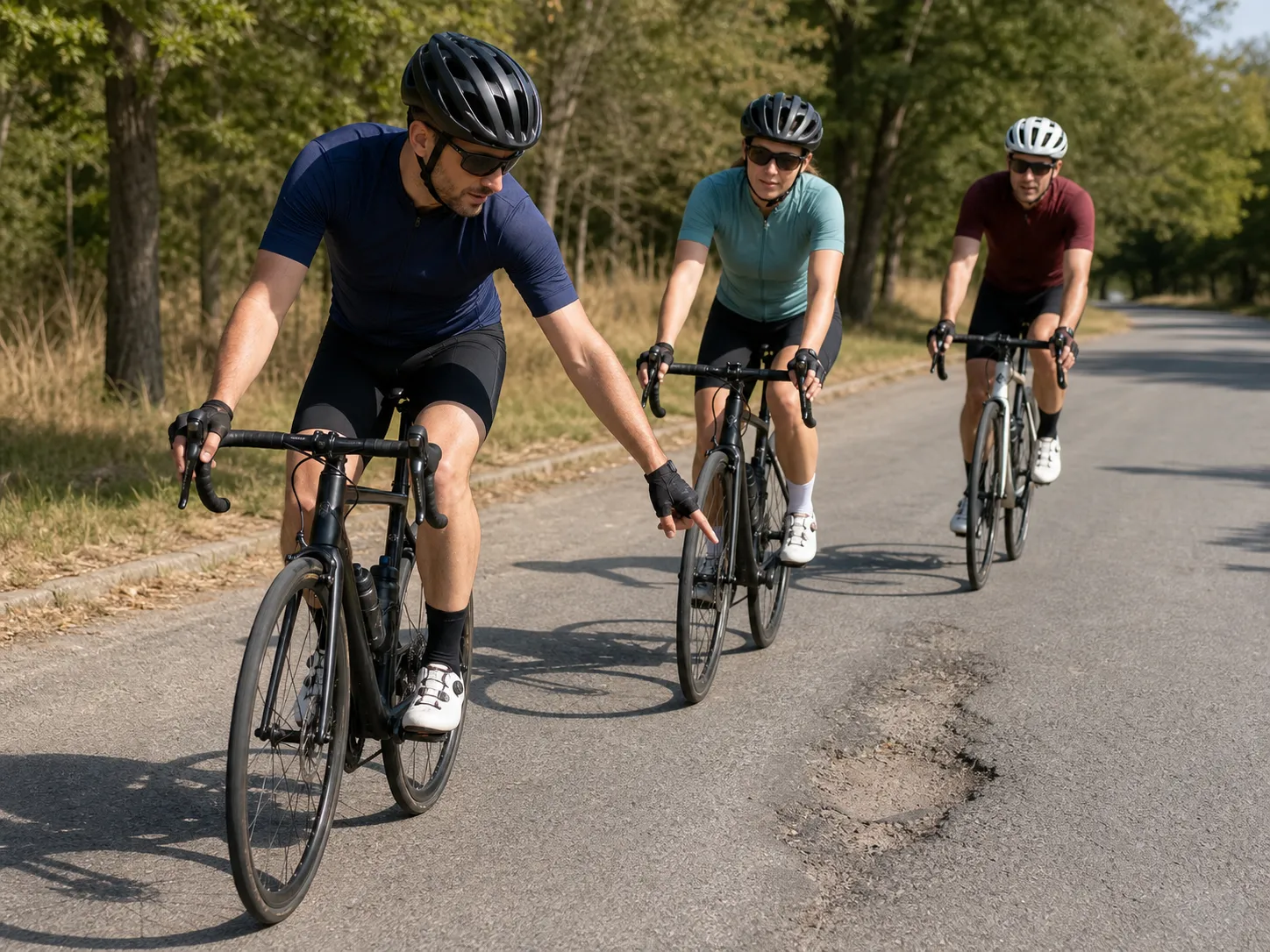
Say the plain word too if needed: “hole,” “glass,” “gravel,” or “branch.” Keep it short. The goal is not a full description; it is enough warning for the next rider to look, hold line, and avoid panic steering.
If taking one hand off the bar would make you unstable, prioritize control and call it out instead.
5. Traffic or people ahead and behind
Groups also pass information forward and backward: “car back,” “car up,” “walker up,” “rider up,” or whatever local wording the ride uses. The exact phrases differ, but the purpose is the same: tell the group about something some riders cannot see yet.
Use these calls with restraint. Shouting constantly makes the important call less useful. A good beginner habit is to repeat important calls once down the line, especially slowing, stopping, hazards, and traffic that affects spacing.
What to ask before rollout
Before the ride starts, ask the ride leader four questions:
| Question | Why it helps |
|---|---|
| “What are your basic hand signals and calls?” | Local groups vary |
| “Is this no-drop, and where do you regroup?” | You know what happens if you lose contact |
| “Where should a new rider sit?” | The back is often calmer for learning |
| “Do you want calls repeated down the line?” | Some groups expect echoes; some keep it quieter |
That small conversation is better than pretending you know a code you have never used.
One focused next action
For your first group ride, learn these five categories, arrive early, and ask the leader to demonstrate the local version. Then ride with extra space, repeat only useful calls, and choose predictability over pride.
If traffic still feels like the hard part, read predictability beats bravery in traffic and road cycling safety and road positioning before joining a faster or tighter group.
Sources and further reading
- Cycling UK: hand signals and calls used on a group ride
- NHTSA: bicycle safety
- League of American Bicyclists: signaling and scanning
- Bicycle Network: group riding basics
- r/cycling reader context: first group-ride etiquette
- r/cycling reader context: group-ride hand signals
- r/cycling reader context: first 40 km group ride