Carbon wheels or a higher-spec road bike: which upgrade makes sense?
Choose between a wheel upgrade and a better complete bike by naming the current limitation, checking compatibility, and pricing the whole change.
 Field guide / carbon-wheels-or-higher-spec-road-bike
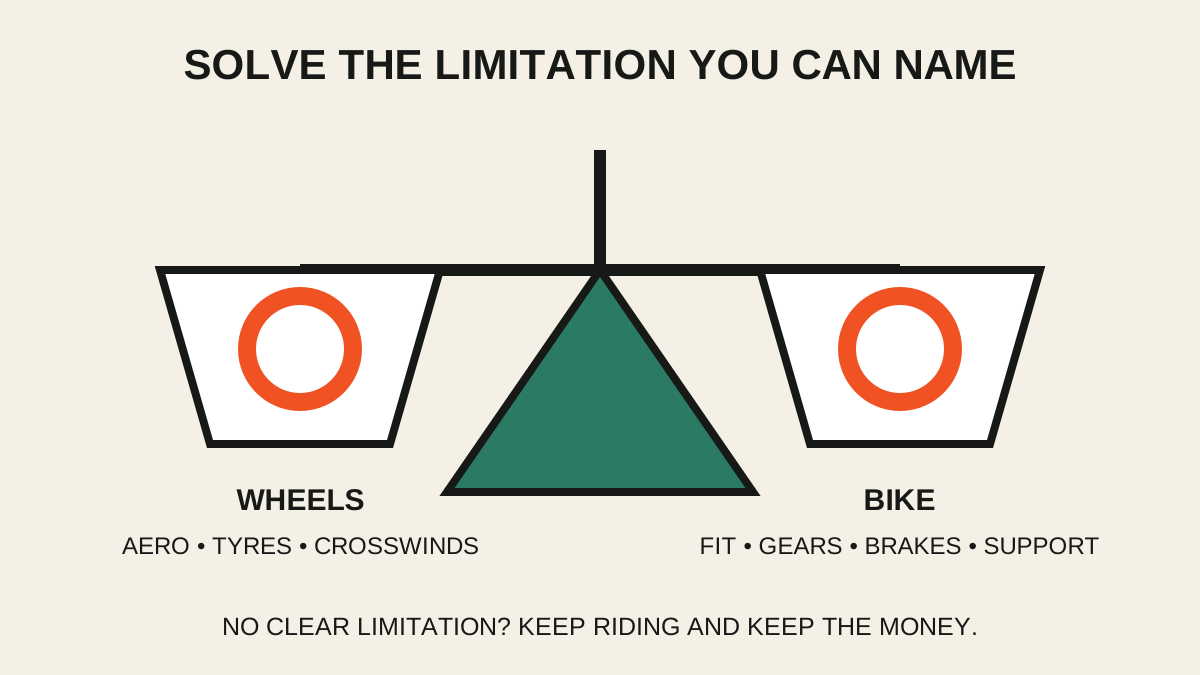
Buy carbon wheels when your current bike fits, brakes, shifts, and provides the gearing you need—and you can name a wheel-specific benefit you will actually use. Buy the higher-spec complete bike when it solves a frame, fit, braking, tyre-clearance, gearing, or integration limitation that wheels cannot.
The short answer: if you cannot name the limitation, keep riding. “Carbon wheels plus mechanical shifting” can be a smarter package than expensive electronic shifting on basic wheels, but only when the wheels are compatible and match your roads, wind, tyres, maintenance, and goals.
Choose wheels when the bike is already right
A wheel upgrade is easier to justify when all of these are true:
- the frame fits and remains comfortable on your real ride duration;
- the bike has the tyre clearance and braking system you want;
- the gearing suits your climbs and riding speed;
- the drivetrain is in good condition;
- your goal is specifically aerodynamics, a tubeless or wider-tyre setup, wheel stiffness, or a second wheelset for a different use;
- you expect to keep the bike long enough to use the purchase.
Deeper rims can be useful at speed, but depth also changes crosswind behaviour. Very light wheels do not fix unsuitable gearing. Carbon rims do not automatically improve reliability, service access, or comfort. Start with what to upgrade first if the limitation is still vague.
Choose the better complete bike when the platform is limiting you
A complete bike usually makes more sense when it provides several changes you already need:
- a frame size or geometry that fits better;
- more tyre clearance;
- hydraulic braking instead of a brake system you have outgrown;
- easier gearing with documented derailleur capacity;
- axle, freehub, or mounting standards that suit your next few years;
- a warranty and local service route you value.
Do not spend heavily upgrading a bike that is the wrong size. Use how to tell whether a road bike is too big or small before turning fit frustration into a wheel purchase.
Compare complete costs, not headline parts
For wheels, include tyres, tubes or sealant, valves, rim tape, cassette, brake rotors, lockrings, possible freehub changes, labour, and the tools needed to swap consumables. Keep the original wheels if they have value as a training or backup set.
For the bike, include pedals, fit changes, different bar or stem, a suitable cassette, accessories, delivery, assembly, and first service. Electronic shifting adds batteries and charging habits; mechanical shifting adds cable maintenance. Neither is automatically the sensible choice for every rider—see mechanical versus electronic shifting.
Run the compatibility check before shopping by rim depth
Confirm all of these from exact model documentation:
- axle type and hub spacing;
- disc rotor interface and permitted rotor size, or the correct rim-brake pad and rim requirements;
- freehub body and cassette compatibility;
- rim internal width and suitable tyre-size range;
- hooked or hookless tyre interface;
- tyre approval and maximum system pressure;
- frame, fork, and brake clearance at the measured tyre width;
- rider-plus-bike system weight limits.
“700c disc wheel” is not a complete specification. Some hookless road rims require specifically approved tubeless or tubeless-ready tyres even when an inner tube is used. SRAM’s current Zipp manual, for example, directs owners to the model-specific compatibility and pressure tables. Apply the instructions for the wheel you actually buy, not a generic number from a forum.
Our replacement-wheel compatibility guide walks through the fit checks in more detail.
Use a three-ride decision test
On three representative rides, note each moment when the bike seems to hold you back. Then classify it:
- Fit: pain, unsafe control access, or inability to sustain the position.
- Gearing: no suitable low gear or awkward jumps.
- Braking: poor modulation or weather performance after correct service.
- Tyres and wheels: repeated tyre incompatibility, a damaged wheel, or a clear aerodynamic goal.
- Fitness or skill: pacing, cornering, group-riding confidence, or training consistency.
Only the fourth category points directly to wheels. Fitness and skill are not insults; they are often the cheapest and most transferable improvements.
A sensible middle path
If your existing bike is sound, fit fast tyres and use an appropriate pressure before buying wheels. If the new-bike option mainly adds electronic shifting while preserving similar geometry, clearance, and braking, test both systems and decide whether the control feel is worth the full difference.
If buying used wheels, inspect provenance, crash history, rim condition, spoke tension, bearings, freehub, and exact tyre interface. A suspiciously cheap carbon wheel is not a bargain if compatibility is undocumented or damage cannot be assessed.
Your next step
Write one sentence beginning, “This purchase will fix…” If the sentence names wheel behaviour and the compatibility list passes, price the complete wheel system. If it names fit, frame, brakes, clearance, or gearing, test complete bikes instead. If the sentence stays vague, keep the money and ride another month.
Sources and further reading
- SRAM/Zipp road-wheel manual: tyre interface, pressure, and compatibility requirements
- Shimano road-wheel dealer manual: pre-ride wheel and carbon inspection
- r/cycling current reader context: carbon wheels versus a higher-spec complete bike
- r/cycling high-engagement reader context: what riders changed on a second road bike