Can you use a ski or snowboard helmet for cycling?
Check certification, fit, vision, ventilation, and condition before deciding whether a snow-sports helmet is suitable for a bike ride.
 Field guide / can-you-use-ski-snowboard-helmet-for-cycling
A ski or snowboard helmet is not automatically a cycling helmet. Use it on a bicycle only if its permanent labels and manufacturer instructions explicitly say it meets the applicable bicycle-helmet standard. A snow-sports certification by itself covers a different intended activity.
The short answer: look inside the helmet, not at its general shape. If you cannot find a cycling certification for your market, use a certified bicycle helmet instead.
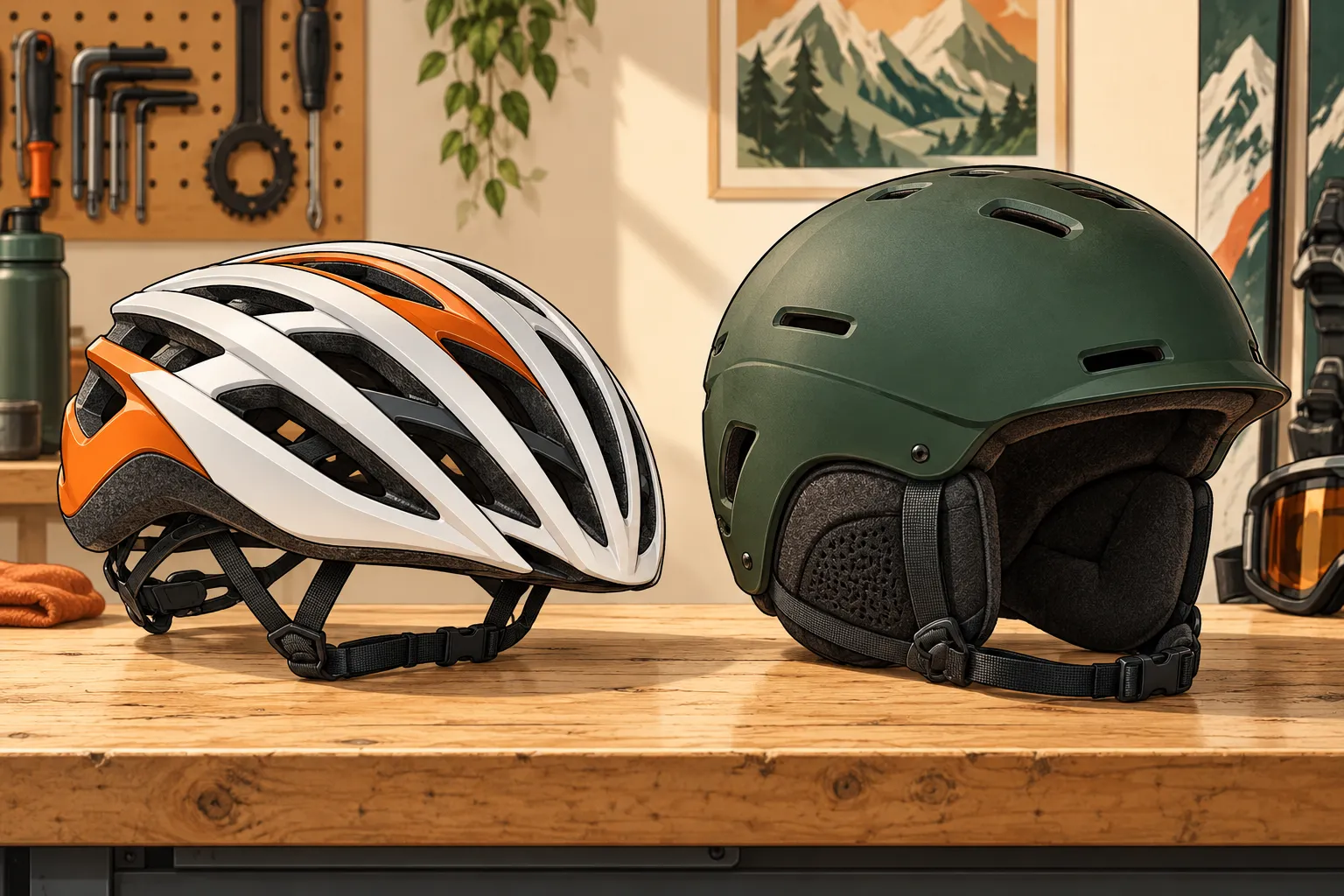
Check the standard before the weather
In the United States, a bicycle helmet should carry a label stating that it complies with CPSC 16 CFR Part 1203. The US Consumer Product Safety Commission lists separate standards for bicycling and snow sports. Other markets use different bicycle standards, such as EN 1078 in much of Europe, so check the rules where the helmet was sold and where you ride.
A multi-sport helmet can be suitable if it genuinely carries both relevant certifications. Marketing phrases such as “all-mountain,” “urban,” or “multi-use” are not substitutes for the actual label.
Do not rely on:
- a seller saying the construction “looks the same”;
- an online listing without a photo of the certification label;
- a second-hand helmet with unknown impact history;
- a standard for skiing, skateboarding, climbing, or motorcycling alone.
If a label is missing, illegible, or conflicts with the manufacturer’s current manual, treat the certification as unverified.
Fit still has to work on a bicycle
Even a dual-certified helmet must fit securely in your cycling position. Put it on, fasten it, and lean forward as you would on the brake hoods. Check that:
- it sits level rather than tipping back;
- the retention system is snug without pressure points;
- the buckle stays closed and the straps do not cover your ears;
- the front edge does not block your forward view when your head is tilted up;
- the shell does not collide with the collar of your jacket or a backpack;
- your cycling glasses can sit normally without lifting the helmet.
Use the full road-cycling helmet fit check before the first ride.
Warmth can become a control problem
Snow helmets are designed around cold conditions and often have less airflow plus insulated ear pads. That may feel useful for a slow winter trip, but it can become uncomfortably hot during sustained pedalling. Ear coverage can also change how clearly you hear traffic and other riders.
Heat, muffled sound, or limited vision are reasons to stop and switch equipment. Do not drill vents, remove structural foam, or make unofficial modifications. Removable liners or ear pads should only be used as the manufacturer directs.
For most road rides, a certified cycling helmet plus a thin cap, skullcap, or ear band is the more adjustable system. You can remove a layer without changing the protective equipment.
Inspect its history, not just its surface
Do not ride in a helmet that has taken a significant impact, has crushed or cracked foam, a damaged shell, unreliable buckle, stretched straps, or an adjustment system that no longer holds. Hidden damage is one reason an unknown used helmet is a poor bargain.
Age alone is not a universal expiry timer. Follow the specific maker’s replacement guidance, and store the helmet away from excessive heat and chemicals that the instructions warn against.
A simple decision rule
Use the snow helmet for cycling only when all four statements are true:
- Its label confirms the bicycle standard required in your market.
- The manufacturer lists cycling as an intended use.
- It fits securely without compromising view, hearing, or head movement.
- Its condition and impact history are known and acceptable.
If any answer is no or unknown, choose a bicycle helmet. A basic correctly fitting certified model is the sensible purchase; price, extra technology, and styling come after certification and fit. The safe cycling helmet buying guide explains that order.
Your next step
Photograph the permanent labels inside your helmet and look up the named standard on an official source. If it does not identify a bicycle standard, set it aside for its intended snow sport and fit a cycling-certified helmet before riding.
Sources and further reading
- US CPSC: Which helmet for which activity — identifies different helmet types and standards for bicycling and snow sports.
- US CPSC bicycle helmet business guidance — explains the US bicycle standard, tests, and required label.
- r/cycling discussion about first-bike equipment — used as an editorial demand signal after a new rider considered using a snow helmet; individual product opinions were not treated as safety evidence.