Can you use a hybrid bike for your first sprint triathlon?
Use the bike you already trust for a first sprint triathlon, then check race rules, roadworthiness, handling, tyres, and transition setup before spending on speed.
 Field guide / can-you-use-hybrid-bike-first-sprint-triathlon
Yes. A sound hybrid bike is a sensible first-sprint-triathlon bike when it fits you, passes the organiser’s equipment rules, and you can ride it confidently for the bike distance. A road or triathlon bike may be faster, but speed is not the first requirement for reaching your first finish line.
The short answer: use the hybrid you already own before buying a specialist bike for an event you have not tried. Service it, fit suitable tyres, practise the actual distance outdoors, learn the course rules, and complete several bike-to-run sessions. Upgrade later if triathlon becomes a repeat goal and the hybrid—not fitness, pacing, position, or handling—is the clear limitation.
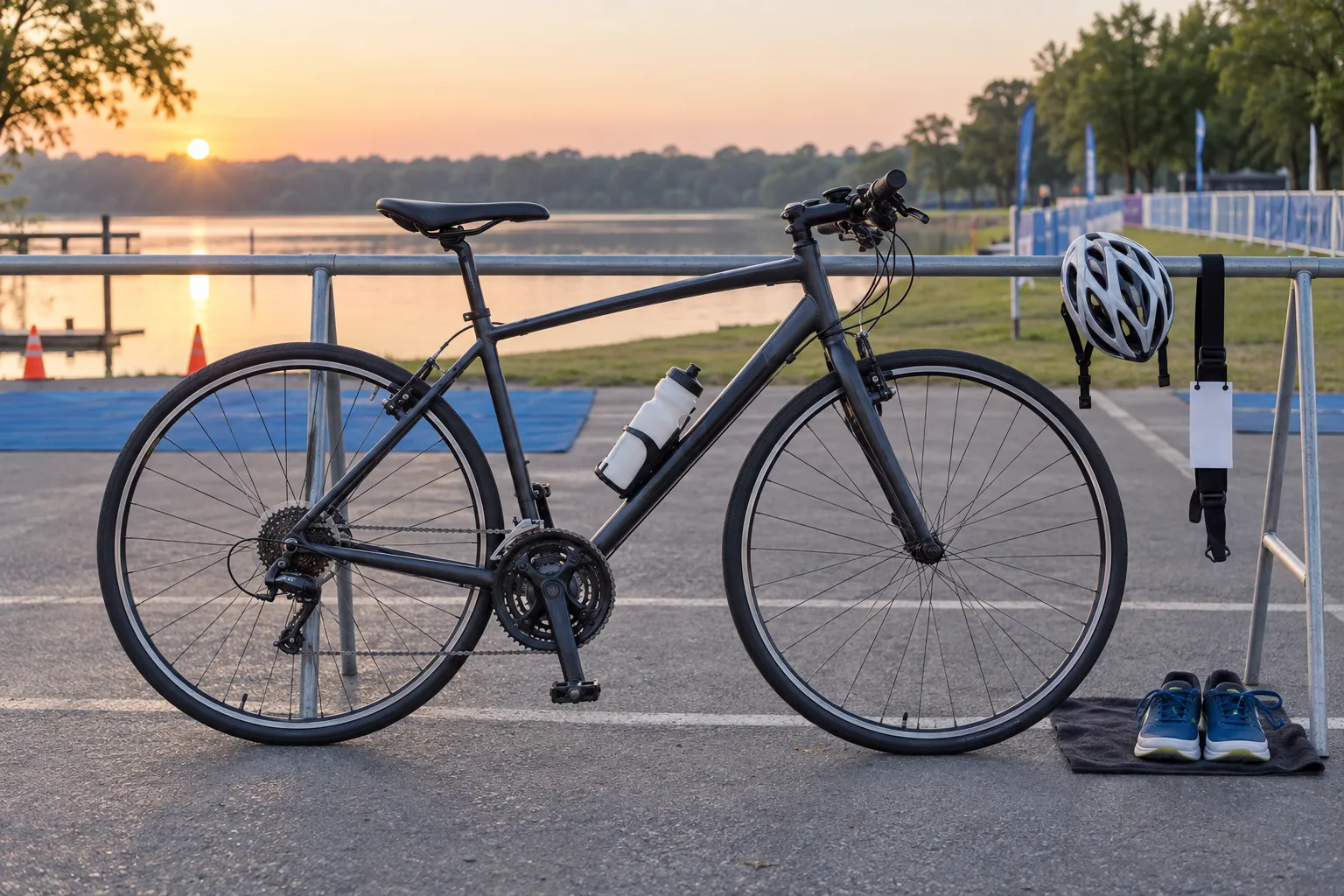
First confirm what your event allows
Do not assume that every event uses identical bicycle rules. Read the current athlete guide and ask the organiser if the wording is unclear. Check:
- whether the race is draft-legal or non-drafting;
- permitted handlebar types and attachments;
- helmet certification and fastening requirements;
- bar-end plugs, wheel, brake, and tyre requirements;
- whether a bike inspection or check-in happens before race day;
- course cut-off times and any local equipment restrictions.
World Triathlon says sprint racing is commonly a 750 m swim, 20 km bike, and 5 km run, but local events can differ. Its rules also distinguish draft-legal and non-drafting races. USA Triathlon similarly publishes current competition rules and stresses that riders need to hold a straight line, corner, drink, pass, and be passed safely. Your organiser’s documents—not a forum answer—decide what applies on your start line.
Make the hybrid race-ready
Start with roadworthiness, not upgrades. At least a week before the event, check or have a mechanic check:
- Brakes: both levers operate firmly and stop the bike without rubbing, leaking, or pulling to the bar.
- Tyres: casings have no cuts, exposed threads, cracking, or embedded debris; pressure suits the tyre, rim, rider, and road.
- Wheels: they are secure, reasonably true, and free from loose or broken spokes and bearing play.
- Steering: the headset is secure and the bars and stem do not slip.
- Drivetrain: the chain is lubricated correctly, gears shift without entering the spokes, and the pedals turn normally.
- Contact points: saddle and grips remain comfortable for the complete ride; do not make a dramatic fit change the night before.
Run the five-minute pre-ride bike check before every outdoor session. If the bike has been stored for months, use the fuller long-storage safety check.
Choose low-drama speed improvements
A hybrid’s upright position, wide bars, and practical tyres usually create more aerodynamic and rolling resistance than a road-bike setup. That does not make the bike unsuitable. It tells you where modest preparation can help.
- Inflate tyres with a gauge to an appropriate pressure; the maximum printed on the sidewall is not a target.
- Replace worn, cracked, or very knobbly tyres only if a compatible smoother road tyre is useful for your normal riding too.
- Remove unnecessary loose cargo, but retain everything the event requires.
- Lubricate a dry chain and wipe off the excess.
- Wear close-fitting, comfortable clothing you have already tested.
- Keep the normal flat pedals if they are secure and familiar. Clipless pedals are not a triathlon entry requirement.
Do not fit clip-on aerobars immediately before the event. They change steering access, braking access, position, and handling, and some races restrict them. A first race is a poor test environment for unfamiliar controls.
Train the parts an indoor bike cannot teach
Indoor cycling can build useful fitness, but the race takes place on a moving bicycle. Practise outdoors until you can:
- start and stop cleanly under pressure;
- hold a predictable line while looking ahead;
- signal and look behind without swerving;
- corner and brake before the turn;
- drink without losing control, or choose to stop safely;
- shift before short climbs;
- manage wind, rough surfaces, and other riders;
- ride the event distance comfortably, then run for 10–20 minutes.
That final bike-to-run session is often called a brick. Keep early bricks easy: the goal is to learn the transition sensation, not prove race fitness every weekend.
Plan a simple transition
Rehearse one repeatable sequence: rack the bike, place the helmet with straps open, arrange shoes and number belt, and decide what you will eat or drink. Follow the event’s transition rules exactly.
On race day, put the helmet on and fasten it before handling the bike if the rules require that sequence. Mount and dismount only where officials direct. Start the cycling leg conservatively; weaving through riders in the first minute costs more safety than a rushed transition saves.
When a road bike becomes worth buying
Consider a road bike after the event when several of these are true:
- you want to continue triathlon or join road group rides;
- you have enough outdoor experience to judge fit and handling;
- the hybrid’s position or gearing clearly limits your regular routes;
- you want more hand positions for longer rides;
- a suitable bike and the required accessories fit your complete budget;
- you can test or verify the size instead of buying from a label alone.
If you buy, a normal road bike is more versatile for training, group rides, and non-race use than a dedicated triathlon bike. Take any candidate through the road-bike buying checklist and read road bike or triathlon bike for a first half Ironman before specialising.
Your next step
Download your race’s current athlete guide. If the hybrid is permitted, book any needed service and ride the full bike distance outdoors on it at easy effort. Follow that ride with a short easy run. A successful rehearsal gives you more useful evidence than a speculative upgrade list.
Sources and further reading
- World Triathlon: Age-Group distances and 2026 competition documents
- USA Triathlon: current multisport competition rules
- USA Triathlon: bike handling and race preparation for new triathletes
- r/triathlon reader context: whether a beginner needs to buy a road bike
- r/triathlon reader context: using an existing hybrid for a first sprint
Reddit discussions were used to identify the question, not to verify equipment legality or safety. No usernames or personal stories are reproduced here.