Can you use gravel shoes on a road bike?
Two-bolt gravel or mountain-bike shoes work well on road bikes. Check pedal compatibility, shoe fit, walking needs, cleat setup, and the few real tradeoffs.
 Field guide / can-you-use-gravel-shoes-on-road-bike
Before you buy
Check the starter kit first
Print the one-page buying brief for helmet, lights, water, phone, and repair compatibility before comparing upgrades.
Yes. Gravel or mountain-bike shoes with recessed two-bolt cleats can be an excellent road-bike setup. They are usually easier to walk in, many matching pedals are double-sided, and one shoe-and-pedal system can serve a road bike, gravel bike, commuter, and indoor trainer.
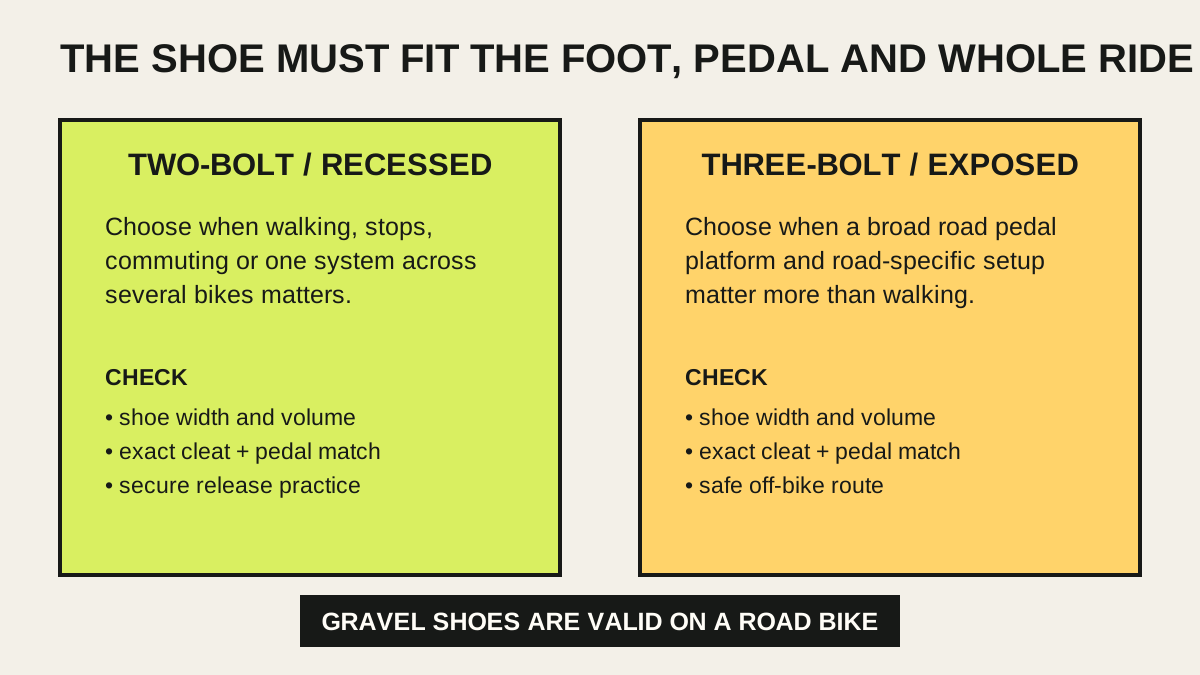
The short answer: choose the shoe that fits your foot and the pedal system that fits your whole ride. Two-bolt SPD-style shoes do not become unsuitable because the bicycle has drop bars. A three-bolt road system may offer a broader road-specific platform and lighter race-oriented options, but it is not a beginner requirement.
Why this question keeps appearing
A highly discussed current r/cycling thread asks whether gravel shoes are sensible on a new road bike, especially for a rider who needs a wider fit and already owns two-bolt pedals. The useful question is not whether the setup looks traditional. It is whether the shoe fits, the hardware matches, and the system supports the rider’s real stops and walking.
Reddit responses are useful evidence of demand and common confusion, not proof of performance or compatibility. Use the pedal and shoe manufacturer’s documents for those decisions.
First confirm the three-part compatibility chain
“Gravel shoe” describes intended use, not one universal cleat mount. Check three separate parts:
- Pedal: identify its exact make and model.
- Cleat: find the specific cleat family approved for that pedal.
- Shoe: confirm that its outsole accepts that cleat’s bolt pattern.
Many gravel and cross-country shoes use a recessed two-bolt mount. Shimano’s SPD system is one example. Road shoes commonly use an exposed three-bolt mount, such as SPD-SL, but brand names and bolt counts are not interchangeable. A shoe that accepts two bolts still needs the correct cleat for the pedal.
Use the shoe, cleat, and pedal compatibility guide before buying. Do not drill an outsole, omit mounting plates, or force a nearly matching cleat.
The practical advantages of gravel shoes on the road
Walking is less awkward
The cleat usually sits inside rubber tread rather than protruding beneath a smooth sole. That generally gives the ground more outsole contact and protects the engagement hardware during ordinary café, station, office, and roadside walking.
Recessed does not mean slip-proof. Wet tile, metal, paint, stairs, mud, and loose stones still need care. Inspect and clear the cleat before clipping back in.
Double-sided pedals are easier to find
Many two-bolt pedals can be entered from either side. That can make starts less fussy in traffic or on a first clipless setup. Some pedals have a mechanism on one side and a flat platform on the other; those give normal-shoe flexibility but require you to rotate to the correct side.
One system can cover several bikes
If the trainer, commuter, gravel bike, and road bike use the same compatible pedals, one well-fitting pair of shoes can move between them. That reduces duplicate purchases and avoids switching release habits from bike to bike.
There are performance-oriented options
Two-bolt shoes range from flexible touring footwear to stiff cross-country race shoes. Do not assume every recessed shoe is soft or bulky. Judge the exact model’s fit, sole, ventilation, tread, closure, and intended use.
The real tradeoffs
A three-bolt road setup can offer a broad pedal platform, lower system weight, very stiff race shoes, and more road-racing choices. Whether you can feel or use those differences depends on the exact shoe, pedal, fit, riding, and preferences—not the category label alone.
Two-bolt systems can have:
- more shoe and tread around the cleat;
- a smaller cleat-to-pedal contact area on some designs;
- different stack height, float, and release feel;
- more mud clearance and easier walking;
- pedal bodies that are heavier than a comparable road model.
None of those facts proves one system is faster or more comfortable for you. A poorly fitting road shoe is not an upgrade from a comfortable gravel shoe.
Fit the shoe before mounting the cleat
Cleat installation can affect return rights, so read the retailer’s policy first. Try both shoes indoors with your normal socks, ideally later in the day. Check:
- length without toes touching the end;
- enough forefoot width without side pressure;
- adequate volume across the top of the foot;
- heel hold without crushing the toes;
- closures that do not create a pressure ridge;
- usable cleat-slot range for your foot position.
“Wide” is not a universal shape. Some shoes add upper volume without making the sole platform meaningfully wider. Use the brand’s current measurement method, and choose fit over a favourite logo.
Numbness, burning, sharp pressure, and persistent hot spots are not a break-in plan. Stop and reassess the shoe, insole, closure tension, cleat position, and fit.
Set up the cleat conservatively
Follow the exact shoe, cleat, and pedal manuals. A safe first process is:
- confirm all specified plates, washers, and bolts are present;
- begin with the cleat rearward enough to avoid an extreme toe-forward position, within the maker’s range;
- align rotation with your natural foot angle rather than forcing both feet to look symmetrical;
- tighten evenly to the documented torque;
- set release tension to the easiest permitted setting if adjustable;
- practise both feet repeatedly while supported;
- complete a short traffic-free ride before a long ride or event;
- recheck bolt security as the maker specifies.
Use how to set road-bike cleats for the first time for the measurement and one-change process.
What about triathlon?
Two-bolt gravel shoes are valid for triathlon training and can be raced if the event rules permit the equipment. They may make walking through a venue easier. Triathlon-specific road shoes can offer features such as fast entry, drainage, and transition-friendly closures, but those matter only after shoe fit, pedal control, and event logistics are understood.
For a first event, do not create a new shoe, cleat, and transition routine at the last minute. Rehearse mounting, dismounting, walking, and changing footwear under calm conditions. Check the organiser’s current rules rather than relying on another rider’s event.
The buying decision
Choose recessed two-bolt gravel shoes when walking, easy entry, one system across bikes, or available foot shapes matter most. Choose a three-bolt road system when its exact platform, shoes, fit, and road-specific features solve a real need.
Neither choice proves seriousness. Flat pedals remain valid too. The best beginner system is the one you can operate reliably, wear without harmful pressure, and use across the complete ride.
Your next step
Write down the exact pedal model, approved cleat, and shoe bolt pattern before ordering anything. Try the shoes indoors before mounting cleats. If all three parts match and the gravel shoe fits best, use it on the road bike without apology.
Sources and further reading
- Shimano: SPD two-bolt pedal and shoe system
- Shimano: SPD-SL three-bolt pedal and shoe system
- r/cycling reader context: gravel shoes on a road bike — used as a current demand signal; personal equipment claims were not treated as product testing.