What to do when a bike arrives with different components
Check whether a new bike matches the order, judge substituted parts, document differences, and ask the seller for a practical remedy before riding.
 Field guide / bike-arrived-with-different-components
If a delivered bike differs from the listing, stop and document it before riding. A substituted part is not automatically unsafe or inferior, but “equivalent” must be checked by function, compatibility, fit, value, and what the seller actually promised. Give the shop a precise written list and the remedy you want.
The short answer: save the advertisement and order records, photograph every difference, identify exact model numbers, keep the bike unused if return rights may matter, and contact the seller before paying another shop to change anything.
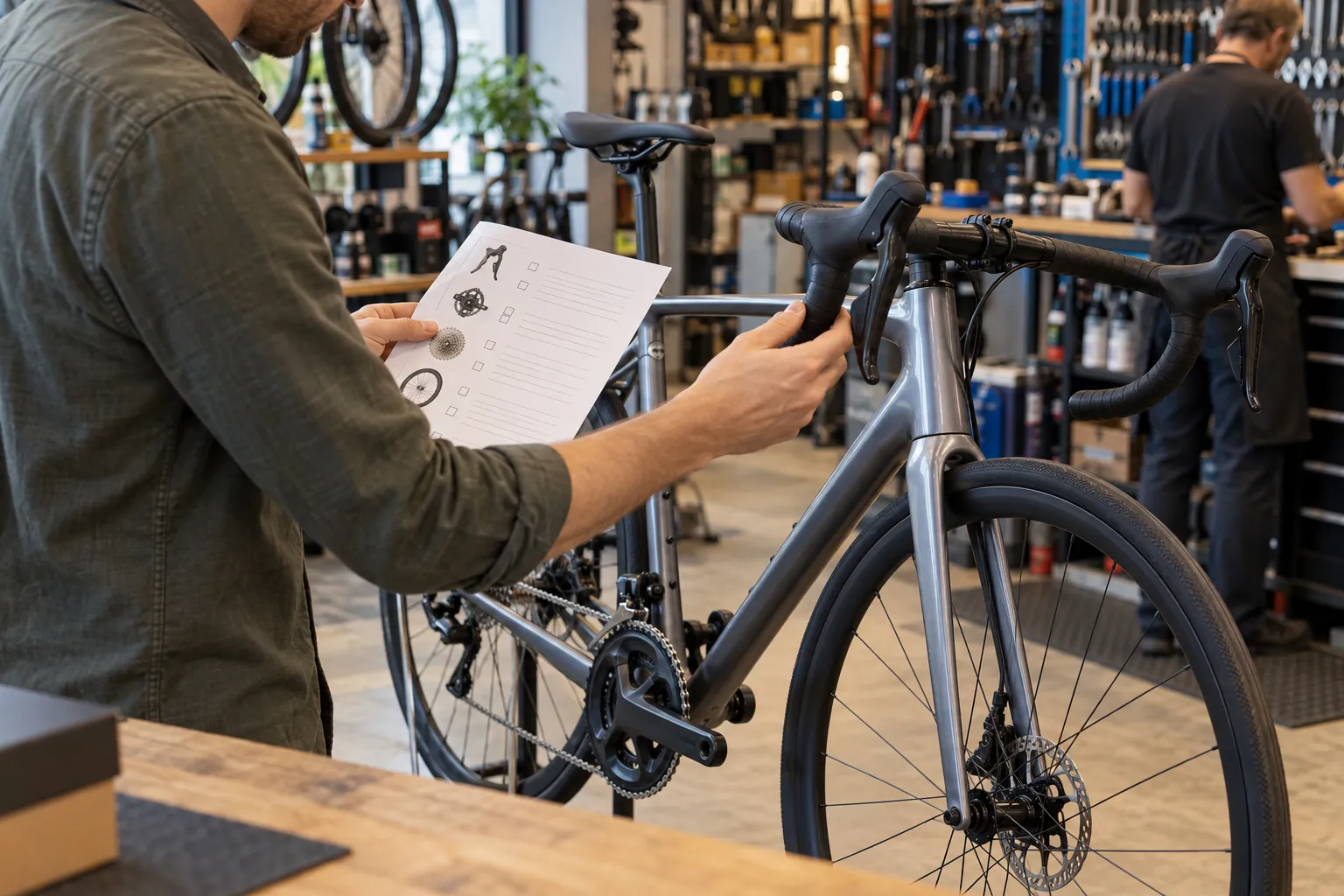
First preserve the evidence
Before the listing changes, save:
- the product page as a PDF or screenshot, including the date;
- the specification table and any “components may vary” notice;
- the order confirmation, invoice, messages, and finance agreement;
- photographs of the complete bicycle and shipping box;
- close photographs of each component model number;
- serial numbers without publishing them publicly;
- a note of whether the bike has been assembled, adjusted, or ridden.
Do not remove protective film, discard packaging, register the bike, or install accessories until you understand the seller’s return process. Those actions do not necessarily erase your rights, but avoiding unnecessary changes keeps the facts simple.
Identify what is actually fitted
Brand families are not precise enough. “Shimano 105” can describe a mix of generations, mechanical or electronic shifting, and components from other series. A tyre’s marketing name may stay the same while width or casing changes.
Read the model code from the part. Check:
- shift-brake lever pair;
- front and rear derailleur;
- crank and chainring sizes;
- cassette range and speed count;
- brake calipers and rotor sizes;
- wheel model, axle type, and freehub;
- tyre model and marked size;
- handlebar, stem, seatpost, and saddle.
Use the replacement-part identification guide if a label is hidden or unfamiliar.
Decide whether the substitution is equivalent
Price alone is a poor test. Compare the consequences that affect this rider:
- Compatibility: does it work correctly with the rest of the system?
- Braking: same brake type, adjustment, rotor compatibility, and lever reach?
- Fit: do the hoods, handlebar, crank length, or saddle change body position?
- Gearing: same number of speeds and useful high and low ratios?
- Serviceability: can local shops obtain pads, cables, hoses, bearings, and spares?
- Weight limits: are the wheels and components suitable for total system weight?
- Warranty: who supports the substituted product?
- Value: would the actual build normally sell for materially less?
A different cassette with the same range may be a minor change. Different brake-shift levers can change hood shape, reach adjustment, cable pull, hydraulic compatibility, and replacement cost. Treat each part by consequence, not by size.
Read the agreement carefully
Some listings reserve the right to substitute components due to availability. That clause matters, but it does not answer every question. Look for whether substitutions must be equivalent, whether the exact build was confirmed separately, and whether the delivered goods still match their description in your jurisdiction.
Consumer law differs by country and purchase method. For example, EU guidance says goods should match what was advertised or agreed, while UK law requires services to be performed with reasonable care and skill. In the United States, rights and repair-estimate rules can vary by state. This article is a documentation and negotiation checklist, not legal advice.
Ask for one clear remedy
Write a calm message with:
- order number and delivery date;
- promised component and source document;
- fitted component and model code;
- why the difference matters—compatibility, fit, function, value, or safety;
- the remedy you prefer;
- a reasonable response deadline.
Possible remedies include:
- seller supplies and installs the specified part;
- seller pays an agreed local-shop installation cost;
- partial refund reflecting a documented difference;
- exchange for the correct build;
- return and refund under the applicable policy or law.
Do not begin with public accusations. Give the seller a chance to verify the build record and propose a fix. Keep all responses in writing.
If the shop says the part is equivalent
Ask them to explain equivalence across compatibility, function, fit, warranty, and retail value. Request the exact technical documents. If the issue affects brakes, steering, or drivetrain compatibility, an independent mechanic’s written assessment can be more useful than an online argument.
Do not authorise replacement work until you know who will pay. Preserve removed parts and invoices if work proceeds.
Our surprise bike-shop charges guide shows how to set approval limits for future service. When buying used, the process is different; use the used-parts buying guide.
Your next step
Make a two-column list headed “ordered” and “delivered,” add exact model codes and photos, then send the seller one requested remedy. Facts resolve these disputes faster than a debate over whether a component looks similar.
Sources and further reading
- EU consumer guidance: goods should match what was ordered
- UK Consumer Rights Act: services and reasonable care and skill
- US FTC repair guidance: written estimates and parts records — written for motor vehicles, but its documentation checklist is useful when agreeing any paid mechanical repair; local bicycle rules may differ.
- r/whichbike demand signal: dispute over delivered shifters — used as an editorial question signal, not legal evidence.